Multichannel Outreach: The Complete Guide for B2B Sales Teams

Andrea López
Partager
Key Takeaways (TL;DR)
What This Guide Covers?: Everything you need to plan, build and run a multichannel outreach strategy, from picking the right channels through to full sequence examples you can copy.
Why It Matters?: A single-channel cold outreach strategy is easy for prospects to ignore. Spreading touches across email, social prospecting and calling gives a message more chances to land.
Who Should Read This?: Sales reps, founders and agencies who want a repeatable way to reach B2B prospects, especially teams whose reply rates have plateaued on one channel alone.
The Core Idea: A multichannel outreach strategy isn't about doing more; it's about spreading the same amount of effort across channels that reinforce each other.
How Enginy Fits In?: We built Enginy as an end-to-end GTM platform where multichannel outreach runs on the same enriched contact data your team already sourced, rather than a separate, disconnected tool.
Multichannel Outreach Strategy: At a Glance
Before diving into the details, here's a quick summary of the core ideas this guide covers. Use it as a reference point to jump back to once you've read the full breakdown below.
Element | What Does It Cover? | Why Does It Matter? |
Core channels | Email, social prospecting, cold calling | Each channel reaches prospects at a different moment and in a different mindset |
Typical sequence length | 10 to 14 touches over 2 to 3 weeks | Most replies come from later touches, not the first message |
Best-fit teams | B2B SaaS, recruitment, agencies, IT consulting, founder-led startups | Anyone reaching multiple stakeholders or running high-volume outbound |
Core risk | Treating channels as separate instead of connected | Disjointed messaging across channels reads as spam, not persistence |
Reported performance lift | Up to 287% more responses with 3+ coordinated channels | Reinforcement between channels matters more than any single channel's strength |
Where does Enginy fit? | Prospecting, enrichment and outreach in one workspace | Sequences run on live, enriched data instead of a static list |
What Is a Multichannel Outreach Strategy?

A multichannel outreach strategy is a structured plan for reaching a prospect across more than one communication channel, usually combining email, social prospecting and phone calls into a single, coordinated sequence.
Rather than sending five emails and hoping one lands, this approach spreads those touches out. A prospect might see a social post, then get an email referencing it, then receive a follow-up call.
The word "strategy" matters here. Simply using several channels at random isn't the same as running a genuine multichannel outreach strategy, since the channels need to reinforce each other rather than repeat the same message in different formats.
Done well, each channel plays a distinct role:
Email carries detail and proof points,
Social prospecting builds familiarity before a pitch ever lands,
A call closes the loop once a prospect has already seen your name twice.
This isn't a new idea. Sales teams have combined calling with mail for decades.
What's changed is the volume of channels now genuinely available, and the amount of contact and behavioural data that makes it possible to sequence them with real precision rather than guesswork.
The shift also reflects how buyers actually behave today. Most B2B decision-makers now research vendors across several touchpoints before ever taking a call, so a single-channel strategy no longer matches how buyers actually decide.
Why Are B2B Teams Moving Away From Single-Channel Outbound?

A few underlying shifts explain why relying on one channel has become riskier:
Inbox volume: Inboxes are more crowded than they've ever been. A typical decision-maker receives well over a hundred sales emails a week, which means even a genuinely good message competes for a few seconds of attention it's unlikely to get.
Deliverability: Spam filters have grown stricter, and a single flagged domain can quietly tank an entire email-only cold outreach strategy without anyone on the sales team realising why replies have dried up.
Buyer expectations: Prospects increasingly expect a seller to have done some homework before reaching out, and a single generic email rarely signals that the way a well-timed social touch followed by a relevant email can.
None of this means email is dead. It remains the most scalable channel in most B2B stacks.
The issue is relying on it exclusively, rather than building it into a broader, coordinated plan.
Multichannel Outreach vs a Single-Channel Cold Outreach Strategy

A single-channel cold outreach strategy relies entirely on one method, usually email, to carry the entire relationship from first contact through to a booked meeting.
That approach can work, but it puts enormous pressure on one channel to do everything. If a prospect's inbox is already flooded, a purely email-based cold outreach strategy has no backup plan.
Here's how the two approaches compare across the criteria that matter most:
Risk: A multichannel approach spreads that risk. If email deliverability dips for a particular domain, a call or social touch can still get a message through, and the sequence as a whole keeps moving.
Familiarity: Seeing the same company name across two or three channels builds a level of familiarity that a single channel struggles to create on its own, even with a well-written email.
Coordination: A single-channel cold outreach strategy is simpler to manage, while a multichannel outreach strategy needs the channels to be sequenced properly so they don't clash or contradict each other.
Cost: A single-channel approach is cheaper to run in terms of tooling and setup time, but that saving often gets eaten up by the extra volume needed to compensate for a lower reply rate. A better-converting multichannel sequence can end up costing less per meeting booked, even with the added coordination overhead.
The decision isn't always binary either. Many teams start with a single-channel cold outreach strategy while they're still validating messaging and positioning, then layer in additional channels once they know what's actually resonating.
Starting simple and expanding deliberately tends to produce a stronger result than trying to coordinate several channels from day one, before you've learned what your audience responds to.
Which Channels Work Well Together?

Not every channel combination works equally well.
Here's how the most common ones fit into a coordinated outreach programme:
1. Cold Email
Email remains the backbone of most outbound sequences, since it's asynchronous, easy to personalise at scale, and gives a prospect something concrete to refer back to later.
It works best paired with a channel that builds context first, since a cold email that references a genuine, recent signal performs noticeably better than one sent completely blind.
Email also scales more predictably than any other channel. A rep can personalise dozens of emails in the time it takes to make a handful of calls, which is why it usually anchors the first and middle stages of a sequence.
2. Social Prospecting
Social prospecting means researching and engaging with prospects through their professional social presence, rather than jumping straight to a pitch.
A short, non-salesy comment or connection on a relevant post can warm up a prospect days before an email even arrives, making that email feel like a continuation of something familiar rather than a cold interruption.
This channel works particularly well early in a sequence, since its whole value lies in reducing the coldness of the first real ask, rather than closing anything on its own.
Spotting the right moment to engage matters just as much as the touch itself.
That's why we built Enginy to surface intent signals like recent job changes or funding rounds. As a result, a first comment or connection can reference something genuinely current, rather than a guess.
3. Cold Calling
Calling adds a real-time, human element that email and social prospecting can't fully replace, particularly for closing the loop after a prospect has already seen a name a few times.
Calls tend to convert better later in a sequence, once a prospect has some passive familiarity, rather than as the very first touch in a cold outreach strategy.
Persistence matters more with calling than with any other channel. Most connected calls happen after several attempts rather than the first, so a single missed call shouldn't be treated as a dead end.
4. SMS and Voice Notes
Shorter, lighter-weight channels like text messages or voice notes work well as a pattern interrupt partway through a sequence, since they stand out precisely because they're used less often.
Used well, these channels work best as a single, well-timed moment within an otherwise email and call-led sequence, rather than a channel you run on repeat.
One well-placed message at the right point in a sequence tends to do far more good than several scattered throughout it.
How to Choose the Right Combination for Your Team?
Not every team needs all four channels. A founder-led startup with limited time might get more value from a tight email and social pairing, while a larger SDR team with dedicated calling capacity can support a fuller, four-channel sequence.
The right combination usually comes down to two questions: which channels does your target audience actually respond on, and which channels does your team have the capacity to run consistently without cutting corners.
It's worth testing combinations deliberately rather than assuming the standard email, social and calling mix will automatically suit your audience.
Some industries respond far better to calling than others, and some buyer personas barely engage with social content at all, so a short pilot across a small segment can save months of running the wrong combination at scale.
Benefits of Running a Multichannel Outreach Strategy
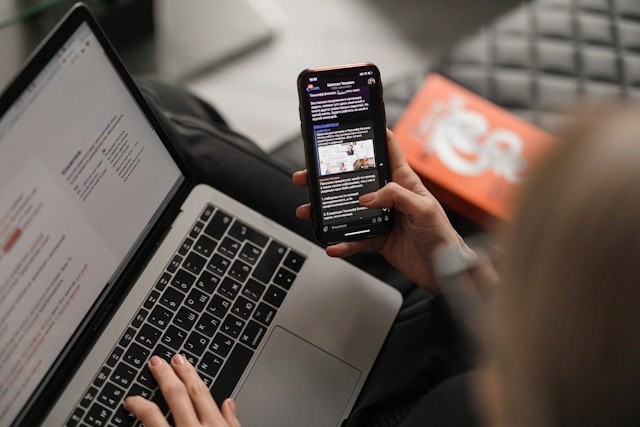
Running a coordinated programme like this pays off in several distinct ways.
Here's a closer look at each one:
1. Wider Reach
The most obvious benefit is reach. A prospect who ignores email entirely might still notice a social touch, and this approach simply gives you more surface area to be seen.
2. Higher Reply Rates
Reply rates tend to improve too, sometimes substantially.
Recent outbound benchmarking research has found that sequences combining three or more channels can generate up to 287% more responses than single-channel outreach, a gap wide enough to change how a whole sales team plans its cadences.
That kind of lift rarely comes from any single channel working harder; it comes from channels reinforcing each other so a prospect recognises your name before the message that actually asks for a meeting arrives.
3. Built-In Resilience
There's also a resilience benefit that's easy to overlook.
If one channel's performance dips, whether that's an email domain losing reputation or lower response rates on calls during a particular season, the rest of the sequence keeps carrying weight.
4. Better Cost Efficiency
Cost efficiency improves as a side effect too.
Reps spend less time chasing prospects who were never going to respond on a single channel, since a coordinated approach surfaces genuine interest faster and lets reps focus their time where it actually matters.
5. Realistic Multi-Stakeholder Outreach
Multi-stakeholder outreach becomes realistic too.
This kind of approach makes it far easier to reach several decision-makers at the same account in parallel, since each stakeholder can be engaged through the channel most likely to catch their attention.
6. Better Data Over Time
Finally, a well-built sequence produces better data over time.
Tracking how prospects respond across different channels shows you which combinations actually work for your specific audience, rather than guessing based on general best practice.
Over several months, that data becomes a genuine competitive advantage. Your team learns which channel pairings convert best for your specific ICP, rather than relying on generic industry benchmarks alone.
Taken together, these benefits compound over time.
A programme that starts out simply improving reply rates tends to also become more resilient, more cost-efficient and better documented the longer it runs.
How to Build A Strong Multichannel Outreach Strategy? - Step-by-Step Process

Building this kind of programme is less about picking channels and more about sequencing them with intent.
Here's a practical, step-by-step approach:
Step 1: Define Your Ideal Customer Profile
Start by getting specific about who you're actually trying to reach, including company size, industry, role and the pain point your offer solves.
A vague target audience makes every channel less effective, since personalisation depends on knowing enough about a prospect to say something relevant.
Write your ICP down as a short, specific list rather than a rough mental picture, since a documented ICP is easier for the whole team to prospect against consistently.
Step 2: Build and Enrich Your Contact List
Once your ICP is clear, build a list of matching companies and contacts, then enrich that list with verified emails, phone numbers and firmographic detail.
This step is where most outreach programmes quietly fail. A sequence built on outdated or incomplete contact data wastes effort on every single channel at once, since a wrong number or bounced email breaks the whole chain regardless of how good the messaging is.
Prioritise quality over volume here. A shorter list of well-enriched, accurately matched contacts consistently outperforms a much larger list padded with guesswork and unverified data.
We simplify this process on Enginy by pulling data from more than 30 enrichment sources at once.
Through waterfall enrichment, the platform keeps checking for a prospect's contact details until a verified match is found. This tends to work better than relying on a single data source to fill every gap.
Step 3: Map Out Your Channel Sequence
Decide which channels touch a prospect in which order, and how many days apart.
A common structure opens with a light social touch, followed by an email two or three days later, then a call after the prospect has seen both.
Write this sequence down as a simple table before building it in any tool. It's much easier to spot gaps or awkward transitions on paper than after a sequence is already live.
Consider how many stakeholders you need to reach at each account too.
If your offer typically involves more than one decision-maker, plan parallel tracks from the start rather than trying to add a second contact into an already-running sequence later.
Step 4: Write Channel-Specific Messaging
Each channel needs its own tone. Social touches should stay brief and low-pressure, emails can carry more detail and a clear ask, and call scripts need to reference whatever the prospect has already seen.
Avoid copying the same message across channels word for word. A prospect who's seen an identical line twice notices immediately, and it undermines the personal feel this kind of programme is meant to create.
Write the messaging for every step before launching, not just the first one or two.
Sequences that trail off into generic, hastily written follow-ups later on tend to lose the momentum the earlier, more careful touches built up.
Step 5: Set Branching Rules Based on Behaviour
Decide what happens if a prospect opens an email but doesn't reply, or engages with a social touch but ignores a call attempt. A good cold outreach strategy adapts rather than running the same fixed steps regardless of engagement.
Static sequences treat an engaged prospect the same as a disinterested one, wasting interest you've already earned, which is exactly what separates a basic sequence from a genuinely responsive programme.
Keep the branching logic simple to start. Two or three rules, like escalating for engaged prospects and slowing down for unresponsive ones, usually cover most of the value.
Enginy's "Campaigns" module handles this by letting a sequence branch automatically based on real engagement rather than a fixed script, which is worth looking for in any tool you choose for this step.
Step 6: Track, Review and Refine
Once a sequence is live, track reply and connection rates by channel, not just overall. This tells you which channels are actually pulling weight and which ones need reworking.
Revisit the sequence every few weeks. A programme that worked six months ago may need adjusting as prospect behaviour, channel saturation and your own offer evolve.
Involve the reps actually running the sequence in this review too. They'll often spot patterns, like a line that keeps landing well, long before the numbers catch up.
How to Measure Whether Your Strategy Is Working?
Building a sequence is only half the job. Without proper measurement, it's impossible to know whether your approach is actually paying off or just generating activity.
Here's what to track, and why each metric matters:
Reply rate by channel: Track this first, not just overall. A sequence with a healthy blended reply rate can still be hiding a channel that's dragging the average down, and you'll never spot that without breaking the numbers apart. Our Analytics module on Enginy surfaces exactly this kind of breakdown, showing conversion and engagement by campaign, identity or channel rather than one blended figure.
Meeting booking rate: This matters more than raw replies. A channel that generates plenty of short, polite "not right now" replies but few actual meetings isn't performing as well as the reply count alone would suggest.
Time to first reply: Worth tracking since it tells you how quickly a given sequence structure moves a prospect from cold to engaged. Sequences that take too long to generate a first response often lose momentum before a meeting ever gets booked.
Sequence completion versus early stop rate: If most of your booked meetings come from prospects who replied within the first three touches, that's a signal your later touches might need reworking rather than simply extending the sequence further.
None of these metrics matter much in isolation.
Reviewed together, they tell you not just whether a sequence is working, but exactly where to focus your next round of changes.
Best Practices for a Multichannel Outreach Strategy

A few habits consistently separate multichannel outreach strategies that work from ones that quietly fail:
Personalise every channel, not just email: A generic social touch is just as easy to ignore as a generic email, so the personalisation effort needs to carry across every channel in the sequence.
Space touches out sensibly: Cramming every channel into the first two days feels aggressive rather than persistent. Most sequences work better spread across two to three weeks.
Track channel-specific performance, not just overall replies: Without that breakdown, it's impossible to tell whether a weak channel is dragging down an otherwise solid cold outreach strategy.
Give each channel a clear job: Deciding upfront what social prospecting, email and calling are each responsible for preventing the sequence from turning into three uncoordinated attempts at the same pitch.
Treat these as a starting checklist rather than a rigid formula.
The exact mix will shift as you learn more about your audience, but a sequence built on these habits from day one rarely needs a complete rebuild later.
Mistakes That Break a Multichannel Sequence
Most of these mistakes aren't dramatic; they're small inconsistencies that compound across a whole sequence and quietly erode reply rates over time.
Here they are:
Repeating the same message across channels: Sending an identical line by email and then by social message reads as lazy automation rather than genuine outreach, undermining the whole point of a multichannel outreach strategy.
Letting the sequence keep running after a reply: Continuing to send scheduled touches after a prospect has already responded is one of the fastest ways to damage a relationship that started well.
Launching sequences on unverified contact data: A programme built on outdated emails and disconnected numbers wastes effort across every channel simultaneously, not just one.
Treating every prospect identically: A large enterprise account and a small, fast-moving startup rarely respond to the same cadence, so build in some flexibility for how aggressively a sequence escalates based on account type.
Most of these mistakes are easy to fix once you know to look for them.
Reviewing a sequence against this list before launch catches far more problems than trying to diagnose weak performance after the fact.
5 Multichannel Outreach Sequence Examples
These examples show how the steps above come together into a working programme.
Adjust timing and tone to fit your own audience:
Example 1: The Warm-Up Sequence
Day 1, engage with a prospect's recent post through social prospecting.
Day 4, send a short email referencing that post directly.
Day 7, follow up with a call if there's been no reply.
Day 10, send a closing email offering to redirect to the right person if the timing's wrong.
This sequence works well for cold accounts with no prior relationship, since the early social touch removes some of the coldness before the first email even lands.
It's also a good starting template for teams building their first proper multichannel outreach strategy, since it's simple enough to run manually before adding automation.
Example 2: The Multi-Stakeholder Sequence
Day 1, email a senior stakeholder with a broad, company-level message.
Day 1, in parallel, reach out to a more operational contact at the same account with a more tactical, role-specific message.
Day 5, follow up with each contact through social prospecting.
Day 9, call whichever contact has shown more engagement.
Running two tracks at once means the whole account has been reached before a single no-reply forces you to give up on it entirely.
This structure tends to work best for larger deals, where more than one person genuinely needs to buy in before a meeting gets scheduled.
A senior identity opening the door before a more tactical follow-up, similar to the C-level layer we've built into Enginy, tends to make that second, more operational contact noticeably easier to reach.
Example 3: The Signal-Triggered Sequence
Trigger the sequence off a specific event, like a job change or a funding announcement.
Day 1, send a congratulatory, low-pressure social touch.
Day 3, email referencing the signal directly.
Day 6, call if there's no response, opening with the same signal as context.
Signal-triggered sequences tend to see stronger reply rates than generic ones, since the first message references something genuinely current rather than a template.
The trade-off is that these sequences depend on reliable, up-to-date intent data feeding the trigger in the first place.
Example 4: The Re-Engagement Sequence
For prospects who went quiet mid-sequence, wait 30 to 45 days, then restart with a fresh angle rather than repeating the original pitch.
Day 1, a brief social touch acknowledging it's been a while.
Day 4, an email with new information, like a recent product update or case study.
Day 8, a short call attempt.
This sequence prevents genuinely interested prospects from being lost simply because timing was wrong the first time around.
Many reps abandon a contact after one unsuccessful sequence, when a second attempt with fresh context often performs just as well as the first.
Example 5: The Fast-Follow Inbound Sequence
For prospects who've engaged with your content or submitted a form, speed matters more than channel variety.
Within the hour, send a personalised email referencing what they engaged with.
Same day, add a light social touch.
Day 2, follow up with a call if there's been no email reply.
Inbound signals are time-sensitive, so this sequence compresses the usual timeline into days rather than weeks.
Response rates on inbound leads drop sharply after the first hour, which makes speed the single biggest lever in this particular sequence type.
When a Full Multichannel Programme Isn't the Right Fit?
This approach isn't always necessary. A few situations genuinely call for something simpler instead:
Very early-stage founders: With just a handful of warm introductions to work through, focused, manual outreach often delivers more value than building out a full, structured cadence.
Extremely niche markets: If you're realistically only ever contacting a few dozen accounts, the coordination overhead of a full programme may outweigh the benefit compared to careful, individually crafted outreach.
Limited channel capacity: Adding calling to a sequence only helps if someone can actually make those calls consistently; a channel included on paper but rarely executed does more harm than good.
In each of these cases, the underlying principle is the same: a channel or a full programme is only worth adding if you can run it properly.
A half-committed multichannel outreach strategy usually performs worse than a well-executed single-channel one.
How Enginy Supports Your Multichannel Outreach Strategy?
We built Enginy around the idea that this kind of programme only works if the data behind it is solid.
As a result, key functions like prospecting, contact data enrichment and sequencing all live on the same platform, rather than three separate tools.
Here's how that shows up in practice:
Verified contact data: Every contact enriched inside Enginy carries verified emails and phone numbers by the time it reaches a sequence, which removes the single biggest cause of underperforming outreach before a message is even sent.
Behaviour-based branching: Our Campaigns module lets sequences branch based on real prospect behaviour rather than running a fixed script regardless of engagement, reflecting exactly the kind of responsive sequencing this approach needs to work well.
Multi-stakeholder sequencing: A C-level layer supports true multi-stakeholder sequencing, letting a senior identity open the door at an account before other contacts are approached, so a single campaign can realistically reach several decision-makers at once.
Signal-driven social prospecting: For teams building out social prospecting as part of their sequence, Enginy surfaces the intent signals, like job changes and funding announcements, that make signal-triggered sequences genuinely effective rather than generic.
AI-assisted replies: Our AI Copilot assists with reply management inside live conversations, so once a sequence starts generating responses across channels, reps aren't left manually drafting every single follow-up by hand.
Taken together, these pieces mean your team spends less time stitching tools together and more time actually running the strategy.
Everything You Need to Know About Multichannel Outreach Strategy
Question | Quick Answer |
What is a multichannel outreach strategy? | A coordinated sequence reaching prospects across email, social prospecting and calling |
How is it different from a cold outreach strategy? | A cold outreach strategy typically relies on one channel; multichannel spreads the same effort across several |
How many touches should a sequence include? | Typically 10 to 14 touches spread across 2 to 3 weeks |
Which channels combine best? | Email, social prospecting and calling, with SMS used sparingly |
What's the biggest mistake teams make? | Repeating the same message across channels instead of letting each one play a distinct role |
What data does a good sequence need? | Verified, enriched contact data, since outdated data undermines every channel at once |
How does Enginy help? | Runs prospecting, enrichment and sequencing from one workspace, with sequences that branch on real behaviour |
Automate Your Multichannel Outreach Strategy With Enginy
Most teams treat multichannel outreach as three separate jobs: one tool for finding contacts, another for enrichment, and a third for actually running the sequence.
We built Enginy so that split doesn't exist. Your programme runs on the same enriched, verified data from first contact through to a booked meeting, with sequences that branch based on how each prospect actually engages.
If your current cold outreach strategy depends on stitching together disconnected tools, that's exactly the friction Enginy can help resolve.
Book a demo with our team to see how a connected multichannel outreach strategy could change your reply rates.
FAQs About Multichannel Outreach Strategy
What is the ideal number of channels for a multichannel outreach strategy?
The ideal number of channels for a multichannel outreach strategy is usually two to three, most often email, social prospecting and calling. Adding more channels than that tends to dilute effort and complicate coordination without meaningfully improving reply rates. Most successful sequences focus on doing two or three channels well rather than spreading thin across five or six.
How long should a multichannel cold outreach strategy sequence run?
A multichannel cold outreach strategy sequence typically runs for two to three weeks, spread across 10 to 14 touches. Shorter sequences risk stopping before the later touches that usually drive the most replies. Longer sequences beyond a month tend to see diminishing returns unless there's a specific reason, like a long enterprise sales cycle, to justify the extra length.
Does adding more channels always improve reply rates?
Adding more channels doesn't always improve reply rates, and can sometimes hurt them if the extra touches feel repetitive or poorly timed. The improvement comes from channels reinforcing each other with distinct roles, not from sheer channel count. A well-sequenced two-channel strategy will usually outperform a poorly coordinated five-channel one.
How do I personalise a multichannel outreach strategy at scale?
Personalising a multichannel outreach strategy at scale starts with using real, current signals like job changes, funding news or recent content engagement rather than generic template fields. Enriched contact data makes this possible without manual research on every single prospect. The goal is a message that would sound odd if sent to anyone else, not just a name inserted into a template.
What is the most common reason a cold outreach strategy fails?
The most common reason a cold outreach strategy fails is poor or outdated contact data, not weak messaging. Emails bouncing, phone numbers being disconnected, or messages reaching the wrong person all undermine even the best-written sequence. Verifying and enriching contact data before launching a sequence solves the majority of these failures before they happen.
Should I use the same message across every channel in a sequence?
You should not use the same message across every channel in a sequence, since repetition reads as automated rather than genuinely persistent. Each channel should reference what's already happened in the sequence without repeating it word for word. A social touch, an email and a call script covering the same ground in different words feels coordinated rather than robotic.
Is multichannel outreach still effective if a prospect never checks social media?
Multichannel outreach is still effective even if a specific prospect rarely checks social media, since the strategy doesn't depend on every channel working equally for every contact. Email and calling can carry more weight for that particular prospect while social prospecting works better elsewhere.
We already run cold emails. Is it worth adding other channels?
It's worth adding other channels if your current cold outreach strategy has plateaued or if deliverability issues are capping your email performance. Teams relying purely on email often see reply rates improve once a light social or calling layer is added, since prospects arrive at the email with some existing familiarity.