Best Lead Generation Tools for Small Businesses in 2026 (Top-Rated Software)

Andrea López
Partager
Key Takeaways (TL:DR)
The Best Overall Lead Generation Tool: Enginy stands out among lead generation tools for small businesses because it combines prospect discovery, data enrichment and outreach in one place, instead of forcing small teams to stitch together three separate subscriptions. It's built so a single founder or a small sales team can run it without needing a dedicated operations hire.
Why Do You Need It?: Small businesses lose hours every week manually searching for contact details and chasing leads that never reply, time that should go toward actual selling. Small business lead generation software fixes this by automating prospect research, list building and outreach in one connected workflow.
Who It's For?: These tools suit founders wearing the sales hat themselves, small SDR or BDR teams, marketing-led teams building inbound pipelines, and agencies running outbound on behalf of clients. Anyone with a limited headcount but an ambitious pipeline target will find value here.
How to Choose the Right One?: Look at data accuracy and coverage first, since bad contact data wastes every other feature. Then weigh ease of use against your team's technical resources, and check whether pricing scales sensibly as your contact volume grows.
Expected Price: Enginy uses a custom, credit-based pricing model that's quoted after a short qualification call, so costs reflect actual usage rather than a flat seat price. Across the wider market, small business lead generation tools range from free entry-level plans to enterprise contracts costing upward of $18,000 a year, depending on data depth and outreach volume.
Top Lead Generation Tools for Small Businesses in 2026: at a Glance
Tool | Best For | Key Features | Pricing |
Enginy | Small teams wanting one platform for prospecting, enrichment and outreach | AI-powered list building, multi-source data enrichment, multichannel outreach sequences | Custom, credit-based, quoted after a qualification call |
Apollo.io | Budget-conscious teams needing a large contact database | Contact search, email sequencing, built-in dialer | Free plan; paid from $49/seat/month |
Snov.io | Teams wanting affordable, credit-based email enrichment | Email finder, drip campaigns, email verifier | Credit packages from $200 for 10,000 tokens |
HubSpot | Businesses wanting lead capture tied to a full CRM | Forms, landing pages, CRM, marketing automation | Free tools; paid Hubs from $7/month/seat |
OptinMonster | Website owners focused on converting existing traffic | Exit-intent popups, A/B testing, on-site targeting | From $7/month, billed annually |
Lusha | Sales reps needing quick contact and phone lookups | Chrome extension, contact and company data, buyer intent | Free plan; paid from $32.45/month |
Instantly AI | Teams running high-volume cold email outreach | Unlimited sending accounts, email warm-up, campaign analytics | From $47/month |
Cognism | Compliance-focused teams needing verified phone data | Phone-verified data, intent data, sales engagement tools | From $14,000/year |
Pipedrive | Small sales teams wanting a visual pipeline with lead tools | Deal pipeline, AI sales assistant, lead capture forms | From $19/user/month |
Reply.io | Teams wanting AI-assisted multichannel sequences | AI SDR agent, multichannel sequences, email deliverability tools | From $99/user/month |
What Are Lead Generation Tools for Small Businesses?
Lead generation tools for small businesses are software platforms that help find, capture and organise potential customers. Some focus on searchable prospect databases. Others focus on capturing visitors already on a website. A growing number combines both with automated outreach.
This category has grown because manual prospecting doesn't scale. Searching for contact details one by one, then copying them into a spreadsheet, only works for a handful of leads a week. So, small business lead generation tools replace that grind with searchable databases, automated enrichment and outreach sequences.
The market also spans many price points and specialisations. Apollo.io and Lusha, for instance, focus mainly on contact data – while OptinMonster focuses on converting existing website visitors.
Away from both these categories – we've got Enginy, an all-in-one GTM platform that combines prospecting, enrichment and outreach into one connected workflow.
Why Do You Need Lead Generation Tools for Small Businesses?
Small businesses typically don't have a dedicated research team, so whoever is doing sales is also doing the prospecting, which eats into the hours that should be spent talking to buyers.
Industry research consistently shows sales reps spend the majority of their working week on tasks other than actually selling.
This shows up in a few recurring ways for growing companies:
Manual research and data entry quietly eat into selling time that a lean team can't afford to lose
Outdated or incorrect contact details lead to bounced emails, wrong-number calls and outreach sent to people who left their job months ago
Generic, untargeted messaging makes it harder to stand out to buyers who are already fielding dozens of cold pitches
Growth targets rarely wait for headcount, so a small team is often expected to generate enterprise-level pipeline without enterprise-level resourcing
Small business lead generation software addresses these problems directly by automating the repetitive parts of prospecting: finding the right companies, verifying contact details, and keeping a list of leads organised and up to date.
This matters more for small businesses than for large enterprises, because a small team simply can't absorb the cost of wasted hours the way a 500-person sales organisation can. Lead generation tools for small businesses also solve the data quality problem by pulling from multiple verified sources rather than relying on a single, often stale, database.
The right small business lead generation tools let a lean team generate the volume of qualified conversations that would otherwise require several additional hires.
Who Needs Small Business Lead Generation Tools?
Different types of small businesses lean on these tools for different reasons, depending on team size and go-to-market motion.
Here's a breakdown of who typically benefits most:
1. Founders and Solo Sellers
Founders running early-stage companies are often the only person doing sales, alongside product, hiring and everything else.
They need something simple enough to operate without technical setup, so they can build a list of prospects and start reaching out within a day rather than a week.
2. Small Sales Teams (SDRs and BDRs)
Teams of two to ten sales development or business development reps need to move fast without a dedicated operations person managing their tools.
They benefit most from platforms that combine list building and outreach, so they aren't exporting spreadsheets between three different systems every morning.
3. Marketing Teams Building Inbound Pipelines
Marketing-led small businesses rely more on capturing interest from website visitors than on cold outreach.
This group leans toward tools focused on forms, popups and landing pages that convert existing traffic into identifiable leads.
4. Agencies Running Outbound for Clients
Digital and marketing agencies managing prospecting on behalf of multiple clients need tools that can handle several distinct target audiences at once.
Clean, separated reporting also matters here, so each client can see exactly where their leads are coming from.
5. Recruitment and Staffing Businesses
Recruitment firms use lead generation tools slightly differently, searching for both client companies and candidate profiles.
Speed and volume of accurate contact data typically matter more to this group than any single feature.
Best Lead Generation Tools for Small Businesses: In-Depth Review & Comparison
1. Enginy

Overview
Enginy is an AI-native, end-to-end GTM platform built for modern B2B sales teams, including growing small businesses that need to move fast without a large sales operations function.
We combine prospect discovery, multi-source data enrichment, and AI-powered multichannel outreach in a single workspace. This removes the tool sprawl that pushes sellers toward spending most of their time on tasks that aren't selling.
As one of the more complete lead generation tools for small businesses, Enginy pulls from over 30 enrichment providers to build accurate contact lists, then automates outreach across email and social channels.
Ideal For
Small B2B teams with active outbound motions who want prospecting and outreach under one roof
Founders who need a complete solution without hiring a GTM engineer to run it
Recruitment and staffing businesses needing fast, high-volume prospect list generation
Agencies managing outbound campaigns across several client accounts
Top Features
AI-powered list building with layered intent signals, including job changes, funding rounds and technology stack usage
Real-time data enrichment from over 30 sources, with automatic cleaning before contacts reach a CRM
Multi-stakeholder outreach sequences that reach several decision-makers at the same company
Native integrations with HubSpot, Salesforce, Pipedrive, Zoho and Microsoft Dynamics 365
Why We Stand Out?
Enginy replaces the need for separate data and outreach subscriptions with one connected workflow, covering everything from finding a prospect to sending the first message and managing replies.
We also focus on social prospecting signals, such as recent hires or content engagement, so outreach lands with context rather than as a cold, generic message.
Pros
One platform instead of stitching together a data tool and a separate outreach tool
Designed to be operated by sales reps directly, without a dedicated GTM engineer
Strong intent-signal filtering for more relevant, timely outreach
Structured onboarding sessions to get a small team running quickly
Cons
Pricing isn't published, so budget-conscious teams need a call to get a quote
Credit-based pricing takes some getting used to compared with flat seat pricing
Smaller brand recognition than long-established data providers like Apollo or ZoomInfo
Pricing
Enginy doesn't publish pricing publicly.
Instead, pricing is custom-quoted after a qualification call, which avoids unfavourable comparisons with cheaper data-only tools.
The model is credit-based, with credits consumed by actions such as data extraction, enrichment, verification and AI-generated fields, across four tiers from Basic to Enterprise.
Final Verdict
For small businesses juggling limited headcount and an ambitious growth target, Enginy's appeal is the combination of prospecting, enrichment and outreach in a single system.
It's a strong fit for teams tired of managing multiple small business lead generation tools that don't talk to each other.
2. Apollo.io
Overview
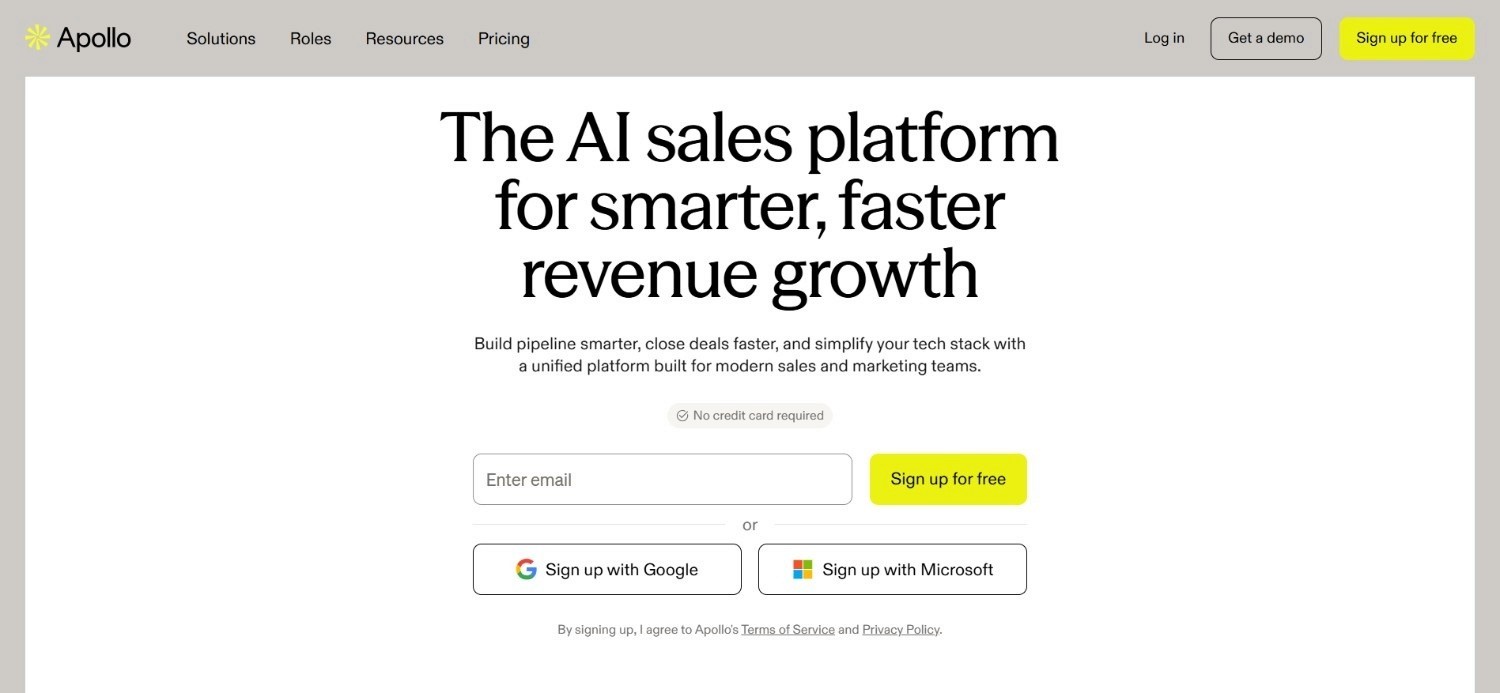
Apollo.io is one of the most recognised names among lead generation tools for small businesses, largely thanks to its enormous contact database and a genuinely usable free plan.
The platform positions itself primarily as a sales intelligence and engagement platform, giving users access to millions of verified contacts alongside built-in email sequencing and a dialer.
Small businesses often start with Apollo because it's inexpensive to try and doesn't require a long onboarding process. It covers the basics: title and company-size filters, email finding, and simple outreach sequences, all in one interface.
Ideal For
Small businesses wanting a low-cost entry point into prospecting and outreach
Sales reps who want a built-in dialer alongside email sequencing
Teams comfortable managing outreach without advanced intent signals
Top Features
Large searchable contact and company database with detailed filters
Built-in email sequencing and a native dialer
Chrome extension for finding contact details while browsing social profiles or company websites
Why They Stand Out?
Apollo.io's biggest draw is price relative to database size, giving small teams a large volume of contacts without an enterprise budget.
It's one of the more accessible options for a business testing outbound for the first time.
Pros
Free plan available, with reasonably priced paid tiers
Very large contact database compared with the price point
Combines data and basic outreach in one product
Cons
Filtering and intent signals are shallower than more specialised platforms
Data accuracy can vary depending on the contact type and region
Less suited to complex, multi-stakeholder outreach strategies
Pricing
Apollo.io offers a free plan alongside paid tiers billed annually: Basic at $49 per seat monthly, Professional at $79 per seat monthly, and Organization at $119 per seat monthly.
Add-ons such as extra credits, advanced email domains and additional integrations are priced separately.
Final Verdict
Apollo.io suits small businesses that want an affordable way to start outbound prospecting without a steep learning curve.
Teams that outgrow its filtering depth or need more advanced outreach sequencing may eventually look toward a more complete platform.
3. Snov.io
Overview
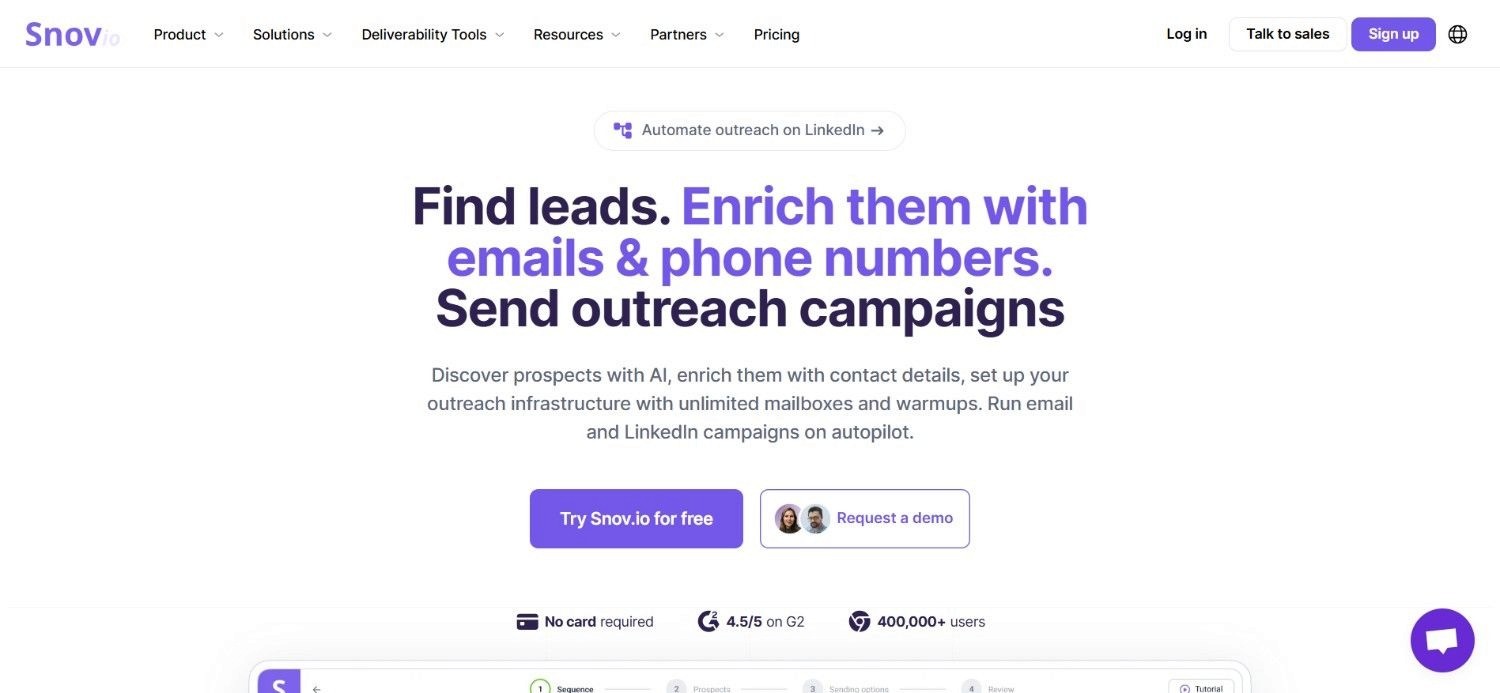
Snov.io is a small business lead generation tool built around email finding, verification and outreach, aimed at teams that want a straightforward, credit-based way to build contact lists.
Rather than a subscription model tied to seats, Snov.io sells token packages that are consumed as contacts are found and verified, which can suit businesses with unpredictable prospecting volume month to month.
The platform includes a Chrome extension for finding emails while browsing, plus drip campaign functionality for sending sequenced outreach once a list is ready.
It's a lighter-weight option compared to full-scale GTM platforms, appealing to small businesses that mainly need reliable email data and a simple way to follow up automatically.
Ideal For
Small businesses with fluctuating outreach volume who prefer paying per use
Teams primarily focused on email-based outreach rather than multichannel campaigns
Users wanting a lightweight tool without a long implementation process
Top Features
Email finder and verifier with a browser extension for quick lookups
Drip campaign builder for automated email sequences
Domain search to find all available email addresses at a target company
Why They Stand Out?
Snov.io's token-based pricing gives small businesses the flexibility to scale usage up or down.
This particularly benefits teams with seasonal prospecting needs, since they aren't locked into a fixed monthly seat cost.
Pros
Pay-as-you-go token pricing suits variable usage
Simple interface with a shallow learning curve
Useful browser extension for on-the-spot email finding
Cons
Outreach features are more basic than dedicated sales engagement platforms
No native phone data or advanced intent signals
Token packages can become costly at higher volumes
Pricing
Snov.io's contact and email enrichment tool uses a credit-based pricing model where businesses purchase token packages for lead enrichment and outreach.
For example, 10,000 tokens cost $200 as a one-time purchase with 90-day validity, with larger packages available for higher-volume needs.
Final Verdict
Snov.io is a reasonable choice for small businesses focused mainly on email prospecting with a flexible budget.
It's less suited to teams wanting a single system for both data and full multichannel outreach.
4. HubSpot
Overview
HubSpot is best known as a CRM and marketing platform, but its free tools and Marketing Hub make it a common choice for small business lead generation centred on inbound rather than outbound prospecting.
Forms, landing pages and pop-up builders capture visitor details directly into a connected CRM. This lets a small business track a lead's full journey from first website visit to closed deal in one system.
Because the CRM itself is free to start, many small businesses adopt HubSpot as their central hub even before paying for the marketing features.
It's less about finding new contacts externally and more about converting the traffic a business already has into a manageable lead pipeline.
Ideal For
Small businesses wanting lead capture tied directly to a CRM
Marketing teams building landing pages and forms without developer support
Businesses that already generate reasonable website traffic and want to convert more of it
Top Features
Drag-and-drop landing page and form builder
Free CRM with contact and deal tracking built in
Marketing automation workflows for nurturing captured leads
Why They Stand Out?
HubSpot's advantage is the tight connection between lead capture and the CRM.
This avoids the disconnect small businesses often face when their marketing tool and their sales records live in separate systems.
Pros
Free CRM and basic marketing tools to get started
Strong ecosystem of integrations and add-ons
Good fit for inbound-focused small businesses
Cons
Higher-tier plans get expensive quickly as contact volume grows
Less built for outbound prospecting compared with dedicated sales intelligence tools
Can feel like more platform than a small business actually needs at first
Pricing
HubSpot offers free tools at $0 monthly, while broader platform pricing varies by Hub and tier.
Starter plans begin at $7 monthly per seat, while Marketing Hub Professional starts at $800 monthly and Enterprise at $3,600 monthly, with higher tiers potentially carrying additional onboarding fees.
Final Verdict
HubSpot works well for small businesses prioritising inbound lead capture tied to a CRM.
Businesses whose growth depends mainly on outbound prospecting will likely need to pair it with a more prospecting-focused tool.
5. OptinMonster
Overview
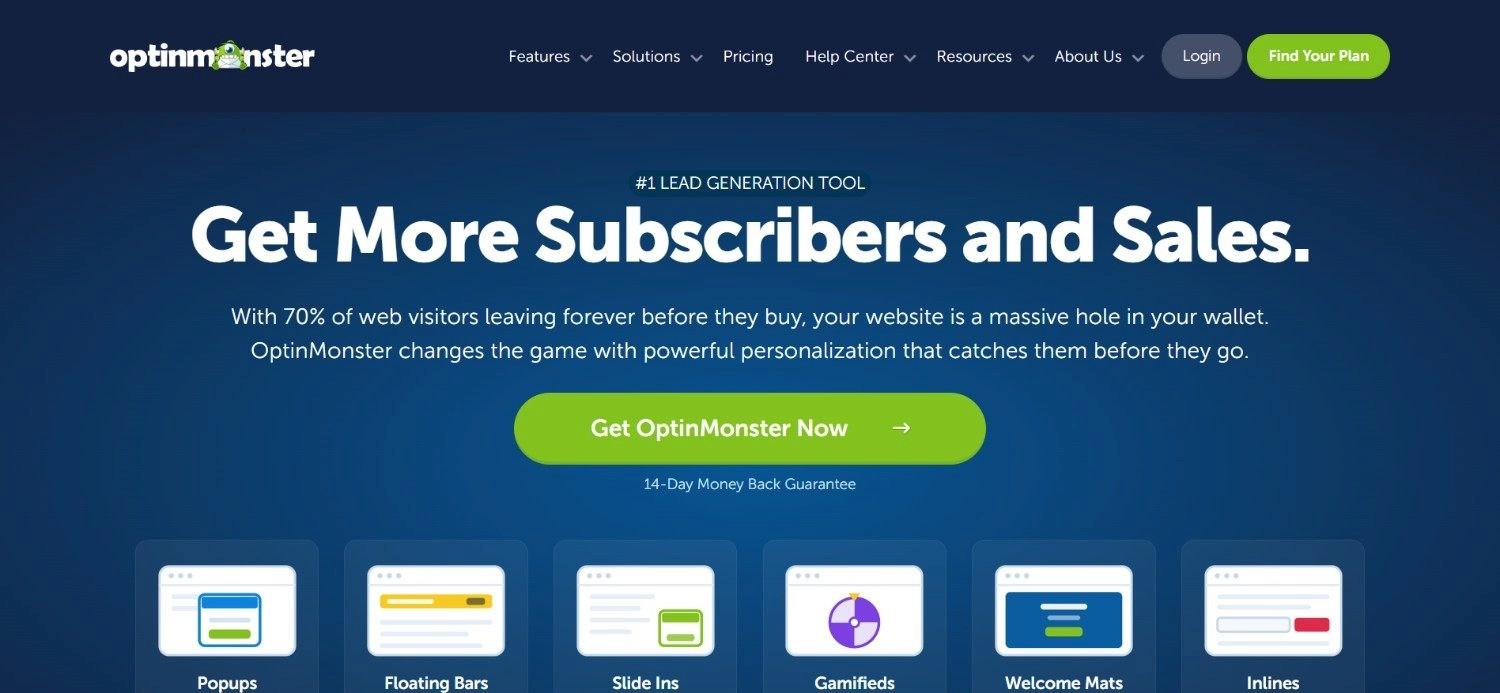
OptinMonster takes a different approach among small business lead generation tools, focusing entirely on converting visitors already on a website rather than finding new prospects externally.
It's built around exit-intent popups, scroll-triggered forms and on-site targeting rules that display specific offers to specific visitor segments.
For small businesses with steady but underused website traffic, OptinMonster can meaningfully increase the number of visitors who leave contact details before exiting the site.
The platform also integrates with most major email marketing platforms, so captured leads flow directly into an existing nurture sequence rather than sitting in a separate database.
Ideal For
Small businesses with existing website traffic they aren't converting effectively
E-commerce brands wanting to reduce cart abandonment through exit-intent offers
Marketing teams running A/B tests on different lead capture messages
Top Features
Exit-intent detection to catch visitors before they leave the site
A/B testing for optimising popup and form conversion rates
Advanced targeting rules based on visitor behaviour and referral source
Why They Stand Out?
OptinMonster's strength is the depth of its on-site targeting, letting small businesses show different offers to first-time visitors versus returning ones.
Most simpler popup tools can't replicate this level of segmentation.
Pros
Purpose-built for converting existing website traffic
Strong A/B testing and targeting capabilities
Straightforward integrations with major email platforms
Cons
Does nothing for finding new prospects outside your existing traffic
Higher tiers needed to unlock advanced targeting and testing features
Requires a reasonable volume of traffic to see meaningful results
Pricing
OptinMonster's introductory pricing starts at $7 monthly for Basic, $19 for Plus, $29 for Pro, and $49 for Growth, all billed annually at a discount for the first 12 months.
Higher tiers add A/B testing, exit-intent targeting, eCommerce integrations and increased campaign impressions.
Final Verdict
OptinMonster suits small businesses that already have decent website traffic and want to capture more of it as leads.
It isn't a fit for businesses that need to actively find and reach out to new prospects.
6. Lusha
Overview
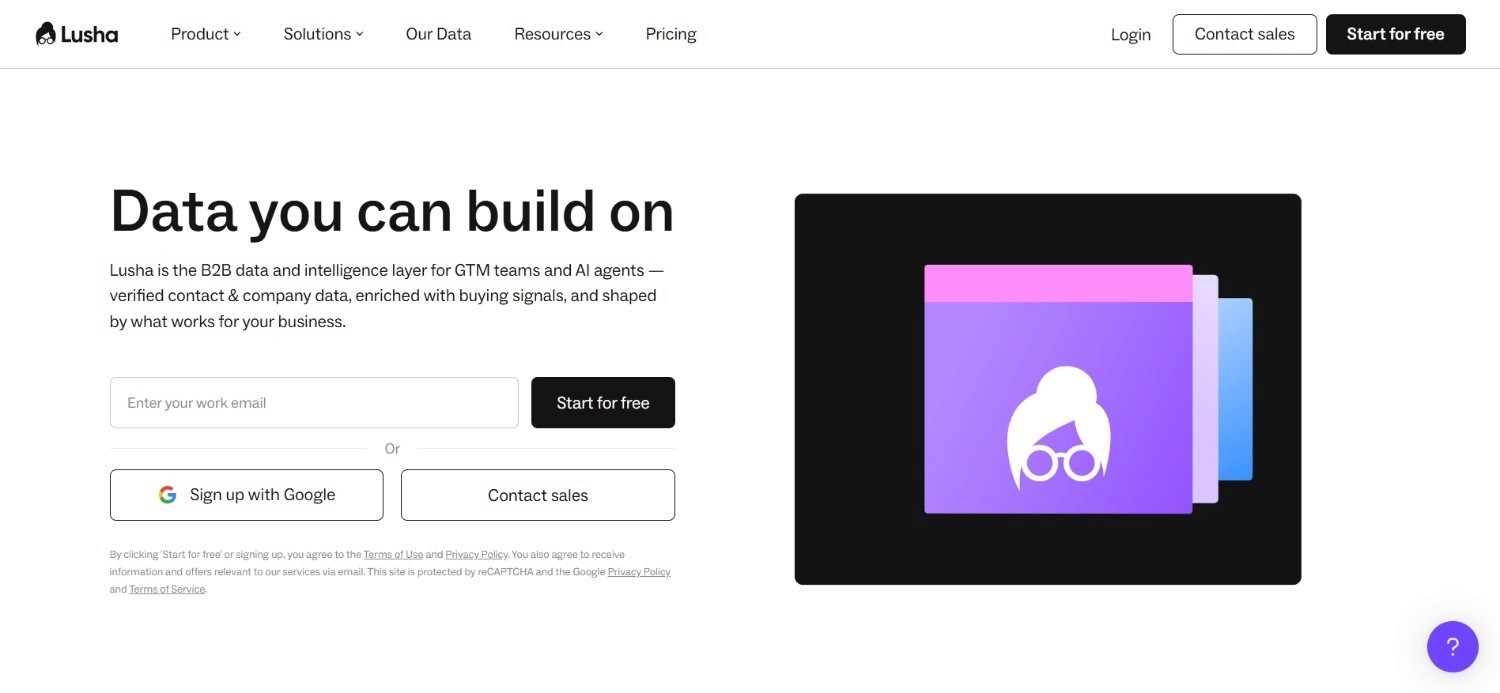
Lusha is a contact data platform widely used for quick lookups of direct phone numbers and email addresses, making it a familiar name among lead generation tools for small businesses that prioritise speed over depth.
Its browser extension lets sales reps pull verified contact details straight from a company website or profile page without leaving their workflow.
Lusha also includes buyer intent data, giving small teams a signal for which companies are actively researching solutions like theirs.
Compared to complete outreach platforms, this platform is narrower in scope, functioning primarily as a data source that plugs into whatever outreach tool a business already uses.
Ideal For
Sales reps needing fast contact lookups without switching tools
Small teams that already have an outreach tool and just need better data
Businesses wanting buyer intent signals without a full sales intelligence suite
Top Features
Browser extension for instant contact lookups
Buyer intent data highlighting companies actively researching relevant solutions
Bulk enrichment for existing contact lists
Why They Stand Out?
Lusha's simplicity is its strength.
It does one thing, contact data, reliably and quickly, without asking a small business to change its entire prospecting workflow.
Pros
Fast, straightforward contact lookups
Reasonably priced entry-level plans
Useful intent data layer for prioritising outreach
Cons
No built-in outreach or sequencing functionality
Data coverage can be inconsistent outside major markets
Requires pairing with a separate outreach tool for a full workflow
Pricing
Lusha offers a free plan, with paid plans starting at $32.45 monthly for Starter, $45.45 monthly for Pro, and $259.95 monthly for Premium, while the Scale plan uses custom pricing.
Plans vary by credits, seats, API access and buying intent data.
Final Verdict
Lusha is a solid pick for small businesses that already have an outreach process and mainly need more reliable contact data feeding into it.
Teams wanting prospecting and outreach in one place should look elsewhere.
7. Instantly AI
Overview
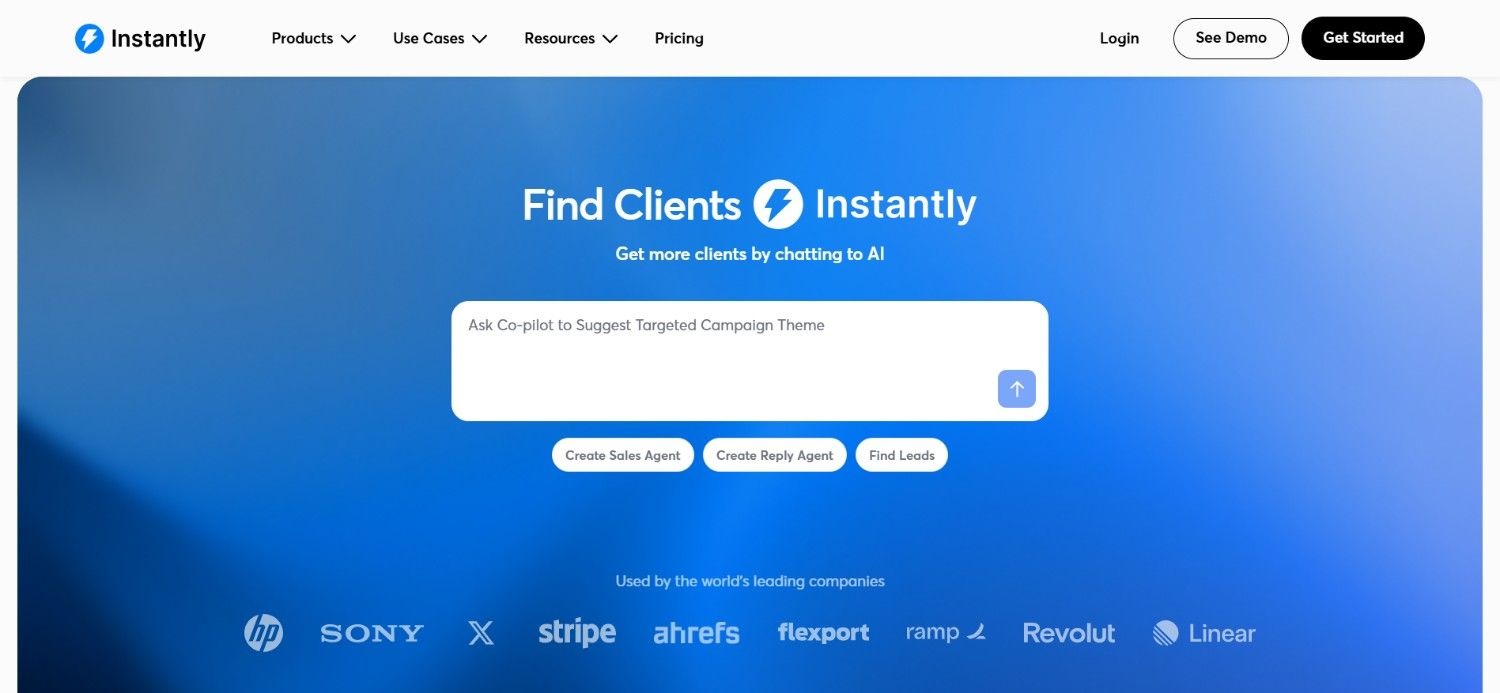
Instantly AI has built a strong reputation among small business lead generation tools focused specifically on high-volume cold email. Its core appeal is unlimited sending accounts and built-in email warm-up, letting small businesses send larger volumes of outbound email without damaging domain reputation.
The platform also includes a lead database, campaign analytics and deliverability monitoring, positioning it as a fairly complete cold email system rather than just a sending tool.
For small businesses whose growth strategy leans heavily on volume-based email outreach, Instantly AI offers infrastructure that would otherwise require managing several email domains manually.
Ideal For
Small businesses running high-volume cold email campaigns
Teams needing built-in email warm-up to protect domain reputation
Businesses wanting campaign analytics without a separate reporting tool
Top Features
Unlimited sending accounts across multiple domains
Built-in email warm-up and deliverability monitoring
Lead database with basic filtering for building outreach lists
Why They Stand Out?
Instantly AI's focus on deliverability infrastructure sets it apart from tools that only handle sending.
This addresses one of the biggest risks in high-volume outbound: emails landing in spam.
Pros
Strong deliverability and warm-up tools
Unlimited sending accounts on most plans
Useful campaign-level analytics
Cons
Less depth on data enrichment compared with dedicated prospecting platforms
Best suited to email-only strategies rather than true multichannel outreach
Higher tiers needed for larger contact volumes
Pricing
Instantly AI's core Email Outreach plan is priced at $47 monthly for Growth, $97 monthly for Hyper Growth, or $358 monthly for Light Speed, with volume-based sending limits and fixed contact caps.
An Enterprise tier is available with custom, enterprise-grade pricing.
Final Verdict
Instantly AI is a strong choice for small businesses committed to email as their primary outbound channel.
Businesses wanting broader multichannel outreach across email and other channels will need to look at more rounded platforms.
8. Cognism
Overview
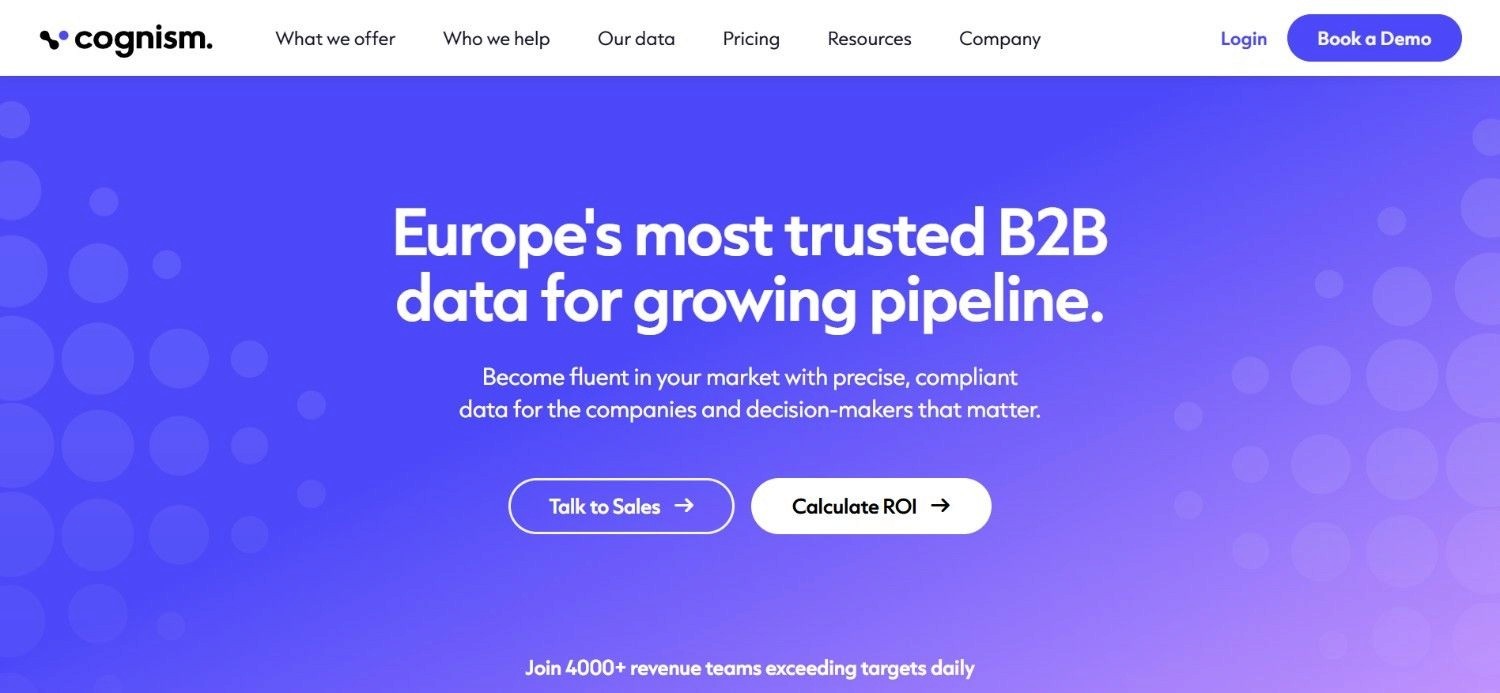
Cognism positions itself as a premium data provider among lead generation tools for small businesses, with a particular emphasis on phone-verified contact data and compliance.
Its mobile numbers are verified through a multi-step process, which matters for small businesses running phone-based outbound in regulated markets.
Cognism also includes intent data and integrates with major sales engagement platforms, though it functions primarily as a data layer rather than a full outreach system.
Ideal For
Small businesses running compliant, phone-heavy outbound campaigns
Teams in regulated industries needing verified data with strong compliance credentials
Businesses with the budget for premium data quality over volume
Top Features
Multi-step verified mobile phone data
Buyer intent signals layered on top of firmographic data
Integrations with major CRM and sales engagement tools
Why They Stand Out?
Cognism's phone data verification process is more rigorous than most competitors.
This makes it a preferred choice for businesses where call-based outreach compliance is a genuine concern.
Pros
High accuracy on verified mobile numbers
Strong compliance credentials for regulated markets
Useful intent data layered into the platform
Cons
Considerably more expensive than most tools on this list
Requires an annual contract rather than flexible monthly billing
Overkill for very early-stage small businesses with limited budgets
Pricing
Cognism's Sales Prospecting plans start at $14,000 yearly for Standard and $18,750 yearly for Pro, with five seats included.
Pricing is subscription-based, with additional Cognism Credits available separately for contact reveals, enrichment and exports.
Final Verdict
Cognism suits small businesses in regulated industries with the budget for premium, compliance-focused data.
For most early-stage small businesses, the price point puts it out of reach compared with more accessible alternatives.
9. Pipedrive
Overview
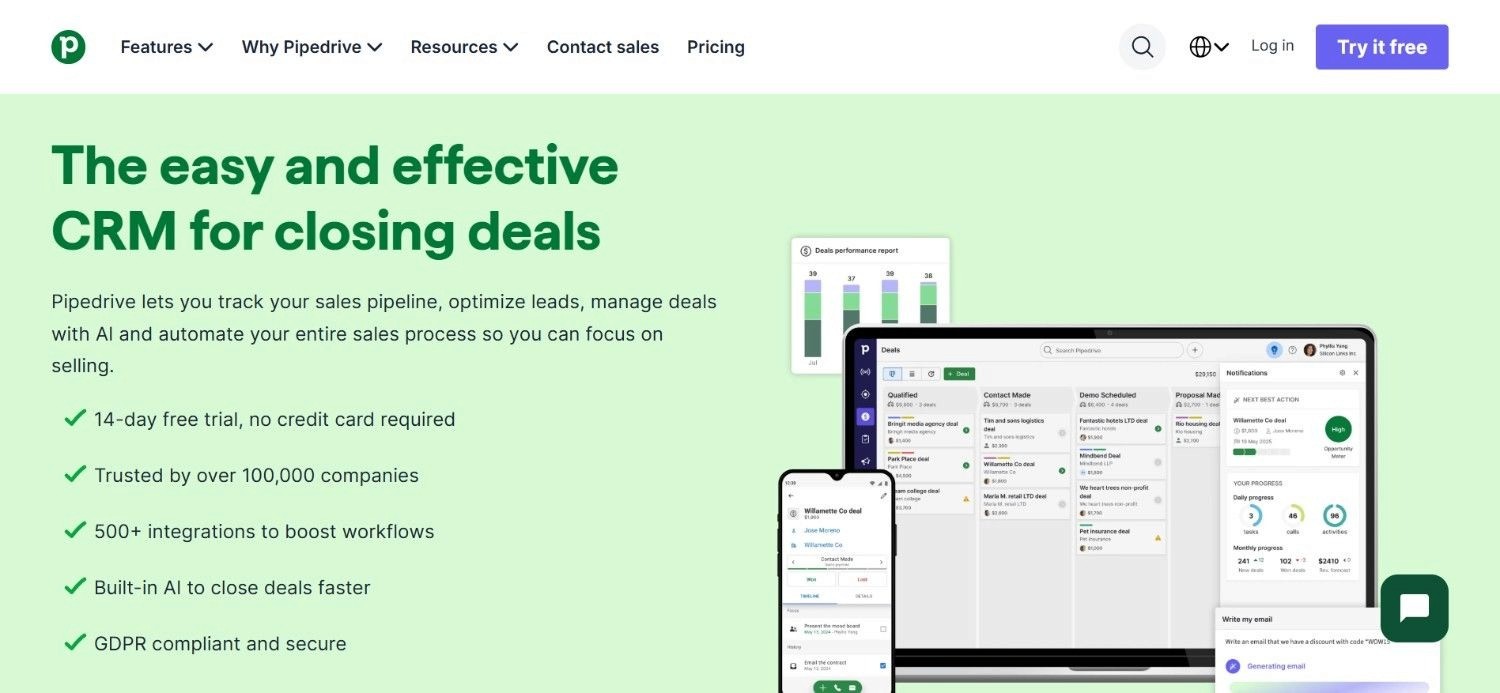
Pipedrive is a visual sales CRM that has expanded into lead generation territory, making it a practical option for small businesses wanting a pipeline view alongside basic prospecting tools.
Its lead capture forms and chatbot let a small business collect leads directly from its website, feeding straight into the same pipeline used for tracking deals.
Pipedrive also includes an AI sales assistant that surfaces suggested next actions, which can help small teams stay organised without a dedicated sales operations function.
Compared with dedicated prospecting platforms, Pipedrive is lighter on external data, but its pipeline visualisation is genuinely useful for small teams managing a growing number of leads.
Ideal For
Small sales teams wanting a visual pipeline alongside lead capture
Businesses that value simplicity over deep data enrichment
Teams wanting an AI assistant to prioritise daily follow-ups
Top Features
Visual, drag-and-drop sales pipeline
Web forms and chatbot for capturing leads directly from a website
AI sales assistant suggesting prioritised actions each day
Why They Stand Out?
Pipedrive's pipeline interface is one of the more intuitive on the market.
Small teams often value this more than raw data volume, especially when they're managing a manageable number of active deals.
Pros
Simple, visual pipeline that's easy to adopt
Affordable entry-level pricing
14-day free trial with no card required
Cons
Limited external contact database compared with dedicated prospecting tools
Fewer advanced enrichment or intent-signal features
Better suited to managing leads than actively finding new ones
Pricing
Pipedrive's monthly pricing is $19 per user for Lite, $34 for Growth, $64 for Premium and $89 for Ultimate. You can also opt for the annual subscription, if you’re looking for discounted rates for using the tool and its features.
Each plan includes AI capabilities and a 14-day free trial with no credit card required, with additional savings available on annual billing.
Final Verdict
Pipedrive is a good fit for small businesses that want an easy-to-use pipeline with basic lead capture built in.
Teams needing serious external prospecting depth will likely need a complementary tool.
10. Reply.io
Overview
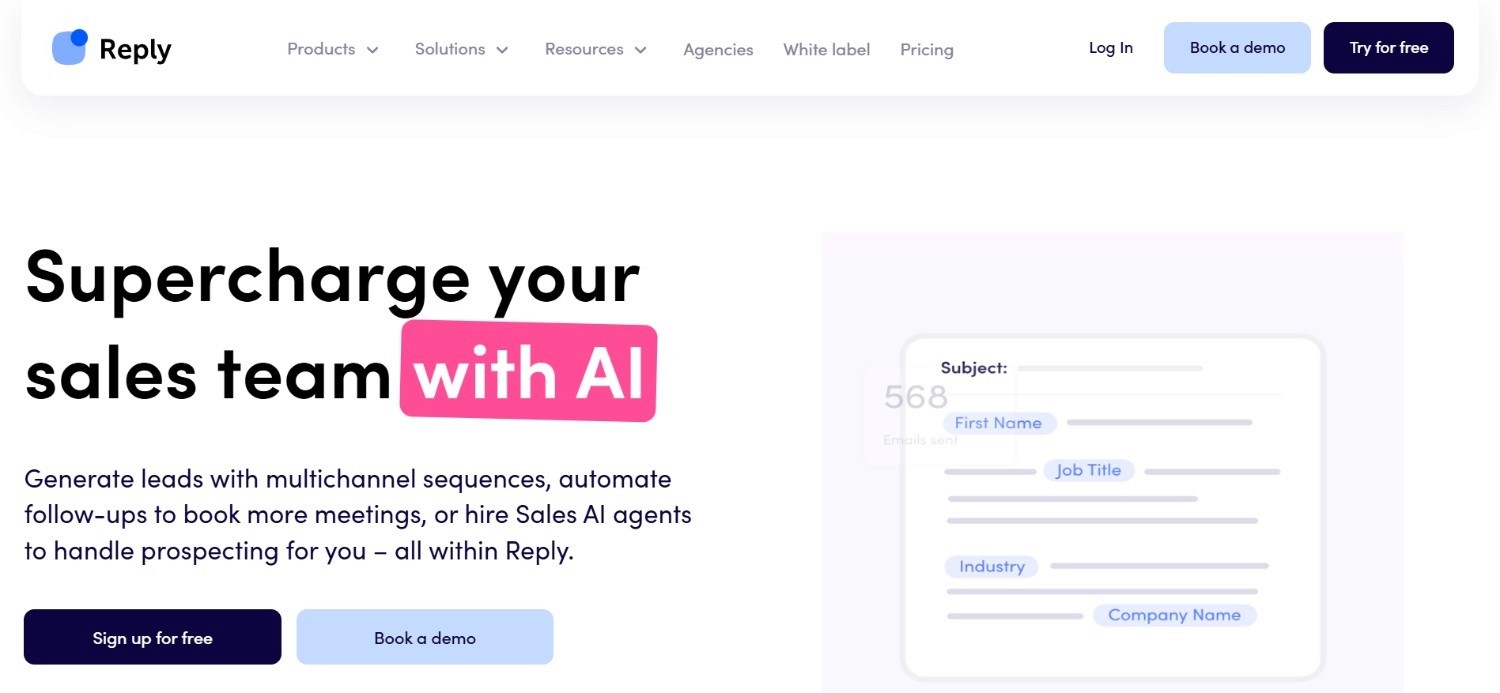
Reply.io is a sales engagement platform built around multichannel outreach, combining email, calls and other touchpoints into automated sequences.
Its standout feature is an AI SDR agent, marketed as "Jason," designed to handle parts of the outreach and follow-up process autonomously.
For small businesses without the headcount to manage sequencing manually, this can meaningfully reduce the daily workload of a lean sales team.
Reply.io also includes deliverability tools to protect sender reputation across high-volume sending. The platform leans more toward outreach automation than data sourcing, so many users pair it with a separate contact database tool to build the lists it then works through.
Ideal For
Small teams wanting AI-assisted sequencing across multiple channels
Businesses looking to automate follow-up without hiring additional reps
Teams already comfortable sourcing their own contact lists elsewhere
Top Features
AI SDR agent that automates parts of outreach and follow-up
Multichannel sequence builder spanning email and calls
Deliverability tools protecting sender reputation at scale
Why They Stand Out?
Reply.io's AI SDR agent is a genuine differentiator.
It gives small businesses a way to extend their outreach capacity without proportional headcount growth.
Pros
Strong automation through the AI SDR agent
Solid multichannel sequencing options
Useful deliverability monitoring tools
Cons
Limited native data sourcing compared with dedicated prospecting platforms
Per-user pricing can add up for larger small teams
AI SDR functionality comes at a noticeably higher price tier
Pricing
Reply.io's monthly pricing starts at $179 monthly for Email Volume with unlimited users, $99 per user monthly for Multichannel, and $500 monthly for the Jason AI SDR plan.
Annual billing can save customers up to 17%, making it more economical for longer-term use.
Final Verdict
Reply.io suits small businesses that already have a way to source contacts and mainly need stronger automated outreach and follow-up.
Businesses wanting prospecting and outreach combined will need to look at a more complete platform.
How to Choose the Best Lead Generation Tools for Small Businesses (What To Consider)
Picking the right option from the many lead generation tools for small businesses comes down to a handful of practical factors, rather than which platform has the longest feature list.
Here's what's worth weighing before you commit to one:
1. Data Accuracy and Coverage
Every other feature depends on contact data being correct.
Check how a provider sources and verifies emails and phone numbers, since outdated data quietly wastes time on every campaign that follows.
2. How Many Tools You're Actually Managing
Some lead generation tools for small businesses only handle data, others only handle outreach.
Decide whether your team can manage several connected tools or would rather run everything through one platform.
3. Ease of Use for a Small Team
A small business rarely has a dedicated operations person to run a complex platform.
Favour tools your team can operate directly, without needing outside technical support to configure basic campaigns.
4. Pricing Structure and Scalability
Seat-based, credit-based and token-based pricing all behave differently as your contact volume grows.
Model out costs at double your current volume before committing, so growth doesn't come with an unpleasant pricing surprise.
5. Outreach Channels Supported
Decide whether email alone is enough or whether your strategy needs broader multichannel outreach across additional channels.
This matters more for B2B businesses selling to buyers who expect more than a single cold email.
6. Integration with Your Existing CRM
Leads generated outside your CRM are only useful if they land inside it cleanly.
Confirm native integrations exist for whichever CRM your business already relies on.
7. Support and Onboarding
Small teams benefit disproportionately from good onboarding, since there's rarely a spare person available to troubleshoot a confusing setup.
Structured onboarding sessions can be the difference between a tool being adopted or abandoned within a month.
Everything You Need to Know About Small Business Lead Generation Tools
Tool | Pros | Cons | Ease of Use | Integrations | Support | Affordability |
Enginy | One platform for prospecting, enrichment and outreach; strong intent signals; structured onboarding | No public pricing; credit-based model takes adjusting to | ⭐⭐⭐⭐ | ⭐⭐⭐⭐⭐ | ⭐⭐⭐⭐⭐ | ⭐⭐⭐⭐ |
Apollo.io | Large database; affordable; free plan | Shallow filtering; variable data accuracy | ⭐⭐⭐⭐ | ⭐⭐⭐⭐ | ⭐⭐⭐ | ⭐⭐⭐⭐⭐ |
Snov.io | Flexible token pricing; simple interface | Basic outreach features; no phone data | ⭐⭐⭐⭐ | ⭐⭐⭐ | ⭐⭐⭐ | ⭐⭐⭐⭐ |
HubSpot | Free CRM; strong integrations | Expensive at scale; weaker for outbound | ⭐⭐⭐⭐ | ⭐⭐⭐⭐⭐ | ⭐⭐⭐⭐ | ⭐⭐⭐ |
OptinMonster | Strong on-site targeting; good A/B testing | No external prospecting; needs traffic | ⭐⭐⭐⭐ | ⭐⭐⭐⭐ | ⭐⭐⭐ | ⭐⭐⭐⭐ |
Lusha | Fast lookups; useful intent data | No outreach features; inconsistent coverage | ⭐⭐⭐⭐⭐ | ⭐⭐⭐ | ⭐⭐⭐ | ⭐⭐⭐⭐ |
Instantly AI | Strong deliverability; unlimited sending | Limited enrichment; email-only focus | ⭐⭐⭐⭐ | ⭐⭐⭐ | ⭐⭐⭐ | ⭐⭐⭐⭐ |
Cognism | Verified phone data; strong compliance | Expensive; annual contract required | ⭐⭐⭐ | ⭐⭐⭐⭐ | ⭐⭐⭐⭐ | ⭐⭐ |
Pipedrive | Easy pipeline; affordable; free trial | Limited external data; basic prospecting | ⭐⭐⭐⭐⭐ | ⭐⭐⭐⭐ | ⭐⭐⭐⭐ | ⭐⭐⭐⭐⭐ |
Reply.io | Strong AI SDR automation; multichannel sequencing | Limited data sourcing; pricing adds up | ⭐⭐⭐⭐ | ⭐⭐⭐ | ⭐⭐⭐ | ⭐⭐⭐ |
Grow Your Small Business Pipeline with Enginy
Running a small business usually means wearing several hats before lunch, and prospecting shouldn't need three separate logins to get done. That's the gap Enginy is built to close.
We bring prospect discovery, data enrichment and multichannel outreach together in one connected workflow, so a lean team spends its time on conversations instead of admin.
Rather than juggling several small business lead generation tools that don't talk to each other, Enginy hands you a single system, from finding a prospect through to sending that first message.
One of our customers, Talent Match – now gets 25-30% of all new leads directly from our platform, with a reported 4 to 5x ROI; the kind of result a lean team without a dedicated operations hire can point to and achieve.
If your current stack feels more like a burden than an advantage, book a demo with Enginy and see how a straightforward, credit-based quote could fit your setup.
FAQs About Lead Generation Tools for Small Businesses
What is the best lead generation tool for small businesses in 2026?
The best lead generation tool for small businesses in 2026 is Enginy, since it combines prospecting, data enrichment and multichannel outreach into one connected platform. Most standalone tools cover either data or outreach, not both with real depth. Enginy is also built to be run directly by sales reps, without needing a dedicated GTM engineer to configure it.
What should I consider when choosing the right lead generation tool for me?
Choosing the right lead generation tool for small businesses starts with data accuracy, since inaccurate contacts waste every other feature downstream. Next, weigh ease of use against your team's technical capacity. Finally, check how pricing scales as your contact volume grows, since some models get expensive quickly at higher usage.
How does Enginy differ from similar alternatives?
Enginy differs from data-only tools like Apollo or Lusha by combining prospecting, enrichment and outreach into one connected platform, rather than a single point solution. Most competitors specialise in finding data or sending outreach, not both with real depth. Enginy is also designed to be run directly by sales reps, without a dedicated GTM engineer.
How do I get started with Enginy?
Getting started with Enginy begins with a qualification call, where the team learns about your target audience and process before quoting custom, credit-based pricing. From there, new customers follow a structured three-guide onboarding process covering configuration, list building and campaign setup, with five sessions included as standard.
How easy is it to switch to Enginy?
Switching to Enginy is manageable, since it integrates natively with major CRMs including HubSpot, Salesforce, Pipedrive, Zoho and Microsoft Dynamics 365. Existing contact lists can be imported directly rather than rebuilt from scratch. Most switching effort goes into configuring the AI Playbook with company and audience information upfront.
Are free lead generation tools worth using for a small business?
Free lead generation tools can be worth using for a small business testing outbound for the first time, particularly free plans from Apollo.io, Lusha or HubSpot's core CRM. They typically come with strict limits on volume or features, which becomes a bottleneck once outreach grows. Treat a free tier as a starting point, not a long-term solution.
Can one tool handle both data enrichment and outreach for a small business?
Yes, though most tools specialise in one or the other rather than doing both well. Platforms built as an end-to-end GTM platform, such as Enginy, are designed to handle data enrichment and outreach together, reducing the need to shuttle contact lists between separate systems. This suits small businesses with limited time to manage integrations.