Best Data Enrichment Tools in 2026 (Top B2B Platforms Compared)

Andrea López
Partager
Key Takeaways (TL;DR)
The Best Overall Data Enrichment Tool: Enginy stands out because it pairs person data enrichment with list building and outreach in one workspace, instead of leaving enrichment as a standalone step. Sales teams get verified contact data without stitching together several separate tools.
Why Do You Need It: Outdated titles, dead emails and missing phone numbers quietly kill outreach before a rep ever sends a message. Data enrichment platforms fix this by keeping contact records accurate and complete as people change roles and companies.
Who It's For: This guide suits RevOps and GTM teams managing data quality at scale, SDR leaders chasing reply rates and founders who need clean pipelines without a dedicated data team. It also fits agencies enriching lists on behalf of clients.
How to Choose the Right One: Focus on match rate, mobile phone coverage and how enrichment fits into your existing outreach workflow. A tool that enriches data but leaves you exporting to five other places adds friction, not value.
Expected Price: Enginy does not publish pricing publicly; costs are credit-based and quoted after a short qualification call. Across the market, data enrichment companies range from around $15 a month for entry-level credit packs up to $18,750 a year for enterprise-grade contact databases.
Top Data Enrichment Tools in 2026 at a Glance
Tool | Best For | Key Features | Pricing |
Enginy | Teams wanting enrichment built into list building and outreach | Waterfall enrichment across 30+ providers, verified emails and phones, AI-powered lists | Custom, credit-based |
Clay | RevOps and GTM engineers wanting full data control | Configurable data waterfalls, AI enrichment workflows, wide integrations | From $167/month |
Apollo.io | Teams wanting an affordable all-in-one starting point | Large contact database, built-in sequencing, browser extension | From $49/seat/month |
Cognism | Enterprise teams needing verified mobile numbers at scale | Phone-verified mobile data, intent data, compliance-first sourcing | From $14,000/year |
Lusha | Small teams wanting quick contact lookups | Chrome extension, buying intent signals, API access | From $32.45/month |
Hunter.io | Teams focused on email discovery and verification | Email finder, bulk verification, domain search | From $49/month |
BetterContact | Teams wanting a lightweight enrichment waterfall | Multi-provider waterfall, CSV enrichment, credit rollover | From $15/month |
Prospeo | Teams wanting affordable per-seat enrichment | Email and phone finder, CRM integrations, credit rollover | From $37/user/month |
Zoominfo | Large enterprises needing the biggest contact database | Deep firmographic data, intent signals, org charts | From around $15,000/year |
FullEnrich | Teams wanting pay-per-result enrichment | Multi-source waterfall, pay-only-for-matches credits, bulk enrichment | From $29/month |
What Is Person Data Enrichment?
Person data enrichment is the process of taking a partial contact record, a name, a job title or a company domain, and filling in the missing details that actually make outreach possible: a verified email address, a working mobile number and up-to-date job information.
Most CRM records start incomplete or go stale within months. People change jobs, phone numbers get reassigned and email addresses bounce. Contact data enrichment exists to close that gap continuously, rather than leaving sales teams to manually search for the same information one prospect at a time.
The category has grown because manual research simply cannot keep pace with modern outbound volume.
B2B data enrichment tools now pull from dozens of sources at once, cross-checking each data point so a sales rep spends their time on the conversation; not the lookup.
Why Do You Need Data Enrichment Tools?
Sellers lose hours every week chasing contact details that proper person data enrichment should already have filled in. That waste compounds fast once you consider how quickly B2B contact data actually decays.
Job changes, company moves and reassigned phone numbers mean a contact list built six months ago is already partly wrong.
Skipping enrichment shows up as three specific costs:
Wasted outreach: messages sent to the wrong title or a dead inbox never get a reply.
Missed decision-makers: incomplete records mean reps miss the person who actually holds budget authority.
Unreliable reporting: a CRM full of stale data makes pipeline forecasts far less trustworthy than they look.
Data enrichment platforms reverse all three by keeping records current automatically.
Teams that invest in person data enrichment upfront typically see reply rates climb, since messages actually reach a real inbox and a real decision-maker.
Who Needs a Person Data Enrichment Platform?
Different teams reach for a lead enrichment platform for different reasons, though the underlying need behind person data enrichment stays consistent across all of them.
Here's how that need actually plays out across five common team types:
1. Heads of Sales and RevOps Teams
Heads of Sales and RevOps own pipeline quality and need contact data they can trust for forecasting.
A reliable enrichment tool removes the guesswork around whether a stalled deal is a targeting problem or a data problem.
2. GTM Engineers and Sales Operations
GTM Engineers own the technical backbone of outreach, including which enrichment sources feed the CRM.
They typically want granular control over data waterfalls, so they can prioritise the most accurate provider for each data type.
3. Founders and Early-Stage Teams
Founders running early sales motions rarely have a dedicated data team to manage enrichment manually.
They need a data enrichment platform that works without heavy configuration, so outreach can start within days, not weeks.
4. Recruitment and Agency Teams
Recruitment firms and agencies often enrich lists on behalf of multiple clients at once, each with a different ideal customer profile.
Speed and volume matter here, since a slow enrichment process directly delays client delivery timelines.
5. Enterprise Revenue Operations
Larger organisations need enrichment that scales across regions and integrates cleanly with an existing CRM and data warehouse.
Compliance and data provenance also matter more at this scale, since regulated industries need to know exactly where a contact record came from.
Best Data Enrichment Tools: In-Depth Review & Comparison
1. Enginy

Overview
Enginy is an AI-native, end-to-end B2B sales automation platform built around person data enrichment, list building and multichannel outreach in a single workspace. Our platform aggregates data from over 30 contact enrichment providers in real time, applying waterfall logic to maximise match rates on verified emails and mobile numbers.
Built-in data cleaning runs both before and after enrichment, so only valid, actionable contacts ever reach the CRM. That combination addresses a problem most data enrichment companies leave unsolved: enriched data that still needs a separate outreach tool to actually put in front of a prospect.
Enginy suits SaaS companies, recruitment agencies and insurance teams running structured SDR and AE functions who want enrichment feeding directly into outreach, not sitting in a spreadsheet waiting to be exported.
Ideal For
Sales teams that want enrichment, list building and outreach in one workflow
RevOps and GTM Engineers managing several disconnected data sources today
Founders and early-stage teams who need clean contact data without a dedicated analyst
Top Features
Waterfall data enrichment across 30+ providers, maximising verified email and phone coverage
Pre- and post-enrichment data cleaning, so invalid contacts never reach the CRM
Contact data enrichment built directly into list building, so enriched contacts move straight into outreach
Why We Stand Out?
Most data enrichment companies stop at the data. Enginy replaces that fragmented handoff with an end-to-end GTM platform that takes a contact from raw research through enrichment to a live sequence.
We also apply layered intent signals, like recent hires and technology stack changes, on top of enrichment, so reps see who to contact and why they matter right now.
Pros
Combines enrichment, list building and outreach in one platform
Waterfall logic across 30+ sources improves match rates on hard-to-find mobiles
Does not require a dedicated data analyst to operate day to day
Cons
Pricing is not published upfront, so a qualification call is required for a quote
Teams wanting a pure data export tool may find the full platform more than needed
Newer users may need a short ramp-up to use every enrichment source effectively
Pricing
Enginy does not publish pricing publicly. Costs are credit-based and custom-quoted after a short qualification call that uncovers a team's specific needs, avoiding unfavourable comparisons with cheaper, data-only tools.
Credits are consumed by actions such as data extraction, enrichment, verification and AI-generated fields, with pricing scaling to match team size and usage.
Final Verdict
Enginy stands out for teams that want person data enrichment to feed directly into outreach, rather than sitting as a separate step someone has to manage manually.
2. Clay
Overview
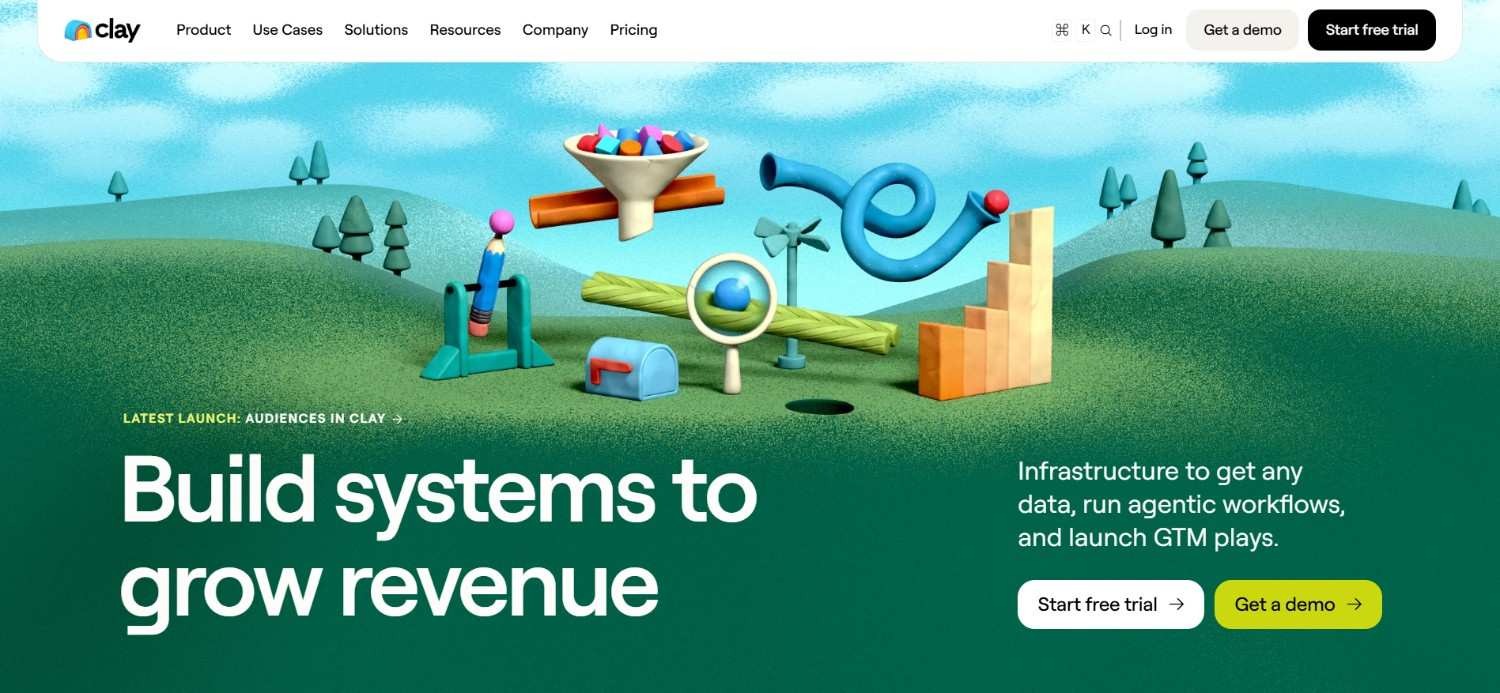
Clay is a data enrichment platform built around configurable data waterfalls and highly customisable enrichment workflows, popular among technical RevOps and GTM engineering teams. Its defining feature lets users chain together dozens of providers in a specific order, so a missed match on one source automatically triggers a lookup on the next.
The platform also supports custom workflows using AI models and third-party APIs - giving technical teams flexibility to build enrichment logic specific to their own data model.
That flexibility asks a lot of the person configuring it, which suits teams with real GTM engineering capacity far better than a sales rep working solo.
Ideal For
RevOps and GTM engineering teams who want full control over data waterfalls
Technical teams building highly customised, API-driven enrichment workflows
Companies with the internal resource to configure and maintain complex enrichment chains
Top Features
Configurable data waterfalls chaining dozens of enrichment providers in sequence
Custom workflow builder supporting AI models and third-party API integrations
Table-based interface for managing large-scale enrichment projects at volume
Why They Stand Out?
Clay is one of the most flexible B2B data enrichment tools available for teams that want to build enrichment logic to their own specification.
It appeals strongly to technical operators precisely because it does not force a fixed process.
Pros
Best-in-class flexibility for data waterfalls and enrichment chains
Strong fit for teams with existing GTM engineering capability
Wide range of third-party integrations and API support
Cons
Requires a GTM engineering skill set to configure and maintain effectively
Not designed for direct use by SDRs without technical support
Steeper learning curve than most out-of-the-box enrichment tools
Pricing
Clay offers a free plan, with paid plans starting at $167 a month for the Launch tier and $446 a month for the Growth tier, while Enterprise pricing is custom.
Plans scale based on annual actions and data credits, with higher tiers adding CRM sync, automation, integrations and dedicated support.
Final Verdict
Clay is recommended for technical teams that already have GTM engineering resource and want maximum control over their enrichment logic.
It is not the right choice for a small team wanting a ready-to-use tool.
3. Apollo.io
Overview
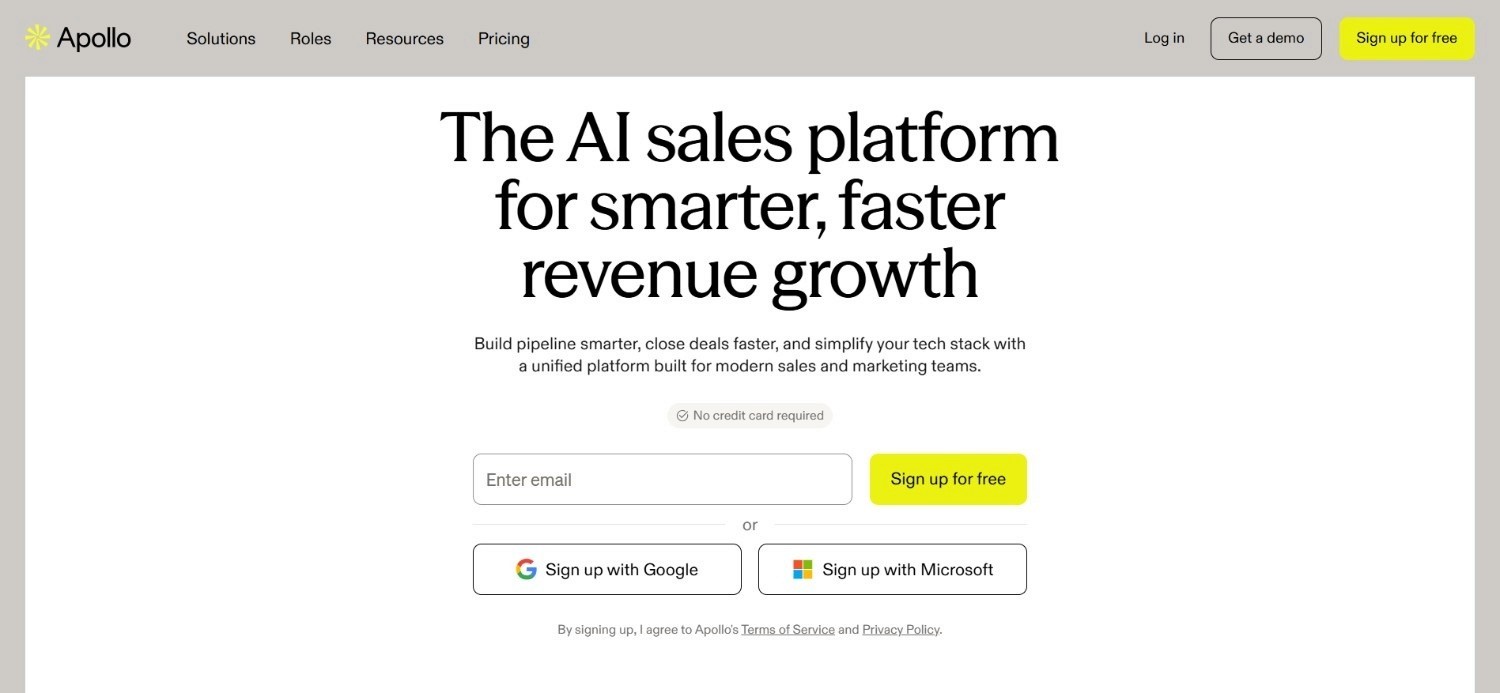
Apollo.io is a widely used data enrichment platform combining a large contact database with basic email sequencing and dialling features. It is one of the most recognised names in the category, largely due to its low entry price and generous free tier.
Apollo.io covers list building and enrichment in one interface: a functional, if fairly shallow, starting point for early-stage teams testing outbound for the first time.
The platform works best as a data source and lightweight sequencing tool rather than a software built for advanced, multi-source enrichment strategies with deep waterfall logic behind them.
Ideal For
Early-stage teams wanting an affordable entry point into data enrichment tools
Reps needing a large, searchable contact database for list building
Teams running simple outreach who need basic enrichment alongside it
Top Features
Large B2B contact database with firmographic and job-title filtering
Built-in email sequencing and dialler within the same interface
Chrome extension for pulling contact data directly from the web
Why They Stand Out?
Apollo.io stands out for accessibility, offering a genuinely usable free tier and low-cost paid plans that make it one of the more approachable best data enrichment tools for smaller teams.
Pros
Low cost of entry with a functional free plan
Large, searchable contact database
Simple to set up without technical support
Cons
Filtering and enrichment depth is relatively shallow compared with waterfall-based platforms
Lacks the layered intent signals found in more complete data enrichment platforms
Data quality can vary, requiring manual verification for higher-stakes outreach
Pricing
Apollo.io offers a free plan plus paid tiers billed annually. Basic costs $49 a seat per month, Professional costs $79 and is the most popular tier, and Organisation costs $119.
Add-ons like extra credits and advanced email domains are priced separately.
Final Verdict
Apollo.io is a sensible starting point for teams testing outbound on a tight budget.
Teams that outgrow its filtering depth tend to look for a more complete enrichment platform next.
4. Cognism
Overview
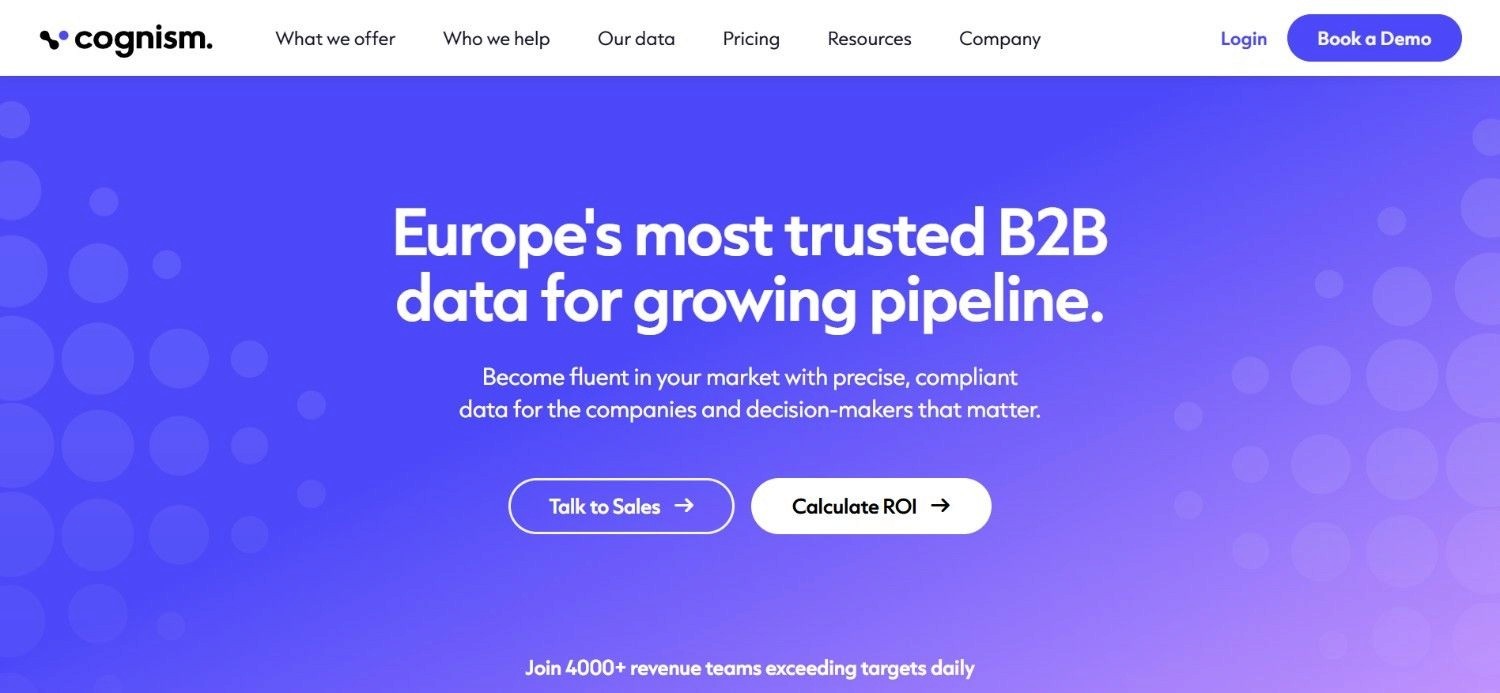
Cognism is a data enrichment company built around phone-verified mobile numbers and compliance-first data sourcing, positioned for enterprise teams that need verified reach at scale. Its core strength is mobile coverage: numbers are verified rather than simply scraped, which matters heavily for outbound teams relying on cold calling.
The platform also layers in intent data, surfacing which accounts are actively researching a relevant category before a rep ever makes contact.
That depth comes with an enterprise price tag and a subscription structure built around seats rather than pay-as-you-go credits, which puts it out of reach for smaller teams still finding their footing.
Ideal For
Enterprise sales organisations that rely heavily on cold calling
Teams needing compliance-first data sourcing for regulated markets
RevOps leaders who want intent data layered on top of contact enrichment
Top Features
Phone-verified mobile numbers, reducing wasted dials on dead lines
Compliance-first sourcing built for regulated industries and regions
Intent data layered on top of standard contact and firmographic records
Why They Stand Out?
Cognism stands out for verified mobile coverage specifically, making it one of the stronger data enrichment companies for teams whose outbound relies heavily on the phone rather than email alone.
Pros
Strong verified mobile number coverage
Compliance-first approach suits regulated industries
Intent data adds useful context beyond basic contact details
Cons
Enterprise pricing puts it out of reach for smaller teams
Seat-based subscription model, with credits for enrichment sold separately
Onboarding and setup typically require dedicated sales operations support
Pricing
Cognism's plans start at $14,000 a year for Standard and $18,750 a year for Pro, with five seats included in both.
Pricing is subscription-based, with additional credits available separately for contact reveals, enrichment and exports.
Final Verdict
Cognism suits enterprise teams that need verified mobile coverage and compliance-first sourcing.
Smaller teams will likely find the subscription cost harder to justify against lighter alternatives.
5. Lusha
Overview
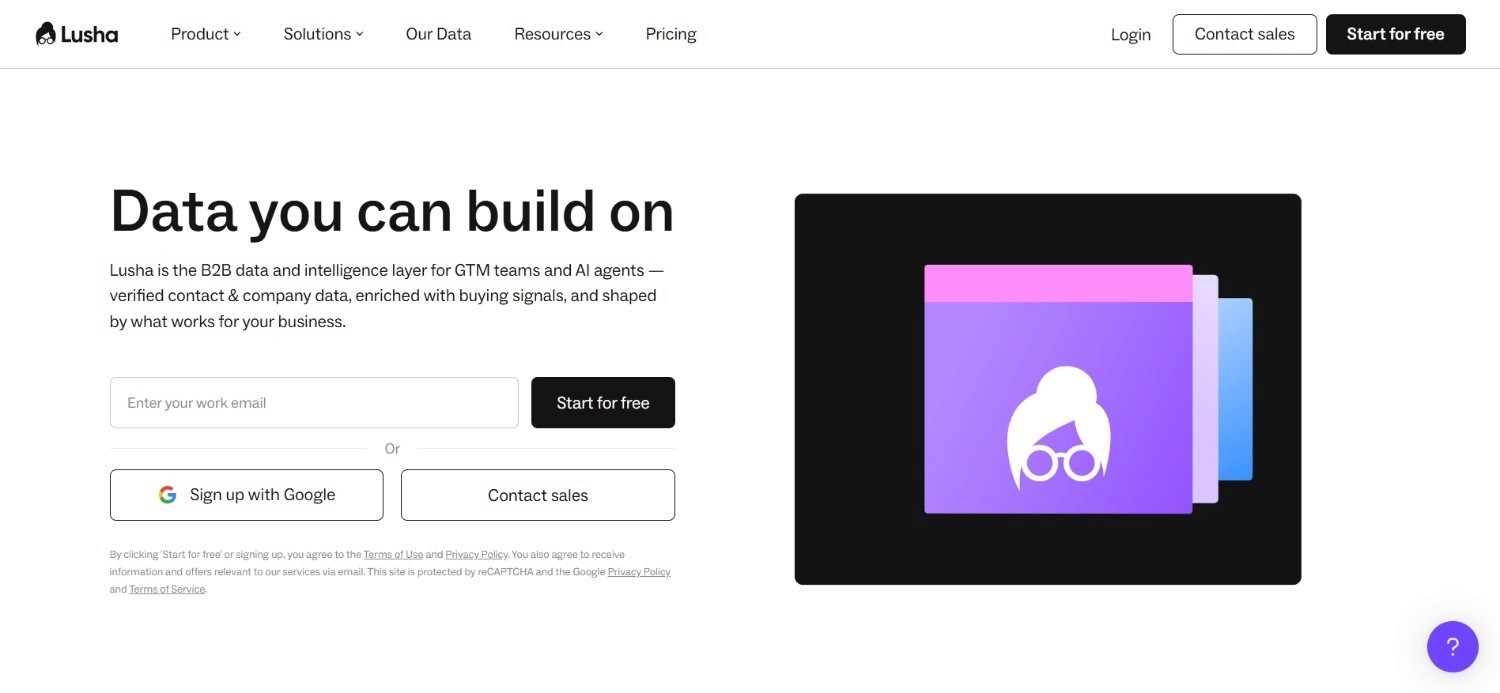
Lusha is a data enrichment platform built around quick contact lookups, designed for sales reps who need a fast answer rather than a configurable workflow. Their Chrome extension pulls contact details directly from a prospect's profile, making it a common choice for reps working reactively rather than running large enrichment batches.
Lusha also surfaces buying intent signals and offers API access for teams wanting to pull enrichment into their own systems.
The platform trades some of the depth found in waterfall-based tools for speed and simplicity - which suits reps doing individual lookups more than teams enriching lists at volume.
Ideal For
Individual reps needing quick, one-off contact lookups
Small teams wanting a straightforward tool without complex configuration
Teams wanting API access to pull enrichment into an existing system
Top Features
Chrome extension for instant contact lookups while browsing
Buying intent signals layered on top of standard contact data
API access for pulling enrichment directly into other systems
Why They Stand Out?
Lusha stands out for speed and simplicity, making it one of the more approachable lead enrichment platform options for reps who need an answer immediately rather than a batch process.
Pros
Fast, straightforward contact lookups via browser extension
Accessible free plan and lower-cost entry tiers
API access supports custom integrations
Cons
Less suited to large-scale, batch enrichment projects
Match rates can lag behind waterfall-based platforms on harder contacts
Advanced features like buying intent are gated behind higher tiers
Pricing
Lusha offers a free plan, with paid plans starting at $32.45 a month for Starter, $45.45 a month for Pro and $259.95 a month for Premium, while the Scale plan uses custom pricing.
Plans vary by credits, seats, API access and buying intent data.
Final Verdict
Lusha works well for individual reps and small teams wanting quick lookups.
Larger teams enriching lists at scale will likely need a platform with deeper waterfall logic.
6. Hunter.io
Overview
Hunter.io is a data enrichment tool focused specifically on email discovery and verification, rather than the full contact profile most platforms on this list provide. Their email finder locates professional addresses tied to a domain, while bulk verification checks existing lists for deliverability before a campaign goes out.
Domain search lets teams pull every known email pattern from a company at once, which suits list building focused purely on the email channel.
Hunter.io does not offer phone number enrichment or the intent signals found in broader platforms, which makes it a narrower tool than most B2B data enrichment solutions covered here.
Ideal For
Teams whose outreach strategy runs primarily through email
Sales operations wanting bulk verification before a campaign launch
Smaller teams needing a straightforward, email-only enrichment tool
Top Features
Email finder locating professional addresses tied to a specific domain
Bulk email verification, reducing bounce rates before a campaign launches
Domain search surfacing every known email pattern at a company
Why They Stand Out?
Hunter.io stands out for email-specific accuracy, making it one of the more focused data enrichment tools B2B teams reach for when phone data is not the priority.
Pros
Strong accuracy specifically for email discovery and verification
Straightforward interface with a genuinely usable free plan
Bulk verification helps protect domain reputation before sending
Cons
No phone number or mobile enrichment included
Lacks the intent signals found in broader enrichment platforms
Less useful for teams running call-heavy outbound programmes
Pricing
Hunter.io offers a free plan alongside Starter at $49 a month, Growth at $149 a month and Scale at $299 a month, plus a custom Enterprise tier.
Plans scale by monthly credits, email accounts and enrichment features, with 30% savings available on annual billing.
Final Verdict
Hunter.io is a strong pick for teams whose enrichment needs are email-only.
Teams needing phone data alongside email will need to pair it with another tool.
7. BetterContact
Overview
BetterContact is a data enrichment platform built around a lightweight, multi-provider waterfall aimed at teams that want simple, affordable enrichment without heavy configuration.
Users upload a CSV; the platform runs it through several providers, returning verified emails and phone numbers on a match.
Credit rollover means unused credits carry into the next billing cycle, which suits teams with inconsistent enrichment volume month to month.
BetterContact keeps things intentionally simple: accessible fast, with less room for the granular control more technical teams sometimes want.
Ideal For
Small to mid-sized teams wanting straightforward CSV enrichment
Teams with inconsistent monthly enrichment volume needing credit rollover
Businesses wanting an affordable entry point into waterfall enrichment
Top Features
Multi-provider waterfall enrichment run directly from a CSV upload
Credit rollover, so unused credits are not lost at the end of the month
Free trial credits available for new users to test match rates first
Why They Stand Out?
BetterContact stands out for affordability and simplicity, offering a genuinely lightweight route into person data enrichment without the setup overhead of more technical platforms.
Pros
Simple CSV-based workflow with minimal setup
Credit rollover protects against wasted spend in quiet months
Affordable entry tier compared with larger enterprise platforms
Cons
Less configurable than platforms built for technical GTM teams
No native outreach features, so exported data still needs a separate tool
Match rates depend heavily on which providers are included in the waterfall
Pricing
BetterContact's pricing starts at $15 a month for Starter with 200 credits, while Pro costs $49 a month for 1,000 credits.
Enterprise starts at $799 a month with custom credit volumes and discounts, and new users receive 50 free credits to try the platform.
Final Verdict
BetterContact suits teams wanting simple, affordable enrichment without a steep learning curve.
Teams needing built-in outreach will still need to pair it with another tool.
8. Prospeo
Overview
Prospeo is a data enrichment tool offering email and phone finding alongside CRM integrations, priced on a per-seat basis rather than bundled credit packs.
Their enrichment engine focuses on finding both a verified email and a direct phone number for a given contact, rather than treating the two as separate lookups.
Credit rollover applies here too, alongside CRM integrations that push enriched contacts directly into existing sales tools.
Prospeo sits in the middle of the market: more configuration than simple lookup tools, less flexibility than a waterfall-first platform like Clay.
Ideal For
Small to mid-sized teams wanting per-seat enrichment pricing
Teams needing both email and phone enrichment from one tool
Businesses wanting enriched contacts pushed directly into an existing CRM
Top Features
Combined email and phone finder for a single contact lookup
Native CRM integrations pushing enriched data directly into sales tools
Credit rollover across billing cycles for uneven enrichment volume
Why They Stand Out?
Prospeo stands out for balancing price and depth, sitting among the more accessible B2B data enrichment tools for teams that want more than a bare-bones lookup without enterprise pricing.
Pros
Combines email and phone enrichment in a single lookup
Native CRM integrations reduce manual export work
Credit rollover suits teams with variable enrichment needs
Cons
Less flexible than fully configurable waterfall platforms
Smaller provider network than larger enterprise-grade tools
Advanced filtering and analytics sit behind higher-priced tiers
Pricing
Prospeo offers a tiered pricing model with a free plan, followed by Starter at $37 a user per month, Growth at $74 a user per month and Pro at $187 a user per month.
Paid plans scale through higher annual credit allowances, additional search filters and CRM features.
Final Verdict
Prospeo works well for teams wanting combined email and phone enrichment at a mid-range price.
Larger teams needing deeper provider coverage may outgrow it.
9. Zoominfo
Overview
Zoominfo is one of the largest data enrichment companies in the market, built around a deep firmographic database and org chart data for enterprise revenue teams.
Its scale is the primary draw: a very large contact and company database, paired with intent signals that flag which accounts are actively in-market.
Org chart data helps teams map an entire buying committee at a target account, rather than working from a single contact record.
That depth suits enterprise budgets, not small or early-stage teams.
Ideal For
Large enterprise revenue teams needing the broadest possible database
Organisations mapping full buying committees through org chart data
Teams already running enterprise-grade sales and marketing technology stacks
Top Features
Extremely large contact and company database across industries
Org chart data for mapping buying committees at target accounts
Intent signals flagging accounts actively researching relevant categories
Why They Stand Out?
Zoominfo stands out for sheer database scale, remaining one of the most recognised data enrichment platforms for enterprise buyers who prioritise coverage above all else.
Pros
Extremely large database covering most industries and regions
Org chart data adds real value for complex, multi-stakeholder deals
Established enterprise relationships and integration ecosystem
Cons
Pricing puts it out of reach for smaller and early-stage teams
Custom, seat and credit-based model makes upfront cost hard to compare
More platform than most lean teams are likely to need
Pricing
Zoominfo uses custom, seat and credit-based pricing, with entry plans starting around $15,000 a year.
Final Verdict
Zoominfo suits large enterprises that need the broadest database available.
Smaller teams will likely find better value in a more focused enrichment tool.
10. FullEnrich
Overview
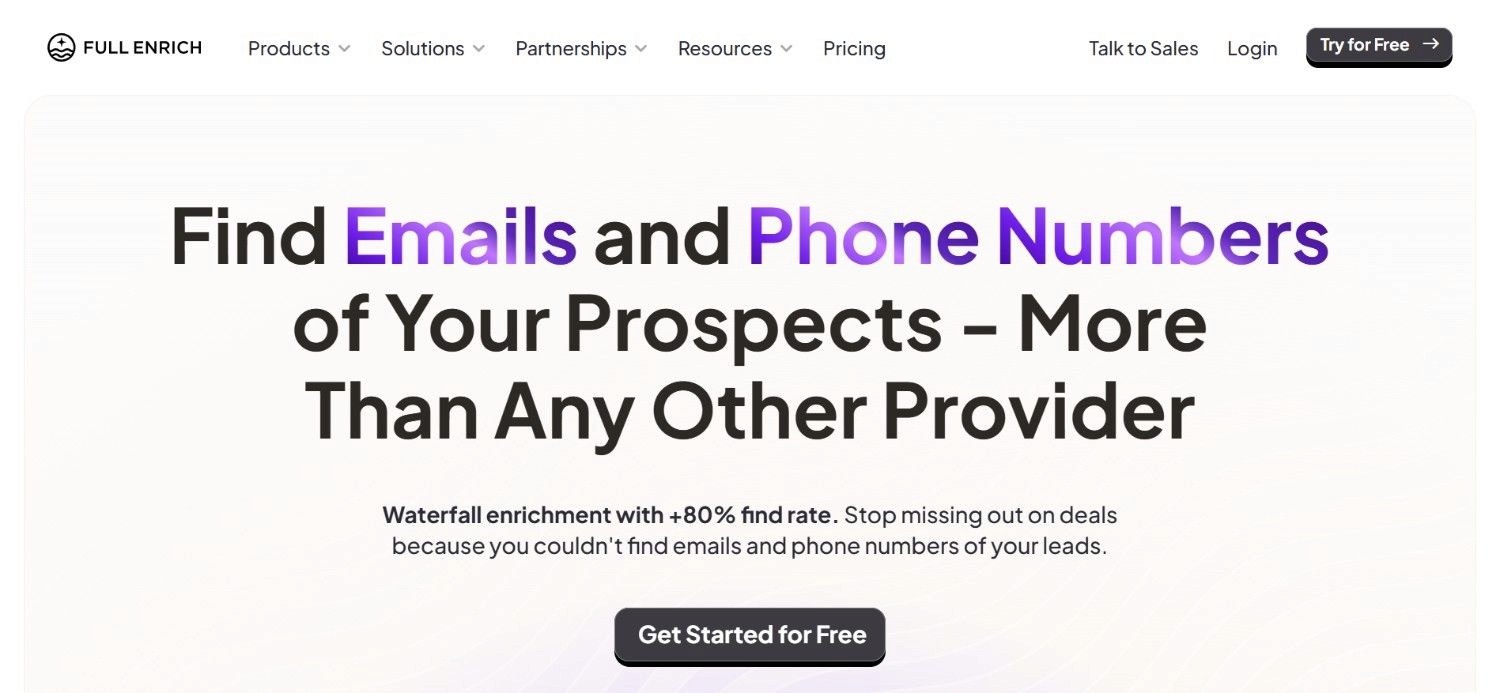
FullEnrich is a data enrichment platform built around pay-per-result pricing, charging credits only when a match is actually found rather than for every lookup attempted.
Their waterfall runs across multiple providers per contact, searching until it finds a verified work email, personal email or mobile number.
That pay-only-for-matches model differs from most tools on this list, which typically charge credits regardless of whether a search returns a result.
FullEnrich suits teams enriching in bulk who want predictable costs tied to successful matches, not failed lookups.
Ideal For
Teams wanting to pay only for successful enrichment matches
Businesses running bulk enrichment across large contact lists
Cost-conscious teams wanting predictable, match-based pricing
Top Features
Multi-provider waterfall searching until a verified match is found
Pay-only-for-matches credit model, avoiding charges on failed lookups
Bulk enrichment support for large contact lists at once
Why They Stand Out?
FullEnrich stands out for its pay-per-result approach, offering one of the more cost-predictable B2B data enrichment solutions for teams enriching contacts in bulk.
Pros
Credits are only spent when a match is actually found
Multi-provider waterfall improves overall match rates
Straightforward, predictable pricing tied to results
Cons
No native outreach features, so enriched data still needs another tool
Smaller brand presence than more established enterprise platforms
Best suited to bulk workflows rather than one-off individual lookups
Pricing
FullEnrich costs $29 a month for 500 credits or $55 a month for 1,000 credits.
Credits are used to enrich contacts: 1 credit for a work email, 3 for a personal email and 10 for a mobile phone, charged only when data is actually found.
Final Verdict
FullEnrich suits cost-conscious teams running bulk person data enrichment who want to pay only for results.
Teams wanting enrichment bundled with outreach will need a broader platform.
How to Choose the Best Person Data Enrichment Tools (What to Consider)?
Choosing the right platform for person data enrichment comes down to matching the tool to your actual data gaps, not just its feature list.
Here are the 5 factors that matter most:
1. Check Match Rate on Your Real Data
Run a sample of your own contacts through a person data enrichment trial before committing.
Match rates vary significantly by industry and region, so a demo using someone else's data will not tell you what you need to know.
2. Confirm Mobile Phone Coverage
If cold calling is part of your outreach strategy, verify that mobile numbers are genuinely phone-verified, not just scraped.
A wrong number wastes a dial and can damage sender reputation on some channels.
3. Understand the Credit Model
Some platforms charge per lookup attempted, others only per successful match.
Factor this into cost comparisons, since two tools with similar headline pricing can produce very different real-world bills.
4. Check How Enrichment Feeds Into Outreach
A tool that enriches data but requires manual export into a separate outreach platform adds a step your team has to manage every time.
Confirm whether enrichment and outreach live in the same workflow.
5. Weigh Compliance and Data Provenance
Regulated industries need to know exactly where a contact record came from and how it was sourced.
Ask any data enrichment companies you shortlist how they handle consent and data provenance before signing a contract.
Everything You Need to Know About Person Data Enrichment Tools
Tool | Pros | Cons | Ease of Use | Integrations | Support | Affordability |
Enginy | Enrichment built into outreach, strong match rates, no analyst needed | Custom pricing, more than pure data-only teams need | ⭐⭐⭐⭐⭐ | ⭐⭐⭐⭐ | ⭐⭐⭐⭐⭐ | ⭐⭐⭐⭐ |
Clay | Full data control, flexible workflows, wide integrations | Needs technical skill, steep learning curve | ⭐⭐⭐ | ⭐⭐⭐⭐⭐ | ⭐⭐⭐ | ⭐⭐⭐ |
Apollo.io | Low cost, large database, easy setup | Shallow filtering, variable data quality | ⭐⭐⭐⭐⭐ | ⭐⭐⭐⭐ | ⭐⭐⭐ | ⭐⭐⭐⭐⭐ |
Cognism | Verified mobiles, compliance-first, intent data | Enterprise pricing, seat-based model | ⭐⭐⭐ | ⭐⭐⭐⭐ | ⭐⭐⭐⭐ | ⭐⭐ |
Lusha | Fast lookups, accessible pricing, API access | Limited batch enrichment, gated intent data | ⭐⭐⭐⭐⭐ | ⭐⭐⭐ | ⭐⭐⭐ | ⭐⭐⭐⭐ |
Hunter.io | Strong email accuracy, usable free plan, bulk verification | No phone data, no intent signals | ⭐⭐⭐⭐ | ⭐⭐⭐ | ⭐⭐⭐ | ⭐⭐⭐⭐ |
BetterContact | Simple CSV workflow, credit rollover, affordable entry | Limited configuration, no outreach features | ⭐⭐⭐⭐ | ⭐⭐⭐ | ⭐⭐⭐ | ⭐⭐⭐⭐ |
Prospeo | Combined email and phone, CRM integrations, credit rollover | Smaller provider network, gated advanced features | ⭐⭐⭐⭐ | ⭐⭐⭐ | ⭐⭐⭐ | ⭐⭐⭐⭐ |
Zoominfo | Massive database, org chart data, established ecosystem | Enterprise pricing, hard to compare upfront | ⭐⭐⭐ | ⭐⭐⭐⭐⭐ | ⭐⭐⭐⭐ | ⭐⭐ |
FullEnrich | Pay only for matches, multi-provider waterfall, predictable cost | No outreach features, smaller brand presence | ⭐⭐⭐⭐ | ⭐⭐⭐ | ⭐⭐⭐ | ⭐⭐⭐⭐ |
Get Person Data Enrichment That Feeds Straight Into Outreach
We built Enginy to close the gap other person data enrichment platforms leave open: enrichment that produces clean, verified contact data but stops there, leaving a separate tool to actually reach that contact. As an end-to-end GTM platform, we replace that handoff with one system that takes a contact from raw research through enrichment to a live sequence.
We also build multichannel outreach and social prospecting directly on top of enriched data – so a verified email or mobile number moves straight into a campaign instead of sitting in an export file, the same data enrichment philosophy that runs through the rest of the platform.
One of our customers, Factorial, used the platform to scale from ten leads a day to 5,000 a month; with reply rates climbing from 10% to 45% along the way.
Book a demo with today and see how properly enriched contact data changes what your pipeline actually looks like.
FAQs About Data Enrichment Tools
What is the best data enrichment tool in 2026?
Enginy is the best overall data enrichment tool in 2026 for teams that want enrichment feeding directly into outreach, rather than sitting as a separate step. Apollo.io suits the lowest-cost entry point, while Zoominfo and Cognism fit large enterprise budgets. The right answer depends on team size and whether cold calling matters to your outreach.
What should I consider when choosing the right data enrichment tools for me?
Choosing the right data enrichment tools for you comes down to match rate, mobile phone coverage and how enrichment fits your existing workflow. Teams with a GTM engineer can consider technical platforms like Clay, while others need something that works without heavy configuration. Compare cost per successful match rather than headline pricing alone, and check data provenance before signing.
How does Enginy differ from similar alternatives?
Enginy differs from similar alternatives by combining person data enrichment, list building and multichannel outreach in one platform that does not require a dedicated data analyst to operate. Most competitors either provide enrichment, like Clay, or outreach, but rarely both with real depth. Enginy also layers intent signals, like recent hires, directly on top of enriched contact data.
How do I get started with Enginy?
Getting started with Enginy begins with a short qualification call, where the team uncovers your specific enrichment and outreach needs before quoting pricing. From there, Enginy runs structured onboarding sessions covering CRM integration and enrichment source setup. Most teams see their first enriched lists live within a couple of sessions, not weeks.
How easy is it to switch to Enginy?
Switching to Enginy is designed to be straightforward, since it integrates directly with major CRMs including HubSpot, Salesforce, Pipedrive and Zoho. Existing contact records can be imported and enriched immediately, rather than rebuilt from scratch. Most of the switching effort goes into consolidating tools that were previously separate, not learning a difficult new interface.
Isn't paying for a dedicated data enrichment company overkill when a CRM already has basic enrichment built in?
Paying for a dedicated data enrichment company is not overkill, since built-in CRM enrichment typically pulls from a single source with limited match rates on mobile numbers. Waterfall-based tools chain multiple providers together, catching contacts a single-source lookup would miss. That cost difference is usually smaller than wasted outreach sent to stale records.
What is the difference between customer profile enrichment and simple contact enrichment?
Customer profile enrichment goes beyond a single contact record to build a fuller picture, adding firmographic data and buying intent signals alongside a verified email or phone number. Simple contact enrichment just fills in missing name, title or email fields. The distinction matters most for personalisation, since a message referencing a real signal performs better than a generic template.