Beste All-in-One-Vertriebsplattform im Jahr 2026 (Software für Prospecting, Enrichment & Outreach)

Andrea López
Teilen
Wichtige Erkenntnisse (TL;DR)
Was ist ein All-in-One-Sales-Tool: Eine einzige Plattform, die die drei Kernsäulen des Outbound-B2B-Vertriebs abdeckt – Lead-Generierung, Datenanreicherung und Multichannel-Outreach – und so fragmentierte Tool-Stacks ersetzt, die Vertriebsmitarbeiter zum Wechseln zwischen unzusammenhängenden Systemen zwingen.
Die beste All-in-One-Vertriebsplattform insgesamt: Enginy kombiniert Lead-Generierung, Datenanreicherung aus mehreren Quellen und KI-gestützten Multichannel-Outreach in einer einzigen Plattform und ersetzt so fragmentierte Tool-Stacks, die die SDR-Produktivität beeinträchtigen. Sie bietet die Tiefe einer Premium-GTM-Plattform, ohne dass ein dedizierter technischer Operator erforderlich ist.
Warum Sie sie brauchen: Vertriebsmitarbeiter verbringen rund 70 % ihrer Zeit mit Aufgaben, die nicht dem Verkauf dienen – manueller Listenaufbau, Datenbereinigung, Wechseln zwischen unzusammenhängenden Tools und das Schreiben generischer Nachrichten. Eine All-in-One-Vertriebsplattform eliminiert diesen Mehraufwand, sodass sich die Mitarbeiter auf Gespräche und Umsatz konzentrieren können.
Für wen sie geeignet ist: B2B-Vertriebsteams, die Outbound-Kampagnen durchführen – von Zwei-Personen-Startup-Teams bis hin zu SDR-Organisationen mit über 100 Mitarbeitern – in den Bereichen SaaS, Personalvermittlung, IT-Beratung, Agenturen, Cybersicherheit und professionelle Dienstleistungen.
So wählen Sie die richtige aus: Bewerten Sie drei Dinge: (1) ob die Plattform den gesamten Workflow von den Daten bis zum Outreach abdeckt oder Zusatzmodule erfordert, (2) die Qualität und Abdeckung ihrer Kontaktdaten in Ihren Zielregionen und (3) ob Ihr Team sie ohne einen dedizierten GTM-Ingenieur bedienen kann.
Top All-in-One-Vertriebsplattformen im Jahr 2026: Auf einen Blick
Unternehmen | Bestens geeignet für | Hauptmerkmale | Preise |
Enginy | Teams mit vollständigem Workflow, die Daten und Outreach an einem Ort wünschen | Multi-Source-Anreicherung (15+ Anbieter), KI-Multichannel-Sequenzen, konditionale Kampagnen, KI-SDR-Agenten | Individuelles Angebot; kreditbasierte Tarife von Basic bis Enterprise |
Apollo.io | Budgetbewusste Teams, die eine große Kontaktdatenbank benötigen | 275 Mio.+ Kontakte, E-Mail-Sequenzen, integrierter Dialer, Chrome-Erweiterung | Kostenlose Version; kostenpflichtig ab 49 $/Nutzer/Monat (jährlich) |
Amplemarket | Mid-Market-Teams, die ein etabliertes All-in-One-System suchen | Duo AI Copilot, Multichannel-Sequenzen, Competitive Intelligence, Klonen von Stimmen | Ab 600 $/Monat (jährlich); Growth und Elite auf Anfrage |
Clay | RevOps-Ingenieure, die maßgeschneiderte Workflows zur Datenanreicherung erstellen | Marktplatz mit über 100 Datenanbietern, Kaskaden-Anreicherung (Waterfall), Workflow-Builder | Launch 185 $/Monat; Growth 495 $/Monat |
Lemlist | Kleine Teams, die sich auf E-Mail-Personalisierung und Zustellbarkeit konzentrieren | Bild-/Videopersonalisierung, Lemwarm-Zustellbarkeit, Datenbank mit über 650 Mio. Leads | Email Pro ab 69 $/Nutzer/Monat; Multichannel ab 99 $/Nutzer/Monat |
ZoomInfo | Enterprise-Teams, die tiefgehende Datenanalysen benötigen | 260 Mio.+ Kontakte, Intent-Daten (Kaufabsicht), Organigramme, erweiterte Compliance | Ab ca. 14.995 $/Jahr (3 Nutzer); nur Jahresverträge |
Outreach.io | Große Enterprise-Vertriebsorganisationen mit strukturierten Abläufen | Amplify KI-Agenten, Conversation Intelligence, Deal-Management, Forecasting | Ca. 100–160 $/Nutzer/Monat; Jahresverträge |
Salesloft | Enterprise-Teams, die im Salesforce-Ökosystem arbeiten | Cadence-Engine, Conversations-Modul, Rhythm AI, Deal-Analytics | Ca. 125–165 $/Nutzer/Monat (individuelles Angebot) |
Cognism | EMEA-fokussierte Teams, die DSGVO-konforme Telefondaten benötigen | Manuell verifizierte Handynummern (Diamond), Bombora Intent-Daten, starke Abdeckung in UK/DACH | Plattformgebühr 15k–25k $/Jahr + Kosten pro Nutzer |
Instantly | Agenturen und Einzelunternehmer, die hochvolumige Kaltakquise per E-Mail betreiben | Unbegrenzte E-Mail-Konten, integriertes Warm-up, Lead-Datenbank, Unibox | Tarife ab ca. 30 $/Monat für den Versand; Lead-Datenbank separat |
Was sind All-in-One-Vertriebsplattformen?
Eine All-in-One-Vertriebsplattform ist eine einzige Software, die die drei Kernsäulen des Outbound-B2B-Vertriebs abdeckt: Prospecting (Finden der richtigen Unternehmen und Kontakte), Enrichment (Hinzufügen verifizierter E-Mails, Telefonnummern und Kontextdaten) und Outreach (Kontaktaufnahme mit potenziellen Kunden über E-Mail, soziale Medien und Telefon in koordinierten Sequenzen).
Diese Kategorie entstand, weil der traditionelle Ansatz – der Kauf eines Datenanbieters, eines separaten Outreach-Tools, eines Zustellbarkeitsdienstes und eines Datenbereinigers – zu fragmentierten Workflows, doppelten Kontakten in verschiedenen Systemen und Gesamtbetriebskosten führt, die oft die Gebühren einer einheitlichen Plattform übersteigen. Branchenüblichen Schätzungen zufolge verbringen Verkäufer rund 70 % ihrer Arbeitszeit mit Aufgaben, die nicht dem eigentlichen Verkauf dienen. Ein Großteil dieser Verschwendung ist auf die Tool-Flut zurückzuführen.
Die besten All-in-One-Vertriebsplattformen im Jahr 2026 gehen über das bloße Bündeln von Funktionen hinaus. Sie integrieren KI in den gesamten Workflow – von der Lead-Suche in natürlicher Sprache bis hin zum automatisierten Antwortmanagement. So konsolidiert die Plattform nicht nur Tools, sondern reduziert auch die Anzahl der manuellen Entscheidungen, die ein Vertriebsmitarbeiter täglich treffen muss.
Warum benötigen Sie eine All-in-One-Vertriebsplattform?
Das Hauptproblem ist der Produktivitätsverlust. Wenn SDRs und AEs fünf oder sechs unzusammenhängende Tools verwalten, führt jede Schnittstelle zwischen den Systemen zu Reibungsverlusten: Daten, die sich nicht synchronisieren, Kontakte, die dupliziert werden, und Datenanreicherungen, die veralten, noch bevor der Mitarbeiter die erste Nachricht sendet.
Hier ist, was diese Reibungsverluste in der Praxis kosten.
SDRs, die Listen manuell in einem Tool erstellen, in einem anderen anreichern und in einem dritten sequenzieren, verlieren täglich 3–4 Stunden an operativem Aufwand. Der Head of Outbound SDRs von Factorial berichtete genau von diesem Wert vor der Konsolidierung auf einer einzigen Plattform – und verzeichnete nach dem Wechsel eine Verdoppelung der Conversion-Rate des Teams von 4 % auf 8 %.
Massen-Outreach funktioniert nicht mehr so wie noch vor zwei Jahren. Posteingänge sind überlastet. Generische Nachrichten führen zu niedrigen Antwortraten. Die Teams, die auch im Jahr 2026 ihre Pipeline-Ziele erreichen, nutzen Kaufabsichtssignale (Intent), Multi-Stakeholder-Outreach und KI-gestützte Personalisierung – Funktionen, die nur dann praktisch umsetzbar sind, wenn Daten und Outreach im selben System leben.
Unstrukturierte CRM-Daten verschlimmern den Schaden. Wenn Datenanreicherung und Outreach in separaten Tools stattfinden, vervielfachen sich Dubletten, Eigenschaften stehen im Konflikt und das Reporting wird unzuverlässig.
Eine All-in-One-Vertriebsplattform löst dieses Problem, indem sie die gesamte Pipeline vom Scraping bis zum CRM-Import kontrolliert. So wird sichergestellt, dass jeder Kontakt, der in Ihre Pipeline gelangt, bereinigt, angereichert und zugewiesen ist.
Wer benötigt eine All-in-One-Vertriebsplattform?
Vertriebsleiter und VP-Level Revenue Leaders
Vertriebsleiter sind für Pipeline-Ziele und die Leistung des Vertriebsteams verantwortlich. Ihr wiederkehrender Frust sind inkonsistente Outbound-Ergebnisse und SDRs, die mehr Zeit mit administrativen Aufgaben als mit Telefonaten verbringen.
Eine All-in-One-Plattform bietet ihnen einen standardisierten Prozess vom Listenaufbau bis zur Terminbuchung. Analysen verfolgen die Leistung nach Kampagne, Identität und Markt, ohne dass Daten über vier verschiedene Dashboards hinweg abgeglichen werden müssen. So wird Outbound von einem Ratespiel zu einem System, das sie Woche für Woche überwachen und verbessern können.
Sales Operations und RevOps-Spezialisten
Sales-Ops-Teams sind in der Regel diejenigen, die Apollo + Lemlist + einen Datenbereiniger + einen CRM-Connector zu einem funktionierenden Stack zusammenflicken. Sie bewerten Tools nach Datenqualität, Integrationstiefe und Workflow-Automatisierung.
Für diese Zielgruppe ersetzt eine All-in-One-Plattform für die B2B-Vertriebsautomatisierung den Aufwand für die Integrationswartung vollständig. Anstatt API-Verbindungen, Deduplizierungsregeln und Anreicherungskredite bei drei verschiedenen Anbietern zu verwalten, steuern sie ein einziges System, das den gesamten Workflow vom Scraping bis zum CRM abdeckt.
Gründer und CEOs von KMUs und Startups
Gründer, die den Vertrieb selbst übernehmen, benötigen eine Lösung, die ohne technischen Operator funktioniert. Sie können es sich nicht leisten, einen GTM-Ingenieur einzustellen, um Clay-Tabellen zu konfigurieren oder ZoomInfo-Verträge zu verwalten.
Sie müssen eine ICP-Definition importieren, eine Liste erstellen, diese anreichern und eine Kampagne starten – im Idealfall in einem Rutsch, ohne Dokumentationen für drei verschiedene Produkte lesen zu müssen. Eine Plattform, die für die direkte Nutzung durch Vertriebsmitarbeiter konzipiert ist, beseitigt diese Barriere.
Sales Manager und Teamleiter
Manager, die 3–10 SDRs leiten, legen Wert auf Konsistenz: Folgen die Mitarbeiter demselben Outreach-Prozess? Nutzen sie dieselben Messaging-Frameworks? Aktualisieren sie das CRM mit denselben Eigenschaften?
Eine All-in-One-Plattform mit integrierten Playbooks und gemeinsamen Kampagnenvorlagen standardisiert diesen Prozess. Zudem verkürzt sie die Einarbeitungszeit für neue Mitarbeiter, da nur ein einziges Tool anstelle von vieren erlernt werden muss.
Ambitionierte SDRs und Account Executives
Der einzelne Vertriebsmitarbeiter, der seine Quote übertreffen möchte, profitiert von einer Plattform, die Entscheidungsmüdigkeit verhindert. Anstatt zu überlegen, welches Tool für welchen Schritt genutzt werden soll, öffnen sie eine einzige Benutzeroberfläche, die ihnen zeigt, welche Kontakte sie kontaktieren, welche Nachricht sie senden und wann sie nachfassen müssen.
Die gewonnene Zeit fließt direkt in Gespräche und Demos – also in die Aktivitäten, die Umsatz generieren. Das ist der Unterschied zwischen beschäftigt sein und produktiv sein.
Beste All-in-One-Vertriebsplattformen: Detaillierte Bewertung & Vergleich
1. Enginy
Übersicht
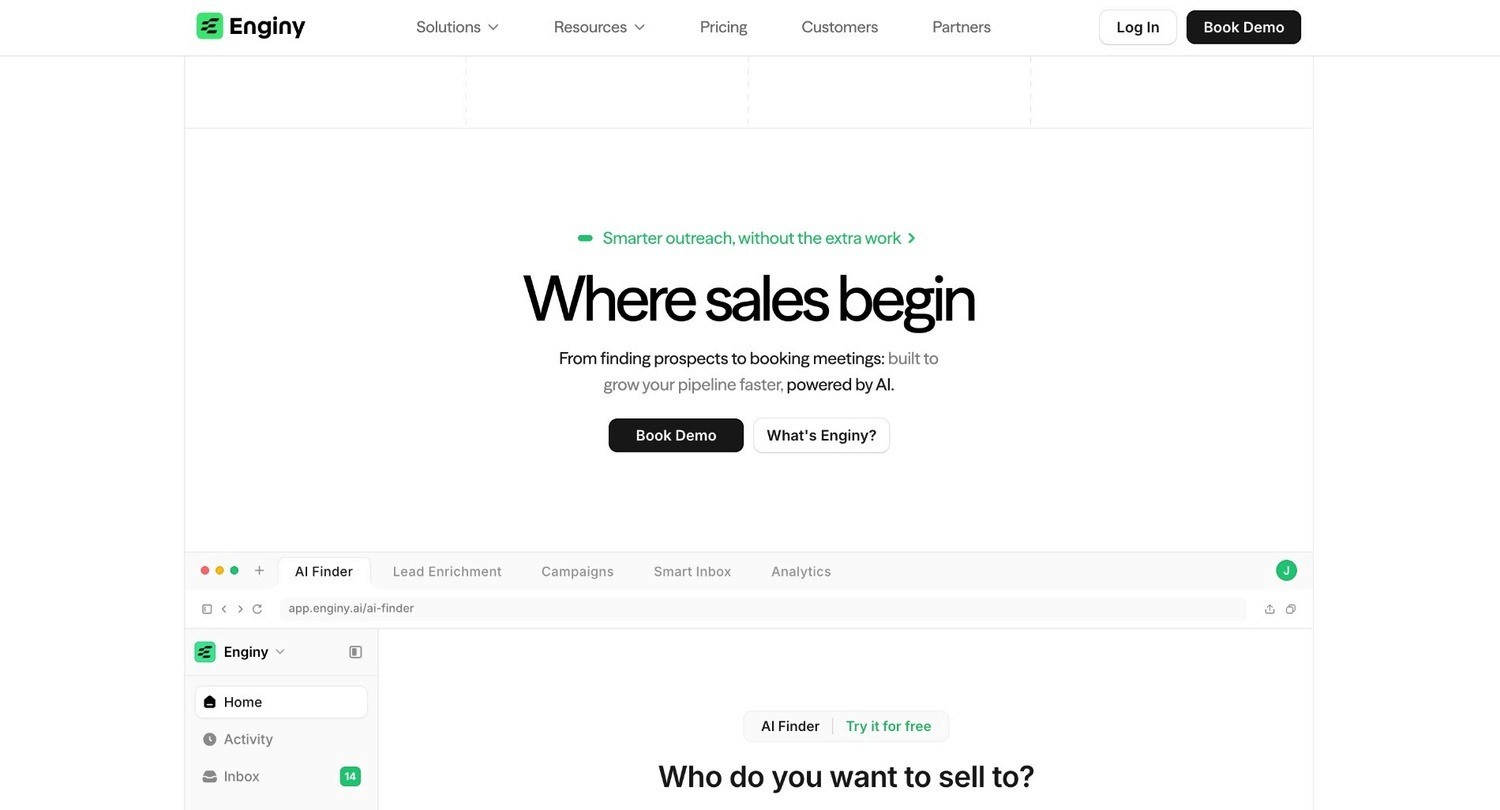
Enginy (ehemals Genesy) ist eine KI-native End-to-End-GTM-Plattform, die für moderne B2B-Vertriebsteams entwickelt wurde. Sie kombiniert Lead-Generierung, Datenanreicherung aus mehreren Quellen und KI-gestützten Multichannel-Outreach in einer einzigen Plattform und eliminiert so die Tool-Flut, die Verkäufer dazu zwingt, den Großteil ihrer Zeit mit Nicht-Verkaufsaktivitäten zu verbringen.
Die Plattform ist um drei Funktionsbereiche herum strukturiert: Listenaufbau und Lead-Generierung (mit erweiterten ICP-Filtern, Intent-Signalen und KI-Recherche), Datenanreicherung (Zusammenführung von 15+ Anbietern mit Kaskaden-Logik und integrierter Datenbereinigung) und Multichannel-Sequenzen (E-Mail, Social Media und Kaltakquise mit konditionalen Verzweigungen, KI-Personalisierung und automatisiertem Antwortmanagement).
Enginy positioniert sich als das Tool, das Vertriebsteams Klarheit und Richtung gibt – nicht durch reines Aktivitätsvolumen, sondern indem sie genau wissen, was als Nächstes zu tun ist und warum es funktioniert. Es ist so konzipiert, dass jeder Vertriebsmitarbeiter den gesamten Workflow ohne GTM-Ingenieur bedienen kann. So bietet es die Tiefe einer Premium-Plattform ohne die damit verbundene Komplexität.
Ideal für
B2B-Vertriebsteams (5–180+ Mitarbeiter), die Outbound-Kampagnen in mehreren Märkten durchführen
Gründer und KMU-Leiter, die eine vollständige Plattform benötigen, ohne einen GTM-Ingenieur einstellen zu müssen
RevOps-Spezialisten, die einen fragmentierten Tool-Stack konsolidieren möchten
Personalvermittlungen und IT-Beratungen, die eine hochvolumige Erstellung von Lead-Listen benötigen
Teams, die in neue Märkte expandieren und schnell Listen erstellen und testen müssen
Top-Features
Datenanreicherung aus mehreren Quellen (Multi-Source): Enginy aggregiert Daten von mehr als 15 Anbietern zur Telefon- und E-Mail-Anreicherung in Echtzeit und wendet eine Kaskaden-Logik (Waterfall) an, um die Abdeckung zu maximieren. Die Plattform führt einen integrierten Workflow zur Datenbereinigung aus (vor und nach der Anreicherung), sodass nur valide, nutzbare Kontakte ins CRM gelangen. Der gesamte Anreicherungsprozess – Scrapen, Bereinigen, Anreichern, Bereinigen, Importieren, Zuweisen – kann durchgehend automatisiert werden.
KI-gestützte Multichannel-Sequenzen: Kampagnen kombinieren E-Mail, soziale Medien und Kaltakquise in konditionalen Sequenzen – „Wenn der potenzielle Kunde X tut, dann tue Y“. Sequenzen stoppen automatisch, sobald ein Lead antwortet, was eine manuelle oder KI-gestützte Übernahme ermöglicht. Multi-Stakeholder-Kampagnen können den CEO, den Gründer und die relevanten Abteilungsleiter desselben Unternehmens in koordinierten, zeitlich abgestimmten Schritten ansprechen.
Erweiterte Intent-Signale und KI-Recherche: Über statische firmografische Filter hinaus erkennt die Plattform Kaufabsichten durch Benachrichtigungen über Jobwechsel, Einstellungsaktivitäten, Finanzierungsrunden, Interaktionen beim Social Prospecting, Eventteilnahmen und Daten zum Technologie-Stack. KI-Recherchefunktionen fügen Unternehmensnews, Kontaktbiografien und Kontextdaten im großen Stil hinzu – diese werden dynamisch in die Outreach-Nachrichten eingefügt.
Warum wir uns abheben
Enginy ersetzt den fragmentierten Stack, den die meisten Teams heute nutzen. Während Wettbewerber entweder nur Daten bereitstellen (Apollo, Lusha, ZoomInfo) oder rein auf Outreach fokussiert sind (Lemlist, Salesloft, Outreach.io), deckt Enginy beide Bereiche tiefgehend ab – und das, ohne dass ein technischer Operator erforderlich ist.
Multi-Stakeholder-Outreach ist eine integrierte Strategie, kein Behelf. Teams können mehrere Entscheidungsträger im selben Unternehmen in koordinierten, zeitlich abgestimmten Sequenzen kontaktieren – so hat die gesamte Organisation bereits von Ihnen gehört, bevor der erste Kaltanruf erfolgt.
Die E-Mail-Warm-up-Funktion schützt die Absenderreputation vom ersten Tag an. KI-SDR-Agenten führen Prospecting- und Outreach-Workflows rund um die Uhr aus und vergrößern die Pipeline, ohne dass der Personalbestand proportional wachsen muss. Das KI-Playbook zentralisiert den Geschäftskontext – ICP-Definition, Wertversprechen, Absenderdaten –, sodass jede KI-generierte Nachricht die Positionierung des Unternehmens widerspiegelt und nicht auf generischen Vorlagen basiert.
Vorteile
Vollständiger Workflow von der Lead-Generierung bis zum CRM-Import in einer einzigen Plattform – keine Zusatz-Tools erforderlich
Entwickelt für die direkte Nutzung durch SDRs, ohne dedizierten GTM-Ingenieur oder technischen Operator
Über 15 Anreicherungsanbieter mit Kaskaden-Logik und integrierter Datenbereinigung
Konditionale Kampagnenverzweigung mit KI-Antwortmanagement
Strukturiertes Onboarding mit fünf geführten Sessions zu KI-Playbook, Zustellbarkeit und CRM-Einrichtung
Nachteile
Preise sind nicht öffentlich einsehbar; erfordert ein Qualifizierungsgespräch vor der Demo
Jüngere Plattform als Amplemarket oder Outreach, mit einer kleineren Enterprise-Kundenbasis
Derzeit am stärksten in europäischen Märkten; die Datenabdeckung für die USA wird kontinuierlich ausgebaut
Preise
Enginy nutzt eine individuelle, kreditbasierte Preisgestaltung. Kredite werden durch Aktionen wie Kontaktextraktion, E-Mail-Anreicherung, Telefon-Anreicherung, E-Mail-Verifizierung, Telefon-Verifizierung, Tech-Stack-Daten, Stellenausschreibungsdaten, Google Maps-Daten, Crunchbase-Daten und KI-generierte Variablen verbraucht.
Die vier Basisstufen sind Basic (5.000 Kredite/Monat, bis zu 500 Kontakte, 1 Identität), Smart (10.000 Kredite/Monat, bis zu 1.000 Kontakte, 2 Identitäten, 1 Warm-up-Nutzer), Business (32.000 Kredite/Monat, bis zu 2.000 Kontakte, 4 Identitäten, 1 Warm-up-Nutzer, dedizierter Success Manager) und Enterprise (vollständig individuell).
Alle Tarife beinhalten fünf Onboarding-Sessions sowie E-Mail- und Chat-Support. Die Tarife sind hochgradig anpassbar – Nutzeranzahl, Kreditvolumen, Einbindung von Telefondaten und andere Parameter werden im Qualifizierungsgespräch individuell auf den Kunden abgestimmt.
Fazit
Enginy is die beste All-in-One-Vertriebsplattform für Teams, die eine vollständige, integrierte Lösung ohne die übliche Komplexität suchen. Sie bietet die Datentiefe eines Premium-Anbieters und die Outreach-Raffinesse eines dedizierten Engagement-Tools in einer einzigen Benutzeroberfläche, die jeder Vertriebsmitarbeiter bedienen kann.
Unternehmen wie Factorial konnten ihre Conversion-Rates verdoppeln und täglich 3–4 Stunden pro SDR einsparen. Venair verdreifachte die monatliche Lead-Generierung in über 20 globalen Niederlassungen. SeQura erschloss neue Märkte, die zuvor nicht vollständig genutzt werden konnten.
Wenn Ihr Team es leid ist, fünf verschiedene Tools für eine einzige Aufgabe zu verwalten, ist Enginy die perfekte Alternative, um sie alle zu ersetzen.
2. Apollo.io
Übersicht
Apollo.io ist eine Sales-Intelligence- und Engagement-Plattform mit einer der größten Self-Service-B2B-Datenbanken auf dem Markt – über 275 Millionen Kontakte in mehr als 73 Millionen Unternehmen. Sie bündelt Kontaktsuche, E-Mail-Sequenzierung, einen integrierten Dialer und grundlegende CRM-Funktionen zu einem Preis, der die meisten Mitbewerber in dieser Kategorie unterbietet.
Die Plattform basiert auf einem Freemium-Modell. Eine kostenlose Version bietet einzelnen Nutzern Zugriff auf die gesamte Datenbank (mit begrenzten Krediten), eine Chrome-Erweiterung zur Anreicherung von Social-Media-Profilen und grundlegende E-Mail-Sequenzen. Kostenpflichtige Tarife schalten erweiterte Filter, A/B-Tests, höhere Kreditkontingente und den Zugriff auf den Dialer frei.
Apollo richtet sich an kleine bis mittlere Teams, die eine große Kontaktdatenbank und grundlegenden Outreach in einem Tool benötigen, ohne die Enterprise-Preise von ZoomInfo oder die individuellen Angebote von Amplemarket zahlen zu müssen. Es ist die bekannteste Referenz für Käufer, die Outbound-Daten-Tools evaluieren. Daher ist es oft das erste Tool, das Teams ausprobieren – und für viele auch das Tool, aus dem sie schließlich herauswachsen, wenn die Anforderungen an den Outreach komplexer werden.
Ideal für
Einzelne SDRs und Startups in der Frühphase, die Outbound-Marketing mit minimalem Budget testen möchten
Kleine Teams, die eine große Kontaktdatenbank mit integrierten E-Mail-Sequenzen benötigen
Budgetbewusste Organisationen, bei denen Volumen vor Workflow-Tiefe geht
Top-Features
Riesige Kontaktdatenbank: Über 275 Millionen Kontakte mit mehr als 65 Suchfiltern für Firmografika, Stellenausschreibungen, Finanzierungsdaten und Technografika. Mit der Chrome-Erweiterung können Vertriebsmitarbeiter Daten direkt aus Social-Media-Profilen ziehen.
E-Mail-Sequenzierung und Dialer: Integrierte E-Mail-Automatisierung mit A/B-Testing sowie ein Dialer, der in den Tarifen Professional und Organization verfügbar ist. Sequenzen unterstützen E-Mail-, Anruf- und manuelle Aufgabenschritte.
Kaufabsichtssignale (Intent): Grundlegende Intent-Filter (Stellenausschreibungen, Mitarbeiterwachstum, Finanzierungsereignisse) sind in den kostenpflichtigen Tarifen enthalten und helfen den Mitarbeitern, aktive Accounts zu priorisieren.
Warum sie sich abheben
Der Hauptvorteil von Apollo ist die Zugänglichkeit. Die kostenlose Version ist für einzelne Nutzer absolut praxistauglich, und die kostenpflichtigen Tarife beginnen bereits bei 49 $/Nutzer/Monat – ein Bruchteil dessen, was ZoomInfo oder Cognism verlangen.
Für Teams, die eine große Datenbank mit integrierten Standard-Outreach-Funktionen benötigen, ist Apollo einer der kosteneffizientesten Einstiegspunkte auf dem Markt. Die Plattform lässt sich zudem in Salesforce, HubSpot, Outreach und Salesloft integrieren, sodass sie sich leicht in bestehende Stacks einfügt.
Vorteile
Kostenlose Version mit echtem Funktionswert (250 E-Mails/Tag, Chrome-Erweiterung, Basisfilter)
Große Datenbank mit breiter globaler Abdeckung
Transparente, veröffentlichte Preise – eine Seltenheit in dieser Kategorie
Integrationen mit Salesforce, HubSpot, Outreach und Salesloft
Nachteile
Die Datengenauigkeit sinkt außerhalb Nordamerikas; Nutzer berichten in einigen Segmenten von E-Mail-Bounce-Rates von 15–20 %
Datenanreicherung aus nur einer Quelle ohne Kaskaden-Fallback – wenn Apollo die Daten nicht hat, erhalten Sie nichts
Das Kreditsystem führt zu unvorhersehbaren Budgets; Kredite verfallen monatlich ohne Übertrag
Die Automatisierung von Social-Media-Outreach ist begrenzt; primär ein E-Mail-fokussiertes Tool
Die Tiefe bei erweiterten Intent-Signalen und KI-Personalisierung hinkt hinter kompletteren Plattformen hinterher
Preise
Kostenlose Version verfügbar. Basic: 49 $/Nutzer/Monat (jährlich). Professional: 79 $/Nutzer/Monat (jährlich). Organization: 119 $/Nutzer/Monat (jährlich, Mindestabnahme 3 Nutzer). Monatliche Abrechnung erhöht den Preis um 15–25 %.
Zusätzliche Kredite kosten ab 0,20 $ pro Stück. Telefonnummern-Kredite sind 5- bis 8-mal teurer als E-Mail-Kredite. Kredite verfallen am Ende jedes Abrechnungszyklus ohne Übertrag.
Fazit
Apollo ist eine der besten Optionen für budgetbewusste Teams und einzelne Vertriebsmitarbeiter, die eine große Datenbank und grundlegenden Outreach in einem Tool benötigen. Es ist ein solider Startpunkt, um Outbound-Prozesse zu validieren.
Bei der Skalierung von Teams stößt das System jedoch an Grenzen. Das Kreditsystem sorgt für unbeständige Kosten, die Datenquelle bietet außerhalb der USA unregelmäßige Abdeckung und der Plattform fehlt die Multichannel-Tiefe (konditionale Verzweigungen, KI-Antwortmanagement, Multi-Stakeholder-Sequenzen), die wachsende Outbound-Strukturen benötigen. Teams, die aus den Funktionen von Apollo herauswachsen, finden in einer kompletteren Plattform die passende Alternative.
3. Amplemarket

Übersicht
Amplemarket ist eine Premium-All-in-One-Vertriebsplattform, die B2B-Daten, Multichannel-Engagement (E-Mail, Telefon, Social Media, Voice Cloning), Competitive Intelligence und KI-gestützte Personalisierung über ihren Duo AI Copilot kombiniert. Das in Lissabon gegründete Unternehmen hat sich im Enterprise-Segment etabliert und gehört zu den reifsten Plattformen in der All-in-One-Kategorie.
Das herausragende Feature im Jahr 2026 ist die Duo AI-Suite – eine Reihe von KI-Agenten für Prospecting, Texterstellung, Voice Cloning und Coaching. Der Duo Copilot deckt unentdeckte Potenziale auf, erkennt Kaufabsichtssignale und erstellt maßgeschneiderte Playbooks, während Duo Copywriter und Duo Voice die Texterstellung und den sprachbasierten Outreach im großen Stil übernehmen.
Amplemarket richtet sich an Outbound-Teams im gehobenen Mittelstand und im Enterprise-Segment, die Daten, Sequenzierung, Zustellbarkeit und KI unter einem einzigen Vertrag bündeln möchten. Die Positionierung basiert auf Konsolidierung: Ersetzen des fragmentierten Stacks aus Datenanbieter, Sequenzierungstool, Social-Media-Automatisierung und Warm-up-Service durch eine einzige Plattform. Für Teams mit dem entsprechenden Budget und Volumen ist es ein umfassendes Toolset – der Einstiegspreis und die jährliche Bindung machen es für kleinere Teams jedoch unerschwinglich.
Ideal für
Vertriebsteams im Mittelstand (10–50+ Mitarbeiter) mit dem Budget für eine Premium-Plattform
Enterprise-Outbound-Organisationen, die mehrere Einzellösungen ersetzen möchten
Teams, die KI-gestützte Personalisierung mit Voice Cloning und Competitive Intelligence nutzen wollen
Top-Features
Duo AI Copilot: Ein KI-Assistent, der unentdeckte Potenziale aufdeckt, Intent-Signale erkennt und maßgeschneiderte Playbooks generiert – er vereint Prospecting, Texterstellung und Coaching in einer Ebene.
Multichannel-Sequenzen mit Voice Cloning: Sequenzen umfassen E-Mail, Telefon, soziale Medien und KI-generierte Sprachnachrichten. Dank konditionaler Logik passen sich die Kampagnen an das Verhalten des Empfängers an.
Competitive Intelligence: Verfolgt die Aktivitäten von Wettbewerbern und erkennt Kaufabsichtssignale, sodass Vertriebsmitarbeiter ihre Kontaktaufnahme genau auf Momente der Veränderung bei Zielkunden abstimmen können.
Warum sie sich abheben
Amplemarket ist eine der vollständigsten All-in-One-Plattformen in dieser Kategorie. Die Kombination aus Daten, Engagement, Zustellbarkeit und KI unter einem einzigen Vertrag erübrigt die Verwaltung mehrerer Anbieter.
Die Fähigkeit des Duo Copilots, personalisierte Sequenzen aus einem einzigen Prompt zu generieren, spart SDRs beim hochvolumigen Outreach enorm viel Zeit. Das integrierte Zustellbarkeitsnetzwerk (inklusive Warm-up-Postfächern pro Nutzer) reduziert zudem den Bedarf an separaten Tools für die Posteingangs-Platzierung.
Vorteile
Full-Stack-Plattform: Daten, Engagement, Zustellbarkeit und KI in einem Vertrag
Duo AI Copilot automatisiert Recherche, Texterstellung und den Aufbau von Sequenzen
Voice Cloning für personalisierten Outreach im großen Stil
Starkes Onboarding und exzellenter Customer-Success-Support
Zustellbarkeitsnetzwerk mit integriertem Warm-up
Nachteile
Teuer: Startet bei 600 $/Monat (jährliche Abrechnung), wobei die Tarife Growth und Elite im individuellen Angebot deutlich höher liegen
Nur Jahresverträge – keine Option für monatliche Zahlung und keine kostenlose Testversion
Komplexer zu bedienen als schlankere Tools; erfordert in der Regel einen dedizierten Administrator
Die Datengenauigkeit nimmt außerhalb Nordamerikas ab, insbesondere in den Regionen EMEA und APAC
Keine Möglichkeit zur selbstständigen Evaluierung vorab – man bindet sich vertraglich, ohne zu wissen, ob die Plattform zum Team passt
Preise
Startup: 600 $/Monat (jährlich, inklusive 2 Nutzer). Growth: auf Anfrage (ab 4 Nutzern). Elite: auf Anfrage (ab 10 Nutzern).
Zusätzliche Lizenzen kosten ca. 300–400 $/Monat pro Stück. Alle Tarife erfordern eine jährliche Mindestlaufzeit. Der Startup-Tarif enthält 15.000 E-Mail-Tracking-Kredite pro Jahr; Growth enthält 70.000; Elite enthält 100.000.
Fazit
Amplemarket ist eine der besten Optionen für Teams im Mittelstand und im Enterprise-Segment, die sich eine Premium-All-in-One-Plattform leisten können und das nötige Volumen haben, um die Investition zu rechtfertigen. Der Konsolidierungseffekt ist real – das Ersetzen von drei bis sechs separaten Verträgen durch einen einzigen Anbieter macht die Gesamtkosten oft wettbewerbsfähig.
Für Einzelunternehmer, kleine Teams oder Organisationen, die ein Tool vor dem Kauf testen möchten, ist es jedoch ungeeignet. Der Jahresvertrag und die Hürde von 600 $/Monat schließen eine unverbindliche Testphase aus. Teams mit kleinerem Budget oder solche, die eine Plattform suchen, die jeder Mitarbeiter ohne Admin-Support bedienen kann, finden andernorts ein besseres Preis-Leistungs-Verhältnis.
4. Clay
Übersicht
Clay ist eine Plattform für Datenanreicherung und Workflow-Orchestrierung, die über 100 Datenanbieter in einer tabellenartigen Benutzeroberfläche bündelt. Sie wurde für GTM-Ingenieure und RevOps-Spezialisten entwickelt, die die volle Kontrolle über komplexe, mehrstufige Anreicherungslogiken haben möchten – einschließlich der sequenziellen Abfrage von Anbietern, Datenfilterung, Lead-Scoring und dem Routing in CRMs oder Outreach-Tools.
Das zentrale Nutzenversprechen der Plattform ist die Kaskaden-Anreicherung (Waterfall Enrichment). Anstatt sich auf einen einzigen Datenanbieter zu verlassen und dessen Trefferquote zu akzeptieren, fragt Clay mehrere Quellen nacheinander ab. Wenn Anbieter A keine E-Mail-Adresse hat, versucht es das System bei Anbieter B, dann bei C – was die Trefferquoten bei der Anreicherung auf über 80 % anhebt. Der Workflow-Builder ermöglicht es Nutzern, diese Schritte mit KI-Prompts, konditionaler Logik und CRM-Routing in einer einzigen Tabelle zu verknüpfen.
Clay ist keine vollständige Outreach-Plattform. Es deckt die Daten- und Anreicherungsebene ab, aber Sie benötigen weiterhin ein separates Tool für den E-Mail-Versand, die Social-Media-Automatisierung, Telefonate und das Zustellbarkeitsmanagement. Die Plattform versteht sich als Orchestrierungsebene zwischen Ihren Datenquellen und Ihren operativen Tools. Für technisch versierte Teams ist diese Flexibilität eine Stärke. Für Teams, die alles an einem Ort haben möchten, ist es eine Lücke.
Ideal für
RevOps-Teams und GTM-Ingenieure, die maßgeschneiderte Workflows zur Datenanreicherung aufbauen
Unternehmen, die 3–4 separate Tools durch eine einzige Orchestrierungsebene ersetzen möchten
Technische Anwender, die gut mit tabellenbasierten Workflow-Buildern arbeiten können
Top-Features
Kaskaden-Anreicherung (Waterfall Enrichment): Fragt mehrere Datenanbieter nacheinander ab. Dies maximiert die Abdeckung, indem bei einem Fehlschlag eines Anbieters automatisch auf alternative Quellen zurückgegriffen wird. Die Trefferquoten liegen typischerweise über 80 %.
Workflow-Builder: Eine flexible, tabellenbasierte Benutzeroberfläche, mit der Nutzer Anreicherungsschritte verknüpfen, KI-Prompts anwenden, Leads bewerten, Daten formatieren und Ergebnisse in CRMs oder Outreach-Plattformen leiten können.
Marktplatz mit über 100 Anbietern: Bietet granulare Kontrolle darüber, welche Datenquellen abgefragt werden – von E-Mails und Telefonnummern über Firmografika und Technografika bis hin zu KI-Recherchen. Mit dem Preisupdate vom März 2026 wurden die Kosten für den Datenmarktplatz um 50–90 % gesenkt.
Warum sie sich abheben
Die Flexibilität von Clay ist unerreicht. Für technisch versierte Teams, die ihre eigenen Anreicherungspipelines und Personalisierungslogiken entwerfen möchten, bietet kein anderes Tool dieses Maß an Kontrolle.
Mit dem Preisupdate vom März 2026 wurden die Kosten für den Datenmarktplatz erheblich gesenkt und CRM-Integrationen vom 800 $/Monat teuren Pro-Tarif in den 495 $/Monat teuren Growth-Tarif verschoben. Zudem verbrauchen erfolglose Suchabfragen keine Kredite mehr, was einen der häufigsten Kritikpunkte früherer Versionen behebt.
Vorteile
Das flexibelste Tool für Datenanreicherung und Workflows auf dem Markt
Über 100 Datenanbieter mit granularer Kontrolle über die Quellen
Unbegrenzte Nutzeranzahl – die Preisgestaltung basiert auf der Nutzung, nicht auf Lizenzen
Starke CRM-Integrationen (Salesforce, HubSpot) im Growth-Tarif
Erfolglose Abfragen verbrauchen keine Kredite mehr (seit dem Update im März 2026)
Nachteile
Steile Lernkurve; erfordert ein ausgeprägtes RevOps- oder GTM-Engineering-Verständnis
Keine vollständige Outreach-Plattform – Sie benötigen weiterhin ein separates Tool für E-Mail-Versand, Social-Media-Automatisierung und Telefonie
Das duale Kreditsystem (Datenkredite + Aktionen) macht die Budgetierung komplex
Die Gesamtkosten für den Full-Stack (Clay + Sequenzer + Sales Navigator + CRM) liegen bei ca. 1.700–5.000 $/Monat
Nicht für die direkte Nutzung durch klassische SDRs konzipiert
Preise
Kostenlose Version: 100 Kredite/Monat. Launch: 185 $/Monat (2.500 Datenkredite, 15.000 Aktionen). Growth: 495 $/Monat (6.000 Datenkredite, 40.000 Aktionen). Enterprise: auf Anfrage.
Alle Tarife enthalten unbegrenzte Nutzerlizenzen. Jährliche Abrechnung spart ca. 10 %. Das Nachkaufen von Krediten ist im Vergleich zu den Inklusivvolumen der Tarife um etwa 30 % teurer.
Fazit
Clay ist eine hervorragende Wahl für GTM-Ingenieure, die maßgeschneiderte Workflows zur Datenanreicherung erstellen und steuern möchten. Die Kaskaden-Anreicherung übertrifft Anbieter mit nur einer Datenquelle in puncto Abdeckung deutlich.
Für die meisten klassischen Vertriebsteams ist es jedoch nicht geeignet. Der Plattform fehlt der integrierte Outreach, die Bedienung erfordert technisches Know-how und die Gesamtkosten für den gesamten Stack (sobald man Sequenzer, Sales Navigator und CRM dazurechnet) übersteigen oft das, was eine integrierte All-in-One-Plattform für den gesamten Workflow verlangt. Teams, die Daten und Outreach in einem einzigen Tool suchen, sollten sich nach Alternativen umsehen.
5. Lemlist

Übersicht
Lemlist is eine Multichannel-Outreach-Plattform, die für ihre Bild- und Videopersonalisierung, die integrierten Tools zur Sicherung der Zustellbarkeit (Lemwarm) und eine Datenbank mit über 650 Millionen Leads bekannt ist. Sie kombiniert E-Mail, Social-Media-Automatisierung, Kaltakquise und SMS in einem lizenzbasierten Preismodell, das für kleine bis mittlere Teams konzipiert ist.
Die Plattform wurde ursprünglich als Kaltakquise-E-Mail-Tool bekannt, das für seine personalisierten Bilder berühmt war – dabei werden Name, Firmenlogo oder Website-Screenshots des Empfängers dynamisch in den E-Mail-Text eingefügt. Seitdem wurde das Angebot um Multichannel-Sequenzen (E-Mail + Social Media + Telefon), eine integrierte Lead-Datenbank und KI-gestützte Personalisierung über den Assistenten Marc AI erweitert.
Lemlist richtet sich an einzelne SDRs, kleine Vertriebsteams und spezialisierte Agenturen, die kreative Personalisierung und Zustellbarkeit über extreme Datentiefe oder komplexe Multi-Stakeholder-Kampagnen stellen. Durch das lizenzbasierte Preismodell skalieren die Kosten linear mit der Teamgröße. Das funktioniert gut für sehr kleine Teams, wird aber ab 5 Mitarbeitern im Vergleich zu volumenbasierten Alternativen schnell teuer.
Ideal für
Einzelne SDRs und Gründer, die primär auf personalisierte E-Mails setzen
Kleine Teams (1–5 Mitarbeiter), die E-Mail und Social Media in einem Workflow kombinieren möchten
Agenturen und Beratungsunternehmen, die Outreach im Auftrag von Kunden durchführen
Top-Features
Erweiterte Personalisierung: Dynamische Bilder (Name des Leads, Firmenlogo oder Website-Screenshots in den E-Mails), Video-Thumbnails und personalisierte Landingpages – alles darauf ausgelegt, die Antwortraten in überfüllten Posteingängen zu steigern.
Lemwarm-Zustellbarkeit: Ein integriertes Warm-up-Netzwerk, Postfach-Rotation, eigene Tracking-Domains und die Verwaltung von Versandlimits sind in allen Tarifen enthalten. Dies macht ein separates Warm-up-Abonnement überflüssig.
Über 650 Mio. Leads in der Datenbank: Suche nach Kontakten basierend auf Branche, Position, Unternehmensgröße und Tech-Stack, inklusive E-Mail-Verifizierung und Telefonnummern-Suche über Kredite. Verfügbar ab dem Tarif Multichannel Expert.
Warum sie sich abheben
Die Personalisierungsfunktionen von Lemlist sind nach wie vor ein Alleinstellungsmerkmal. Die Kombination aus individuellen Bildern, dynamischen Landingpages und integriertem Warm-up in einem Tool macht es zu einer sehr attraktiven Option für Vertriebsmitarbeiter, die auf kreativen Outreach statt auf reines Masse-Volumen setzen.
Die 14-tägige kostenlose Testversion ohne Kreditkarte senkt zudem die Hürde für eine erste Evaluierung – ein Angebot, das viele Mitbewerber in dieser Kategorie nicht bereitstellen.
Vorteile
Bild- und Videopersonalisierung in jedem Tarif enthalten
Lemwarm-Zustellbarkeit inklusive – kein separates Warm-up-Abonnement erforderlich
Datenbank mit über 650 Millionen Leads in den kostenpflichtigen Tarifen (ab Multichannel Expert) enthalten
14 Tage kostenlos testen, keine Kreditkarte erforderlich
A/B-Testing für E-Mail- und Multichannel-Sequenzen
Nachteile
Das lizenzbasierte Preismodell wird schnell teuer; ein 5-köpfiges Team im Tarif Multichannel Expert kostet ca. 495 $/Monat
Anreicherungskredite sind im Vergleich zu spezialisierten Anbietern teuer (5 Kredite pro E-Mail, 20 pro Telefonnummer)
Die Automatisierung von Social-Media-Aktionen birgt das Risiko von Kontoeinschränkungen, wenn sie zu intensiv genutzt wird
Die Datenanreicherung ist nicht die Kernstärke – Teams nutzen oft zusätzliche externe Anbieter
Nicht geeignet für hochvolumige, infrastrukturintensive Kampagnen
Preise
Email Pro: 69 $/Nutzer/Monat (63 $ bei jährlicher Zahlung). Multichannel Expert: 99–109 $/Nutzer/Monat (87 $ bei jährlicher Zahlung). Outreach Scale (Enterprise): auf Anfrage, Mindestabnahme 5 Lizenzen.
Zusätzliche Kredite: 50 $ für 5.000 Kredite. Zusätzliche Absenderadressen: 9 $/Monat pro Postfach über das im Tarif enthaltene Kontingent hinaus. Jährliche Abrechnung spart ca. 20 %.
Fazit
Lemlist ist eine der besten Optionen für kleine Teams und einzelne Vertriebsmitarbeiter, die einen personalisierungsfokussierten Outbound-Vertrieb betreiben. Das Paket aus Warm-up, Lead-Datenbank und Personalisierungstools bietet bei 1–3 Nutzern ein hervorragendes Preis-Leistungs-Verhältnis.
Das lizenzbasierte Modell und die Kreditkosten machen eine Skalierung über 5 Nutzer hinaus jedoch kostspielig, und die Datenanreicherung kann nicht mit spezialisierten Datenplattformen mithalten. Teams, die aus dieser Größenordnung herauswachsen, wechseln meist zu Plattformen, die tiefere Datenanreicherung, Multi-Stakeholder-Kampagnenlogiken und KI-Antwortmanagement bündeln.
6. ZoomInfo
Übersicht
ZoomInfo ist der Industriestandard für B2B-Sales-Intelligence im Enterprise-Bereich. Die Plattform bietet eine Datenbank mit über 260 Millionen Kontakten, hochentwickelte Intent-Daten (Kaufabsichten) über Bombora, Organigramme, abteilungsbezogene Daten, technografische Einblicke und tiefe CRM-Integrationen. Sie richtet sich an große Vertriebs- und Marketingorganisationen, die eine umfassende Datenabdeckung benötigen und bereit sind, dafür einen Premiumpreis zu zahlen.
Die Plattform ist in verschiedene Produktsuiten unterteilt: SalesOS (für Vertriebsteams), MarketingOS (für ABM und Lead-Generierung), TalentOS (für das Recruiting) und OperationsOS (für das Datenmanagement). Jede Suite bündelt unterschiedliche Funktionen und wird separat bepreist, wobei die meisten Kunden mit SalesOS starten. Durch die Übernahme von Chorus hat ZoomInfo zudem Conversation Intelligence in sein Angebot integriert, um Verkaufsgespräche aufzuzeichnen und zu analysieren.
ZoomInfo positioniert sich als Goldstandard für die Tiefe von B2B-Daten. Die Vielfalt der Datensignale – Intent, Technografika, Organigramme, Einstellungsaktivitäten – bietet großen Teams mehr Dimensionen für die Zielgruppenansprache als fast jeder andere Anbieter. ZoomInfo ist jedoch eine reine Datenplattform, kein Outreach-Tool. Sie enthält keine E-Mail-Sequenzierung, Social-Media-Automatisierung oder Kampagnenverwaltung. Teams, die ZoomInfo nutzen, benötigen weiterhin ein separates Engagement-Tool (wie Outreach, Salesloft oder ähnliche), um mit den Daten zu arbeiten, was die Gesamt-Stack-Kosten erhöht.
Ideal für
Enterprise-Vertriebs- und Marketingteams mit einem jährlichen Datenbudget von über 15.000 $
Revenue-Operations-Teams, die Intent-Daten, Technografika und Organigramme benötigen
Unternehmen mit strengen Compliance- und Einkaufsanforderungen (SOC 2, DSGVO)
Top-Features
Tiefgehende Sales Intelligence: Über 260 Millionen Kontakte mit Organigrammen, Abteilungsgrößen, technografischen Daten und erweiterten Suchfiltern für mehr als 300 Kriterien.
Intent-Daten (Bombora): Erfasst, welche Unternehmen aktiv nach Themen suchen, die mit Ihrer Lösung zusammenhängen. Das ermöglicht eine gezielte Ansprache von Accounts mit aktiver Kaufabsicht.
Umfassende CRM-Integrationen: Native Integrationen mit Salesforce, HubSpot, Microsoft Dynamics und Marketing-Automatisierungs-Tools sorgen dafür, dass die CRM-Daten stets aktuell bleiben.
Warum sie sich abheben
ZoomInfo bleibt die Benchmark für Datentiefe und Enterprise-Compliance im Bereich Sales Intelligence. Die Breite der verfügbaren Datensignale bietet großen Teams präzisere Targeting-Optionen als fast jeder andere Einzelanbieter.
Die Integration von Chorus erweitert die Plattform um leistungsstarke Conversation-Intelligence-Funktionen. So entsteht eine kombinierte Lösung aus Daten und Gesprächsanalysen, die im Enterprise-Sektor ihresgleichen sucht.
Vorteile
Die tiefgehendste Daten-Intelligence-Ebene auf dem Markt (Intent, Organigramme, Technografika)
Hervorragende Abdeckung der Kontaktdaten in den USA
Enterprise-grade Compliance und Sicherheit (SOC 2, DSGVO)
Umfangreiches Ökosystem für CRM-Integrationen
Nachteile
Preise starten bei ca. 14.995 $/Jahr und erreichen mit Zusatzmodulen schnell 30.000–60.000 $ und mehr
Undurchsichtige, angebotsbasierte Preise mit aggressiven automatischen Verlängerungsklauseln (60–90 Tage Kündigungsfrist)
Kredite verfallen jährlich; zusätzliche Kredite sind sehr teuer
Die E-Mail-Genauigkeit liegt je nach Segment bei etwa 75–85 %
Erfordert separate Tools für den eigentlichen Outreach – ZoomInfo liefert nur die Daten, führt aber die Kampagnen nicht aus
Preise
Professional: ca. 14.995 $/Jahr (3 Nutzer, 5.000 Kredite). Advanced: ca. 24.995 $/Jahr (10.000 Kredite). Elite: ca. 39.995 $/Jahr. Alle Tarife sind nur mit jährlicher Laufzeit verfügbar.
Zusätzliche Lizenzen: 1.500–2.500 $/Jahr pro Stück. Zusatzmodule (Intent-Daten, Chorus, API-Zugriff) erhöhen die Kosten erheblich. Automatische Vertragsverlängerung mit einer schriftlichen Kündigungsfrist von 60–90 Tagen.
Fazit
ZoomInfo wurde für Großunternehmen entwickelt, die das Budget und die Infrastruktur besitzen, um einen Premium-Datenanbieter mit separaten Outreach-Tools zu kombinieren. Für Teams, die tiefgehende Intent-Daten und US-fokussierte Account-Intelligence benötigen, bleibt es eine der stärksten Optionen am Markt.
Es ist jedoch keine All-in-One-Vertriebsplattform – Sie benötigen weiterhin ein separates Outreach-Tool, einen Warm-up-Dienst und gegebenenfalls einen Datenbereiniger. Die Gesamtbetriebskosten für einen Stack rund um ZoomInfo übersteigen für mittelgroße Teams schnell 40.000 $/Jahr. Schlankere, integrierte Plattformen, die Daten und Outreach vereinen, sind für die meisten Käufer die praktischere Wahl.
7. Outreach.io
Übersicht
Outreach (jetzt erreichbar unter outreach.ai) ist eine Enterprise-Vertriebsplattform, die Multichannel-Sequenzen, Deal-Management, Conversation Intelligence, KI-Coaching und Umsatzprognosen (Forecasting) abdeckt. Das 2014 gegründete Unternehmen unterstützt weltweit über 6.000 Kunden und hält auf G2 eine Bewertung von 4,3/5 bei mehr als 3.400 Bewertungen.
Im Jahr 2026 hat Outreach seine Tarife in drei Amplify-Stufen strukturiert – Core, Plus und Pro. Jede dieser Stufen bündelt unterschiedliche KI-Agenten (Research Agent, Revenue Agent, Personalization Agent, Meeting Prep Agent, Deal Agent) mit einem nutzungsbasierten Kreditmodell, das zusätzlich zu den Lizenzgebühren berechnet wird. Die Plattform deckt nun den gesamten Umsatzlebenszyklus ab: Prospecting-Sequenzen, Deal-Management, Conversation Intelligence und KI-gestützte Prognosen.
Outreach versteht sich als die kategorieprägende Plattform für das Engagement im Enterprise-Vertrieb. Ihre Stärke liegt in der Tiefe der Sequenzierung und der Pipeline-Transparenz für große, strukturierte Vertriebsorganisationen. Sie enthält jedoch keine integrierte Lead-Datenbank oder Datenanreicherung – Teams, die Outreach nutzen, benötigen einen separaten Datenanbieter (wie Apollo, ZoomInfo, Cognism o. Ä.), um Kontakte in das System einzupflegen. Dies bedeutet eine Mindestanforderung von zwei Plattformen für jedes Outbound-Team.
Ideal für
Enterprise-Vertriebsorganisationen mit mehr als 50 Mitarbeitern, die strukturierte E-Mail- und Telefon-Sequenzen nutzen
Revenue-Operations-Teams, die Pipeline-Forecasting, Deal-Analysen und Coaching-Auswertungen benötigen
Unternehmen mit starker Salesforce-Nutzung, die eine nahtlose CRM-Integration suchen
Top-Features
Amplify KI-Agenten: Agenten für Research, Personalization, Revenue, Meeting Prep und Deals automatisieren spezifische Teile des Vertriebs-Workflows über ein verbrauchsbasiertes Kreditmodell.
Conversation Intelligence: Zeichnet Gespräche auf, transkribiert und analysiert sie in Echtzeit. Sie filtert Keywords, Erwähnungen von Wettbewerbern und nächste Schritte für das Coaching heraus.
Pipeline- und Deal-Management: Zeigt an, welche Deals planmäßig verlaufen oder gefährdet sind. Bietet gemeinsame Aktionspläne für die Zusammenarbeit zwischen Käufer und Verkäufer sowie KI-gestütztes Forecasting.
Warum sie sich abheben
Outreach hat die Kategorie „Sales Engagement“ maßgeblich geprägt und bietet die tiefgehendsten Enterprise-Funktionen. Für große, strukturierte Vertriebsorganisationen, die bereits einen Datenanbieter nutzen und eine dedizierte Ebene für Outreach und Forecasting benötigen, bietet Outreach eine Pipeline-Transparenz, die einfachere Tools nicht erreichen können.
Die Suite der KI-Agenten (Research, Personalization, Revenue, Meeting Prep, Deal) deckt mehr Schritte des Vertriebs-Workflows ab als die meisten Wettbewerber, auch wenn das kreditbasierte Nutzungsmodell die Kosten schwerer kalkulierbar macht.
Vorteile
Ausgereifte Enterprise-Sequencing-Engine mit tiefer Salesforce-Integration
KI-Agenten für Recherche, Personalisierung und Deal-Management
Conversation Intelligence mit Echtzeit-Gesprächsanalyse
Starke Funktionen für Pipeline-Forecasting und Coaching
Nachteile
Undurchsichtige Preise: ca. 100–160 $/Nutzer/Monat mit verpflichtenden Jahresverträgen
Keine integrierte Lead-Datenbank oder Datenanreicherung – ein separater Datenanbieter ist zwingend erforderlich
Die Implementierungsgebühren liegen je nach Komplexität der Einrichtung zwischen 5.000 $ und über 25.000 $
Steile Lernkurve; neue SDRs benötigen meist 2–4 Wochen, um produktiv mit dem Tool zu arbeiten
Die Automatisierung sozialer Medien beschränkt sich auf manuelle Aufgabenerinnerungen – keine automatisierten Nachrichten
Preise
Amplify Core: ca. 100 $/Nutzer/Monat (25.000 KI-Kredite). Amplify Plus: ca. 130 $/Nutzer/Monat (50.000 KI-Kredite). Amplify Pro: ca. 160 $/Nutzer/Monat (100.000 KI-Kredite).
Alle Tarife nur mit jährlicher Laufzeit. Implementierungsgebühren: 5.000–25.000 $+. Der mittlere Vertragswert liegt laut Vendr-Daten (aus 907 Transaktionen) bei ca. 45.480 $/Jahr.
Fazit
Outreach wurde speziell für große Enterprise-Vertriebsteams entwickelt, die neben einem separaten Datenanbieter eine dedizierte Engagement- und Coaching-Plattform benötigen. Es ist das richtige Tool für strukturierte Organisationen mit mehr als 50 Mitarbeitern, intensiver Salesforce-Nutzung und eigenen Sales-Ops-Ressourcen.
Es ist im eigentlichen Sinne keine All-in-One-Software für die Vertriebsautomatisierung – es übernimmt die Ausführung des Outreachs und das Pipeline-Management, nicht aber die Lead-Generierung oder Datenanreicherung. Kleinere Teams, budgetbewusste Käufer und Organisationen, die Daten und Outreach in einem Tool vereinen möchten, finden in integrierten Plattformen, die den gesamten Workflow abdecken, ein besseres Preis-Leistungs-Verhältnis.
8. Salesloft
Übersicht
Salesloft ist eine Sales-Engagement-Plattform, die sich in vier Kernmodule gliedert: Cadence (Multichannel-Sequenzen), Conversations (Gesprächsaufzeichnung und KI-Analyse), Rhythm (KI-gestützte Workflow-Orchestrierung) und Pipeline (Deal-Analytics). Die Fusion mit Clari im Dezember 2025 erweiterte die Plattform um Umsatzprognosen (Forecasting) und Revenue Intelligence, wodurch eine kombinierte Lösung aus Outreach und Forecasting entstand.
Seit der Gründung im Jahr 2011 hat sich die Plattform stark weiterentwickelt. Was als reines Cadence-Tool (als direkter Konkurrent zu Outreach) begann, umfasst heute Conversation Intelligence, KI-Coaching, Deal-Management und – durch den Zusammenschluss mit Clari – auch Umsatzprognosen. Salesloft positioniert sich nun als „Predictive Revenue System“, das Umsetzung, Coaching und Prognose unter einem Dach vereint.
Wie Outreach ist auch Salesloft eine reine Engagement-Plattform, kein Datenanbieter. Sie enthält keine Kontaktdatenbank oder Datenanreicherungsebene. Teams, die Salesloft nutzen, benötigen einen separaten Datenanbieter (wie ZoomInfo, Cognism, Apollo o. Ä.) für die Lead-Generierung, was zusätzliche Kosten und Integrationsaufwand verursacht. Die tiefsten Integrationen bestehen zu Salesforce und HubSpot, und die Plattform wird regelmäßig als eines der stärksten Tools für Teams bewertet, die primär im Salesforce-Ökosystem arbeiten.
Ideal für
Enterprise-Vertriebsteams (20+ Mitarbeiter), die strukturierte Outbound-Prozesse mit Salesforce nutzen
Revenue-Verantwortliche, die Sequenzautomatisierung, Conversation Intelligence und Forecasting von einem einzigen Anbieter suchen
Unternehmen, die eine Alternative zu Outreach mit einer potenziell noch stärkeren Salesforce-Integration suchen
Top-Features
Cadence Engine: Mehrstufige Sequenzen, die E-Mails, Anrufe, Social-Media-Interaktionen und SMS koordinieren – das Fundament des täglichen SDR-Outreachs.
Conversations-Modul: Aufzeichnung, Transkription, Keyword-Erkennung und KI-gestütztes Coaching-Feedback für Verkaufsgespräche. Hilft Managern, die Einarbeitungszeit zu verkürzen und die Leistung des Teams zu steigern.
Rhythm AI: Empfiehlt dem Mitarbeiter die jeweils nächste beste Aktion und priorisiert Aufgaben über alle aktiven Sequenzen hinweg, um Entscheidungsmüdigkeit zu minimieren.
Warum sie sich abheben
Die Fusion mit Clari macht Salesloft zu einer der wenigen Plattformen, die Outreach und Umsatzprognosen nativ vereinen. Für große Organisationen, die Kampagnenausführung und Umsatz-Forecasting bei einem einzigen Anbieter bündeln möchten, ist Salesloft eine erstklassige Wahl.
Die Salesforce-Integration wird in Bewertungen immer wieder als eine der besten und tiefsten in dieser Kategorie hervorgehoben, was das Tool besonders für Unternehmen attraktiv macht, die stark in dieses Ökosystem investiert haben.
Vorteile
Tiefe Salesforce-Integration – eine der stärksten in dieser Kategorie
Die Cadence-Engine wird in G2-Bewertungen regelmäßig für ihren täglichen Outbound-Workflow gelobt
Die Fusion mit Clari bringt nativ integrierte Umsatzprognosen und Pipeline-Analysen
Leistungsstarke Conversation Intelligence mit Coaching- und Trainingsfunktionen
Nachteile
Preise sind nicht öffentlich; individuelle Angebote liegen bei ca. 125–165 $/Nutzer/Monat
Die Dialer-Funktion ist ein kostenpflichtiges Zusatzmodul (ca. 300–400 $/Nutzer/Jahr)
Keine integrierte Kontaktdatenbank oder Anreicherung – erfordert einen separaten Datenanbieter
Jahresverträge mit automatischer Verlängerung; jährliche Preiserhöhungen von 5–8 % sind üblich
Onboarding- und Implementierungsgebühren belaufen sich auf zusätzliche 5.000–25.000 $+
Preise
Die Tarife Essentials, Advanced und Premier sind nur auf Anfrage erhältlich. Schätzungen: Essentials ca. 80–125 $/Nutzer/Monat. Advanced ca. 125–165 $/Nutzer/Monat. Premier ca. 165–250 $/Nutzer/Monat.
Dialer-Zusatzoption: ca. 25–40 $/Nutzer/Monat. Jahresverträge sind erforderlich; meist gilt eine Mindestanzahl an Lizenzen (10–15 Nutzer). Kunden verhandeln häufig Rabatte von 35–45 % auf die Listenpreise, insbesondere zum Ende des Geschäftsquartals.
Fazit
Salesloft ist eine hervorragende Wahl für Enterprise-Teams im Salesforce-Ökosystem, die Sequenzautomatisierung, Gesprächsanalyse und Forecasting aus einer Hand suchen. Die Clari-Fusion bringt einen echten Mehrwert, den die meisten reinen Outreach-Tools nicht bieten.
Für Teams, die eine All-in-One-Lösung für Prospecting und Outreach suchen, ist es jedoch ungeeignet. Wie Outreach ist auch Salesloft eine reine Engagement-Plattform – Sie benötigen weiterhin einen separaten Datenanbieter für die Lead-Generierung und -Anreicherung, was die Kosten und die Komplexität erhöht. Teams, die den gesamten Workflow an einem Ort haben möchten, benötigen eine andere Kategorie von Tools.
9. Cognism
Übersicht
Cognism ist eine in Großbritannien ansässige B2B-Sales-Intelligence-Plattform, die vor allem für zwei Dinge bekannt ist: DSGVO-konforme europäische Daten und Diamond Data – manuell verifizierte Handynummern mit einer garantierten Genauigkeit von 98 %. Die Plattform richtet sich an Outbound-Teams, die stark auf Telefonakquise setzen und verifizierte Nummern in EMEA-Märkten benötigen.
Die Plattform ist in zwei Kernstufen unterteilt (Standard und Pro, ehemals Platinum und Diamond). Standard deckt die grundlegende Lead-Generierung mit E-Mails und einfachen Mobiltelefonnummern ab. Pro erweitert dies um Diamond Data (telefonisch verifizierte Handynummern), Bombora-gestützte Intent-Daten, mobile Verifizierungen auf Abruf und technografische Daten. Beide Stufen werden über Jahresverträge mit einer Plattformgebühr plus Nutzerlizenzen abgerechnet.
Cognism besitzt Zertifizierungen nach ISO 27001, ISO 27701 und SOC 2 Typ II, ist beim britischen ICO registriert und gleicht Daten mit den Robinsonlisten (DNC/TPS) in 15 Ländern ab. Für europäisch ausgerichtete Teams in regulierten Branchen ist diese Compliance-Infrastruktur ein echter Pluspunkt. Cognism ist jedoch eine reine Datenplattform, kein Outreach-Tool. Sie bietet keine E-Mail-Sequenzen, Social-Media-Automatisierung oder Kampagnenverwaltung. Teams, die Cognism nutzen, kombinieren es mit einem separaten Engagement-Tool (wie Salesloft, Outreach o. Ä.), was die Kosten und Komplexität erhöht.
Ideal für
Europäisch ausgerichtete SDR-Teams, die einen telefonintensiven Outbound-Vertrieb betreiben
Enterprise-Organisationen mit strengen DSGVO- und Compliance-Vorgaben
Teams, die Cognism-Daten mit einem separaten Engagement-Tool (Salesloft, Outreach) verbinden möchten
Top-Features
Diamond Data (telefonisch verifizierte Handynummern): Ein manuell verifizierter Datensatz für Mobiltelefonnummern, der eine Erreichbarkeit von 98 % verspricht – deutlich über dem Branchendurchschnitt. Die Abdeckung ist in Großbritannien, der DACH-Region, Frankreich, Benelux und den nordischen Ländern am stärksten.
Bombora Intent-Daten: Zeigt, welche Unternehmen aktiv nach Themen suchen, die mit Ihrem Angebot zu tun haben. Das hilft Vertriebsmitarbeitern, prioritär jene Accounts anzusprechen, die Kaufinteresse signalisieren. Bis zu 12 Intent-Themen sind im Pro-Tarif enthalten.
DSGVO-konforme Europa-Abdeckung: Zertifiziert nach ISO 27001, ISO 27701 und SOC 2 Typ II. Abgleich mit Robinsonlisten in 15 Ländern für rechtssicheren Vertrieb über Grenzen hinweg.
Warum sie sich abheben
Für Teams, die sich auf den EMEA-Raum konzentrieren und stark auf Telefonakquise setzen, bietet Diamond Data von Cognism einen echten Mehrwert. Kein anderer Anbieter liefert diese Qualität an telefonisch verifizierten Nummern in europäischen Märkten.
Die Compliance-Infrastruktur (Robinsonlisten-Abgleich in 15 Ländern, diverse ISO-Zertifizierungen, ICO-Registrierung) ist die gründlichste in dieser Kategorie. Das macht Cognism zu einer erstklassigen Wahl für Unternehmen in regulierten Sektoren, die eine lückenlos dokumentierte Datenherkunft benötigen.
Vorteile
Die stärkste EMEA-Datenabdeckung in dieser Kategorie, insbesondere in UK und DACH
Diamond Data Telefonverifizierung mit einer versprochenen Genauigkeit von 98 %
Nativ in die Plattformarchitektur integrierte DSGVO-Konformität
Bombora Intent-Daten im Pro-Tarif inklusive
Chrome-Erweiterung für die Lead-Generierung direkt aus Social-Media-Profilen
Nachteile
Undurchsichtige Preise: Plattformgebühr von ca. 15k–25k $/Jahr + Nutzerlizenzen (ca. 1.500–2.500 $/Jahr)
Datenabdeckung für die USA und den APAC-Raum ist schwächer als bei ZoomInfo oder Apollo
Keine Outreach-Plattform – Sie benötigen ein separates Engagement-Tool für E-Mails, Telefonate und Sequenzen
Nur Jahresverträge; keine kostenlose Testversion (nur ein kleiner, begrenzter Musterexport)
Preiserhöhungen bei Vertragsverlängerungen von 10–15 % sind üblich
Preise
Standard (Grow): Plattformgebühr ca. 15.000 $/Jahr + ca. 1.500 $/Nutzer/Jahr. Pro (Elevate): Plattformgebühr ca. 25.000 $/Jahr + ca. 2.500 $/Nutzer/Jahr.
Zusätzliche Intent-Themen und API-Zugriff kosten extra. Alle Tarife sind nur jährlich mit Vorauszahlung verfügbar. Es gilt eine Fair-Use-Grenze von ca. 2.000 Datensätzen pro Nutzer und Monat.
Fazit
Cognism wurde speziell für EMEA-fokussierte, telefonintensive Outbound-Teams entwickelt, die strenge Compliance-Vorgaben erfüllen müssen. Das Diamond-Data-Angebot ist in Europa ein echter USP, und die rechtlichen Absicherungen übertreffen die der meisten Mitbewerber.
Für Teams, die eine integrierte All-in-One-Plattform suchen, ist es jedoch ungeeignet – Cognism liefert ausschließlich Daten, führt aber keine Kampagnen aus. Die Gesamtkosten für einen solchen Stack (Cognism + Salesloft/Outreach + Warm-up + CRM) übersteigen für ein 5-köpfiges Team schnell 40.000 $/Jahr. Wer Daten und Outreach aus einer Hand möchte, benötigt eine Plattform, die genau dafür gebaut wurde.
10. Instantly
Übersicht
Instantly ist eine E-Mail-Infrastruktur-Plattform, die für hochvolumigen Kaltakquise-Versand optimiert ist. Sie bietet unbegrenzte E-Mail-Konten, integriertes Warm-up, eine Lead-Datenbank (separat erhältlich als Instantly B2B Lead Finder) und einen zentralen Posteingang (Unibox) für das Antwortmanagement über alle verbundenen Konten hinweg.
Die Plattform wurde bei Agenturen und Einzelunternehmern vor allem durch ihr Preismodell populär: Anstatt pro Nutzerlizenz abzurechnen, erlaubt Instantly den Teams, unbegrenzt viele E-Mail-Konten zu verbinden und Postfächer ohne zusätzliche Kosten rotieren zu lassen. Für Kampagnen, bei denen es auf maximales E-Mail-Volumen bei gleichzeitig hoher Zustellbarkeit ankommt, ist die Wirtschaftlichkeit pro E-Mail deutlich besser als bei lizenzbasierten Tools wie Lemlist oder Apollo.
Instantly konzentriert sich auf einen klaren Anwendungsfall: Kaltakquise per E-Mail im großen Stil. Social-Media-Automatisierung, Telefonie, konditionale Kampagnenverzweigungen oder Multi-Stakeholder-Sequenzen werden nicht unterstützt. Die Lead-Datenbank ist ein separates Produkt mit eigener Abrechnung. Wer also Daten und Versand an einem Ort nutzen möchte, zahlt für zwei Abonnements. Für reine, volumenbasierte E-Mail-Kampagnen ist Instantly hervorragend geeignet. Wer einen echten Multichannel-Ansatz verfolgt, deckt damit jedoch nur einen einzigen Kanal ab.
Ideal für
Agenturen, die Kaltakquise-E-Mail-Kampagnen für mehrere Kunden verwalten
Einzelunternehmer und Berater, die auf volumenbasierten E-Mail-Outreach setzen
Budgetbewusste Teams, die unbegrenzte E-Mail-Konten und Warm-up zu einem günstigen Preis benötigen
Top-Features
Unbegrenzte E-Mail-Konten und Warm-up: Bietet die Möglichkeit, beliebig viele E-Mail-Konten mit integriertem Warm-up zu verbinden – ein entscheidender Vorteil gegenüber Tools, die pro Lizenz abrechnen.
Lead-Datenbank (separat bepreist): Der Instantly B2B Lead Finder bietet verifizierte Kontakte, die nach Position, Branche, Unternehmensgröße und Standort gefiltert werden können. Dieser Dienst erfordert ein separates Abonnement.
Unibox: Ein zentraler Posteingang, über den alle Antworten der verschiedenen verknüpften E-Mail-Konten in einer einzigen Oberfläche verwaltet werden können.
Warum sie sich abheben
Das Preismodell von Instantly ist konsequent auf Volumen ausgelegt. Während Lemlist pro Lizenz und Apollo pro Nutzer abrechnen, erlaubt Instantly das Verbinden unbegrenzter Konten und die Rotation von Postfächern ohne Zusatzkosten.
Für Agenturen, die Kampagnen über mehrere Kundendomänen hinweg steuern, und für Einzelunternehmer, die ihre Versandinfrastruktur kostengünstig skalieren möchten, bietet dies eine unschlagbare Wirtschaftlichkeit im Vergleich zu lizenzbasierten Alternativen.
Vorteile
Unbegrenzte E-Mail-Konten und Warm-up in allen Tarifen enthalten
Sehr günstiger Einstiegspreis (ca. 30 $/Monat für den Versand)
Starker Fokus auf Zustellbarkeit durch Postfach-Rotation und ein aktives Warm-up-Netzwerk
Schlanke, intuitive Benutzeroberfläche mit einer sehr kurzen Einarbeitungszeit
Nachteile
Reiner E-Mail-Versand – keine Social-Media-Automatisierung, Telefonie oder SMS
Die Lead-Datenbank ist ein separates Produkt und muss extra bezahlt werden
Eingeschränkte Berichte und Analysen im Vergleich zu Enterprise-Tools
Keine CRM-Integrationen in den kleineren Tarifen
Nicht geeignet für anspruchsvolle Multichannel- oder Multi-Stakeholder-Kampagnen
Preise
Tarife für den E-Mail-Versand starten bei ca. 30 $/Monat. Die Tarife für die Lead-Datenbank werden separat berechnet.
Höhere Tarife (Hyper Growth, Light Speed) bieten höhere Versandlimits und zusätzliche Funktionen. Die Preisgestaltung ist transparent und öffentlich einsehbar.
Fazit
Instantly ist eine hervorragende Wahl für Agenturen und Einzelunternehmer, die eine hochvolumige Kaltakquise-Infrastruktur per E-Mail zu einem günstigen Preis aufbauen möchten. Das Modell mit unbegrenzten Konten und integriertem Warm-up löst ein reales Problem für Massenversender.
Für Teams, die auf Multichannel-Engagement, Multi-Stakeholder-Kampagnen oder komplexe logische Verzweigungen (inklusive Anrufen und Social Media) angewiesen sind, ist die Plattform nicht geeignet. Sie löst ein einzelnes Problem – den E-Mail-Versand im großen Stil mit hoher Zustellbarkeit – exzellent, ist aber keine umfassende All-in-One-Vertriebsplattform.
So wählen Sie die beste All-in-One-Vertriebsplattform aus (Entscheidungshilfe)
1. Abdeckung des gesamten Workflows vs. Einzellösungen
Analysieren Sie zunächst Ihren aktuellen Tool-Stack. Wenn Sie drei oder mehr verschiedene Tools für Daten, Outreach und Datenanreicherung nutzen, berechnen Sie die Gesamtbetriebskosten – inklusive der Arbeitszeit, die Ihr Team mit der Verwaltung der Schnittstellen verbringt.
Eine Plattform, die den gesamten Workflow abdeckt (Listenaufbau, Anreicherung, Multichannel-Outreach, CRM-Integration), ist in der Regel günstiger als die Summe der Einzellizenzen und verhindert Datenverluste zwischen den Systemen. Der automatisierte Workflow von Enginy – Scrapen, Bereinigen, Anreichen, Bereinigen, Importieren, Zuweisen – dient hier als guter Maßstab: Wenn Ihr aktueller Stack in einem dieser Schritte manuelle Arbeit erfordert, haben Sie erhebliches Konsolidierungspotenzial.
2. Datenqualität und geografische Abdeckung
Die beste All-in-One-Software zur Lead-Generierung nützt nichts, wenn die zugrundeliegenden Daten fehlerhaft sind. Fordern Sie vor einem Kauf eine Test-Anreicherung für eine Stichprobe Ihrer Zielkunden (ICP) an.
Prüfen Sie die Zustellbarkeitsraten der E-Mails, die Genauigkeit der Telefonnummern und die Abdeckung in Ihren Zielmärkten. Plattformen, die eine Kaskaden-Anreicherung (Waterfall) aus mehreren Quellen nutzen, schneiden hierbei systematisch besser ab als Anbieter mit nur einer Datenquelle, da sie bei Fehlern eines Anbieters automatisch auf alternative Datenbanken ausweichen.
3. Benutzerfreundlichkeit und personelle Anforderungen
Manche Plattformen (wie Clay, ZoomInfo oder Outreach) erfordern einen dedizierten RevOps-Spezialisten oder GTM-Ingenieur, um ihr volles Potenzial auszuschöpfen. Andere sind so konzipiert, dass jeder Vertriebsmitarbeiter den gesamten Workflow eigenständig und ohne technisches Vorwissen steuern kann.
Stimmen Sie die Komplexität der Plattform auf die technischen Kapazitäten Ihres Teams ab. Wenn Sie keine eigenen personellen Ressourcen für die Systempflege haben, wird ein zu komplexes Tool in der Praxis schlicht nicht richtig genutzt werden.
4. Multichannel-Outreach und Kampagnenlogik
Im Jahr 2026 stößt reiner E-Mail-Outreach zunehmend an Grenzen. Prüfen Sie daher genau, ob die Plattform Social-Media-Automatisierung, Telefonie, konditionale Kampagnenverzweigungen und Multi-Stakeholder-Sequenzen nativ unterstützt.
Moderne All-in-One-Software zur Vertriebsautomatisierung koordiniert alle Kanäle in einem einzigen, logischen Fluss, der sich flexibel an das Verhalten des Empfängers anpasst (z. B. „Wenn die LinkedIn-Einladung angenommen wird, sende eine persönliche Nachricht von der Geschäftsführung; falls nicht, leite den Lead in die E-Mail-Sequenz des SDRs um“). Wenn Ihre Plattform solche Verzweigungen nicht beherrscht, müssen Sie diese Prozesse mühsam und fehleranfällig über verschiedene Tools hinweg manuell steuern.
5. CRM-Integration und Datenhygiene
Der beste Mehrwert einer Plattform verpufft, wenn die angereicherten Daten nicht sauber in Ihrem CRM ankommen. Untersuchen Sie die Tiefe der nativen Integrationen mit Ihrem CRM-System (HubSpot, Salesforce, Pipedrive, Microsoft Dynamics 365, Zoho) und prüfen Sie, ob die Plattform Dublettenprüfung, Datenabgleich und Lead-Zuweisung automatisch übernimmt.
Ein gepflegtes CRM ist das Fundament für verlässliche Berichte. Wenn die Plattform keine automatische Datenbereinigung nach der Anreicherung bietet, werden Sie sich auch weiterhin mit unvollständigen oder doppelten Datensätzen herumschlagen müssen.
Alles, was Sie über All-in-One-Vertriebsplattformen wissen müssen
Unternehmen | Vorteile | Nachteile | Benutzerfreundlichkeit | Integrationen | Support | Preis-Leistungs-Verhältnis | Datenqualität |
Enginy | Vollständiger Workflow, einfach zu bedienen, Multi-Source-Anreicherung | Keine öffentlichen Preise, jüngere Marke, US-Daten im Aufbau | ⭐⭐⭐⭐⭐ | ⭐⭐⭐⭐ | ⭐⭐⭐⭐⭐ | ⭐⭐⭐⭐ | ⭐⭐⭐⭐⭐ |
Apollo.io | Große Datenbank, kostenlose Version, transparente Preise | Daten aus nur einer Quelle, Preisschwankungen durch Kredite, eingeschränkter Multichannel-Ansatz | ⭐⭐⭐⭐ | ⭐⭐⭐⭐ | ⭐⭐⭐ | ⭐⭐⭐⭐⭐ | ⭐⭐⭐ |
Amplemarket | Umfassende KI-Suite, Voice Cloning, starkes Onboarding | Teuer, nur jährliche Bindung, komplex in der Bedienung | ⭐⭐⭐ | ⭐⭐⭐⭐ | ⭐⭐⭐⭐⭐ | ⭐⭐ | ⭐⭐⭐⭐ |
Clay | Flexibelste Anreicherung, unbegrenzte Nutzer, 100+ Anbieter | Steile Lernkurve, kein integrierter Outreach, komplexe Preise | ⭐⭐ | ⭐⭐⭐⭐⭐ | ⭐⭐⭐ | ⭐⭐⭐ | ⭐⭐⭐⭐⭐ |
Lemlist | Starke Personalisierung, integrierte Zustellbarkeit, 650M+ Lead-Datenbank | Kosten skalieren mit Lizenzen, teure Kredite, begrenzte Anreicherung | ⭐⭐⭐⭐ | ⭐⭐⭐ | ⭐⭐⭐⭐ | ⭐⭐⭐ | ⭐⭐⭐ |
ZoomInfo | Tiefste Sales Intelligence, Intent-Daten, hohe Compliance-Standards | Sehr teuer, undurchsichtige Preise, reine Datenplattform ohne Outreach | ⭐⭐⭐ | ⭐⭐⭐⭐⭐ | ⭐⭐⭐⭐ | ⭐ | ⭐⭐⭐⭐ |
Outreach.io | Umfassendes Enterprise-Engagement, KI-Agenten, tiefe Salesforce-Integration | Undurchsichtige Preise, keine eigenen Daten, hohe Implementierungskosten | ⭐⭐⭐ | ⭐⭐⭐⭐⭐ | ⭐⭐⭐⭐ | ⭐⭐ | N/A |
Salesloft | Bewährte Cadence-Engine, Fusion mit Clari, erstklassige Salesforce-Integration | Keine eigenen Daten, Dialer kostet extra, hohe Preise mit jährlichen Erhöhungen | ⭐⭐⭐ | ⭐⭐⭐⭐⭐ | ⭐⭐⭐⭐ | ⭐⭐ | N/A |
Cognism | Beste EMEA-Daten, Diamond verifizierte Handynummern, DSGVO-konform | Kein integrierter Outreach, teuer, schwächere Abdeckung in den USA | ⭐⭐⭐⭐ | ⭐⭐⭐⭐ | ⭐⭐⭐⭐ | ⭐⭐ | ⭐⭐⭐⭐⭐ (EMEA) |
Instantly | Unbegrenzte Konten, sehr günstig, exzellenter Fokus auf Zustellbarkeit | Nur E-Mail, kein Multichannel, Lead-Datenbank muss separat erworben werden | ⭐⭐⭐⭐⭐ | ⭐⭐ | ⭐⭐⭐ | ⭐⭐⭐⭐⭐ | ⭐⭐⭐ |
Starten Sie jetzt mit Enginy
Enginy wurde entwickelt, damit sich Verkäufer zu 100 % auf das Verkaufen konzentrieren können. Eine einzige Plattform deckt die Lead-Generierung, die Datenanreicherung aus mehreren Quellen, den KI-gestützten Multichannel-Outreach und die CRM-Integration ab – ganz ohne technischen Einrichtungsaufwand.
Unternehmen wie Factorial konnten ihre Antwortraten von 10 % auf 45 % steigern und ihre Conversion-Rate von 4 % auf 8 % verdoppeln. Venair verdreifachte die monatliche Lead-Generierung in über 20 Zielmärkten. SeQura erschloss neue Märkte, die zuvor ungenutzt blieben. Talent Match generiert heute 25–30 % aller neuen Leads direkt über die Plattform und erzielt einen 4- bis 5-fachen ROI auf ihre Investition.
Wenn Ihr Team immer noch drei oder mehr verschiedene Tools für den Outbound-Vertrieb nutzt, ist der schnellste Weg, den Unterschied zu verstehen, Enginy in Aktion zu sehen.
Buchen Sie eine Demo mit Enginy und erleben Sie, wie sich Ihre Outbound-Pipeline verändert, wenn alles nahtlos an einem einzigen Ort läuft.
Häufig gestellte Fragen (FAQs) zu All-in-One-Vertriebsplattformen
Was ist die beste All-in-One-Vertriebsplattform im Jahr 2026?
Die beste All-in-One-Vertriebsplattform im Jahr 2026 ist Enginy. Sie vereint Lead-Generierung, Datenanreicherung aus mehr als 15 Quellen und KI-gestützten Multichannel-Outreach in einer einzigen, intuitiven Benutzeroberfläche. Sie ersetzt fragmentierte Einzellösungen (wie Apollo für Daten + Lemlist für E-Mail + einen separaten Bereiniger) durch einen einheitlichen Prozess, den jeder Vertriebsmitarbeiter sofort bedienen kann. Kunden wie Factorial verzeichneten nach dem Wechsel zu Enginy eine Steigerung der Conversion-Rates von 4 % auf 8 % sowie einen Anstieg der Antwortraten von 10 % auf 45 %.
Worauf sollte ich bei der Auswahl der passenden All-in-One-Vertriebsplattform achten?
Bei der Wahl der richtigen Plattform sollten Sie fünf Faktoren prüfen: die vollständige Abdeckung des Workflows (Daten + Anreicherung + Outreach in einem Tool), die Datenqualität in Ihren Zielmärkten, die Benutzerfreundlichkeit passend zu den technischen Fähigkeiten Ihres Teams, die Unterstützung von Multichannel-Kampagnen (E-Mail, LinkedIn, Telefon, konditionale Sequenzen) sowie die tatsächlichen Gesamtkosten inklusive Krediten, Zusatzmodulen und eventuellen Ergänzungstools. Eine Plattform, die mit 49 $/Monat wirbt, kann durch nötige Zukäufe von Krediten und Zusatzabonnements schnell bei über 200 $/Monat landen.
Wie unterscheidet sich Enginy von vergleichbaren Alternativen?
Enginy unterscheidet sich von Mitbewerbern dadurch, dass es den kompletten Workflow – von der Lead-Suche über die mehrstufige Kaskaden-Anreicherung (Waterfall) bis hin zu KI-gestützten Multichannel-Sequenzen mit intelligentem Antwortmanagement – abdeckt, ohne dass ein technischer Operator benötigt wird. Während Apollo primär Daten mit einfacher Outreach-Funktionalität liefert und Outreach ein reines Engagement-Tool ohne eigene Datenbasis ist, bietet Enginy beides tiefgehend in einem System. Es ist so konzipiert, dass jeder Vertriebsmitarbeiter es sofort nutzen kann, und liefert die Leistungsstärke eines Enterprise-Systems ohne dessen typische Komplexität.
Wie starte ich mit Enginy?
Der Einstieg bei Enginy beginnt mit einem kurzen Erstgespräch, um die individuellen Anforderungen Ihres Teams zu verstehen, gefolgt von einer maßgeschneiderten Produkt-Demo. Nach Vertragsabschluss begleiten wir Sie in fünf strukturierten Onboarding-Sessions zu den Themen CRM-Integration, Konfiguration Ihres KI-Playbooks, Best Practices für den Listenaufbau, Kampagneneinrichtung und Optimierung der Zustellbarkeit. Die meisten Teams starten bereits in der ersten Onboarding-Woche ihre ersten Kampagnen.
Wie aufwendig ist der Wechsel zu Enginy?
Der Wechsel zu Enginy ist unkompliziert, da die Plattform native Integrationen für HubSpot, Salesforce, Pipedrive, Microsoft Dynamics 365, Zoho, Attio, TribeCRM sowie individuelle CRM-Setups bietet. Bestehende Lead-Listen aus anderen Tools können einfach per CSV-Datei importiert und über die Multi-Source-Anreicherung von Enginy direkt aktualisiert werden. Die fünf Onboarding-Sessions werden eng von unserem Customer-Success-Team begleitet, sodass die Einrichtung vollständig geführt und nicht im reinen Selbststudium erfolgt.
Lohnt sich eine All-in-One-Vertriebsplattform im Vergleich zu verschiedenen Einzel-Tools?
Eine All-in-One-Plattform lohnt sich für jedes Team, dessen Mitarbeiter wöchentlich 10 oder mehr Stunden mit dem Wechseln zwischen verschiedenen Tools und der manuellen Datenpflege verbringen. Der Head of Outbound SDRs von Factorial berichtete von einer Zeitersparnis von 3–4 Stunden pro SDR und Tag nach der Konsolidierung auf einer Plattform – wertvolle Zeit, die direkt in mehr Telefonate, mehr Produkt-Demos und letztlich mehr Umsatz fließt. Die Gesamtkosten für einen fragmentierten Stack (Datenanbieter + Outreach-Tool + Zustellbarkeitsdienst + Datenbereiniger) übersteigen in der Regel den Preis einer integrierten Komplettlösung deutlich, noch bevor man den zeitlichen Mehraufwand für die manuelle Koordination berücksichtigt.
Kann eine All-in-One-Vertriebsplattform mein CRM ersetzen?
Eine All-in-One-Vertriebsplattform wie Enginy ist nicht als Ersatz für Ihr CRM gedacht, sondern als dessen wichtigster Zulieferer. Die Plattform arbeitet vorgeschaltet: Sie übernimmt die Lead-Generierung, die Datenanreicherung sowie den ersten Outreach und sorgt über native Integrationen (mit HubSpot, Salesforce, Pipedrive, Zoho, Microsoft Dynamics 365, Attio, TribeCRM) dafür, dass der gesamte Prozess automatisiert wird (Scrapen, Bereinigen, Anreichern, Bereinigen, Importieren, Zuweisen). Ihr CRM bleibt das zentrale System für Ihre Kundendaten (System of Record); die Vertriebsplattform füttert es kontinuierlich mit bereinigten, angereicherten und vertriebsbereiten Kontakten.