What Is an AI SDR? How It Works in 2026 (Full Guide)

Andrea López
Partilhar
An AI SDR promises to do the grunt work your sales team hates, like finding prospects, cleaning data, writing the first message, and chasing follow-ups around the clock.
The idea sells itself because sellers spend roughly 70% of their day on tasks that aren't selling. But most teams switch one on, watch reply rates crater, and quietly conclude the technology isn't ready.
The technology is ready. The setup usually isn't. This guide explains what an AI SDR is, how AI SDRs work step by step, where they fit in your sales process, and the specific mistakes that turn a promising hire into an expensive spam machine.
If you want the research layer that feeds one, our guide to AI sales research covers that side in depth.
Key Takeaways (TL;DR)
An AI SDR is software that runs early-stage sales work autonomously, from prospecting and data enrichment to personalised outreach, follow-ups, and lead qualification across email, social, and calling.
An AI SDR does not replace a human rep. It removes the repetitive volume work so reps spend their time on live conversations and closing.
The quality of an AI SDR is capped by the quality of its data. B2B contact data decays at 2.1% per month, so weak enrichment sinks the whole motion before the first message is sent.
Most teams get it wrong by chasing full autonomy, feeding dirty data, scaling volume until deliverability collapses, and skipping the human handoff.
It takes an average of 8 touchpoints to book a first meeting, so an AI SDR earns its keep through disciplined multi-channel sequencing, not raw send volume.
Signal-based selling is the 2026 shift, so the best AI SDRs act on live buying signals like funding, hiring, and job changes, not a static list.
Judge an AI SDR on data quality, signal intelligence, multi-channel reach, and deliverability, then pilot it for 30 days before you commit.
The teams that win treat the AI SDR as one connected motion, from discovery through handoff, rather than a bolt-on tool sitting next to five others.
Table of Contents
What Is an AI SDR?
Types of AI SDR: Autonomous vs Augmented
Where an AI SDR Fits in Your Sales Process
How Do AI SDRs Work? A Step-by-Step Breakdown
AI SDR vs Human SDR: What Each Does Best
Benefits of an AI SDR
Why Most Teams Get AI SDRs Wrong
How to Choose an AI SDR: What to Look For
How to Deploy an AI SDR the Right Way
Is AI SDR Cold Outreach Legal? UK and EU Rules
Everything You Need to Know About AI SDRs
Book a Demo With Enginy
FAQs About AI SDRs
About the Author
AI SDR at a Glance
Before the detail, here is the quick reference for what an AI SDR is, what it does, and where its limits lie.
Attribute | Detail |
What it is | Software that runs early-stage sales development autonomously |
Core jobs | Prospecting, data enrichment, research, outreach, follow-ups, lead qualification |
Channels | Email, social messaging, and cold calling workflows |
Best for | B2B teams with structured SDR and AE functions that need to grow pipeline without adding headcount |
Biggest dependency | Data quality: contact data decays at 2.1% per month |
Not a replacement for | Human judgement, live objection handling, and relationship building |
Typical impact | More qualified conversations per rep, faster response to signals, lower cost per meeting |
What Is an AI SDR?
An AI SDR is a software that uses artificial intelligence to run the work of a sales development representative, from finding target prospects, enriching their contact data, writing personalised outreach, sending multi-channel sequences, and handling first replies, through to qualifying leads before an account executive takes over.
In short, it automates the top of the sales funnel that a human SDR would otherwise spend most of the week on.
The role it copies is well defined. A sales development representative books meetings; they don't close deals. So an AI SDR is measured on the same things a human SDR is, namely qualified meetings booked, reply rates, and pipeline created, not revenue signed.
What separates an AI SDR from older sales automation is judgement at each step. A sequencing tool sends the same template on a fixed schedule. An AI SDR reads a prospect's company news, recent posts, and role, then decides what to say and when to say it, adjusting as replies come in.
It behaves less like a mail merge and more like a junior rep who never forgets a follow-up. For plain definitions of the sales terms used across this guide, see Enginy's definition pages.
You'll also see the term AI BDR, for business development representative. In practice, the two mean the same thing in 2026. The old split was that an SDR worked inbound leads while a BDR chased outbound, but most AI tools now do both, so treat the labels as interchangeable and judge the tool on what it actually does.
Types of AI SDR: Autonomous vs Augmented
Not every AI SDR works the same way, and the difference matters more than any feature list. Before you look at tools, it helps to know the three shapes an AI SDR comes in, because each one asks something different of your team and carries a different risk.
A fully autonomous AI SDR tries to run the entire motion with little human input. It sounds like the dream, but with nobody reviewing the output, message quality drifts, deliverability slips, and you carry the fallout when it emails the wrong thing to the wrong person.
A point tool covers one layer only. A data-only tool finds and enriches contacts, an outreach-only tool sends sequences, and neither is a full AI SDR on its own. You end up as the glue between them, doing the manual work the tool was meant to remove.
A complete, human-in-the-loop tool runs discovery through handoff in one place while keeping a person on judgement and the final send. This is the shape that holds up in practice, and it's how Enginy is built.
Type | What it does | The catch |
Fully autonomous | Runs the whole motion with little oversight | Quality and deliverability slip; you own the mistakes |
Data-only point tool | Finds and enriches contacts | No outreach layer; you still stitch tools together |
Outreach-only point tool | Sends and sequences messages | No data or research layer; only as good as the list you feed it |
Complete, human-in-the-loop | Discovery through handoff in one place, human judgement | None for most teams; the setup that lasts |
The pattern that keeps winning in 2026 is the last one. Let the AI carry the volume, and keep a human on the calls that need judgement, so you get the scale without the reputational risk of a machine running unsupervised.
Where an AI SDR Fits in Your Sales Process
An AI SDR doesn't run your whole sales process; it owns one stretch of it. Knowing exactly where that stretch starts and stops keeps expectations honest and stops you from asking the software to do a closer's job.
A standard B2B sales team runs on four roles. Sales operations build and enrich the lists; the SDR team prospects and books meetings; the AE team runs demos and closes deals; and customer success handles accounts after the sale. The common ratio is 3 SDRs per AE because booking meetings is volume work, and closing is not.
An AI SDR slots into the first two stages, building the list and running outreach until a meeting is booked. It hands the qualified opportunity to an AE with the full context attached, then goes back to the top of the funnel. Everything downstream, the demo, the negotiation, and the close, stays with humans. The AI SDR feeds the pipeline; it doesn't work on the pipeline.
It earns its place fastest in a particular situation, a large addressable market, a repeatable pitch, and a motion where scale matters more than a handful of named relationships. If you sell to thousands of similar accounts, that's the sweet spot. If your revenue comes from ten strategic logos, a human still leads, and the AI only supports the research.
That fit shows up across teams that look nothing alike. A fast-scaling SaaS or HR-tech company runs an AI SDR to feed a growing SDR team without hiring in proportion. A global manufacturer uses one to centralise prospecting that used to happen separately in every region. A recruitment or professional-services agency, selling a repeatable service to many clients, leans on it for steady top-of-funnel volume. The common thread is a large, similar-looking market that rewards consistent, well-targeted outreach.
How Do AI SDRs Work? A Step-by-Step Breakdown
So how do AI SDRs work once you switch one on? The motion runs as a loop of six stages, and the quality of each stage decides whether the next one produces anything useful. Skip or rush an early stage, and the polished message at the end lands on the wrong person.
1. Prospect discovery and list building
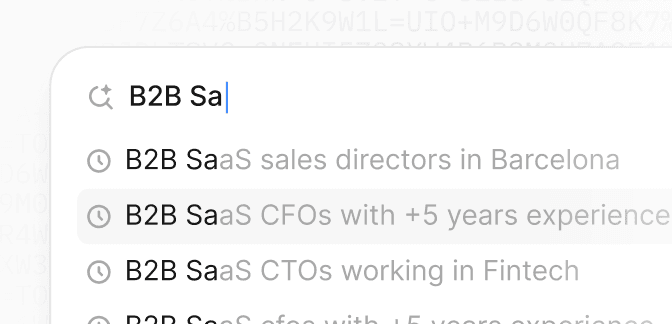
The AI SDR builds a target list from your ideal customer profile, filtering by firmographics like company size, industry, and region. Natural-language search means a rep can type "heads of RevOps at UK SaaS firms with 50 to 200 staff" and get a filtered list back without configuring anything by hand.
Filtering is only half of it. The stronger AI SDRs prioritise by buying signals, the observable events that suggest a company is ready to buy, so your reps reach people at the moment something has changed rather than at random. This is what people mean by signal-based selling, and it's the biggest shift in outbound for 2026.
Signal | What it tells you |
Job change or new hire | Someone is building a fresh agenda and is open to change |
Funding round | New budget, and pressure to spend it on growth |
Hiring for a role | The company is investing in that function, so it feels that pain now |
Technology in use | They run a competitor tool or one that pairs well with yours |
Event attendance | Active interest in a topic, and a warm reason to reach out |
Social engagement | A public clue about what's on the decision-maker's mind |
An AI SDR watches these across your market continuously, so the list refreshes itself as signals fire instead of ageing the moment you build it.
2. Data enrichment and cleaning
Next, the AI SDR fills in the missing contact details, verified work emails, direct phone numbers, and firmographic fields by pulling from multiple data providers in sequence until each field is filled or confirmed unavailable.
A cleaning step then strips out invalid emails and wrongly formatted numbers before anything reaches your CRM. This stage matters more than any other because everything after it inherits the data quality here.
3. AI research and message generation
With a clean record in place, the AI SDR researches each prospect and writes the opening message. It reads the company website, recent news, job postings, and the prospect's own posts, then drafts outreach that references something real rather than a generic template. A good message follows a tight shape, a personalised opener, then a clear problem, a short proof point, and a call to action under five words.
The difference is easy to see side by side:
A generic template reads: "Hi {name}, I'd love to show you how our software helps sales teams work smarter and sell more."
An AI SDR message reads: "Noticed {company} posted three SDR roles last week. Teams scaling outbound usually hit a data-quality wall first. We helped another HR-tech team book more meetings with the same headcount. Open to a quick look?"
The second message isn't better because of clever wording. It's better because it's built on something true about the prospect, which is exactly what the research stage produces.
4. Multi-channel sequencing and sending
The AI SDR then runs the sequence across email, social messaging, and calling tasks, spacing touches over days rather than firing everything at once. It respects sending limits and time zones, warms up sender identities to protect deliverability, and pauses a sequence the moment a prospect replies so a human or the AI can take over the conversation.
The strongest sequences don't stop at a single contact either. They reach several decision-makers at the same account in parallel, sometimes warming up a senior prospect with a light message before an SDR ever calls, so the whole company has heard of you before the first real conversation. That multi-stakeholder approach is a large part of why booking rates climb, and it's something most email-only tools can't do.
5. Reply management and lead qualification
When replies land, the AI SDR sorts them, i.e, interested, a question, an objection, or not interested, and routes each accordingly. It drafts context-aware responses, tags conversations to track what's working, and scores each lead against your qualification criteria so only genuine opportunities move forward.
6. Handoff and continuous learning
Qualified leads pass to an AE with the full history attached, including the signal that triggered outreach, the research that shaped the message, and the reply thread so far. Because the research travels with the contact, the AE opens a clean record instead of starting cold.
Over time, the AI SDR tags outcomes back to prompts and messaging, so the next cycle runs sharper than the last.
AI SDR vs Human SDR: What Each Does Best
The AI SDR vs human SDR question isn't much of a contest because the two are good at different things. An AI SDR wins on volume, consistency, and speed. A human SDR wins on judgement, nuance, and trust. The strongest teams run both and let each do what it's built for.
Job | AI SDR | Human SDR |
High-volume prospecting | Runs continuously at scale | Limited by working hours |
Data enrichment and research | Consistent on every record | Cut first when the week gets busy |
Personalisation | Data and signal driven | Reads intuition and live cues |
Follow-ups | Never forgets or delays | Prone to slipping |
Nuanced objections | Follows set logic | Adjusts in real time |
Building trust and rapport | Limited | The whole point |
Where an AI SDR pulls ahead
An AI SDR's edge is that it never tires, forgets, or falls behind. It can research a thousand accounts, draft a thousand tailored openers, and track every follow-up date without the quality sliding on account nine hundred, something no human rep could sustain across a full week.
Speed is the other half. When a prospect fills in a form or a buying signal fires, an AI SDR can enrich the record and send a relevant first touch within minutes, while a human might not see it until the next day. For example, when a company announces funding at 9 am, an AI SDR can have a personalised, funding-aware message out before the founder's inbox fills with generic congratulations.
Where a human SDR still wins
A human SDR reads the room. They hear the hesitation in a maybe-next-quarter, catch the objection a prospect never says out loud, and know when to push and when to wait. An AI classifier sees not interested and moves on, while a good rep hears not interested right now and books a follow-up for the next budget cycle.
Trust is the other piece. A senior buyer choosing between vendors wants a person who understands their business, not a bot matching replies to a script, so the conversations that move a deal from curious to committed still need a human on the other end.
How they two work together
The setup that works is augmentation, not replacement. A rep oversees the AI's output, so the machine handles the research, first drafts, and follow-up scheduling, while the person approves the list, works the live replies, and runs the conversations that need judgement. You get the machine's scale and the human's judgement in one motion, rather than trading one for the other.
Benefits of an AI SDR
The case for an AI SDR is straightforward once the setup is right. The gains show up in rep time, pipeline consistency, and cost per meeting rather than in vanity activity counts.
More selling time for your reps
The average seller spends around 70% of the day on work that isn't selling, building lists, cleaning data, hunting down email addresses, and logging activity. An AI SDR takes that load off, so a rep starts the day with a researched, enriched list instead of a blank spreadsheet.
The maths is simple. If prospecting and admin eat three hours a day and an AI SDR gives most of that back, a rep gains close to an extra selling day every week, and that time goes into calls and demos, the activities that actually book revenue.
Consistent execution at any volume
Human output is uneven by nature. Research gets deep when the week is quiet and shallow when it's busy, and follow-ups slip when the pipeline heats up.
An AI SDR runs the same process on every contact regardless of volume, so the hundredth prospect gets the same quality of research and the same timely follow-up as the first. That consistency compounds because reply rates depend on relevance and follow-through, and a motion that never drops a follow-up keeps performing when a manual process would crack.
Faster response to buying signals
Timing decides a lot of the outbound. A prospect who recently changed jobs, raised funding, or filled in a form is far more likely to reply in the first hour than the next day.
An AI SDR reacts to those triggers in near real time, enriching and messaging while the signal is still fresh. For inbound especially, a reply that lands in minutes and references exactly what the prospect did reads as attentive, while the same message a day later reads as generic.
More pipeline without more headcount
Scaling a human SDR team is slow and expensive because every new rep needs hiring, onboarding, and months of ramp before they produce. An AI SDR lifts output without lifting headcount in the same proportion, since the volume of work that used to need another person is absorbed by software.
This is the benefit finance cares about. Pipeline grows while the cost line grows more slowly, which quietly changes the unit economics of outbound.
Lower cost per booked meeting
Put the first four together, and the cost of each qualified meeting falls. You generate more conversations from the same team, react faster, and stop paying a salary for every increment of volume, and as the prompts and signals sharpen over time, that cost keeps dropping.
It's worth measuring directly. Track cost per meeting before and after, and most teams find the AI SDR pays for itself on saved rep time alone, before counting the extra pipeline.
Why Most Teams Get AI SDRs Wrong
Here is the part the tool roundups skip. Most AI SDR projects don't fail because the software can't do the work; they fail because of how teams set it up and what they expect from it. These are the five mistakes that show up again and again.
Chasing full autonomy instead of augmentation
The first mistake is buying an AI SDR to replace headcount outright, then pointing it at your whole market on day one. Fully autonomous outreach with no human in the loop tends to over-send, misread objections, and burn good accounts.
The teams that win start narrow, keep a human reviewing early output, and expand only once the quality holds.
Feeding the AI dirty data
An AI SDR is only as good as the data underneath it, and B2B contact data decays at 22.5% per year. Point clever AI at stale records, and it will confidently email the wrong person at the wrong company.
Enrichment and cleaning aren't setup chores you do once; they're the input that decides whether anything downstream is worth sending.
Scaling volume until deliverability collapses
Because an AI SDR makes sending easy, teams turn the volume up and quietly destroy their domain reputation. Every inbox provider reads high-volume, low-reply sending as spam, and once a domain is flagged, even good messages stop landing. It takes an average of 8 touchpoints to book a first meeting, so the win comes from a patient, well-spaced sequence, not brute-force volume.
In practice, that means concrete limits. Keep sending around 30 emails a day per domain and roughly 20 new social connections a day, spread across warmed-up sender identities, and verify every address before it goes out. The discipline sounds small, but it's the difference between a domain that keeps landing in inboxes and one that quietly stops working. The goal is a rising reply rate, not a rising send count.
Deploying without a benchmark for good
Plenty of teams launch an AI SDR with no idea what strong performance looks like, so they can't tell whether it's working. Real SDR benchmarks give you the yardstick to hold it to, whether the work is done by a person or a machine.
Metric | Healthy monthly benchmark |
Calls per day | 60 to 80 |
Meetings booked per month | 20 to 30 |
Average close rate downstream | 20% |
New clients per month | 4 to 6 |
Without numbers like these to measure against, you're guessing about whether the AI SDR is pulling its weight. Our guide on how to measure sales performance sets out the metrics that matter and how to track them.
Skipping the human handoff
The last mistake is letting the AI SDR run past its remit into qualification and closing. It's built to book meetings, not to navigate a nuanced buying committee or handle a live objection under pressure.
When a qualified lead appears, a human should take the conversation, with the AI SDR's research and history handed over intact so nothing is lost in the switch.
How to Choose an AI SDR: What to Look For
Knowing the traps makes choosing easier, because the right AI SDR is mostly one that designs those traps out. Feature lists all look similar, so judge tools on the six things that actually decide whether one books meetings for you. Each is a question worth asking on the demo.
Data quality and enrichment depth: Ask how it fills in contact data. A strong AI SDR pulls from many providers in sequence rather than one, so coverage stays high, and records stay current. This is the input that caps everything else, so it matters more than any output feature.
Signal intelligence and freshness: Check whether it acts on live buying signals or queries a static database instead. Signals that update continuously let you reach people at the right moment, while a stale list only automates spray-and-pray. Ask how often the data refreshes.
True multi-channel, not email-only: Most tools are email-first, but a first meeting usually takes several touches across email, social, and calls. A tool that can only send email leaves most of the sequence and most of the booking rate on the table.
Deliverability infrastructure: Ask what protects your domain, specifically send caps, identity warm-up, address verification, and reply-rate monitoring. Without those built in, more sending only means more spam folders and a burned domain.
CRM sync and a clean handoff: The research an AI SDR gathers is only useful if it reaches the human who takes the call. Look for native CRM sync that carries the full context across, not a CSV export that someone has to reconcile by hand.
Total cost, including your time: Compare the subscription plus the hours a person spends running it. A cheap tool that needs a GTM engineer to operate can cost more than a complete one that a single rep can run alone.
Whatever makes the shortlist, test before you commit. Run a narrow pilot, around 100 accounts over 30 days, on your own data and messaging, and measure it against a human baseline.
Every demo looks good because the vendor picks the example; only your accounts tell the truth. Expect 60 to 90 days for meaningful results rather than an instant pipeline.
How to Deploy an AI SDR the Right Way
Knowing the mistakes is half the job; avoiding them takes a deliberate rollout. Treat the first few weeks as a controlled test rather than a full switch, and the AI SDR earns trust before it earns volume.
Start with one clear job: Pick a single, narrow task first, inbound reply handling or follow-ups on a defined segment, so you can judge quality before you scale.
Connect your data and tools: Wire up your CRM, email, and calendar so the AI SDR works from real context and writes back cleanly to one record.
Set the rules and guardrails: Define who to contact, sending limits, qualification criteria, and a blocklist, so the AI SDR stays inside your compliance and brand lines.
Keep a human in the loop early: Review the first batches of output, correct the misses, and feed those corrections back before you widen the scope.
Measure, then expand: Track reply rate, meetings booked, and handoff quality against real benchmarks; scale the AI SDR only once the numbers hold.
The teams that stumble skip straight to step five. The teams that see returns treat steps one through four as the actual work.
Is AI SDR Cold Outreach Legal? UK and EU Rules
Because an AI SDR sends outreach at scale, the compliance question matters more, not less. The software doesn't know your legal obligations, so the guardrails are yours to set. This is general guidance rather than legal advice, but the rules below are the ones UK and EU teams work within.
Under UK GDPR and the EU GDPR, B2B cold email to a named individual usually relies on the legitimate interest basis, which means the outreach has to be relevant to the person's job and easy to opt out of.
The UK's PECR rules are lighter for email to corporate subscribers than to individuals or sole traders, but you still can't hide who you are or make it hard to unsubscribe.
For calling, the UK's Corporate Telephone Preference Service and the individual TPS list registered numbers that must not be cold called; screening against them before dialling is not optional.
Across every channel, the practical rules are the same. Identify yourself honestly, keep the contact relevant, honour every opt-out immediately, and keep a record of why you believed the contact was appropriate. A well-configured AI SDR makes this easier because a blocklist and opt-out handling can be built into the workflow rather than left to memory.
Everything You Need to Know About AI SDRs
This table pulls the whole guide into one place, so you can scan the answers or share them with a team evaluating an AI SDR.
Question | Short answer |
What is an AI SDR? | Software that runs prospecting, enrichment, outreach, follow-ups, and lead qualification autonomously. |
What does it do? | Books meetings by finding, researching, and contacting prospects via email, social, and calls. |
How do AI SDRs work? | A six-stage loop: discover, enrich, research and write, sequence, manage replies, and hand off. |
Does it replace human reps? | No, it removes repetitive volume work so reps focus on live conversations and closing. |
What decides its quality? | Data quality above all, since contact data decays at 2.1% per month. |
Where do teams go wrong? | Chasing full autonomy, dirty data, over-sending, no benchmarks, and skipping the handoff. |
Which type should I pick? | A complete, human-in-the-loop tool beats fully autonomous or single-layer point tools for most teams. |
How do I choose one? | Check data quality, live signals, multi-channel reach, deliverability, and CRM sync, then pilot for 30 days. |
Who is it for? | B2B teams with structured SDR and AE functions that need a pipeline without adding headcount. |
How is success measured? | Qualified meetings booked, reply rate, and pipeline created, not revenue closed. |
Book a Demo With Enginy
Most AI SDR setups fail on the same four things, i.e, dirty data, fragmented tools, no deliverability discipline, and no clear handoff to a human. That's precisely the gap Enginy is built to close.
Enginy runs the whole motion in one place, from prospect discovery through enrichment across 30+ data providers to AI-powered multi-channel outreach, and it does it without a dedicated GTM engineer to operate it.
That combination, complete and easy to run, is what point tools can't match, because a data-only tool covers one layer, an outreach-only tool covers another, and your reps pay for the gaps in wasted time.
Enginy is built for B2B sales teams with real SDR and AE functions that want to grow their pipeline without growing headcount.
The proof is in the numbers, as Factorial, one of our clients, lifted reply rates from 10% to 45% and doubled conversion from 4% to 8% after centralising outbound on Enginy. If you're ready to run an AI SDR motion that books meetings instead of burning your domain. Book a Demo Today.
FAQs About AI SDRs
What is an AI SDR?
An AI SDR is software that automates the early-stage sales work of a sales development representative, from prospecting and data enrichment to personalised outreach, follow-ups, and lead qualification. It runs across email, social messaging, and calling, and operates around the clock rather than during working hours. It's measured on qualified meetings booked and pipeline created, the same targets a human SDR carries, which, for a strong rep, means roughly 20 to 30 meetings a month. It doesn't close deals; it feeds the pipeline that closers then work.
How do AI SDRs work?
AI SDRs work as a six-stage loop, discovering prospects, enriching and cleaning their data, researching and writing personalised messages, running multi-channel sequences, managing replies, and handing qualified leads to a human. Each stage feeds the next, so the enrichment step, where verified emails and phones are pulled from multiple providers, sets the ceiling on everything downstream. The AI reads real signals like company news and job changes to decide what to say and when. It pauses automatically the moment a prospect replies, so a person can take over.
How much does an AI SDR cost?
AI SDR pricing usually runs on a subscription or credit-based model tied to how many contacts and messages you process, so cost scales with usage rather than headcount. Enginy prices per team based on a short qualification call rather than publishing a public rate, because needs vary by data volume and channels. The relevant comparison isn't the sticker price but the return, since Factorial doubled conversion from 4% to 8% and scaled to 5,000 leads a month on Enginy with the same team. Weighed against the salary of even one SDR, a working AI SDR motion typically pays for itself on time saved alone.
Can an AI SDR replace human sales reps?
An AI SDR cannot replace human sales reps, and treating it as a straight swap is the most common way teams get it wrong. It replaces the repetitive, high-volume work, prospecting, enrichment, research, and follow-ups, but it can't read hesitation, handle a nuanced objection, or build the trust a deal needs. The effective setup uses the AI SDR to book meetings and free reps for the conversations where a person changes the outcome. Think of it as adding capacity, not removing people.
Do AI SDRs actually book meetings?
AI SDRs book meetings when the data and sequencing are set up properly, and the results are measurable rather than theoretical. Factorial lifted reply rates from 10% to 45% after moving its outbound onto Enginy, and reply rate is the leading indicator of booked meetings. The mechanism is disciplined multi-channel sequencing, since it takes an average of 8 touchpoints to secure a first meeting, which an AI SDR delivers without dropping follow-ups. The teams that see no meetings almost always have a data or deliverability problem upstream, not an AI problem.
Is AI SDR cold outreach legal in the UK and EU?
AI SDR cold outreach is legal in the UK and EU when it follows the same rules that govern any cold outreach, since the automation doesn't change your obligations. B2B email to a named individual generally relies on the legitimate interest basis under UK and EU GDPR, meaning it must be relevant to their role and carry an easy opt-out. Calls must be screened against the TPS and Corporate TPS lists before dialling. Identify yourself honestly, honour opt-outs immediately, and keep a blocklist; this is general guidance, not legal advice, so confirm your specifics with a professional.
What's the difference between an AI SDR and sales automation?
The difference between an AI SDR and sales automation is judgement. Sales automation sends the same template on a fixed schedule and follows rigid rules, while an AI SDR reads each prospect's context, decides what to say and when, and adapts as replies come in. Automation is a mechanism; an AI SDR is closer to a junior rep who runs that mechanism intelligently. In practice, a full AI SDR includes automation as one part, plus research, personalisation, reply handling, and qualification on top.
Is an AI SDR the same as an AI BDR?
An AI SDR and an AI BDR are effectively the same thing in 2026, and the label rarely reflects a real difference in capability. The old split put SDRs on inbound leads and BDRs on outbound prospecting, but most AI tools now handle both, so vendors use the two names interchangeably. Artisan brands its agent as a BDR while 11x calls its agent an SDR, yet both do similar work. Judge the tool on its data, channels, and output, not on whether it says SDR or BDR.
Won't an AI SDR spam my prospects and damage my domain reputation?
An AI SDR only spams prospects and damages your domain if you let it scale volume without discipline, which is a setup choice, not a fixed trait. Inbox providers flag domains that send high volume with low reply rates, so the safeguard is capping sends per domain, warming up identities, verifying every address, and aiming for replies rather than raw send count. A well-configured AI SDR builds these limits into the workflow, and it pauses sequences the moment someone replies. Done right, personalised sequencing tends to lift reply rates, which protects domain health rather than harming it.
About the Author
Andrea López is a content writer at Enginy, where she covers B2B sales, outbound strategy, and go-to-market execution for modern sales teams. She writes about the systems behind prospecting, data quality, and pipeline growth, translating what works on the ground into practical guidance for SDRs and sales leaders. Follow more of her work on Enginy's Instagram.
