Lead Scoring: A Complete Guide for B2B Sales Teams in 2026

Andrea López
Condividi
Key Takeaways (TL;DR)
What This Guide Covers?: Everything you need to understand lead scoring, from the basic maths behind it through to modern AI lead scoring and the tools that run it.
Why It Matters?: Sales teams without a lead scoring system waste time treating every lead the same, chasing cold contacts while genuinely interested prospects wait.
Who Should Read This?: Sales and revenue teams who want a repeatable way to prioritise leads, particularly teams whose reps disagree on which leads to call first.
The Core Idea: A good lead scoring model turns scattered signals, like job title, company size and website activity, into a single number reps can act on immediately.
How Enginy Fits In?: We built Enginy as an end-to-end GTM platform where the enriched contact and intent data behind a lead score lives in the same place as your outreach, rather than a separate system reps have to check manually.
Lead Scoring: At a Glance
Element | What Does It Cover? | Why Does It Matter? |
Core inputs | Firmographic fit, behavioural activity, intent signals | Different signals answer different questions about a lead |
Traditional approach | Fixed points assigned manually per attribute | Simple to build, but doesn't adapt as data changes |
AI approach | Models trained on closed-won and closed-lost data | Adjusts automatically as buying patterns shift |
Typical output | A single numeric score or hot, warm, cold band | Gives reps one clear signal instead of scattered data |
Where Enginy fits | Enrichment and intent data feeding scoring criteria directly | Scores stay accurate because the underlying data is verified |
What Is Lead Scoring?

Lead scoring assigns a numeric value to each lead based on how likely they are to become a customer.
Instead of guessing which of fifty leads to call first, this gives every contact a score, so the leads worth chasing rise to the top automatically.
Most systems combine two signals:
Fit signals: whether a lead matches your ideal customer profile, like company size and job title.
Behavioural signals: what that lead is actually doing, like opening emails or visiting pricing pages.
Scoring becomes useful once both feed into one number, since a perfect-fit lead with no engagement and a highly engaged poor fit are both worth avoiding.
The term covers everything from a spreadsheet to a fully automated model, but every version shares one goal: an ordered list a rep can work from.
How to Calculate a Lead Score?
The simplest way to calculate a lead score is to assign points to specific attributes and actions, then add them together.
A basic points-based system might look like this:
20 points: matching your target job title
15 points: company size within range
10 points: opening three emails
25 points: visiting a pricing page
Once a lead crosses an agreed threshold, say 60 points, it moves from marketing qualified to sales qualified.
Anything scoring negatively, like a personal email domain or a role clearly outside your buyer persona, can subtract points instead of adding them.
This manual points system is exactly what most traditional lead scoring models are built on, though modern AI lead scoring takes a rather different approach, which we'll get into shortly.
Why Lead Scoring Matters for B2B Sales Teams?

This solves a specific, recurring problem: not every lead deserves the same amount of a rep's time, but without a system, most teams treat them as if they do.
Here's what changes once a proper scoring system is in place:
1. It Stops Good Leads Getting Lost in the Noise
Without scoring, a genuinely interested prospect who quietly downloaded a case study can sit in the same queue as someone who filled in a form by accident.
A lead scoring system surfaces the first prospect automatically, so reps don't need to manually sift through every new lead to spot who's actually worth calling.
2. It Aligns Sales and Marketing on What "Qualified" Means
Sales and marketing teams argue about lead quality more often than either side would like to admit.
A shared lead scoring model gives both teams the same definition of a qualified lead, removing the usual back and forth about whether a lead was ever "sales ready" in the first place.
3. It Shortens the Sales Cycle
Reps calling high-scoring leads first tend to close faster, simply because those leads already show stronger fit and intent before the first conversation even happens.
Chasing low-scoring leads early in a sales cycle often just delays the moment a rep gets to the leads that were always going to convert.
4. It Makes Forecasting More Reliable
A pipeline built on scored leads gives sales leadership a clearer read on how much of that pipeline is genuinely likely to close.
Without scoring, forecasts often rely on gut feel, which tends to be optimistic right up until the quarter closes and the numbers don't land.
5. It Reduces Wasted Spend on Low-Fit Leads
Marketing teams generating volume without a scoring system often end up passing leads to sales that were never a good fit to begin with.
B2B lead scoring flags this early, so marketing can adjust targeting before more budget goes towards attracting the wrong audience.
Taken together, these five effects are what turn lead scoring from a nice-to-have into a genuine driver of sales and marketing performance.
Key Lead Scoring Models to Know About

Now that you can see why scoring matters, it helps to know the different ways a score can actually be built.
Most lead scoring systems combine several of these models rather than relying on just one.
Here's a closer look at the five you're most likely to come across:
1. Demographic and Firmographic Scoring
This model scores a lead based on who they are and what company they work for, covering attributes like job title, seniority, company size, industry and geography.
It answers a simple question: does this lead match your ideal customer profile at all, regardless of how engaged they currently are.
2. Behavioural Scoring
Behavioural scoring tracks what a lead actually does, including email opens, website visits, content downloads and webinar attendance.
This model captures intent that firmographic data alone can't, since a perfect-fit lead who never engages is a very different prospect from one who's been quietly researching for weeks.
3. Predictive or AI Scoring
Predictive scoring uses machine learning to identify patterns across historical deals, then applies those patterns to score new leads automatically.
This is the model most people mean when they talk about scoring leads with AI, and it tends to outperform manual models once enough historical data exists to train on.
4. Fit vs Intent Scoring
Some teams score fit and intent as two entirely separate numbers rather than blending them into one, since a high-fit, low-intent lead needs a very different follow-up approach than a high-intent, low-fit one.
Keeping the two scores separate also makes it easier to diagnose why a particular lead scored the way it did.
5. Negative Scoring
Negative scoring subtracts points for signals that suggest a lead is unlikely to convert, like a competitor's email domain, a student job title or repeated unsubscribes.
This model prevents a lead from scoring artificially high just because they triggered a handful of positive signals while also showing clear red flags elsewhere.
Now that you know the individual models, it's worth seeing how the two broader approaches actually run them day to day.
How Traditional Lead Scoring Works?

The traditional approach runs on a simple, transparent points system that a sales or marketing team builds and maintains by hand.
Here's what traditional lead scoring looks like, in practice:
1. Identifying the Attributes That Matter
The process usually starts by identifying the handful of attributes that matter most, drawn from your existing customer base.
Common examples include job title, company size, industry and specific pages visited on your website.
2. Assigning Point Values
Each attribute gets assigned a point value, weighted by how strongly it correlates with an actual sale.
A perfect job title match might be worth more points than a single email open, since title tends to be a stronger predictor of fit.
3. Accumulating Scores and Taking Action
Points accumulate as a lead interacts with your company, and the total determines whether that contact gets passed to sales or stays in nurturing.
Because every rule is visible and adjustable, this approach remains popular with smaller teams who want full control over their lead scoring criteria without relying on a black box.
4. The Maintenance Trade-off
The main weakness is maintenance.
Someone has to periodically review whether the point values still reflect reality, and most teams simply don't get round to it often enough.
How AI Lead Scoring Works?

Unlike the traditional approach, AI lead scoring trains a model on your actual sales outcomes, learning which signals genuinely predict a closed deal.
Here's how it works:
Step 1: Gather Historical Deal Data
The model needs a dataset of past leads, including which ones converted and which didn't, along with the attributes and behaviours associated with each one.
The more complete and accurate this historical data is, the more reliable the resulting model becomes.
Step 2: Identify the Signals That Actually Predict Conversion
Rather than a human guessing which attributes matter, the model tests dozens of variables at once, surfacing correlations a person might never spot manually.
This often reveals unexpected predictors, like a particular combination of company size and engagement timing that consistently shows up before a deal closes.
Step 3: Assign Weighted Scores Automatically
Once the model identifies which signals matter, it assigns weighted scores to new leads automatically, without anyone manually setting point values.
This weighting also adjusts itself over time as new deals close and new data feeds back into the model.
Step 4: Continuously Retrain as New Data Comes In
Unlike a static points system, an AI-driven model keeps learning. As markets shift and buyer behaviour changes, the model updates its scoring criteria to match.
This ongoing retraining is the main advantage the AI-driven approach holds over the traditional one, and it's why AI-scored leads tend to stay accurate for longer without manual intervention.
Step 5: Surface Scores Directly Inside Your Workflow
The final step is making the score visible and actionable, ideally inside whatever platform your reps already use for outreach, rather than a separate dashboard nobody checks.
A score that lives outside a rep's daily workflow rarely gets used consistently, no matter how accurate the underlying model is.
Worth noting: this approach needs a reasonable volume of past deal data to get started.
That's why newer companies often begin with the traditional, points-based approach, moving to an AI-driven model once they've got enough history to train against.
Benefits of Lead Scoring to Know About
Understanding how traditional and AI scoring actually work is one thing, but it's worth being explicit about what a team actually gains once either approach is running properly.
Here's where those benefits actually show up in practice:
1. Sharper Focus for Sales Reps
A rep working from a scored list knows exactly where to spend the next hour, rather than working through a queue in whatever order leads happened to arrive.
That clarity compounds across a team.
When every rep is working from the same prioritised list, managers spend less time adjudicating disputes over who should call whom first.
2. Better Alignment Between Marketing and Sales
Shared scoring criteria mean marketing knows exactly what "qualified" looks like before handing a lead over, cutting down on leads getting bounced back and forth.
This alignment also makes it easier to have a genuinely useful conversation about lead quality, since both teams are referencing the same numbers rather than arguing from instinct.
3. Faster Response Times on the Leads That Matter Most
High-scoring leads tend to get followed up faster once a team can see clearly which leads deserve that priority, and response speed has a real, measurable effect on conversion.
A lead that sits unscored in a general queue for two days has usually cooled considerably by the time anyone calls, regardless of how strong the original signal was.
4. More Accurate Revenue Forecasting
A pipeline built from scored leads gives leadership a more honest picture of how much revenue is genuinely likely to close, rather than a raw lead count that includes plenty of poor fits.
That accuracy matters most at quarter end, when the gap between a hopeful forecast and an honest one usually becomes impossible to ignore.
5. A Feedback Loop for Improving Targeting
Reviewing which scores actually converted over time tells marketing which channels and campaigns are producing genuinely qualified leads, not just high volume.
Over several quarters, this feedback loop becomes one of the more reliable ways to improve targeting, since it's based on what actually closed rather than what looked promising at the time.
Things to Consider While Implementing A Lead Scoring System
Knowing the benefits is one thing, but actually building a model that delivers them requires getting a few foundational decisions right from the start.
Here are the things worth thinking through before you build anything:
1. Start With a Clear Definition of a Qualified Lead
Before assigning a single point, agree on what a genuinely sales-ready lead actually looks like. Without that definition, any scoring model is just guesswork dressed up as maths.
Sales and marketing should agree on this together, since a definition built by only one team rarely survives contact with the other.
2. Use Data You Can Actually Trust
Any scoring model is only as good as the data feeding it. Scoring based on outdated job titles or unverified contact details produces confident-looking scores that are quietly wrong.
This is where reliable enrichment matters.
Tools that keep contact and firmographic data current through waterfall data enrichment give a scoring model far more accurate inputs to work from than a static, ageing database.
3. Avoid Over-Complicating the Model Early On
A scoring model with forty variables sounds thorough but tends to be harder to maintain and explain than one with eight or ten well-chosen ones.
Start simple, review performance after a few months, then add complexity only where it clearly improves accuracy.
4. Revisit Your Scoring Criteria Regularly
Buyer behaviour and market conditions shift, and a scoring model built two years ago may no longer reflect what a good lead looks like today.
Set a recurring review, even quarterly, to check whether your lead qualification criteria still match reality.
5. Make Scores Visible Where Reps Actually Work
A score buried in a report nobody opens doesn't change behaviour. Scores need to sit inside the CRM or outreach tool reps use every day to actually influence prioritisation.
6. Get Buy-In From the Reps Who'll Actually Use It
A scoring model that reps don't trust gets quietly ignored, no matter how sound the underlying logic is.
Involve a handful of reps early on, ask them to sanity-check whether high-scoring leads actually match their own instincts, and adjust the model where their experience disagrees with the numbers.
Lead Scoring Examples: A Practical Look-in
Seeing how scoring plays out on real leads makes the theory above easier to apply. Here are five common scenarios and how they'd typically score:
1. The ‘SaaS Free Trial’ Signal
A lead who signs up for a free trial, then logs in three times in the first week and invites a colleague, would score highly under most behavioural models.
That combination of repeat usage and internal advocacy is one of the strongest predictors of a genuine buying intent in product-led SaaS businesses.
2. The ‘Perfect-Fit, Zero-Engagement’ Contact
A VP of Sales at a company matching your exact target profile who has never opened a single email would score well on firmographic fit but poorly on behaviour.
This lead might need a different outreach approach entirely, since the fit is clearly there but the interest hasn't been triggered yet.
3. The ‘Content-Driven Warm Lead’
A marketing manager who downloaded three gated reports, attended a webinar, and visited the pricing page twice in the same week would score highly on both fit and intent.
This is the kind of lead a rep should be calling within hours, not days.
4. The ‘Disqualified, High-Volume’ Signal
A student using a personal email address who downloaded a single free template would score low, or even negative, despite technically converting on a lead magnet.
Volume alone doesn't equal quality, and a good scoring model filters this kind of lead out automatically.
5. The ‘Re-Engaged, Dormant’ Lead
A contact who went cold for six months, then suddenly opened three emails and revisited your website after a company funding announcement, would see their score jump sharply.
This kind of re-engagement, especially tied to a real intent signal, often gets missed entirely without an active scoring system tracking it.
AI Lead Scoring Tools to Help You Scale
A range of tools now offer AI-powered lead scoring, each taking a slightly different approach to the same problem.
Here are six worth knowing:
1. Enginy

We built Enginy as an end-to-end GTM platform that ties lead scoring directly to the data behind it, rather than treating scoring as a separate feature bolted onto a CRM — and without needing a dedicated GTM engineer to keep it running.
Every contact is enriched against firmographic detail and intent signals like job changes and funding announcements as it enters your pipeline, so the lead qualification criteria your team defines are always working from current, verified information.
Given that prospecting, enrichment and outreach sit in the same workspace, a lead's score also reflects real engagement across channels including outreach to multiple stakeholders at the same account, not just a single contact. And because AI SDR agents can act on a score the moment it crosses your threshold, a hot lead gets an outreach sequence started around the clock, not whenever a rep next opens their queue.
2. HubSpot

HubSpot's predictive lead scoring runs inside the CRM many marketing teams already use, scoring contacts based on a blend of demographic fit and engagement with marketing emails, forms and website pages.
Because scoring lives natively in the CRM, it's straightforward to set up for teams already standardised on HubSpot.
The model's accuracy still depends heavily on how much activity data flows through that same system.
3. Cognism
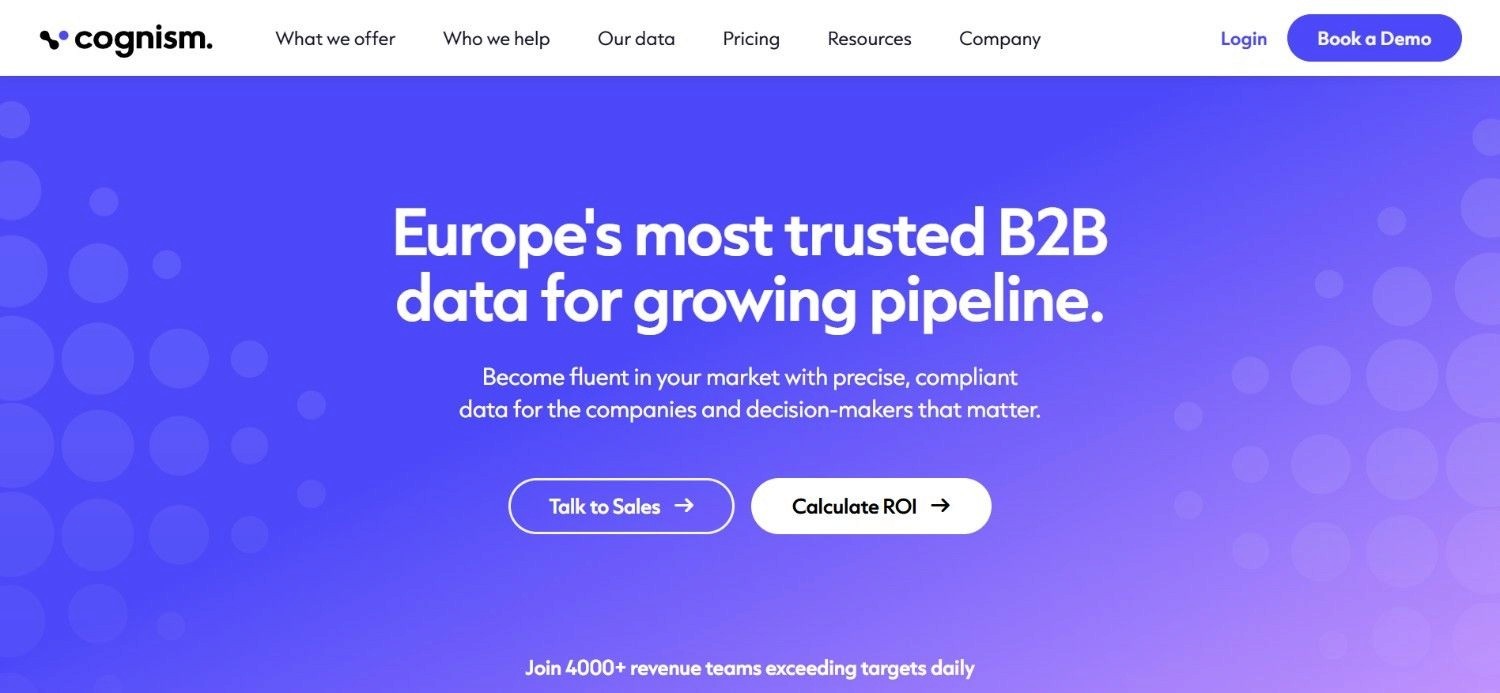
Cognism is a sales intelligence platform built around compliant, phone-verified contact data, layering in intent data through a Bombora integration to flag which accounts are actively researching relevant topics.
That intent layer feeds naturally into a scoring model, since it gives a fit-focused data provider a genuine behavioural signal to combine with firmographic accuracy. As with most data-only providers, though, a high score still has to be handed off to a separate outreach tool before a rep can act on it.
4. 6sense
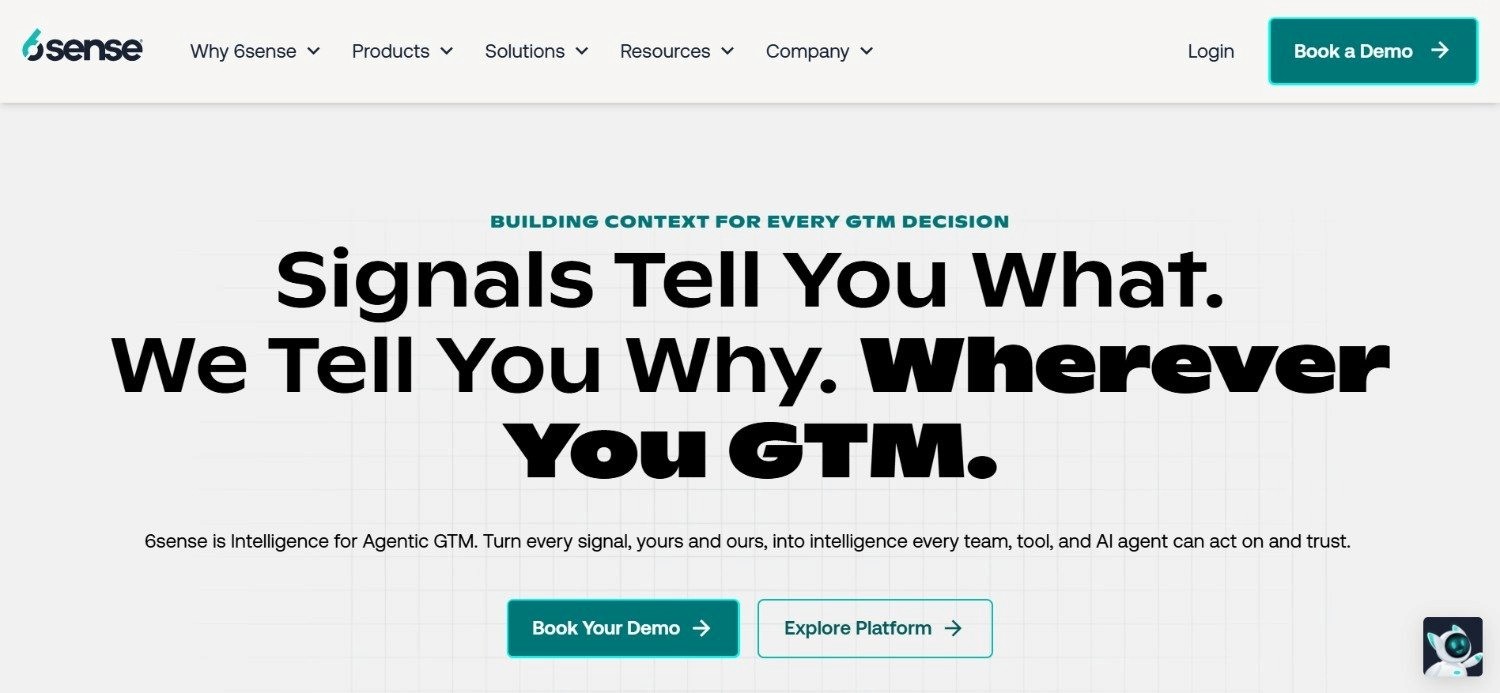
6sense focuses on account-level predictive scoring, using intent data gathered across the web to flag which accounts are actively researching a category of solution, even before they've filled in a single form.
This makes it particularly useful for account-based sales motions where the buying signal often comes from anonymous research rather than a direct enquiry. That account-level view is a real strength for ABM, though the score itself still needs to be exported into another platform before a rep can engage the account across channels.
5. ZoomInfo
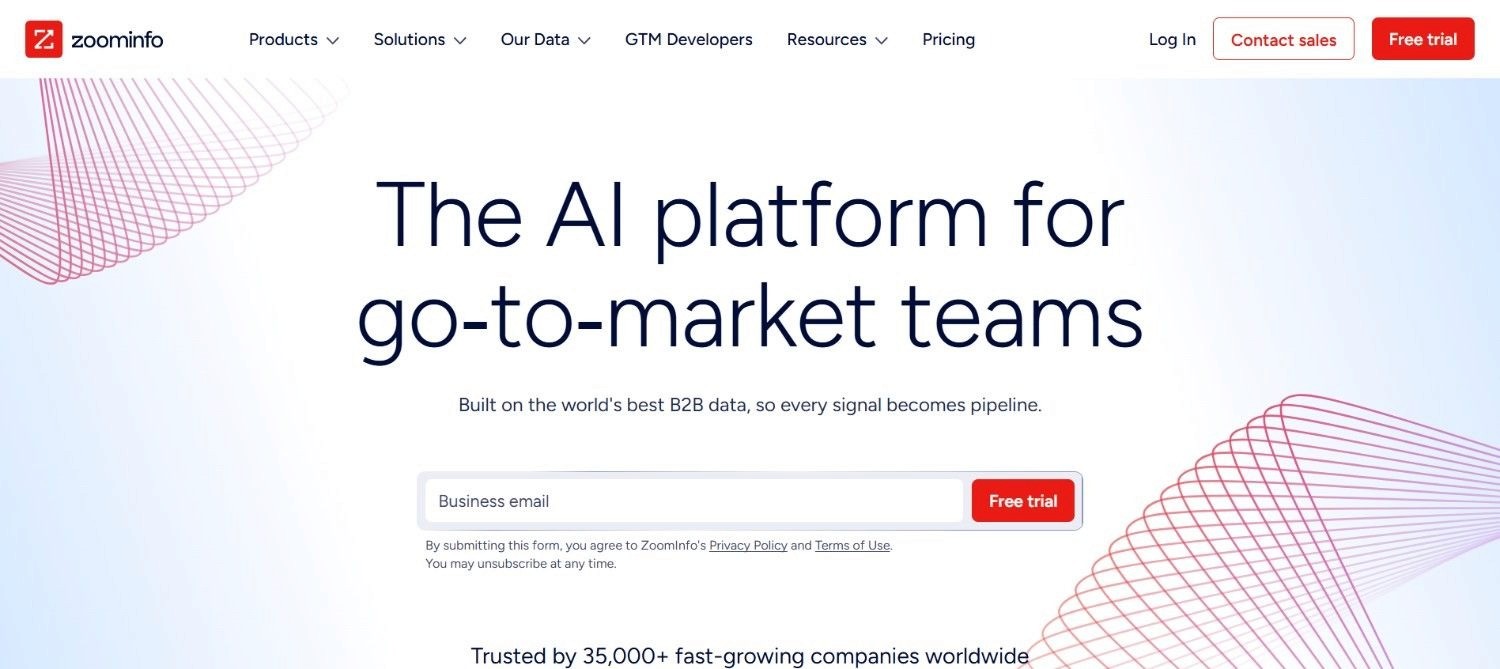
ZoomInfo layers scoring on top of its large, verified contact and firmographic database, giving teams a fit score grounded in accurate company and role data rather than self-reported form fields.
Its scale makes it a common choice for enterprise teams that need scoring across a very large total addressable market though, as with most data providers, scoring and outreach live in separate tools, so a high-scoring contact still has to be pushed into a sequencing platform before a rep can reach out.
6. Adobe Marketo Engage
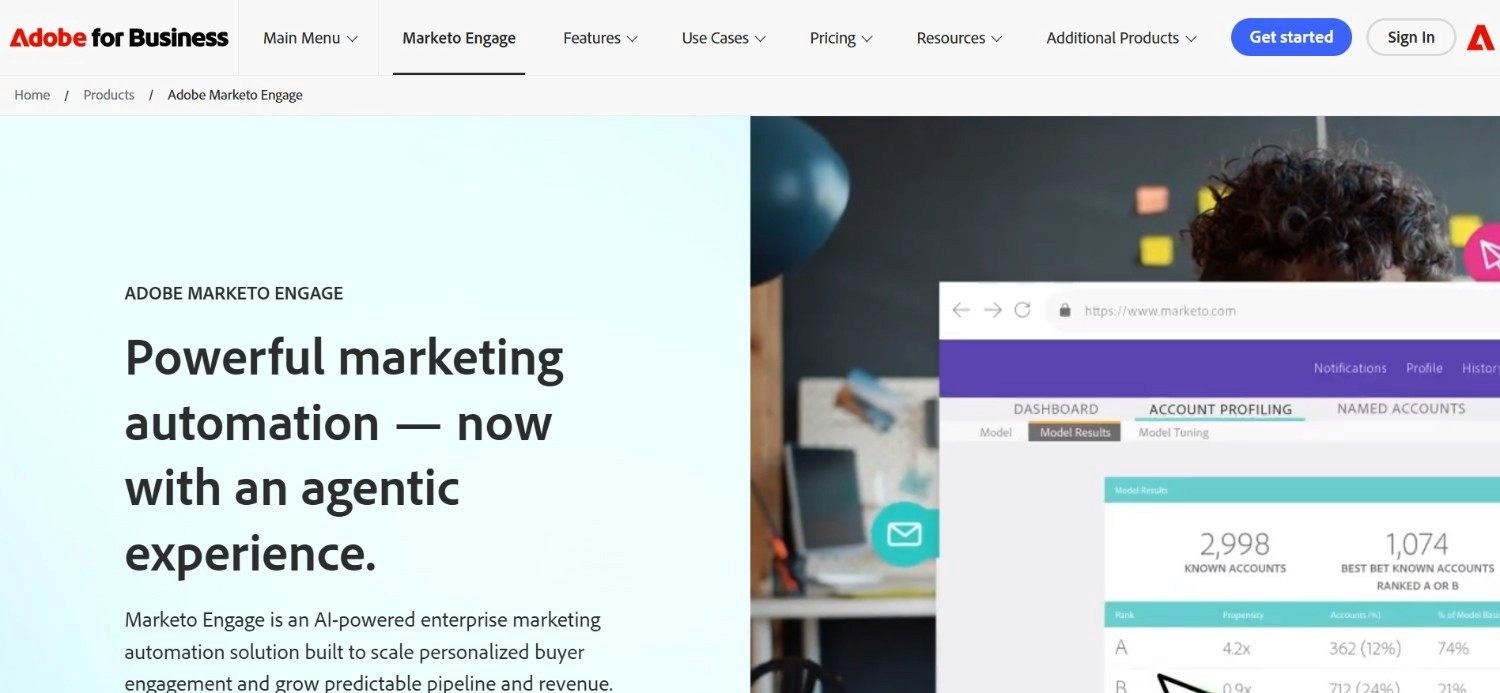
Adobe Marketo Engage includes lead scoring as part of a broader marketing automation suite. It weights engagement actions, like email opens, content downloads and webinar attendance, into a behavioural score.
It tends to suit marketing-led organisations already running nurture campaigns through Marketo.
For these teams, scoring naturally extends the same engagement data already being tracked though it's built for marketing automation rather than sales prospecting or outreach, so a rep still needs a separate tool to act on the score.
Key Best Practices for Lead Scoring
A handful of habits consistently separate models that get trusted and used from ones that quietly get ignored after a few months:
Agree on scoring criteria across teams first: A model built without marketing and sales agreeing on definitions rarely gets trusted by either side.
Weight recency alongside frequency: A lead who engaged once last week often deserves more attention than one who engaged five times six months ago.
Score negatively as well as positively: Ignoring disqualifying signals lets clearly unfit leads inflate their way to the top of a rep's list.
Review conversion data quarterly: Check whether your highest-scoring leads are actually the ones converting, not just assume the model is working.
Keep the model explainable: Reps trust a score more when they can see roughly why a lead scored the way it did, rather than treating it as an unexplained black box.
Feed the model with verified data: No scoring approach, traditional or AI, produces reliable output from outdated or unverified contact and firmographic data.
Set clear tiers, not just a single number: Splitting scores into bands, like hot, warm and cold, is often easier for reps to act on quickly than a raw number they have to interpret each time.
None of these practices work in isolation.
A model that follows all six consistently is what actually earns the trust needed for reps to use it every day, rather than falling back on gut feel.
Everything You Need to Know About Lead Scoring
Question | Quick Answer |
What is lead scoring? | Assigning a numeric value to leads based on fit and behaviour, to prioritise follow-up |
How is it calculated? | By adding points for matching attributes and actions, or through an AI model trained on past deals |
What's the difference between traditional and AI lead scoring? | Traditional scoring uses fixed, manually set points; AI scoring learns and adjusts from historical outcomes |
What are the main lead scoring models? | Demographic, behavioural, predictive, fit vs intent, and negative scoring |
What data does a good lead scoring system need? | Verified, current firmographic and behavioural data |
How does Enginy help with lead scoring? | Feeds enriched, verified contact and intent data directly into scoring criteria and outreach sequences |
Automate Your Lead Scoring and Outreach with Enginy
Most teams build a lead scoring model on top of data that's already a few months stale by the time it's actually used.
We built Enginy so that gap doesn't exist. Prospecting, enrichment and outreach all draw from the same verified data your scoring criteria depend on, so a lead's score reflects information that's genuinely current.
Given that our platform also runs multichannel outreach and social prospecting, a lead's engagement across channels feeds directly back into the same profile used for scoring.
If your scoring model keeps flagging leads that turn out to be a poor fit once a rep actually calls them, that's usually a data problem, not a model problem, and it's exactly what Enginy can help you fix.
None of this requires a dedicated GTM engineer to keep running, either reps and sales ops can adjust scoring criteria and sequences directly inside the same platform. And once a lead crosses that threshold, AI SDR agents can start the right outreach sequence immediately, at any hour, rather than waiting for the next time someone checks the queue.
Book a demo with our team to see how connected data could make your lead scoring more accurate.
FAQs About Lead Scoring
What is lead scoring and why does it matter for B2B teams?
Lead scoring is the process of assigning a numeric value to leads based on how likely they are to convert, combining fit and behavioural signals into one usable number. For B2B teams, it matters because reps can't manually judge lead quality at scale once volume grows. A shared scoring system also gives sales and marketing the same definition of a qualified lead.
What should I consider when choosing a lead scoring model?
Choosing the right lead scoring model starts with how much historical deal data you actually have, since AI models need volume to train against. Traditional, points-based models suit newer teams without that history yet. Consider too how easily each model's logic can be explained to reps, since scores nobody trusts rarely change behaviour.
How does AI lead scoring differ from traditional scoring methods?
AI lead scoring differs from traditional scoring by learning which signals predict conversion directly from historical data, rather than relying on a team manually assigning point values. This means AI models adjust automatically as buyer behaviour shifts, while traditional models stay fixed until someone manually updates them. AI scoring generally needs more historical data to get started.
How do I get started with Enginy for lead scoring?
Getting started with Enginy begins with a qualification call, where we scope your team's data and scoring needs before recommending a plan. From there, our team runs structured onboarding sessions covering enrichment setup and criteria configuration. Most teams see enriched, scoring-ready data flowing within the first onboarding sessions.
How accurate is AI lead scoring compared to manual scoring?
AI lead scoring is generally more accurate than manual scoring once there's enough historical data to train a reliable model, since it identifies patterns a person is unlikely to spot manually. Manual scoring can still work well for smaller teams without much deal history yet. Accuracy in either approach depends heavily on the quality of the underlying contact and firmographic data.
Can lead scoring work without a large sales team?
Lead scoring can work well without a large sales team, and arguably matters more for smaller teams who can't afford to waste limited rep hours on poor-fit leads. A simple points-based model is often enough at a smaller scale, with AI lead scoring becoming more valuable as deal volume and historical data grow. The core benefit, prioritising the right leads, applies at any team size.
What's a common mistake teams make when building a lead scoring system?
A common mistake teams make when building a lead scoring system is setting it up once and never revisiting it, letting the criteria quietly drift out of date as the market changes. Another frequent error is scoring purely on demographic fit while ignoring behavioural signals entirely, or the reverse. Regularly checking whether high-scoring leads are actually converting catches both problems early.
Is lead scoring worth it if my sales cycle is very short?
Lead scoring is still worth it with a short sales cycle, since fast-moving deals make it even more important to identify the right leads immediately rather than losing time on poor fits. A short cycle makes response speed more critical, and scoring tells a rep which lead deserves that response first. The main adjustment is weighting recent behavioural signals more heavily.