Best Zoominfo Alternatives in 2026 (Top-Rated Competitors Reviewed)

Andrea López
Share
Key Takeaways (TL;DR)
Who ZoomInfo Is For?: ZoomInfo suits large enterprise sales teams that want a massive contact database and are prepared to commit to a sizable annual contract for that scale.
Why Seek a ZoomInfo Alternative?: Teams often look for Zoominfo alternatives because of steep entry pricing, long procurement cycles, and a database-first approach that leaves outreach as a separate purchase. Most Zoominfo competitors try to solve one of these gaps, but rarely all three at once.
Best Overall Zoominfo Alternative: Enginy edges ahead because we combine list building, data enrichment, and multichannel outreach in one workspace, so a verified contact moves straight into a campaign instead of sitting in a spreadsheet.
What Sets Enginy Apart?: Our centralized platform lets any sales rep run signal-based prospecting and outreach without needing a dedicated GTM engineer, something most Zoominfo competitors still require for their more technical setups.
How to Choose the Best Zoominfo Alternatives?: Match the alternative to your team size and budget first, then weigh data coverage against how much of the outreach motion you want handled in the same platform, and confirm the pricing model fits your monthly volume.
Top ZoomInfo Alternatives in 2026: at a Glance
Tool | Best For | Key Features | Pros | Cons | Pricing Starts |
Enginy | Teams wanting list building, enrichment, and outreach in one workspace | Signal-based targeting, waterfall enrichment, multichannel sequencing | No GTM engineer needed, fast deployment, unified workflow | Custom pricing only | Credit-based, custom quote |
AiSDR | Teams wanting an AI SDR to handle outbound end to end | AI-researched contacts, automated sequencing, outbound capacity tiers | Fully autonomous outreach motion | Less control over manual list building | $250/month |
SMARTe | Global teams needing wide international data coverage | Multi-source waterfall enrichment, volume-based Enterprise pricing | Strong international coverage | Free tier credit limit fills quickly | $25/month (Pro) |
Lusha | Individual reps and small teams doing manual prospecting | Chrome extension, buying intent signals, API access | Fast, simple setup | Built more for single lookups | $32.45/month |
Clay | Technical GTM teams building custom enrichment workflows | 100+ data provider integrations, AI research agents | Extremely flexible workflows | Steep learning curve | $167/month |
Apollo.io | Startups wanting an affordable all-in-one database and sequencer | 275M+ contact database, built-in dialer, email sequences | Large database at low cost | Data depth trails specialists | $49/seat/month |
Snov.io | Small teams wanting an affordable prospecting and outreach kit | Email finder, verifier, drip campaigns, token-based credits | Budget-friendly, broad toolkit | Tokens can add up at scale | $29.25/month |
Cognism | Enterprise teams needing verified EU and US mobile data | Diamond Data verified phones, intent data, compliance sourcing | Strong compliance posture | High annual cost | $14,000/year |
Seamless.AI | Teams wanting a simple credit-based contact search tool | Real-time search, unlimited export on paid tiers | Straightforward search experience | Custom pricing beyond free tier | Free plan (50 credits) |
Hunter.io | Teams needing lightweight email finding and verification | Email finder, verifier, campaign sending | Simple, affordable entry point | Less depth on phone or intent data | $49/month |
Why Consider ZoomInfo Alternatives?
What Does ZoomInfo Do Well?
ZoomInfo built its reputation on the sheer size of its B2B contact and company database, giving sales teams a single source to search for prospects across nearly every industry and geography.
Its scale is genuinely useful for large enterprises that need to find decision-makers at accounts they haven't already mapped out.
The platform also layers in intent data, technographic signals, and organisational chart mapping, which positions it closer to a data intelligence tool than a simple contact list.
For sales operations teams at large companies, this depth of data is a real advantage when researching complex accounts with multiple stakeholders.
Where ZoomInfo Falls Short?
Scale comes at a cost, and that's usually the first thing that pushes teams to look at Zoominfo alternatives.
Entry-level pricing typically starts around $15,000 a year, which puts it out of reach for smaller teams and early-stage companies that still need reliable contact data.
Procurement is also a common friction point. ZoomInfo's enterprise sales process and multi-year contract structure can take weeks to finalise, which is a poor fit for teams that need to start prospecting immediately.
On top of that, ZoomInfo is fundamentally a data provider rather than an outreach platform, so teams still need to buy and connect a separate sequencing tool to actually act on the contacts they find.
Best ZoomInfo Alternatives: In-Depth Review & Comparison
1. Enginy
Overview
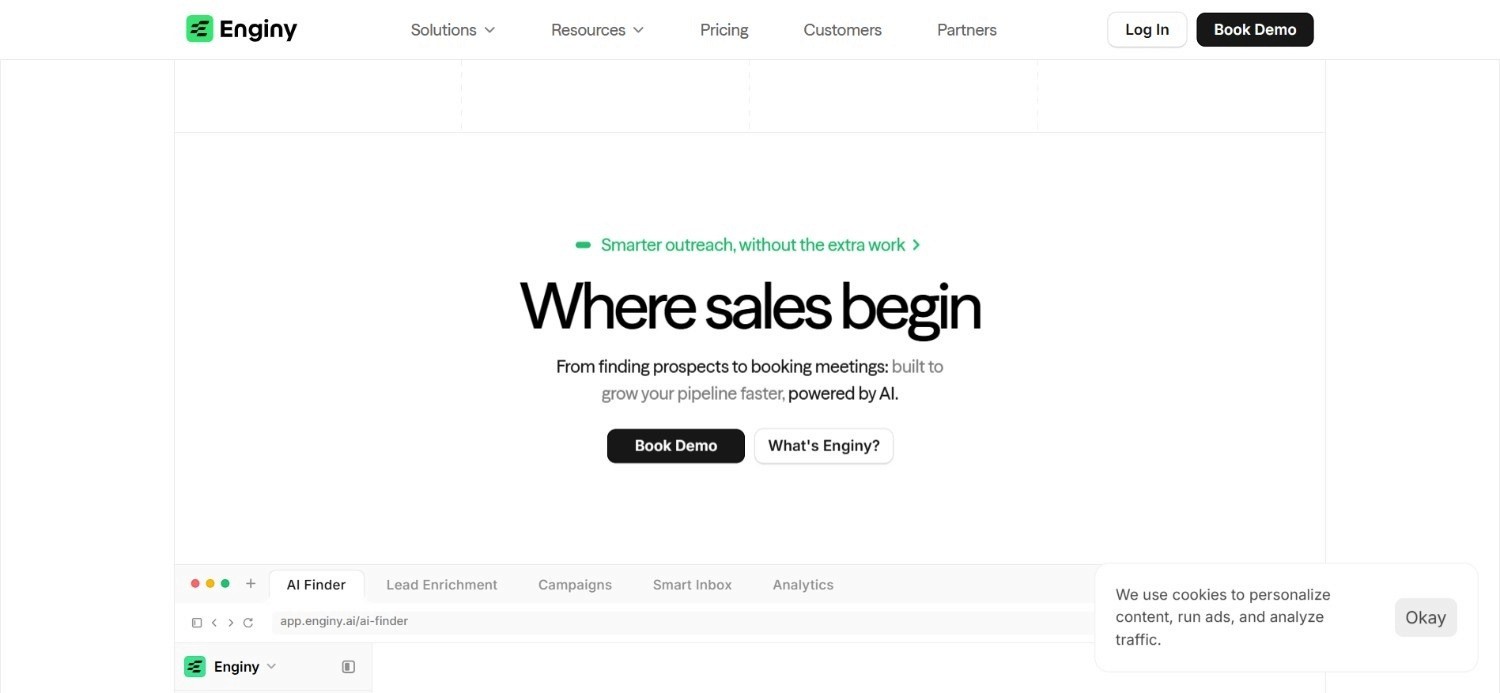
Enginy is an AI-native, end-to-end GTM platform built for modern B2B sales teams that need list building, data enrichment, and multichannel outreach without stitching together three separate tools.
We built this platform because sellers spend around 70% of their time on tasks that aren't selling, and a huge share of that time goes into manually searching for contacts, cleaning bad data, and jumping between disconnected systems.
Unlike ZoomInfo's database-first model, we designed Enginy around a full workflow: build a targeted list using firmographic and intent signals, and enrich it with verified emails and phone numbers pulled from 30+ providers. You can then launch coordinated outreach across email, social, and calling, all inside one workspace.
This makes Enginy one of the more complete Zoominfo alternatives for teams that want to move from a cold list to a live campaign without leaving the platform.
Ideal For
Heads of Sales and RevOps teams consolidating a fragmented stack of a data provider, a cleaner, and a separate outreach tool
Founders and early-stage teams that need to build and enrich lists without hiring a dedicated technical operator
Recruitment agencies and B2B SaaS companies running high-volume outbound on a growing budget
Top Features
Signal-based list building using firmographics, job changes, hiring alerts, and technology stack filters
Waterfall data enrichment across 30+ providers, covering both verified emails and direct phone numbers
Built-in multichannel outreach that launches campaigns straight from an enriched list
AI research that adds company news and contextual data to each contact automatically
AI SDR agents that can run prospecting and outreach autonomously, including reply handling, so pipeline keeps moving without adding headcount
Why We're the Best ZoomInfo Alternative
ZoomInfo gives you a large database, but you're still on your own for outreach.
We built Enginy so the entire motion, from list building through enrichment to launching a campaign, happens in a single workspace, which removes the manual export and re-import step that slows most database-only tools down. Our pricing also works differently from ZoomInfo's fixed enterprise contracts.
Since we charge based on credits consumed, smaller teams can start without committing to a six-figure annual spend, while larger teams scale their usage as their pipeline grows.
Factorial, for example, scaled from ten manually-sourced leads a day to 5,000 leads a month after consolidating onto Enginy, while lifting reply rates from 10% to 45%.
Pros
List building, enrichment, and outreach all run from the same workspace, with no manual handoff between tools
Waterfall enrichment across 30+ providers improves the odds of finding a verified email or phone number
Signal-based targeting surfaces accounts already showing buying intent, not just a static list
Any sales rep can operate the platform without needing a dedicated GTM engineer
AI agents can run outreach and manage replies autonomously, growing pipeline without growing headcount
Cons
Pricing is custom-quoted rather than published upfront, so it takes a short qualification call to get an exact number
Newer brand recognition than decades-old enterprise data providers in the space
Pricing
We don't publish pricing publicly, since it's custom-quoted based on what each team actually needs, uncovered during a qualification call before the demo.
This keeps the model fair for both a five-person startup and a two-hundred-person sales floor, rather than forcing everyone into the same fixed tier. Pricing runs on a credit-based model, where credits are consumed by actions like data extraction, enrichment, and verification.
Base plans start with an entry-level tier covering a modest number of contacts a month, scaling through two mid-tier options, with a fully custom Enterprise tier above that.
Final Verdict
Enginy stands out among Zoominfo alternatives because it closes the gap ZoomInfo leaves open between finding a contact and actually reaching them.
Combining signal-based targeting, waterfall enrichment, and multichannel outreach in one platform, without needing a technical operator to run it, makes Enginy the strongest overall replacement on this list.
2. AiSDR
Overview
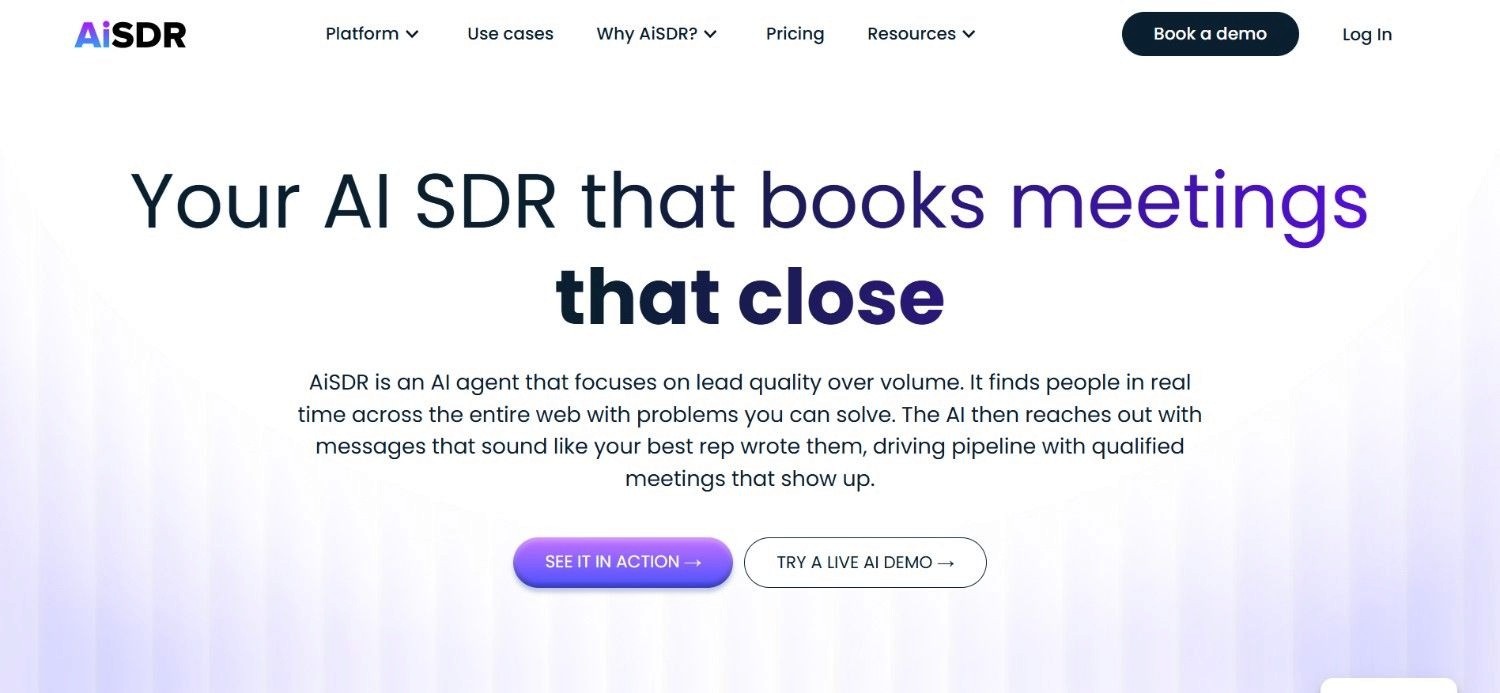
AiSDR takes a different angle on replacing ZoomInfo than most tools on this list, positioning itself as a fully autonomous AI sales development rep rather than a data provider you plug into your own sequences.
Instead of handing a rep a list to work manually, AiSDR researches contacts, writes outreach copy, and manages follow-up largely on its own.
This makes AiSDR appealing to teams that want to grow outbound volume without growing headcount, since the AI handles a meaningful share of the SDR workload end to end rather than just supplying contact data.
Ideal For
Small sales teams wanting to scale outbound volume without hiring additional SDRs
Founders who need pipeline generation running in the background while they focus elsewhere
Teams comfortable handing off first-touch messaging and follow-up to an AI system
Top Features
AI-researched contact lists built around your ideal customer profile
Automated sequencing and follow-up handled largely without manual rep input
Outbound capacity tiers that scale with plan level
Why It's a Strong ZoomInfo Alternative
AiSDR's fully automated approach makes it one of the more distinctive Zoominfo competitors, particularly for teams that would rather delegate the entire outbound motion than manage lists and sequences themselves.
Pros
Handles research, messaging, and follow-up with minimal manual input
Scales outbound capacity without adding headcount
Straightforward plan structure tied to volume
Cons
Less granular control over list building compared to platforms built for manual targeting
Plans can get expensive quickly as outbound capacity needs grow
Less suited to teams that want to fine-tune every step of the outreach process themselves
Pricing
AiSDR offers three paid plans starting at $250 a month for Solo, $900 a month for Explore, and $2,500 a month for Scale. Plans differ by the number of AI-researched contacts, user limits, and outbound capacity.
Annual billing is available at a 20% discount for teams ready to commit longer term.
Final Verdict
AiSDR works well for small teams that want an autonomous outbound engine without managing the day-to-day mechanics themselves.
Teams wanting more hands-on control over list building and messaging will likely prefer a platform built around manual configuration.
3. SMARTe
Overview
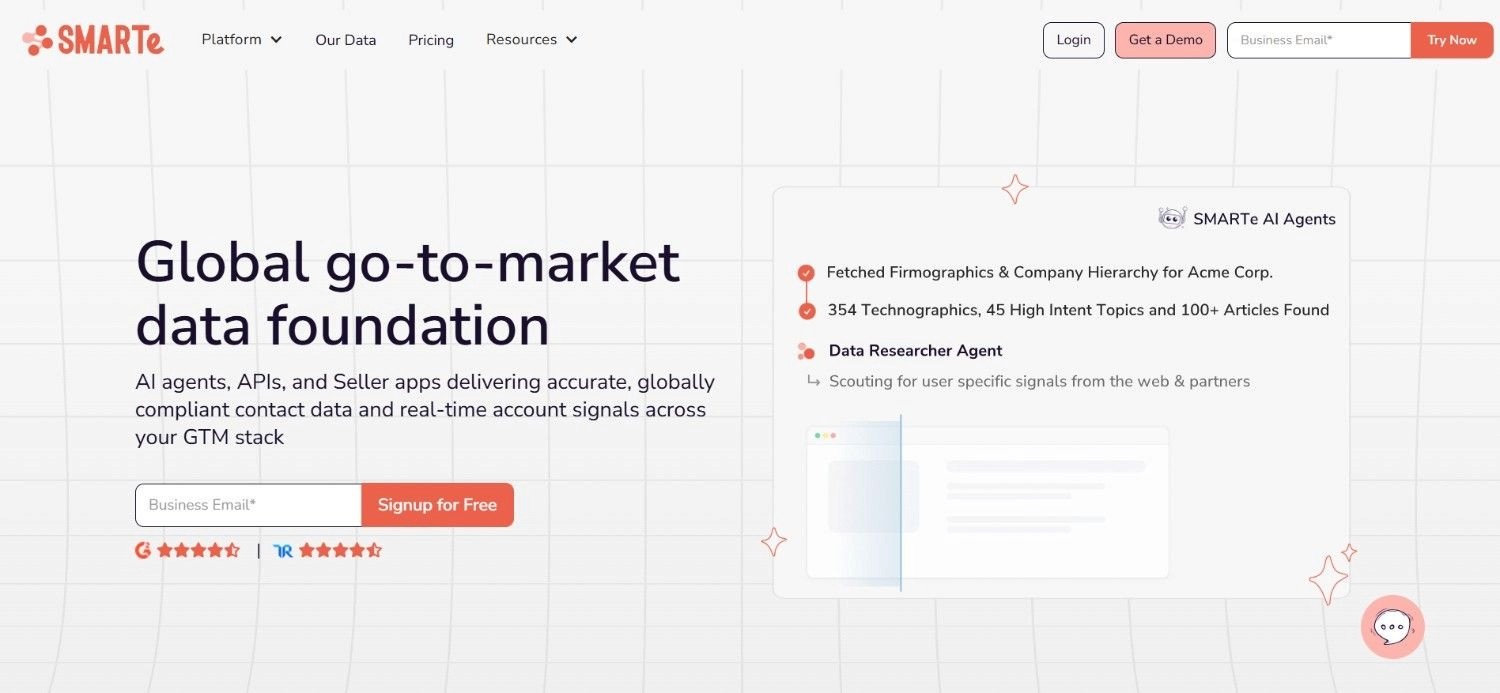
SMARTe built its positioning around global data coverage, aggregating contact and company information across more than 200 countries through a multi-source waterfall approach.
This makes it a common choice for teams expanding into international markets where domestic-focused providers, including ZoomInfo, often come up short outside North America and Western Europe.
The platform's Enterprise pricing structure is also unusual: rather than a flat license fee, SMARTe charges purely on credit usage that decreases per credit as volume increases, which is worth comparing directly against ZoomInfo's flat enterprise contracts.
Ideal For
Sales teams expanding into international markets needing broad geographic data coverage
High-volume enterprise teams wanting per-credit pricing that improves with scale
Teams evaluating Zoominfo alternatives specifically for stronger coverage outside the US
Top Features
Multi-source waterfall enrichment aggregating data across 200+ countries
Volume-based Enterprise pricing with no fixed license fee
Both email and phone data returned through the same enrichment workflow
Why It's a Strong ZoomInfo Alternative
SMARTe's global coverage and usage-based Enterprise pricing make it one of the more flexible Zoominfo competitors for international sales organisations that have struggled with data quality outside major Western markets.
Pros
Strong international data coverage across a wide range of countries
Enterprise tier avoids a fixed license fee, tying cost directly to usage
Waterfall approach across multiple sources improves match rates
Cons
Entry-level Pro plan credit limits fill up quickly for active outbound teams
Enterprise pricing starting at $15,000 still requires meaningful budget
Interface and workflow feel less polished than more consumer-focused competitors
Pricing
SMARTe offers a Free plan with 10 monthly credits, a Pro plan starting at $25 a month, and an Enterprise plan starting at $15,000 with volume-based pay-per-credit pricing.
Enterprise customers pay no license fee, and per-credit costs decrease as usage increases.
Final Verdict
SMARTe is a strong fit for international sales teams comparing total cost of ownership against ZoomInfo's flat-fee enterprise contracts.
Smaller teams may find the free and Pro tiers too limited for consistent daily prospecting.
4. Lusha

Overview
Lusha positions itself as a lightweight prospecting tool built for individual reps and small teams who need contact details fast, without the lengthy setup or contract process associated with larger data providers like ZoomInfo.
Its Chrome extension is the centrepiece of the product, letting a rep pull a verified email or phone number directly from a professional profile with a single click.
Beyond the extension, Lusha has expanded into buying intent signals and API access for teams wanting to build enrichment into their own workflows, at a considerably more accessible price point than enterprise-grade alternatives.
Ideal For
Individual reps doing manual, contact-by-contact prospecting from professional profiles
Small teams wanting a low-cost entry point into contact enrichment
Teams needing API access to build enrichment into an existing internal tool
Top Features
Chrome extension for one-click contact enrichment while browsing profiles
Buying intent signals layered on top of standard contact data
API access for teams building enrichment into custom workflows
Why It's a Strong ZoomInfo Alternative
Lusha's simplicity and accessible pricing make it one of the more approachable Zoominfo alternatives for reps who want fast, single-contact lookups rather than a full enterprise data platform.
Pros
Simple, fast setup with an intuitive browser extension
Accessible pricing compared with enterprise-focused competitors
API access supports custom integrations for technical teams
Cons
Built more for one-contact-at-a-time lookups than bulk list enrichment
Data depth on niche industries and smaller companies can be inconsistent
Higher-tier plans needed to unlock buying intent data and larger credit volumes
Pricing
Lusha offers a free plan for light usage.
Paid tiers start at $32.45 a month for the Starter plan, $45.45 a month for the Pro plan, and $259.95 a month for the Premium plan, with a custom-priced Scale plan for larger teams.
Plans vary based on credits, seats, API access, and buying intent data.
Final Verdict
Lusha works well for individual reps or very small teams who want a fast, low-commitment way to enrich contacts one at a time.
Teams building larger, list-based outbound motions will likely need a platform built more around bulk enrichment and coordinated outreach.
5. Clay

Overview
Clay has built a strong following among technical GTM operators for its flexibility, treating enrichment less like a fixed database and more like a workflow builder.
Rather than offering one search interface like ZoomInfo, Clay lets users design their own enrichment sequences by combining over 100 data providers and AI research agents in whatever order best fits their use case.
This flexibility is Clay's defining trait, and also its steepest learning curve. It rewards teams with a dedicated RevOps or GTM engineering function willing to invest time in building custom workflows, rather than reps looking for a plug-and-play Zoominfo alternative they can use immediately.
Ideal For
RevOps and GTM Engineers building fully custom enrichment and research workflows
Teams wanting to combine multiple data providers into a single waterfall they control
Technical operators comfortable with a no-code but complex workflow builder
Top Features
Integrations with more than 100 data providers, combinable into custom waterfalls
AI-powered research agents that can pull contextual company and contact data automatically
Flexible workflow builder that extends beyond enrichment into broader GTM automation
Why It's a Strong ZoomInfo Alternative
Clay's flexibility is unmatched among the tools on this list, letting technical teams build exactly the enrichment logic they want rather than relying on a single provider's fixed database like ZoomInfo's.
Pros
Extensive integration library covering over 100 data providers
Highly customisable workflows suited to complex or unusual enrichment logic
AI research agents extend the tool beyond simple enrichment into broader automation
Cons
Steep learning curve that generally requires a dedicated technical operator
Not designed for direct use by SDRs without GTM engineering support
Costs can scale unpredictably depending on how many providers and actions a workflow uses
Pricing
Clay offers a free plan, with paid plans starting at $167 a month for the Launch tier and $446 a month for the Growth tier, while Enterprise pricing is custom.
Plans scale based on annual actions and data credits, with higher tiers adding CRM sync, automation, integrations, and dedicated support.
Final Verdict
Clay is best suited to technical GTM teams that want full control over their enrichment logic and have the resources to build and maintain custom workflows.
Teams wanting a simpler, ready-to-use tool without a setup investment will likely find it more complex than necessary.
6. Apollo.io
Overview
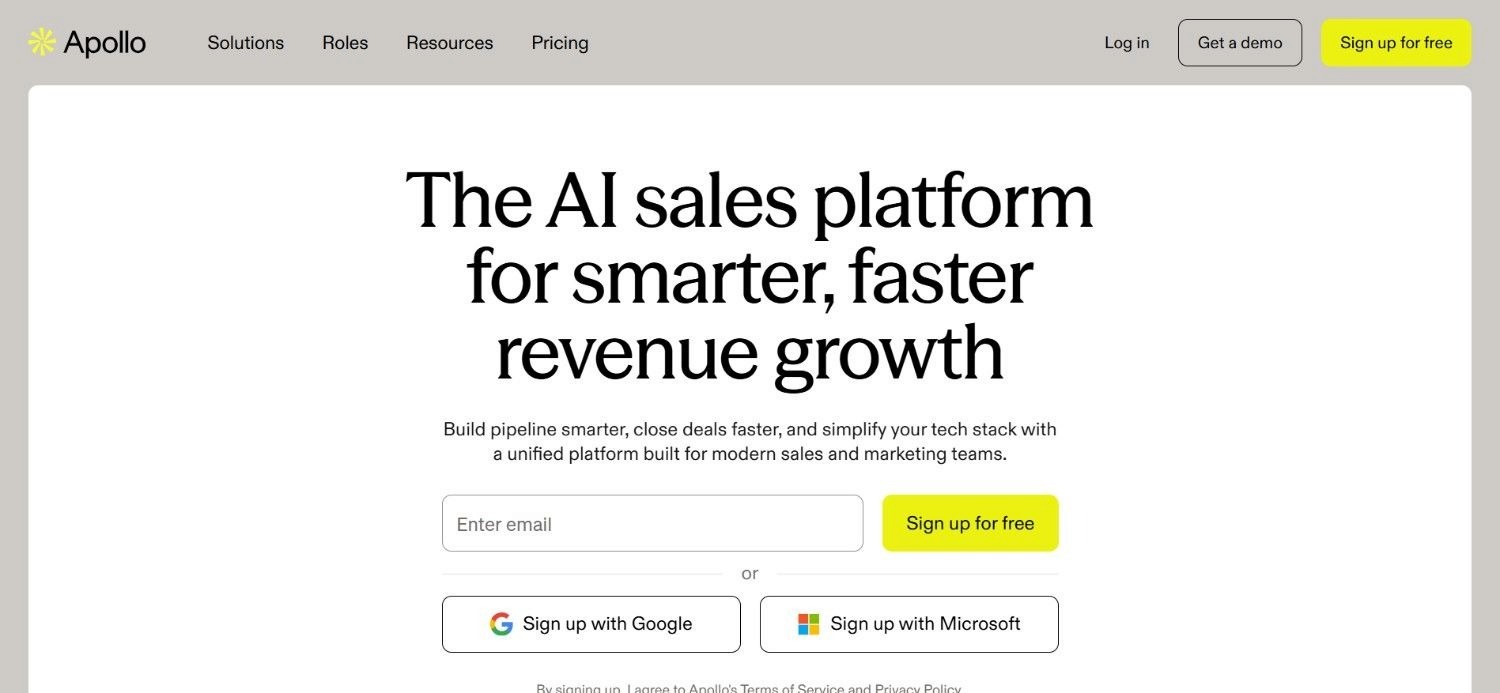
Apollo.io is one of the most widely recognised names in B2B sales data, built around a contact database that now spans well over 275 million profiles, positioning it as a direct, lower-cost rival to ZoomInfo's scale.
Its core product blends a searchable database with built-in sequencing and a dialer, giving it an all-in-one prospecting angle that ZoomInfo, as a pure data provider, doesn't offer natively.
The platform is popular with startups and self-serve buyers thanks to its low entry price and generous free tier, which makes it one of the most accessible Zoominfo alternatives for a small team just getting outbound off the ground.
Ideal For
Startups and small sales teams wanting an affordable, all-in-one prospecting and outreach tool
Individual reps who need a self-serve tool without a lengthy sales cycle to get started
Teams prioritising a large contact database over deep enrichment accuracy
Top Features
A contact database covering more than 275 million profiles across industries and geographies
Built-in email sequencing and a dialer alongside the core enrichment and search functionality
Chrome extension for enriching contacts directly while browsing a professional profile
Why It's a Strong ZoomInfo Alternative
Apollo's biggest advantage over ZoomInfo is accessibility.
Its free plan and low-cost paid tiers make it one of the easiest entry points into B2B prospecting for teams that don't have enterprise budget to spend.
Pros
Large contact database with broad industry and geographic coverage
Low-cost entry point with a functional free plan
Combines enrichment, sequencing, and calling in one interface
Cons
Data accuracy on niche or international contacts trails more specialised providers
Advanced features like extra credits and premium email domains cost extra on top of seat pricing
Less depth on intent signals compared with platforms built specifically around buying intent
Pricing
Apollo offers a free plan for individuals just getting started.
Paid tiers are billed annually, starting at $49 per seat per month for the Basic plan, $79 per seat per month for the Professional plan, and $119 per seat per month for the Organization plan.
Add-ons like extra credits, advanced email domains, and additional integrations are priced separately.
Final Verdict
Apollo works well for early-stage teams that need an affordable way to get contact data and basic outreach off the ground quickly.
Teams that outgrow its data depth will likely need a more specialised platform.
7. Snov.io
Overview
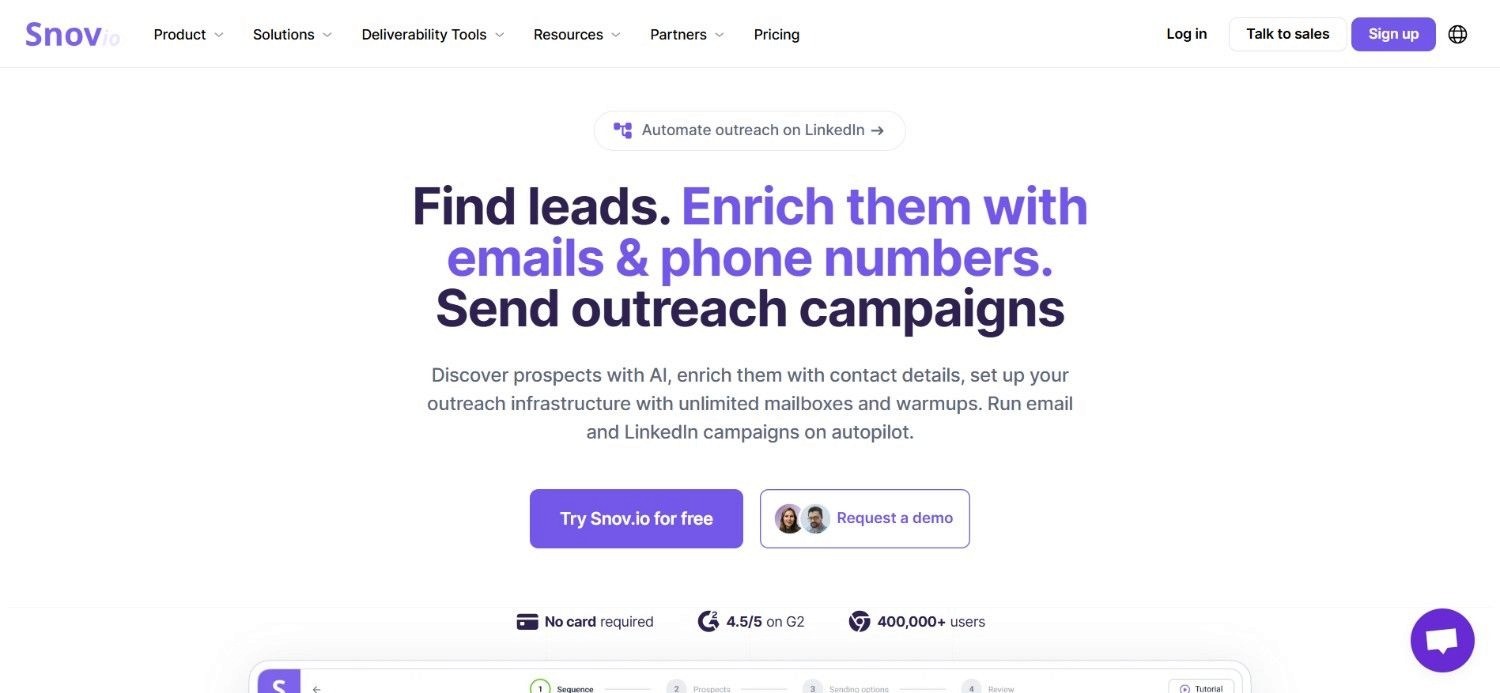
Snov.io positions itself as an affordable, all-in-one prospecting kit for small teams, bundling an email finder, a verifier, drip campaign functionality, and a lightweight CRM into a single subscription.
Rather than a flat enterprise price tag like ZoomInfo's, Snov.io uses a token-based system for its enrichment tool, which appeals to teams with unpredictable or seasonal sending volume.
Alongside enrichment, Snov.io also offers a broader sales automation suite with Starter, Pro, and Custom Ultra plans, all including unlimited team seats – which is a notable difference from the per-seat pricing common across most Zoominfo competitors.
Ideal For
Small teams and solo founders wanting an affordable, all-in-one prospecting kit
Teams with unpredictable send volume who prefer token-based pricing over fixed seats
Early-stage companies not yet ready to invest in a full enterprise sales tech stack
Top Features
Combined email finder, verifier, and drip campaign tool in a single subscription
Token-based pricing for enrichment that scales with actual usage rather than a fixed monthly seat
Sales automation suite with unlimited team seats across paid tiers
Why It's a Strong ZoomInfo Alternative
Snov.io's combination of affordability and breadth makes it one of the more practical Zoominfo alternatives for teams building their first outbound motion without enterprise-level budget.
Pros
Affordable, token-based pricing suited to variable sending volume
Combines finding, verifying, and emailing in one subscription
Unlimited team seats across all sales automation plan tiers
Cons
Data depth and accuracy trail more specialised enterprise providers
Token consumption can add up quickly during high-volume campaigns
Advanced automation and integrations are more limited than platform-level competitors
Pricing
Snov.io's contact and email enrichment tool uses a credit-based pricing model where businesses purchase token packages for lead enrichment and outreach, with 10,000 tokens costing $200 as a one-time purchase valid for 90 days.
For its broader sales automation suite, Snov.io offers Starter at $29.25 a month, Pro from $74.25 a month, and Custom Ultra plans, all with unlimited team seats.
Pricing scales by credits, recipients, and outreach capacity, with annual subscriptions saving up to 40%.
Final Verdict
Snov.io works well for small teams and early-stage companies wanting an affordable way to combine finding, verifying, and emailing prospects.
Larger teams with higher volume or stricter data accuracy needs will likely outgrow it.
8. Cognism
Overview
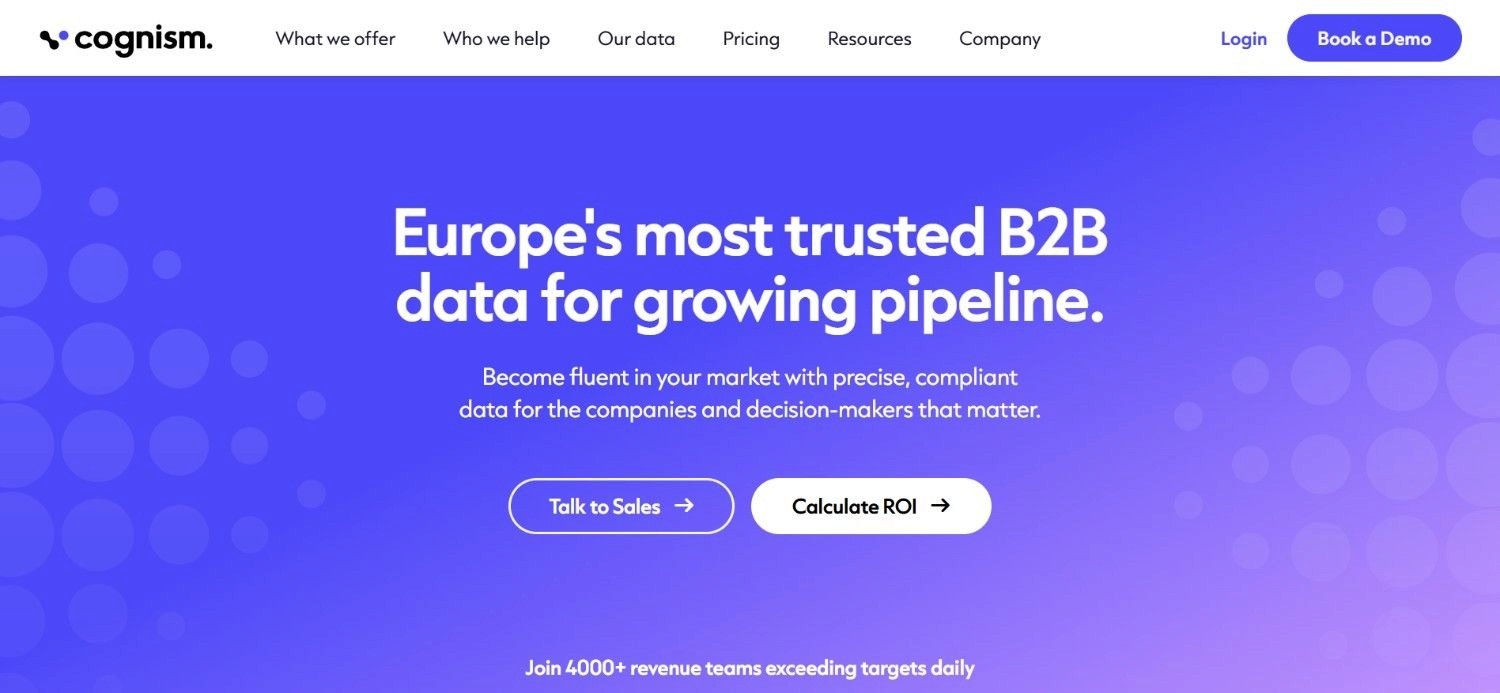
Cognism built its reputation around compliance and data accuracy, particularly for teams selling into European markets where GDPR compliance is non-negotiable, a segment where ZoomInfo has historically been less specialised.
Its flagship offering, branded Diamond Data, focuses on phone-verified mobile numbers, addressing one of the most persistent gaps in B2B prospecting. The platform pairs this compliance-first sourcing with intent data, letting sales teams prioritise accounts already showing buying signals.
Cognism sits firmly in the enterprise segment, with pricing and contract structures built for larger sales organisations rather than solo reps or early-stage startups.
Ideal For
Enterprise sales teams selling into European markets with strict compliance requirements
Teams that prioritise verified mobile phone numbers over email volume
RevOps functions that need intent data layered on top of standard firmographic enrichment
Top Features
Diamond Data, a phone-verification process aimed at improving mobile number accuracy
Built-in intent data to help prioritise accounts already showing buying behaviour
Compliance-first data sourcing designed around GDPR and other regional privacy regulations
Why It's a Strong ZoomInfo Alternative
Cognism's compliance-first approach makes it one of the stronger Zoominfo competitors for teams that can't risk falling foul of GDPR or similar regulations while prospecting into Europe.
Pros
Strong compliance posture, particularly valuable for teams selling into the EU
Verified mobile phone data reduces the guesswork around cold calling
Intent data helps prioritise which accounts to approach first
Cons
Annual contract pricing puts it out of reach for smaller teams or early-stage startups
Additional Cognism Credits are needed for contact reveals and exports beyond the base plan
Onboarding and implementation typically take longer than lighter, self-serve tools
Pricing
Cognism's plans start at $14,000 a year for the Standard tier and $18,750 a year for the Pro tier, both including five seats.
Pricing runs on a subscription basis, with additional Cognism Credits sold separately for contact reveals, enrichment, and exports beyond what's included.
Final Verdict
Cognism is best suited to enterprise teams with compliance requirements and budget to match, particularly those selling into Europe.
Smaller teams or startups working with a tighter budget will likely find the annual contract structure harder to justify.
9. Seamless.AI
Overview
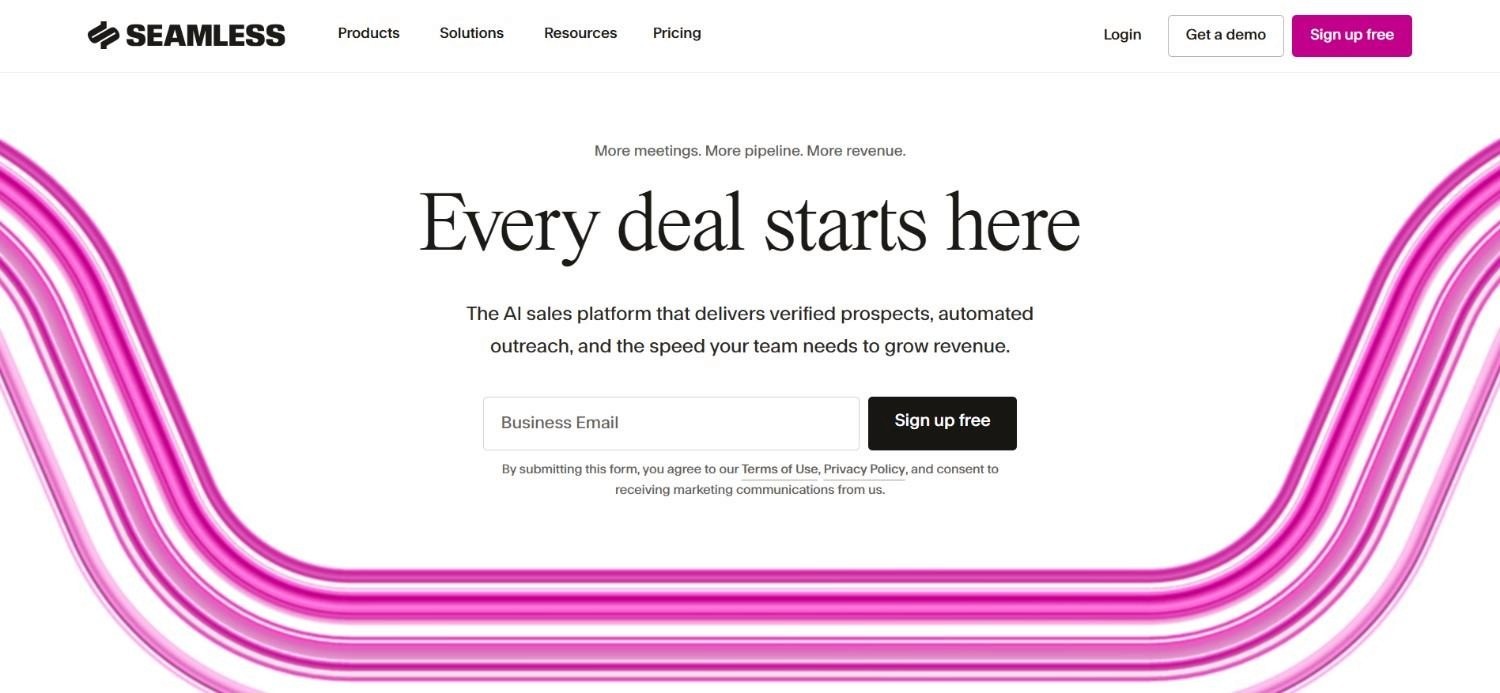
Seamless.AI positions itself as a straightforward, real-time contact search tool, letting sales reps pull verified emails and phone numbers on demand rather than working from a static, periodically refreshed database like ZoomInfo's.
The platform's free tier, which includes 50 credits, makes it an easy first step for individual reps testing out a new data source.
Paid Pro and Enterprise plans move to custom pricing and add features like unlimited exports, positioning Seamless.AI as a scalable option once a team outgrows the free tier's limits.
Ideal For
Individual reps and small teams wanting a simple, real-time contact search experience
Teams testing a new data source before committing to a larger contract
Businesses wanting unlimited export capability on paid tiers
Top Features
Real-time contact search rather than relying solely on a static database
Free plan with 50 credits for individual users to test the platform
Unlimited exports available on paid Pro and Enterprise tiers
Why It's a Strong ZoomInfo Alternative
Seamless.AI's straightforward, credit-based free tier makes it one of the more approachable Zoominfo alternatives for reps who want to try real-time search before committing to a paid plan.
Pros
Free tier with a meaningful number of credits for individual testing
Real-time search rather than a static, periodically updated database
Unlimited exports available once on a paid plan
Cons
Pricing beyond the free tier requires a custom quote
Less structured enrichment workflow compared to waterfall-based platforms
Fewer built-in outreach features than platforms combining data with sequencing
Pricing
Seamless.AI offers a free plan with 50 credits for individual users, while Pro and Enterprise plans use custom pricing.
Paid plans include annual credit packages, unlimited exports, and enterprise features such as dedicated customer success and support.
Final Verdict
Seamless.AI is a reasonable starting point for individual reps and small teams wanting to test real-time contact search before committing further.
Teams needing a fully integrated enrichment and outreach workflow will likely need a more complete platform.
10. Hunter.io
Overview
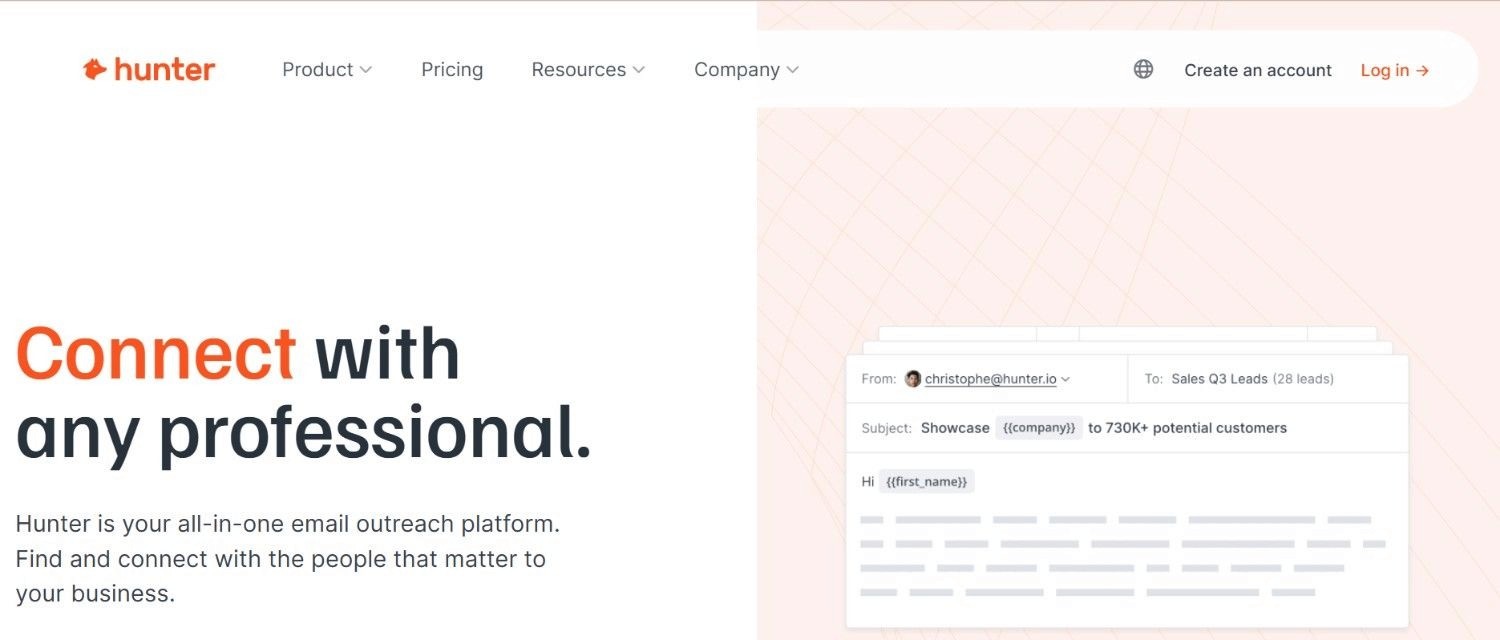
Hunter.io focuses specifically on email finding and verification, offering a lighter-weight alternative to ZoomInfo's full data intelligence platform for teams that mainly need reliable email addresses rather than a complete contact database.
The tool has built a reputation for simplicity, making it a common first choice for smaller teams and individual users.
Beyond finding and verifying emails, Hunter.io includes basic campaign sending functionality, letting users go from finding an address to sending an email without needing a separate outreach tool for simple use cases.
Ideal For
Small teams and individual users needing reliable email finding and verification
Businesses wanting a lightweight tool without the complexity of a full data platform
Teams sending basic outreach campaigns without needing advanced sequencing
Top Features
Email finder built around domain and name-based search
Built-in email verification to reduce bounce rates before sending
Basic campaign sending functionality for simple outreach needs
Why It's a Strong ZoomInfo Alternative
Hunter.io's simplicity and affordability make it one of the more accessible Zoominfo alternatives for teams that specifically need email finding and verification without the cost of a full enterprise data platform.
Pros
Simple, affordable entry point for email finding and verification
Built-in verification reduces bounce rates before a campaign launches
Basic campaign sending removes the need for a separate tool in simple use cases
Cons
Less depth on phone number data or broader intent signals
Not built for complex, multi-channel outreach sequences
Higher-volume teams will need to move up tiers relatively quickly
Pricing
Hunter.io offers a Free plan alongside Starter at $49 a month, Growth at $149 a month, Scale at $299 a month, and a custom Enterprise tier.
Plans scale by monthly credits, email accounts, and enrichment features, with 30% savings available on annual billing.
Final Verdict
Hunter.io is a solid choice for small teams and individual users who mainly need reliable email finding and verification.
Teams needing broader phone data or full multichannel outreach will likely need a more complete platform.
Why Does Enginy Work Across Multiple Use Cases?
1. Enginy for B2B SaaS Sales Teams
SaaS teams running product-led or sales-led outbound motions need lists built around specific firmographic and technographic signals, not just a broad database search.
Our filtering by company size, industry, and technology stack lets SaaS reps target accounts already using a specific tool or platform, which is far more precise than searching ZoomInfo's general database.
2. Enginy for Recruitment and Staffing Agencies
Agencies need fast, high-volume prospect list generation across multiple client verticals at once.
Our list-building techniques, including past company and past school filters, help agencies build alumni-based and ex-employee lists that a generic database search doesn't surface as easily.
3. Enginy for RevOps and GTM Engineering Teams
RevOps teams consolidating a fragmented stack of a data provider, a cleaner, and a separate outreach tool get all three functions in one workspace with Enginy.
Our post-enrichment data cleaning automatically routes each contact to the right channel based on what data was actually verified, removing a manual step that most Zoominfo competitors still require.
4. Enginy for IT Consulting and Managed Service Providers
Consulting firms targeting enterprise accounts often need to reach multiple stakeholders at the same company before a single decision-maker responds.
Our multichannel sequencing contacts several relevant people at an account in parallel, which improves meeting-booking rates compared to single-threaded outreach from a static list.
5. Enginy for Founders and Early-Stage Startups
Founders wearing the sales hat themselves need a complete solution that doesn't require a technical operator.
Our platform is designed so that any sales rep, including a non-technical founder, can build a list, enrich it, and launch outreach without hiring a dedicated GTM engineer first.
What Makes a Good ZoomInfo Alternative?
A genuinely useful replacement for ZoomInfo needs to do more than just offer a smaller database at a lower price.
The five criteria below cover what actually separates a strong alternative from one that only solves part of the problem:
1. Data Coverage That Matches Your Target Market
A good alternative needs contact and company data that covers the specific industries, company sizes, and geographies you're actually targeting, not just an impressively large total database size.
2. A Path From List to Outreach in One Place
ZoomInfo leaves outreach as a separate purchase. The strongest Zoominfo alternatives connect list building and enrichment directly to a sequencing tool, so a verified contact doesn't sit idle in a spreadsheet.
3. Pricing That Matches Your Actual Volume
Whether it's credit-based, token-based, or a published subscription tier, pricing should scale with how much your team actually prospects, rather than locking you into a flat enterprise contract regardless of usage.
4. Accessibility Without a Dedicated Technical Operator
Some platforms require a GTM engineer to configure and maintain. A good alternative should let any sales rep operate the core workflow without that dependency.
5. Signal-Based Targeting, Not Just Static Search
Fraud and stale data both cost money. The best alternatives layer in intent signals like job changes, hiring alerts, and technology stack usage on top of standard firmographic filters, so outreach reaches accounts already showing buying behaviour.
How to Choose the Right ZoomInfo Alternative for Your Needs?
Once you've narrowed down a shortlist, work through these factors in order to land on the right fit for your team:
1. Define your team size and budget first
A five-person startup and a two-hundred-person enterprise sales floor have very different needs, and this single factor eliminates several options quickly.
Tools like Cognism and ZoomInfo itself are built for larger budgets, while platforms like Enginy, Apollo, and Snov.io scale down more comfortably for smaller teams.
2. Map the specific data gaps you have today
List the specific data types you're missing, whether that's international coverage, verified mobile numbers, or intent signals.
This tells you whether you need a broad platform or a more specialised tool like Cognism for compliance-heavy phone verification.
3. Decide how much of the outreach motion you want in one platform
If you want list building, enrichment, and outreach all in one workspace, prioritise a platform like Enginy that's built around that full workflow.
If you're happy pairing a data tool with a separate sequencer, a specialised option like Hunter.io or Clay may fit better.
4. Test pricing models against your actual monthly volume
Run the numbers for your projected monthly prospecting volume against each pricing model, whether that's per-seat, credit-based, or token-based, before committing to a plan.
5. Request a trial, demo, or qualification call
Most of the tools on this list offer some form of free plan, trial, or demo. Use it to test data accuracy against your actual target list rather than relying on general coverage claims.
6. Check integration with your existing CRM
Confirm the platform pushes enriched data automatically into your CRM and outreach sequences, rather than requiring manual export and import between systems.
7. Evaluate onboarding and support structure
Ask how much onboarding support is included and whether custom development is available if your use case falls outside standard configuration.
Everything You Need to Know About ZoomInfo Alternatives
Category | Key Considerations |
Top 3 Zoominfo Alternatives | Enginy, Apollo.io, and Cognism cover the widest range of use cases across team sizes and budgets |
Best Overall Option | Enginy, for combining list building, enrichment, and multichannel outreach in one workspace |
Why Look for Zoominfo Alternatives | High entry pricing, long procurement cycles, and a database-only model that leaves outreach as a separate purchase |
How to Choose the Best Zoominfo Alternatives? | Start with team size and budget, map your specific data gaps, then compare pricing models against your actual volume |
Price Range | From roughly $25/month for lighter tools like SMARTe's Pro tier to enterprise contracts running into six figures annually |
Ease of Switching | Credit-based platforms with short setup windows, like Enginy, are typically faster to switch to than multi-year enterprise contracts |
Must-Have Features | Signal-based targeting, verified email and phone enrichment, CRM integration, and a clear path from list to outreach |
Mistakes You Shouldn't Make | Choosing a tool purely on database size while ignoring outreach capability, or skipping a trial before committing to an annual contract |
Ready to Move On from ZoomInfo? Try Enginy
Choosing between ZoomInfo and the alternatives covered here ultimately comes down to your team size, budget, and how much of the outreach motion you want handled in one place.
If that decision points you toward a platform that combines list building, enrichment, and outreach instead of a standalone database, Enginy is worth a closer look.
We built Enginy specifically for teams that want the full end-to-end GTM platform experience without needing a dedicated GTM engineer to run it.
If you're comparing Zoominfo alternatives and want contact data enrichment paired directly with multichannel outreach, we'd love to show you how it works.
Book a demo call with our sales team to see how Enginy fits your team before you commit to anything.
FAQs About ZoomInfo Alternatives
What is ZoomInfo used for?
ZoomInfo is used for searching a large B2B contact and company database to find decision-makers, verify firmographic details, and access intent and technographic signals. It works as a standalone data source that sales teams typically pair with a separate outreach or sequencing tool to actually act on the contacts they find. This makes it strongest for large enterprises with the budget and internal tooling to build outreach around ZoomInfo's data.
What are the best ZoomInfo alternatives in 2026?
The best ZoomInfo alternative in 2026 is Enginy, since it combines signal-based list building, waterfall data enrichment, and multichannel outreach in one workspace. Unlike a standalone database, Enginy's credit-based pricing scales with actual usage and lets any sales rep run the full workflow without needing a dedicated GTM engineer, giving teams a more complete replacement for ZoomInfo's database-only model.
What features should I look for in a ZoomInfo alternative?
Look for data coverage that matches your specific target market, a clear path from list building to actual outreach, and pricing that scales with your usage rather than locking you into a flat annual contract. Signal-based targeting and CRM integration also matter significantly for teams running active outbound campaigns.
How to choose the best ZoomInfo alternative for your needs?
Choosing the best ZoomInfo alternative starts with defining your team size and budget, since that quickly narrows the field between enterprise-focused tools and more accessible platforms. From there, compare data coverage against your specific gaps, test pricing models against your actual volume, and request a trial or demo before committing.
Is it easy to switch from ZoomInfo to an alternative?
Switching from ZoomInfo is generally easier with platforms offering credit-based or usage-based onboarding rather than multi-year enterprise contracts. Enginy, for example, connects with major CRMs and starts with a qualification call rather than a lengthy procurement process, which makes the transition considerably lower-risk than committing to a new annual contract upfront.
Is Enginy better than ZoomInfo?
Enginy is better than ZoomInfo for teams that want list building, enrichment, and multichannel outreach in one workspace rather than a standalone database. ZoomInfo remains a reasonable choice for large enterprises specifically wanting the widest possible database with dedicated internal tooling to act on it, but that database-only model doesn't extend to outreach the way Enginy's platform does.
What is the main difference between Enginy and ZoomInfo?
The main difference between Enginy and ZoomInfo is the underlying model: ZoomInfo is primarily a data provider that leaves outreach as a separate purchase, while Enginy combines signal-based list building, data enrichment, and multichannel outreach in a single platform. Enginy also uses credit-based pricing tied to actual usage, compared to ZoomInfo's fixed enterprise contract structure.
Do I need a massive database, or is targeted enrichment enough?
Whether you need a massive database or targeted enrichment depends on how well-defined your ideal customer profile already is. Teams with a clear ICP often get better results from signal-based targeting and waterfall enrichment across a specific segment than from searching a huge, general-purpose database like ZoomInfo's.
Why do sales teams outgrow database-only tools like ZoomInfo?
Sales teams typically outgrow database-only tools because finding a contact is only the first step, and a separate outreach tool still has to be bought, connected, and maintained to actually act on that data. This creates fragmented workflows, duplicated contacts across systems, and higher total cost of ownership compared to a platform that combines list building, enrichment, and outreach from the start.