Back to blog
Best Outbound Sales Software in 2026 (Top-Rated Outreach Platforms Compared)

Andrea López
Share
Key Takeaways (TL:DR)
The Best Overall Outbound Sales Platform: Enginy takes the top spot among the best outbound sales platforms because we handle the whole outbound motion in one place, from finding the right accounts to booking the meeting. Any rep can run it, so you don't need a GTM engineer to get results.
Why Do You Need It: Outbound breaks down when data, sequencing and calling live in separate tools. The right software keeps your pipeline full without eating up your reps' week.
Who It's For: The best outbound sales platforms suit B2B sales teams, founders and agencies that rely on outbound to create pipeline, from early-stage startups to mid-market companies with SDR teams.
How to Choose the Right One: Look at data quality, channel coverage and how quickly your team can launch campaigns. Then compare the total cost of every tool you'd need around it.
Expected Price: At Enginy, we build custom, credit-based plans after a short qualification call. Elsewhere, prices run from free plans to around $600 per month, while enterprise tools quote on request.
Top Outbound Sales Platforms in 2026: at a Glance
Tool | Best For | Key Features | Pricing |
|---|---|---|---|
Enginy | Teams wanting data, enrichment and multichannel outbound in one tool | Intent-based list building, 30+ enrichment providers, conditional multichannel campaigns | Custom, credit-based plans |
Outreach | Large revenue teams that need tight process control | Sequences, AI agents, conversation intelligence, forecasting | Custom quote |
Salesloft | Enterprise teams running structured cadences | Cadences, AI prioritisation, coaching, deal tools | Custom quote |
Apollo.io | Startups building their first outbound process | B2B database, sequences, dialler, AI email help | Free plan; paid from $49/seat/month |
Nooks AI | Call-heavy SDR teams | AI parallel dialler, call coaching, AI roleplay | Custom quote |
Clay | Technical teams building custom research workflows | Waterfall enrichment, AI research agent, flexible tables | Free plan; paid from $167/month |
Amplemarket | Growing teams that want AI-assisted, all-in-one outbound | AI copilot, contact data, multichannel sequences, deliverability tools | From $600/month |
Unify | Teams focused on warm, signal-based outbound | Buying signals, automated plays, AI messaging | Free plan; paid from $20/seat/month |
Lemlist | Small teams running creative multichannel campaigns | Personalised visuals, multichannel steps, email warm-up | From $39/user/month |
Reply.io | Teams wanting flexible multichannel sequences and an AI SDR | Email, social media, calls and SMS steps; Jason AI SDR | From $99/user/month |
What Are Outbound Sales Platforms?
Outbound sales platforms help sales teams start conversations with prospects who haven't contacted them yet. They cover the work that happens before a meeting: finding the right accounts, getting accurate contact details and reaching out across email, phone and social media.
The category has grown out of several older tool types:
Contact databases: These supplied the prospect data, such as names, job titles, emails and phone numbers.
Sales engagement tools: Reps used them to run the email and call sequences for each prospect.
Diallers: They handled outbound calls, so reps could get through more numbers each day.
Today, most outbound sales software combines at least two of those jobs, and the more complete tools cover all of them.
AI has also changed what these tools can do. Many now research accounts automatically, write tailored first drafts and even answer simple replies.
As a result, the best outbound sales platforms in 2026 spend less time sending generic messages and more time helping reps reach the right person with a relevant reason to talk.
For startups and lean teams, that shift matters. A well-chosen outbound sales platform can do work that once needed a researcher, an SDR and an operations hire.
Why Do You Need Outbound Sales Platforms?
Outbound is hard to do well by hand. According to Salesforce's State of Sales report, reps spend only around 28% of their week actually selling. The rest goes on admin, data entry and research.
At Enginy, we see the same pattern across our customers' sales teams, where sellers lose roughly 70% of their time to tasks that aren't selling. Manual list building, patchy contact data and switching between tools take up most of that time.
The cost shows up in the pipeline in 3 main ways:
Bad data: Outdated or missing contact details lead to bounced emails and wrong numbers, which wastes reps' time and hurts deliverability.
Generic messages: When outreach doesn't reflect what's happening at the prospect's company, it gets ignored and burns good leads.
Disconnected tools: Copying data between separate systems leaves duplicate contacts in the CRM, so reports become hard to trust.
The best outbound sales platforms fix those gaps at the source. For example, Factorial moved from around 10 leads a day to 5,000 leads a month with our campaigns, while each SDR saved 3 to 4 hours a day.
That's the kind of change that turns outbound from a grind into a predictable channel.
Who Needs Outbound Sales Platforms?
Any team that relies on reaching out first can benefit. Still, these 5 groups tend to get the most value from the best outbound sales platforms:
1. Startup Founders Selling Without a Sales Team
Early-stage founders often handle sales themselves, alongside hiring, product and fundraising. They need to test markets and messaging quickly, without the time to build lists and write every email by hand.
A good tool lets a founder go from an idea for a target market to live campaigns in days. It also shows which messages work before the company invests in hiring SDRs.
2. SDR and BDR Teams
SDRs own prospecting and meeting booking, so they feel every gap in their tools. Without good software, they spend hours hunting for phone numbers, checking emails and copying data between systems.
They need clean lists, ready-to-use sequences and a single inbox for replies. That way, more of the day goes into calls and conversations.
3. Heads of Sales and Sales Managers
Sales leaders own the number and the team that has to hit it. Their biggest challenges are inconsistent outbound results and limited visibility into what's actually working.
They look for tools that standardise the process across reps, with clear reporting on reply rates, meetings and pipeline.
Easy onboarding also matters, since new reps need to ramp quickly.
4. RevOps Teams and GTM Engineers
RevOps and GTM engineers manage the technical side of outbound: data, enrichment, CRM hygiene and automation.
Many juggle several tools that don't sync well, which leads to duplicates and broken reporting.
They want strong data coverage, reliable CRM integrations and automation they can trust. Consolidating tools also cuts the time they spend fixing connections between them.
5. Agencies and Recruitment Firms
Outbound agencies and recruiters run many campaigns at once, often across different industries and regions. They need to spin up targeted lists and sequences quickly for each new client or role.
Flexible filters, fast enrichment and reusable campaign templates help them launch faster.
Meanwhile, multichannel reach gives them more ways to get a response from busy decision-makers.
Best Outbound Sales Platforms: In-Depth Review & Comparison
1. Enginy
Overview
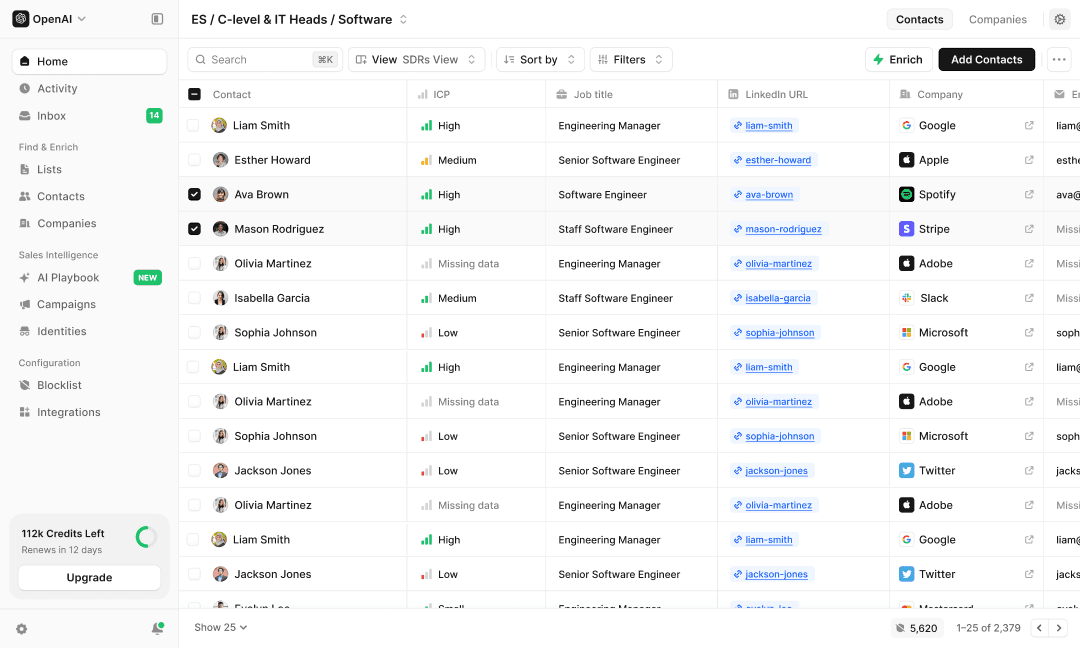
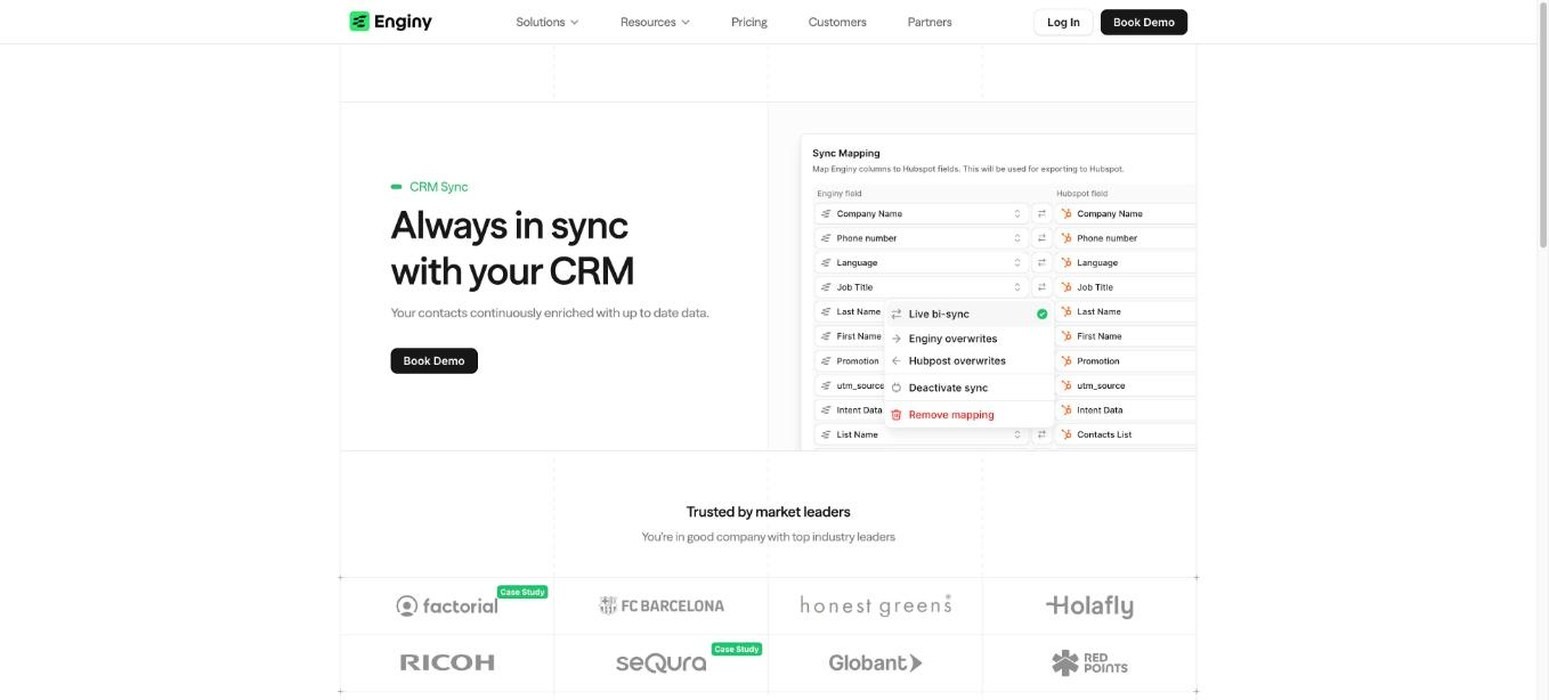
Enginy is an AI-native, end-to-end GTM platform built for B2B teams that want outbound to run from one place. We combine prospect discovery, data enrichment and multichannel engagement, so reps stop switching between separate tools.
Our list building starts with your ideal customer profile and layers on buying signals. These include job changes, new hires, funding rounds, technology stack and event attendance.
We then enrich every contact through 30+ providers and clean the data before it reaches your CRM. From there, our multichannel outreach campaigns run across email, social media and calls, with AI-written messages and conditional steps.
That makes us the most complete outbound sales platform for teams that want results without hiring a GTM engineer to run it.
Ideal For
B2B SaaS and services companies with SDR and AE teams
Founders and early-stage startups building their first outbound motion
Sales leaders who want consistent outbound across every rep
Agencies and recruitment firms running campaigns for many clients or roles
Top Features
Signal-based list building: Target accounts showing buying intent, including social prospecting lists of people who engaged with specific posts or events.
Multi-source enrichment: Checks 30+ providers for verified emails and phone numbers, then cleans the data before it reaches your CRM.
Conditional multichannel campaigns: Branch sequences across email, social media and calls based on what each prospect does.
Multi-stakeholder outreach: Reach the CEO, the buyer and the end users at the same account, so your name is familiar before the first call.
AI inbox and reply handling: Our AI drafts replies and tags conversations, so no response slips through the cracks.
Why We Stand Out?
Most outbound tools focus on either data or sending. At Enginy, we cover both in real depth, from search to meeting.
We also designed our tool so any rep can run it. That gives you the reach of a complete outbound setup without the usual technical overhead.
On top of that, five structured onboarding sessions help your team launch with a proven process.
Pros
Data, enrichment and multichannel outreach live in one tool
Buying signals help reps reach accounts at the right moment
Enrichment across 30+ providers improves contact coverage
Easy enough for SDRs to run without technical support
Structured onboarding gets teams live quickly
Cons
Solo users who only want a basic email sender may not need its full depth
Teams that prefer instant self-serve sign-up will need a short call first
Companies deeply tied to a legacy enterprise suite may face a longer switch
Pricing
At Enginy, we don't publish fixed prices. Instead, we tailor each plan after a short qualification call, based on your team size and outbound goals.
Our pricing is credit-based. Credits cover actions such as data extraction, email and phone enrichment, verification and AI-generated fields, so you pay for what you use.
Final Verdict
Among the best outbound sales platforms, Enginy is our top pick for teams that want outbound without a patchwork of tools. We bring data, enrichment and multichannel campaigns together in one workflow.
Because any rep can run it, you get the depth of a full outbound setup without hiring a specialist.
For growing B2B teams that need a predictable pipeline, that balance is hard to beat.
2. Outreach
Overview
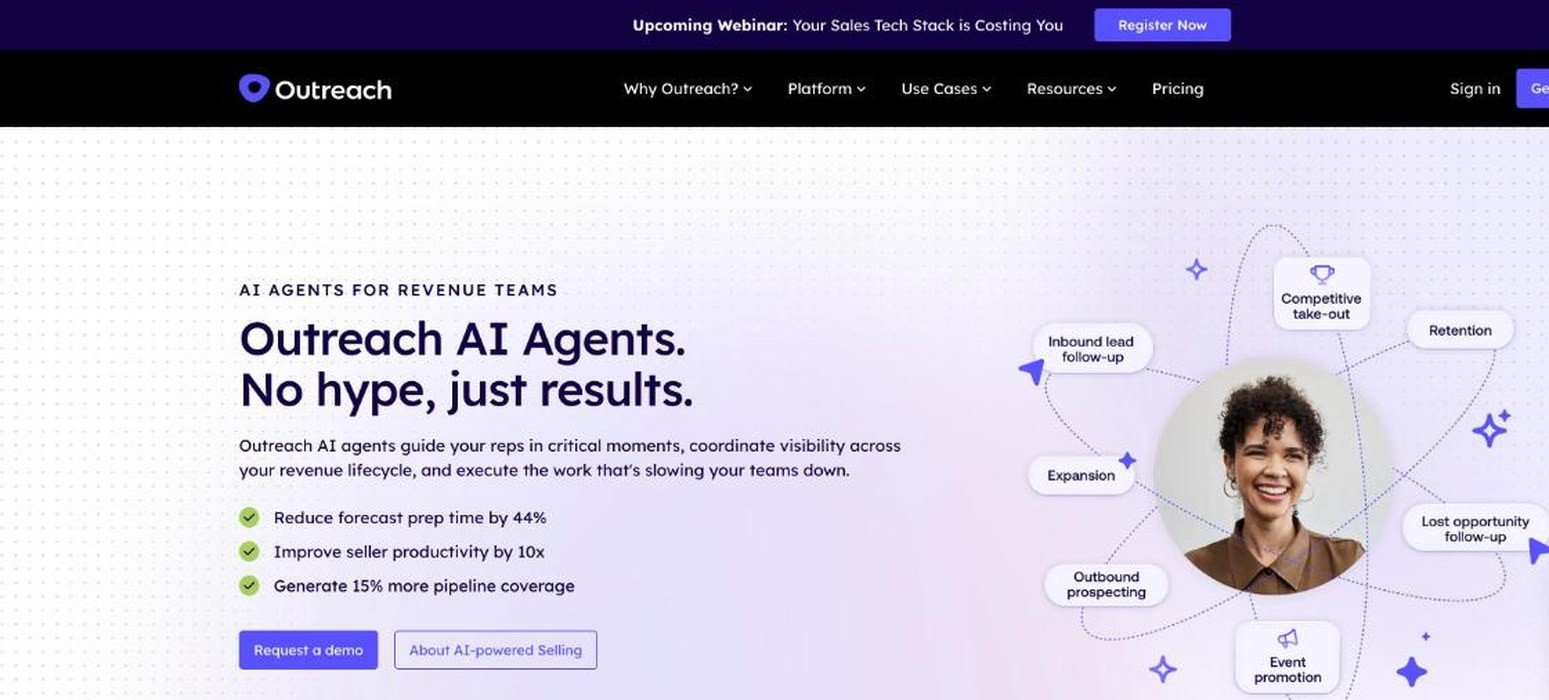
Outreach is a sales execution tool used by large revenue organisations to run and measure their entire sales process. Its sequences bring email, calls and tasks into one daily workflow, so reps always know their next step.
Over time, Outreach has expanded well beyond sequencing. Its AI agents research accounts, draft emails and recommend follow-ups. Kaia, its conversation intelligence tool, records and summarises calls for coaching.
Deal management and forecasting give leaders a clear view of pipeline health.
It suits large organisations with mature outbound processes. Since the tool relies on your own prospect data, many teams pair it with a separate data provider.
Ideal For
Enterprise sales teams with large SDR and AE functions
Revenue leaders who want execution, coaching and forecasting in one place
Companies with dedicated sales operations staff
Top Features
Sequences: Multi-step email, call and task sequences keep outbound consistent across large teams.
AI agents: Handle the background research on each account, so reps start with a ready-made first draft.
Kaia: Captures each call and turns it into a short summary that managers can use for coaching.
Forecasting: Helps leaders spot at-risk deals early and plan the quarter with more confidence.
Why They Stand Out?
Outreach is one of the strongest choices for large teams that want a disciplined, measurable outbound process. It turns your sales playbook into a repeatable daily routine for every rep.
The AI agents add useful research and drafting on top of that structure.
However, you'll still need separate tools for prospect data and enrichment, which adds cost and setup time.
Pros
Proven with large, complex sales organisations
Strong AI drafting and research support
Detailed analytics, coaching and forecasting
Broad range of CRM and productivity integrations
Cons
No native prospect database or enrichment
Setup usually needs dedicated admin resources
Too heavy for most startups and small teams
Social media steps are less central than email and calls
Pricing
Outreach doesn't publish its prices. Instead, pricing depends on your team size, use cases and setup requirements.
The quickest way to get an accurate figure is to speak with their sales team. They'll put together a quote based on your seats and the modules you need.
Final Verdict
Outreach suits large organisations that want to run a structured, measurable outbound process across many reps.
On the other hand, its depth brings setup and admin overhead. You'll also need to source data and enrichment from other tools.
For startups and smaller teams, an all-in-one tool covering data, enrichment and outreach usually delivers results faster.
3. Salesloft
Overview
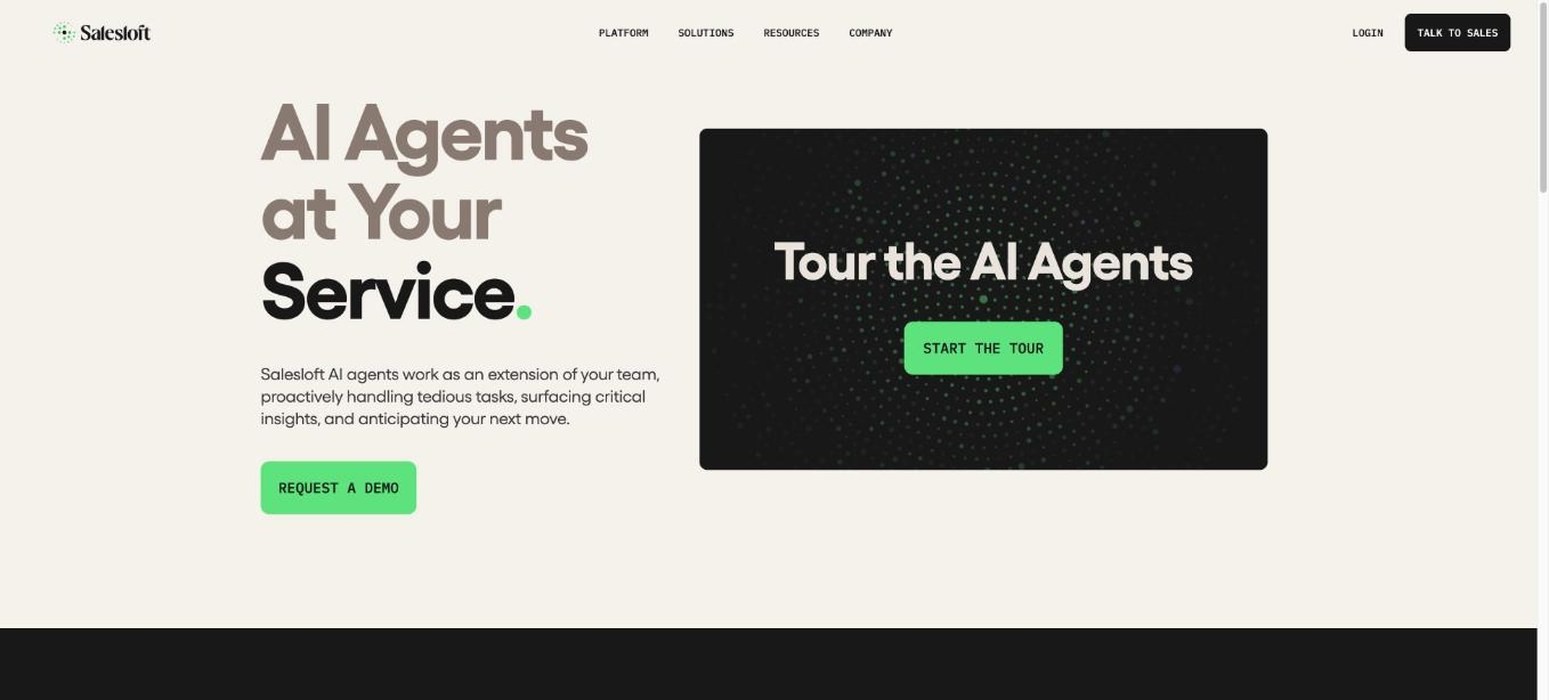
Salesloft is a revenue orchestration tool designed for enterprise sales teams. At its centre sits the cadence: a structured series of emails, calls and social media touches that reps follow for each prospect.
The tool also uses AI to rank daily priorities. Based on buyer signals and activity, it highlights the accounts and actions most likely to move deals forward.
Beyond outbound, Salesloft covers conversation intelligence, coaching, deal management and forecasting. Leaders can see the full pipeline without switching tools. Personalisation mainly comes from templates, snippets and AI-assisted writing. Salesloft suits large teams that care about consistency and governance.
Lean teams wanting built-in prospect data or deep research will usually need extra tools alongside it.
Ideal For
Enterprise sales organisations with established processes
Sales leaders who need coaching and forecasting alongside outbound
Teams with dedicated operations staff to manage setup
Top Features
Cadences: Structured, multi-step sequences across email, phone and social media.
AI prioritisation: Surfaces the next best action for each rep every day.
Conversation intelligence: Analyses calls to support coaching and spot risks.
Deal and forecast tools: Give managers clear pipeline visibility.
Why They Stand Out?
Salesloft is one of the smartest choices for enterprise teams that need governance and visibility at scale. It brings outbound, coaching and forecasting into a single suite.
As a result, large sales organisations can keep hundreds of reps aligned on one process.
Still, it depends on the user for prospect data, so list building and enrichment usually happen in other tools.
Pros
Mature cadence management for large teams
Strong coaching and conversation intelligence
Deep integrations with major enterprise CRMs
Clear reporting for sales leadership
Cons
No built-in contact database
Can feel complex for startups and small teams
Implementation often needs admin support
Personalisation relies heavily on templates
Pricing
Salesloft doesn't list its prices publicly. Instead, it tailors pricing to each team's size, use cases and requirements.
To get a figure, you'll need to contact their sales team for a custom quote. That quote will reflect your seats, setup and any add-ons you choose.
Final Verdict
Salesloft works well for enterprise teams that already have clean data and want a structured way to run outbound, coaching and forecasting.
For smaller teams, though, it's often more than they need, and it won't build or enrich lists for them.
Teams wanting data and outreach together will likely need to pair it with other tools or choose a broader option.
4. Apollo.io
Overview
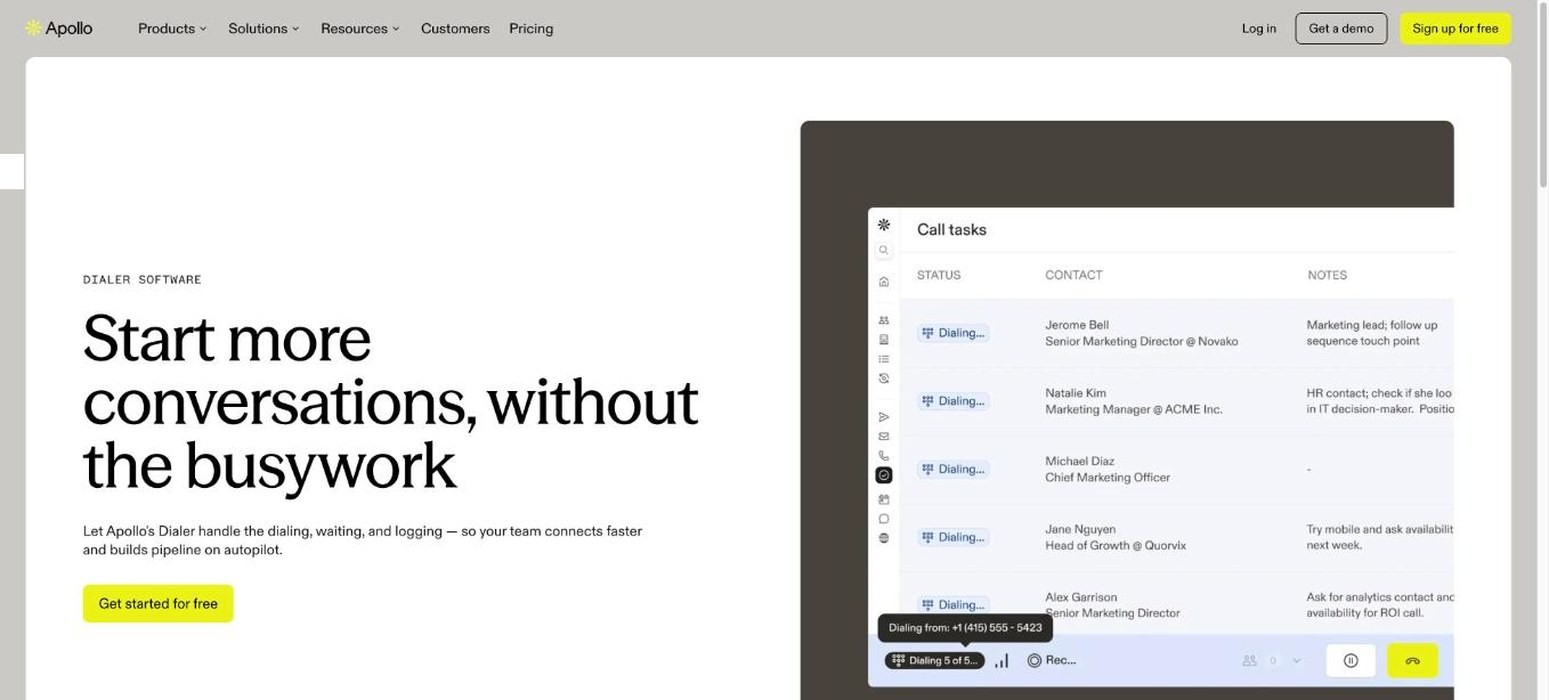
Apollo.io is an all-in-one sales tool that pairs a large B2B contact database with sequences, a built-in dialler and AI writing help. For many startups, it's the first outbound sales tool they try.
Its database lets teams search by job title, company size, industry and location. Sequences can include email, calls and manual social media tasks, while the AI assistant drafts emails using contact and company data.
Apollo covers a lot of ground for a small team. Its filters and personalisation are fairly simple, though, compared with tools built around buying signals.
Once outbound gets more targeted, many teams outgrow the platform and look for tools with deeper intent data, cleaner enrichment or multi-stakeholder campaigns.
Ideal For
Early-stage startups launching their first outbound campaigns
Solo founders and small sales teams on tight budgets
Teams that want data and basic sequences in one tool
Top Features
Contact database: Search a large pool of B2B contacts with standard filters.
Sequences: Combine email, calls and tasks in one campaign.
AI writing assistant: Drafts emails using contact and company details.
Built-in dialler: Call prospects without leaving the tool.
Why They Stand Out?
Apollo.io is one of the smartest choices for startups launching outbound on a budget. Its free plan bundles data, sequences and calling into one tool.
That breadth lets small teams launch campaigns within a day or two.
However, its fairly basic filtering and personalisation mean teams often outgrow Apollo as their targeting sharpens over time.
Pros
Free plan and low entry price
Database, sequences and dialler in one tool
Quick to set up for small teams
AI help with email drafting
Cons
Data accuracy can vary by region
Filters and intent signals are fairly basic
Personalisation lacks depth
Add-ons can push up the real cost
Pricing
Apollo.io offers a Free plan alongside paid tiers billed annually. Basic costs $49, Professional costs $79 and Organization costs $119 per seat per month.
Add-ons such as extra credits, advanced email domains and additional integrations are priced separately, so costs can rise as you grow.
Final Verdict
Apollo.io is a sensible starting point for startups that need data and sequences on a tight budget. Its free plan makes it easy to test outbound before committing.
Teams that need intent-led targeting, cleaner enrichment or multi-stakeholder campaigns usually move to a more complete tool.
5. Nooks AI
Overview
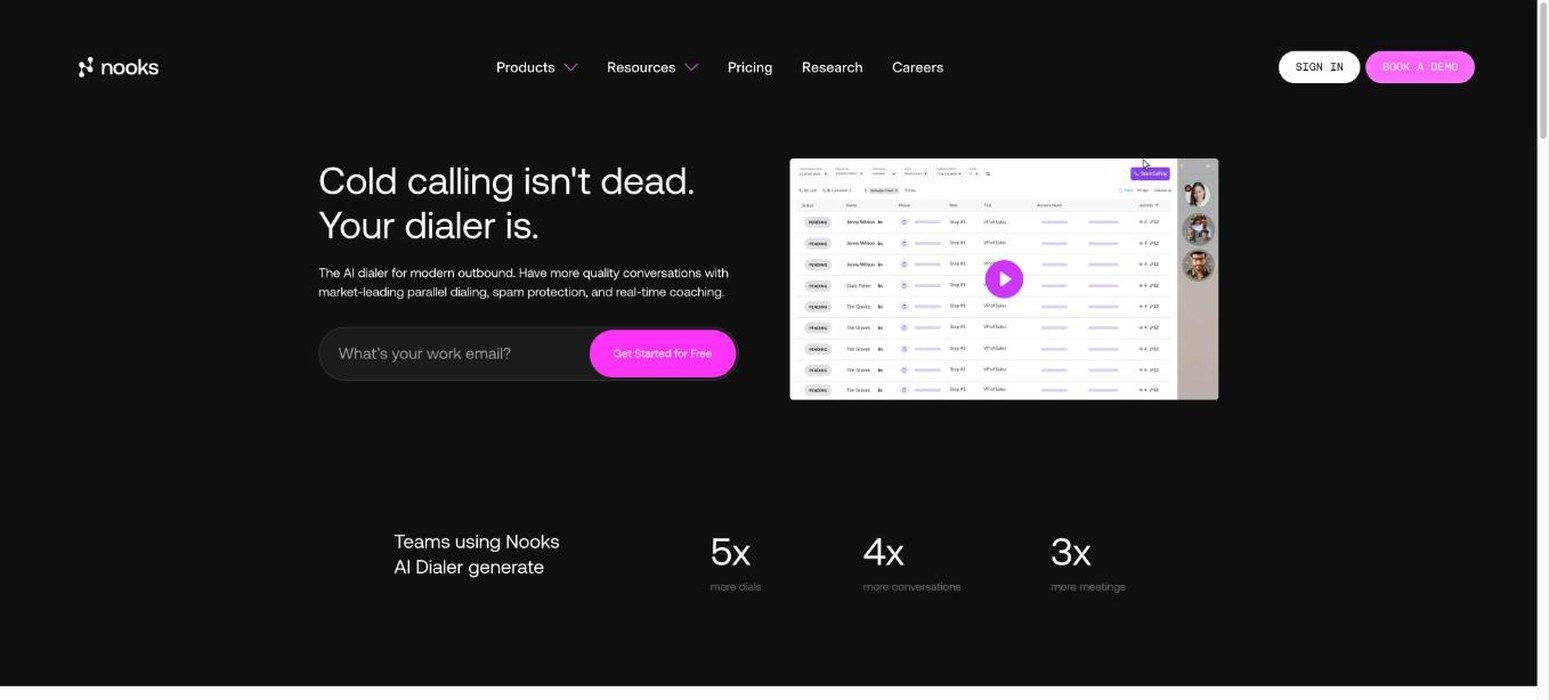
Nooks AI is an AI-powered calling tool built for outbound teams that rely heavily on the phone. Its best-known feature is the parallel dialler, which calls several prospects at once and connects reps only when someone picks up.
Beyond dialling, Nooks uses AI to help reps prepare and improve. It can surface account research before calls, transcribe conversations and support coaching with AI roleplay that lets reps practise objections.
The tool also brings SDR teams together in a shared virtual workspace, which helps managers coach in real time.
Because Nooks centres on calling, it fits phone-first teams best. Teams that need tools with deeper list building, enrichment or email-led sequences might need to plug it with other platforms to make things work.
Ideal For
SDR teams where cold calling drives most meetings
Sales managers who coach reps on live calls
Teams looking to increase connect rates and call volume
Top Features
AI parallel dialler: Calls several numbers at once and connects reps only to live answers.
AI call support: Transcribes calls and surfaces key moments for follow-up.
AI roleplay: Lets reps practise pitches and objection handling before live calls.
Virtual salesfloor: Keeps remote SDR teams connected for coaching and call blitzes.
Why They Stand Out?
Nooks AI is one of the strongest options for teams that book most meetings by phone. Its parallel dialler helps reps spend far more of their calling time in real conversations.
The AI roleplay and coaching features also help new reps ramp faster.
On the other hand, it focuses on calling, so data, enrichment and email sequences usually sit in other tools you'll manage.
Pros
Parallel dialling lifts conversation volume
Strong coaching and AI roleplay features
Shared workspace suits remote SDR teams
Helps new reps build calling confidence quickly
Cons
Focused mainly on the phone channel
Limited built-in list building and enrichment
Pricing isn't published, so budgeting takes a sales call
Pricing
Nooks AI doesn't publish fixed prices. Instead, it uses custom, quote-based pricing tailored to your team size and product modules.
Contract terms also shape the final figure. With no self-serve plans available, you'll need to book a sales consultation to get a quote.
Final Verdict
Nooks AI suits phone-first SDR teams that want to make more live connections and coach reps more effectively.
Its narrow focus is also the tool's main limitation. Most teams will still need separate tools for data, enrichment and email outreach.
For companies that want calling, email and social media in one workflow, a broader tool will usually be simpler to manage.
6. Clay
Overview
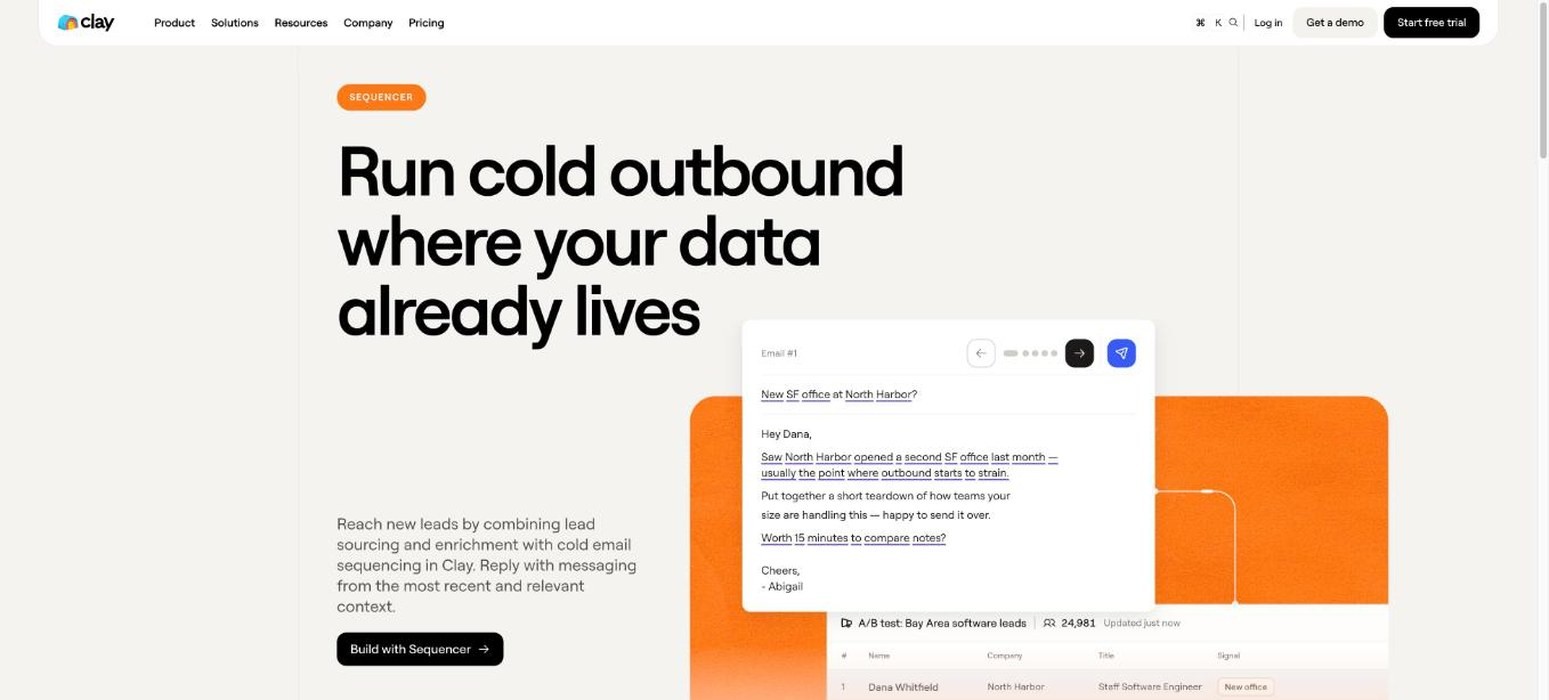
Clay is a data enrichment and research tool built around a flexible, spreadsheet-style workspace. Teams use it to pull data from many providers in sequence, filling gaps that a single database would miss.
Its AI research agent, Claygent, browses the web to answer custom questions about each account. That might include recent product launches, hiring plans or the tools a company uses.
Teams then turn those insights into tailored messages or tighter segments. Clay doesn't send sequences itself; instead, it feeds enriched data into outreach tools and CRMs.
That makes it a strong research layer for technical GTM teams. Getting real value from it, though, usually needs someone who can build and maintain the workflows.
Ideal For
GTM engineers and RevOps teams who enjoy building workflows
Growth teams needing niche data points beyond standard filters
Agencies creating custom research for several clients
Top Features
Waterfall enrichment: Checks multiple providers in order to improve match rates.
Claygent: Answers custom research questions about accounts at scale.
Flexible tables: Combines data, formulas and AI prompts in one view.
Integrations: Sends enriched data into CRMs and outreach tools.
Why They Stand Out?
Clay is one of the most flexible research tools available to outbound teams. You can design almost any enrichment or AI research workflow you need.
That control appeals to technical teams who want precise, well-researched data behind every campaign they run.
However, it focuses on research rather than sending. You'll still need a separate tool to run sequences, handle deliverability and manage replies.
Pros
Access to many data providers in one workspace
Highly customisable research and enrichment
Large library of templates and community resources
Works alongside existing outreach tools
Cons
Steep learning curve for non-technical reps
No built-in sequencing or outreach
Credits can run out quickly on complex workflows
Usually needs a dedicated operator
Pricing
Clay offers a free plan for testing, while paid plans start at $167 per month for Launch and $446 per month for Growth.
Enterprise pricing is custom. Plans scale by annual actions and data credits, and higher tiers add CRM sync, automation and dedicated support.
Final Verdict
Clay works best for technical GTM teams that want to build their own research engine and already run a separate sequencer.
For most sales teams, though, setup and upkeep take time that reps don't have.
Without a dedicated operator, much of its flexibility goes unused, so teams wanting a ready-to-run outbound tool may find it a heavy lift day to day.
7. Amplemarket
Overview
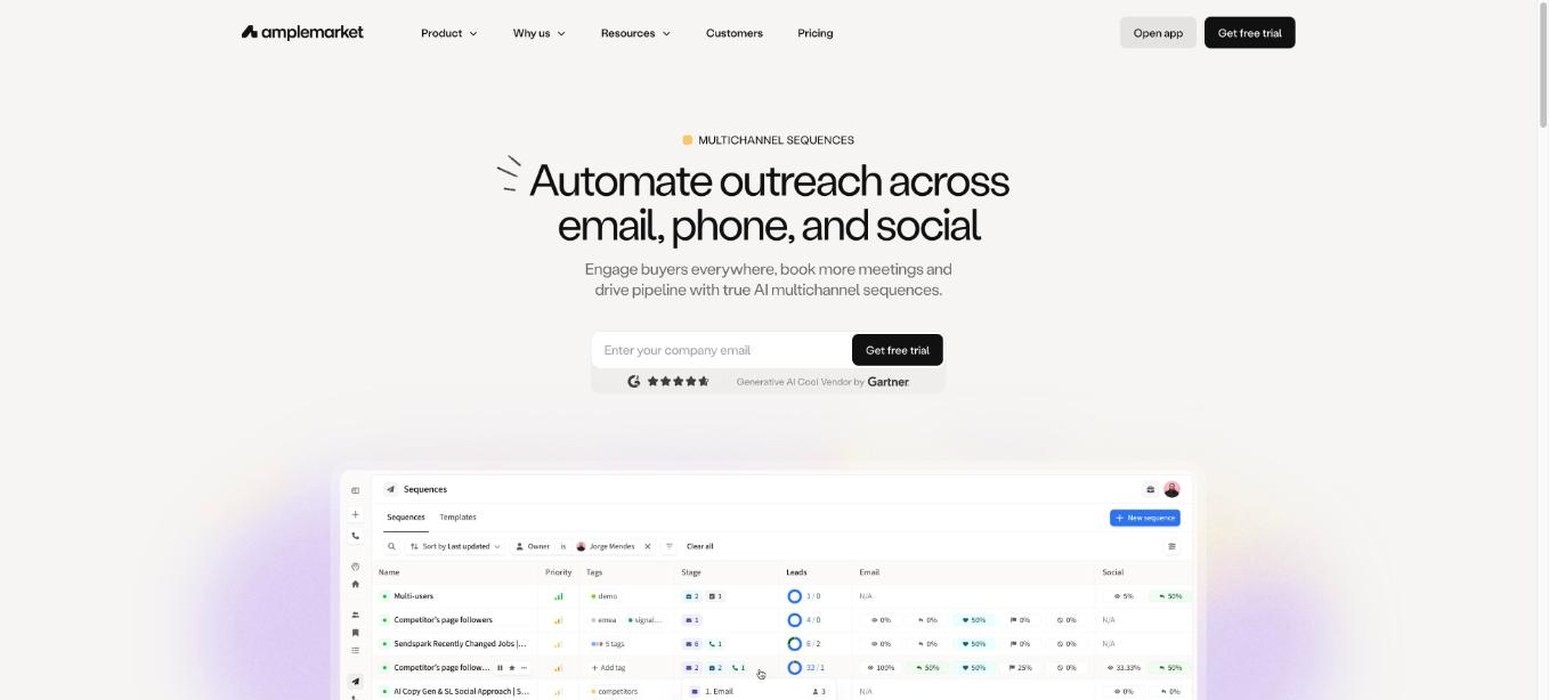
Amplemarket is an AI-driven sales tool that combines contact data, multichannel sequences and deliverability features in one place. Its AI copilot, Duo, helps reps find new prospects, research accounts and draft messages.
Sequences can span email, social media and calls. Meanwhile, intent signals such as job changes and website activity help reps prioritise who to contact first.
Amplemarket also puts weight on deliverability, with tools that monitor mailbox and domain health. That helps teams protect sender reputation as daily sending volumes grow steadily over time.
The tool suits mid-sized and growing teams that want an all-in-one setup. However, getting the most from its features can take more setup, training and hands-on configuration than lighter tools.
Ideal For
Growing B2B sales teams that want one outbound tool
Teams sending at volume that care about deliverability
Sales leaders who want AI support across prospecting and writing
Top Features
Duo AI copilot: Helps reps find leads, research accounts and draft outreach.
Contact data: Built-in database for prospect search and enrichment.
Multichannel sequences: Email, social media and calls in one flow.
Deliverability tools: Monitor mailbox and domain health to protect sender reputation.
Why They Stand Out?
Amplemarket is one of the strongest all-in-one options for growing outbound teams. It combines data, AI assistance and multichannel sequences without forcing teams to stitch separate tools together themselves.
Their focus on deliverability also helps teams scale sending safely, while volume rises.
Still, the overall depth of their platform can make onboarding heavier, and the entry price may feel steep for smaller businesses.
Pros
Data and multichannel outreach in one tool
Helpful AI copilot for research and writing
Strong deliverability monitoring
Useful intent signals for prioritisation
Cons
Higher entry price than many self-serve tools
Can take time to set up and learn fully
Smaller teams may not use its full feature set
Pricing
Amplemarket's Startup plan starts at $600 per month on an annual contract and includes two users, which suits small teams.
Growth and Elite plans use custom pricing. They add more users, larger contact allowances, advanced AI features, personalised onboarding and dedicated customer success for scaling teams.
Final Verdict
Amplemarket fits growing teams that want data, AI assistance and multichannel sequences in one tool, with a strong focus on deliverability.
However, the annual entry price and setup effort can be a lot for the smallest teams.
Startups testing outbound for the first time may prefer a lighter, more affordable option, and then revisit Amplemarket once their volume and teams grow.
8. Unify
Overview
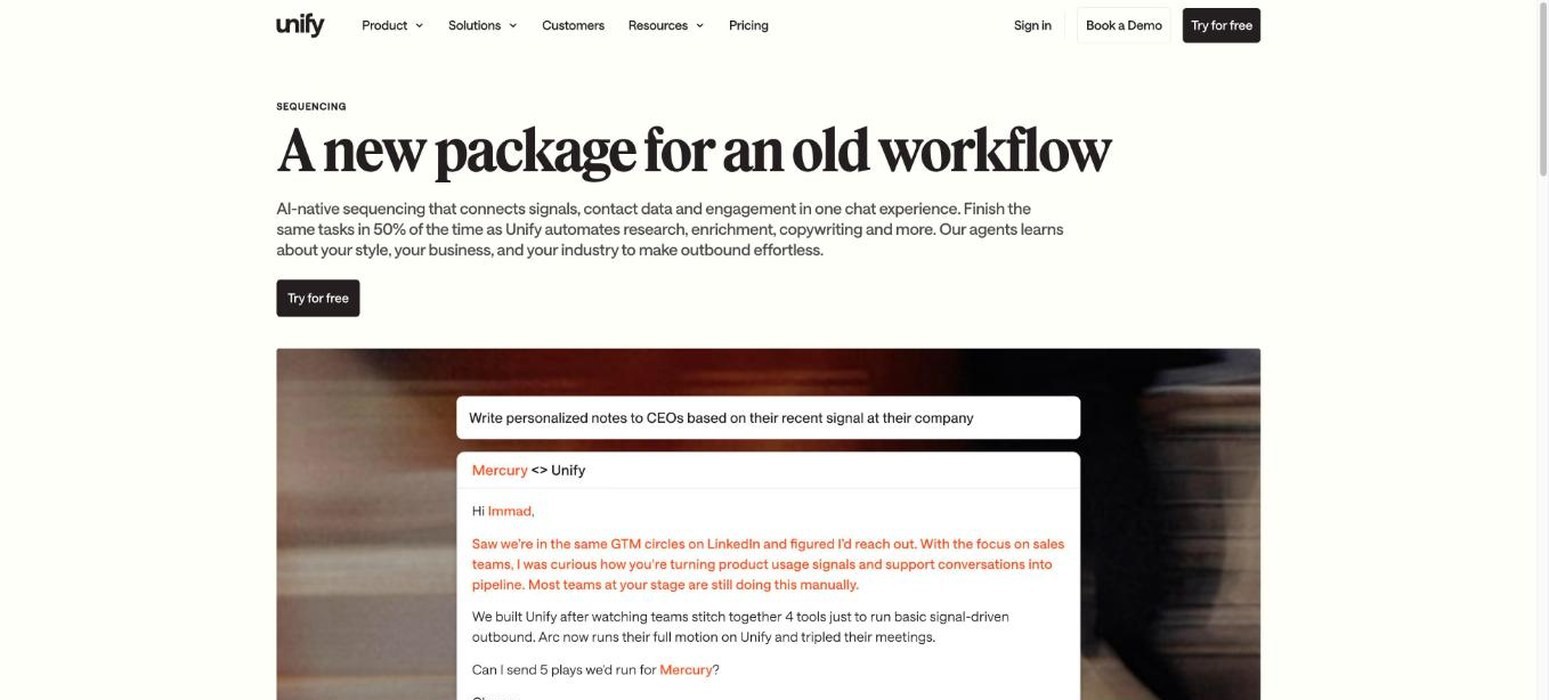
Unify is a warm outbound tool built around buying signals. It watches for website visits, job changes, champions moving to new companies and product usage, then turns those moments into automated outreach plays.
When a signal fires, Unify can enrich the contact, add them to a sequence and write a message that references the trigger. That makes outreach feel timely because it follows a real, recent event. For teams with healthy website traffic or a product-led motion, this approach can surface warmer, more responsive prospects than a standard cold list.
Setting up and tuning plays usually takes some RevOps time, though. Teams that also need large-scale cold list building may run another tool alongside it.
Ideal For
B2B teams focused on signal-based, warm outbound
RevOps teams comfortable building automated workflows
Companies with strong website traffic or product usage data
Top Features
Buying signals: Track website visitors, job changes and champion moves.
Automated plays: Trigger enrichment, sequences and tasks when signals fire.
AI messaging: Writes outreach that references the specific trigger.
CRM sync: Keeps activity and data aligned on higher plans.
Why They Stand Out?
Unify is one of the smartest choices for teams that want to reach prospects at the right moment. Its plays turn buying signals into timely outreach with little manual effort.
That helps reps focus their time on warmer accounts rather than cold, unqualified lists.
However, the value depends on how well plays are built and tuned, which usually needs RevOps support from the start.
Pros
Strong focus on timing and buying intent
Automated plays reduce manual follow-up
AI messages reference real triggers
Free plan available for testing
Cons
Plays take time and technical skill to set up
Less suited to broad cold prospecting
Advanced signals sit on the Business tier
Pricing
Unify offers four plans. Free costs $0 with limited credits, Base costs $20 per seat per month with 800 credits and Pro costs $60 per seat per month with 2,400 credits.
Pro adds CRM integrations, while Business has custom annual pricing with intent signals and advanced workflows.
Final Verdict
Unify suits teams that want to build outbound around warm signals and have RevOps time to set up and refine plays.
Its results depend heavily on configuration, and it's less focused on broad cold list building.
Teams after a simpler, all-in-one outbound tool may find Unify harder to set up and maintain than expected.
9. Lemlist
Overview
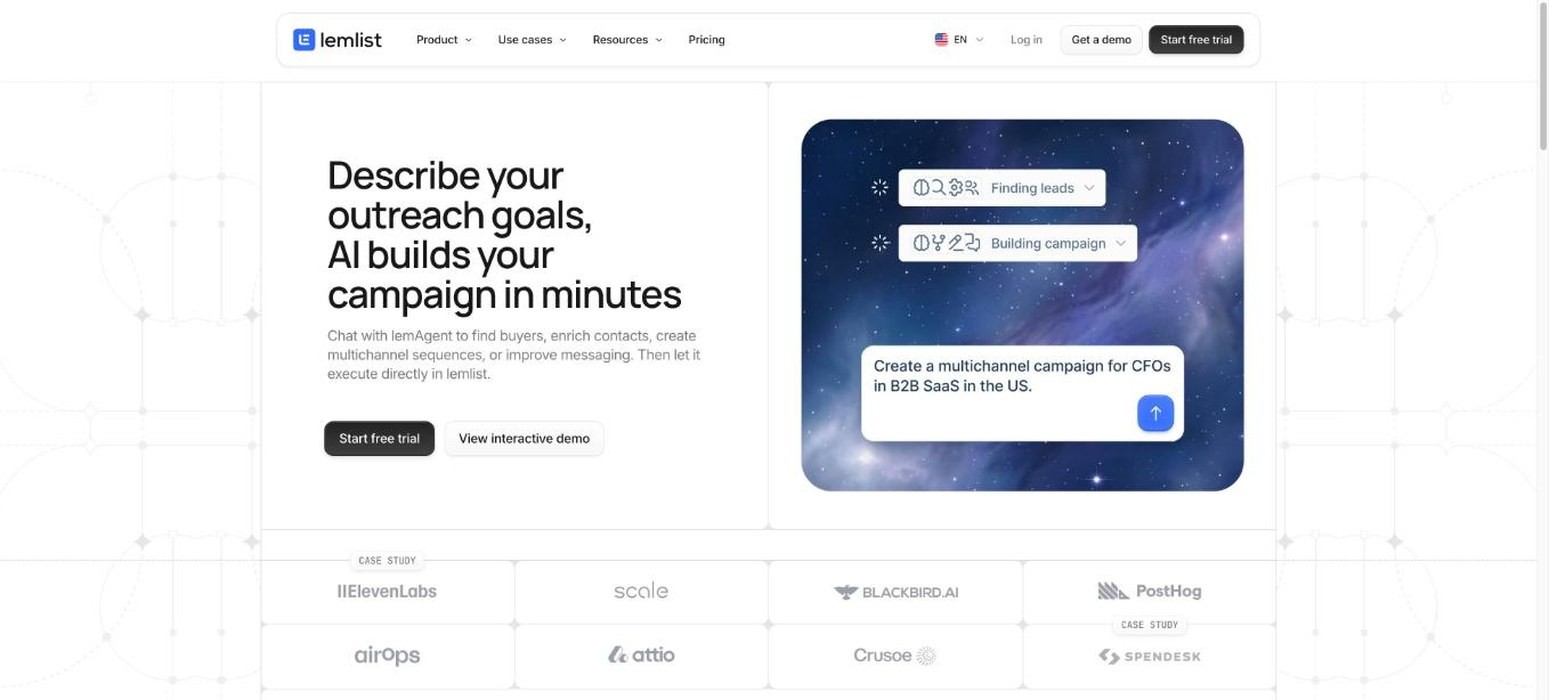
Lemlist is a multichannel outreach tool known for creative personalisation. Teams can add custom images, videos and landing pages to emails, which helps messages stand out in a busy, crowded inbox.
Campaigns can also mix in social media steps, calls and other channels. Lemlist adds a built-in lead database, AI-drafted sequences and lemwarm for email warm-up.
The interface is friendly and quick to learn, so small teams can launch their first campaigns without much training or outside help.
Its intent signals and enrichment are lighter than research-led tools, so teams running highly targeted, signal-based outbound may need extra data sources.
Ideal For
Small and mid-sized teams running multichannel campaigns
Founders who want creative, eye-catching cold outreach
Agencies testing campaigns across several channels
Top Features
Personalised visuals: Add custom images, videos and landing pages to each email.
Multichannel sequences: Combine email, social media steps and calls.
AI campaign writer: Drafts sequences based on your audience and offer.
lemwarm: Warms up inboxes to protect deliverability.
Why They Stand Out?
Lemlist is one of the smartest choices for creative, personal outbound. Its visual personalisation sets messages apart from standard cold emails.
The multichannel sequences and built-in warm-up also cover most of what small teams need.
Still, its data depth is limited, which can hold back highly targeted, signal-based campaigns as you grow.
Pros
Creative personalisation with images and videos
Multichannel sequences in one tool
Built-in lead database and warm-up
Easy to learn for new users
Cons
Intent signals and enrichment are fairly light
Reporting can feel basic for larger teams
Add-ons for extra credits and channels raise costs
Pricing
Lemlist charges per user, billed annually. Email Starter costs $39, Email Pro costs $69 and Multichannel Expert costs $99 per month.
Enterprise pricing is custom and quoted on request. Each plan includes credit bundles, while extra credits, phone dialling and other channels are available as paid add-ons.
Final Verdict
Lemlist is a good fit for small and mid-sized teams that want creative multichannel outbound without a complex setup.
However, its lighter data layer can limit teams that depend on intent signals and deep enrichment.
As targeting sharpens, you may need a tool with stronger built-in research and enrichment, or extra data sources alongside Lemlist.
10. Reply.io
Overview
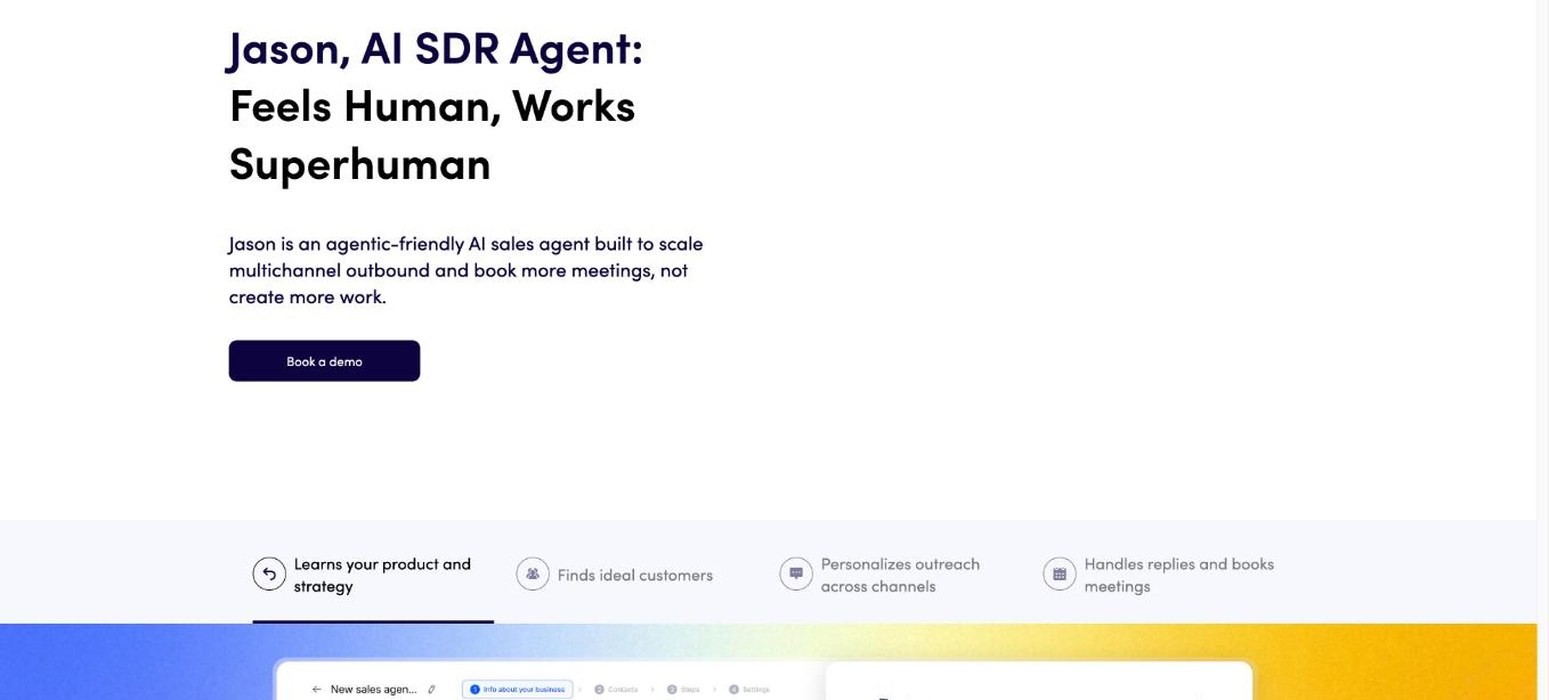
Reply.io is a multichannel sales engagement tool that lets teams build sequences across email, social media, calls, SMS and WhatsApp. That range gives reps several ways to reach busy prospects within one campaign.
The tool also includes a B2B contact database, email warm-up and deliverability features. Its AI helps write emails, suggest replies and keep campaigns moving. For teams that want to automate more of the top of the funnel, Reply.io offers Jason AI SDR.
This AI agent can build sequences, write messages, handle replies and book meetings.
Reply.io suits teams that want flexible multichannel outreach with an optional AI layer. Their data and intent signals are less advanced than signal-first tools, though, so targeting relies more on your own lists.
Ideal For
Sales teams running outreach across many channels
Agencies managing campaigns for several clients
Teams testing AI SDRs alongside human reps
Top Features
Multichannel sequences: Email, social media, calls, SMS and WhatsApp in one flow.
Jason AI SDR: Builds sequences, writes messages and books meetings.
B2B database: Find and add contacts without leaving the tool.
Deliverability tools: Warm-up and inbox health features protect sender reputation.
Why They Stand Out?
Reply.io is one of the strongest options for teams that want broad channel coverage in one sequencer. Few tools support as many outreach channels in a single campaign.
Its Jason AI SDR also gives teams an easy, low-risk way to test AI-led prospecting.
However, their data and buying signals are lighter than signal-first tools, which limits how deep targeting can go.
Pros
Wide range of outreach channels
Optional AI SDR for automated prospecting
Built-in database and deliverability tools
Unlimited users on the Email Volume plan
Cons
Intent signals are less advanced than signal-first tools
AI SDR adds a separate monthly cost
Interface can feel busy for new users
Pricing
Reply.io's Email Volume plan starts at $179 per month and includes unlimited users. Multichannel costs $99 per user per month for wider channel coverage.
Its Jason AI SDR costs $500 per month. Annual billing can save up to 17%, which makes longer commitments more economical.
Final Verdict
Reply.io suits teams that want flexible multichannel sequences and the option to add an AI SDR. Its lighter data and intent signals mean targeting depends much more on your own lists, research and contact enrichment.
Teams that want buying signals, enrichment and multichannel outreach in one place may find a more complete, all-in-one tool easier to run day to day.
How to Choose the Best Outbound Sales Platforms (What To Consider)?
Choosing between the best outbound sales platforms depends on how your team prospects, which channels you use and how much setup you can handle.
Here are the factors that matter most:
1. Data Quality and Coverage
Outbound only works if your data is accurate.
Check where each tool sources its contacts, how often it updates them and whether it checks several providers before giving up on a match.
Then test it on your own market. A tool with strong US coverage may still miss decision-makers in the UK, Spain or Germany.
2. Buying Signals and Targeting
Static filters like job title and company size are only a starting point. Look for buying signals such as job changes, new hires, funding rounds and technology changes.
These signals help you reach accounts when they're most likely to buy, which lifts reply rates without adding volume.
3. Channel Coverage
Email alone rarely delivers enough meetings anymore. Look for outbound sales software that combines email, social media and calls in one sequence.
Multi-stakeholder campaigns also help, since reaching several people at the same company builds familiarity before your first call.
4. Ease of Use and Time to Launch
Some tools need a GTM engineer to build and maintain them. Others are designed so any rep can launch campaigns within days.
For startups and lean teams, a tool that's quick to learn usually beats a flexible one that sits half-configured for weeks.
5. CRM Integration and Data Hygiene
Your outbound sales tool should keep your CRM clean. Check for native integrations, duplicate handling and data cleaning before and after enrichment.
Good integration also means replies and activity sync automatically, so your reporting stays accurate.
6. Total Cost of Ownership
Headline prices only tell part of the story. A cheap sender may still need a separate data provider, an enrichment tool and hours of manual research each week.
Add up every tool and the rep time involved.
An all-in-one option often costs less overall than a stack of single-purpose tools.
Everything You Need to Know About Outbound Sales Platforms
Tool | Pros | Cons | Ease of Use | Integrations | Support | Affordability | Channel Coverage |
|---|---|---|---|---|---|---|---|
Enginy | All-in-one data and outreach; buying signals; easy for any rep | Short call before pricing; more depth than solo senders need; longer switch from legacy suites | ⭐⭐⭐⭐⭐ | ⭐⭐⭐⭐⭐ | ⭐⭐⭐⭐⭐ | ⭐⭐⭐⭐ | ⭐⭐⭐⭐⭐ |
Outreach | Proven at scale; AI drafting; strong forecasting | No native data; complex setup; heavy for startups | ⭐⭐⭐ | ⭐⭐⭐⭐⭐ | ⭐⭐⭐⭐ | ⭐⭐ | ⭐⭐⭐⭐ |
Salesloft | Mature cadences; strong coaching; enterprise CRM sync | No contact database; complex for small teams; template-led personalisation | ⭐⭐⭐ | ⭐⭐⭐⭐⭐ | ⭐⭐⭐⭐ | ⭐⭐ | ⭐⭐⭐⭐ |
Apollo.io | Low price; data and sequences together; quick start | Variable data accuracy; basic filters; shallow personalisation | ⭐⭐⭐⭐ | ⭐⭐⭐⭐ | ⭐⭐⭐ | ⭐⭐⭐⭐⭐ | ⭐⭐⭐ |
Nooks AI | Parallel dialling; strong coaching; AI roleplay | Phone-focused; limited data; no public pricing | ⭐⭐⭐⭐ | ⭐⭐⭐ | ⭐⭐⭐⭐ | ⭐⭐⭐ | ⭐⭐ |
Clay | Wide data coverage; flexible research; strong templates | Steep learning curve; no sequencing; credits add up | ⭐⭐ | ⭐⭐⭐⭐⭐ | ⭐⭐⭐⭐ | ⭐⭐⭐ | ⭐ |
Amplemarket | All-in-one; AI copilot; deliverability focus | Higher entry price; setup time; more than small teams need | ⭐⭐⭐ | ⭐⭐⭐⭐ | ⭐⭐⭐⭐ | ⭐⭐ | ⭐⭐⭐⭐ |
Unify | Signal-led timing; automated plays; free plan | Setup effort; weaker cold prospecting; key signals on top tier | ⭐⭐⭐ | ⭐⭐⭐⭐ | ⭐⭐⭐ | ⭐⭐⭐⭐ | ⭐⭐⭐ |
Lemlist | Creative visuals; multichannel; built-in warm-up | Light data; basic reporting; costly add-ons | ⭐⭐⭐⭐ | ⭐⭐⭐⭐ | ⭐⭐⭐⭐ | ⭐⭐⭐⭐ | ⭐⭐⭐⭐ |
Reply.io | Wide channel range; optional AI SDR; deliverability tools | Lighter intent data; AI SDR costs extra; busy interface | ⭐⭐⭐ | ⭐⭐⭐⭐ | ⭐⭐⭐ | ⭐⭐⭐⭐ | ⭐⭐⭐⭐⭐ |
Build a Predictable Outbound Pipeline With Enginy
Outbound shouldn't depend on how many hours your reps spend building lists and switching tabs. At Enginy, we give your team the data, buying signals and multichannel campaigns to reach the right accounts with a reason to talk.
Our customers see the impact quickly. Factorial lifted reply rates from 10% to 45% and doubled conversion from 4% to 8% on deals touched by our campaigns. Similarly, Venair grew monthly leads two to three times across most of its markets.
Because any rep can run it, you don't need a GTM engineer to get there. Five structured onboarding sessions help the team connect your CRM, set up the AI Playbook and launch your first campaigns.
Book a demo with Enginy and see how much more pipeline your team can build when reps spend their time selling.
FAQs About Outbound Sales Platforms
What is the best outbound sales platform in 2026?
The best outbound sales platform in 2026 is Enginy, because it combines signal-based list building, enrichment from 30+ providers and multichannel campaigns in one tool that any rep can run. Factorial used it to lift reply rates from 10% to 45%. Outreach and Salesloft suit large enterprise teams, while Apollo.io suits startups. That's why Enginy tops our list of the best outbound sales platforms.
What should I consider when choosing the right outbound sales platform for me?
When choosing the right outbound sales platform for you, consider data quality, buying signals, channel coverage, ease of use and CRM integration. Test each tool on 20 to 30 real prospects in your own market before committing. Also compare total cost, including any separate data or enrichment tools you'd still need to buy. The best outbound sales platforms also include onboarding support to launch faster.
How does Enginy differ from similar alternatives?
Enginy differs from similar alternatives by combining prospect data, enrichment and multichannel outreach in one tool that doesn't need a GTM engineer to run. Most competitors focus on either data or sending. We also support multi-stakeholder campaigns across email, social media and calls, plus buying signals like job changes, new hires and funding rounds. Any rep can run it without technical support.
How do I get started with Enginy?
You can get started with Enginy by booking a demo on our website. After a short qualification call, we build a credit-based plan around your team size and goals. Then five structured onboarding sessions cover CRM setup, the AI Playbook, list building and your first campaigns, so your team launches with a clear, repeatable process. You can also try our free prospect search tool first.
How easy is it to switch to Enginy?
Switching to Enginy is straightforward, because our team sets everything up with you across five onboarding sessions. We connect your CRM, including HubSpot, Salesforce, Pipedrive, Zoho and Microsoft Dynamics 365, and help you rebuild lists and sequences. Most teams replace a separate data provider, enrichment tool and sequencer with one workflow. Recurring automated lists then keep your CRM data fresh.
Do I need a GTM engineer to run Enginy?
You don't need a GTM engineer to run Enginy, because we designed it so any sales rep can build lists, enrich contacts and launch campaigns. Our AI Finder turns plain-language searches into filtered lists in seconds. Five onboarding sessions cover setup, and teams like Factorial scaled from 10 leads a day to 5,000 a month without adding operations headcount or extra tools.
What is the difference between outbound sales software and a CRM?
The difference between outbound sales software and a CRM is that outbound tools find and contact new prospects, while a CRM tracks existing relationships and deals. Outbound software builds lists, enriches contacts and runs sequences across email, social media and calls. When the two sync, every reply and booked meeting lands in the CRM automatically.