Melhores Ferramentas de Prospeção IA em 2026 (Comparativo das Principais Plataformas)

Andrea López
Partilhar
Principais Conclusões (TL;DR)
A Melhor Ferramenta Geral de Prospeção com IA: A Enginy é a ferramenta de prospeção com IA tudo-em-um mais forte para equipas de vendas B2B que precisam de descoberta de potenciais clientes, enriquecimento de dados de múltiplas fontes e alcance multicanal baseado em IA num único fluxo de trabalho, sem a necessidade de um engenheiro de GTM para a operar.
Por que razão Precisa Dela?: A prospeção manual faz com que os SDRs passem a maior parte do seu dia de trabalho em pesquisa, introdução de dados e construção de listas, em vez de em conversas. As ferramentas de prospeção de vendas com IA resolvem isto automatizando todo o pipeline, desde a descoberta do ICP até à primeira resposta.
A Quem se Destina?: Equipas de vendas B2B em PMEs e empresas de média dimensão, desde SDRs e Diretores de Vendas até Chefes de Vendas e Fundadores que desejam um outbound escalável sem um crescimento proporcional do número de colaboradores.
Como Escolher a Correta?: Avalie se precisa de uma plataforma completa que cubra dados e alcance em conjunto ou de uma ferramenta especializada para apenas uma fase. Verifique se a sua equipa consegue operar a ferramenta sem um recurso dedicado de RevOps. Confirme se cobre os canais e os sinais de intenção relevantes para o seu ICP.
Preço Previsto: A Enginy tem orçamentos personalizados com base numa chamada de qualificação e utiliza um modelo baseado em créditos, com planos que vão desde o Basic (até 500 contactos/mês) a escalões Enterprise totalmente personalizados. Em todo o mercado, a maioria das ferramentas de prospeção com IA varia de planos gratuitos (Apollo.io, Clay) a contratos empresariais a partir de $14.000/ano (Cognism), com opções de gama média entre $27 e $250/mês.
Visão Geral das Principais Ferramentas de Prospeção com IA em 2026
Empresa | Melhor Para | Principais Funcionalidades | Preços |
Enginy | Prospeção completa com IA: descoberta, enriquecimento e alcance multicanal | AI Finder, enriquecimento em cascata de mais de 30 fontes, campanhas multicanal condicionais, agentes AI SDR | Personalizado (baseado em créditos) |
Artisan | Prospeção autónoma com AI SDR com o mínimo de intervenção humana | AI SDR (Ava), pesquisa e alcance automatizados de e-mail, base de dados de contactos | A partir de $280/mês |
AiSDR | Alcance de e-mail outbound automatizado por IA e gestão de leads inbound | Prospeção de e-mail automatizada, alcance baseado em CRM, personalização por IA | A partir de $250/mês |
Cognism | Dados B2B em conformidade com o RGPD para EMEA e América do Norte | Dados telefónicos verificados com selo Diamond, Intenção de Compra, integração com Salesforce/HubSpot | A partir de $14.000/ano |
Saleshandy | Alcance de cold email com um localizador de leads integrado | Lead Finder (+852M contactos), sequenciação por IA, aquecimento de e-mail, alcance multicanal | A partir de $25/mês |
Gong | Inteligência de conversação e insights de prospeção baseados em chamadas | Gravação de chamadas, inteligência de negócios, coaching por IA, análise de pipeline | Personalizado |
Apollo.io | Base de dados acessível com sequenciação de e-mail integrada | +275M contactos, redação de e-mails por IA, alertas de mudança de emprego, extensão para Chrome | Gratuito; pago a partir de $49/utilizador/mês |
ZoomInfo | Profundidade de dados da América do Norte para empresas e intenção de compra | +260M perfis, Intenção de Compra, ZoomInfo Copilot, SalesOS | A partir de ~$15K/ano |
Clay | Operadores técnicos de GTM que constroem fluxos de trabalho de enriquecimento personalizados | Mais de 50 fornecedores de enriquecimento, agentes de pesquisa de IA, construtor de fluxos de trabalho | Gratuito; pago a partir de $167/mês |
Lavender | SDRs que procuram melhorar a personalização de e-mails e as taxas de resposta | Treinador de e-mail por IA, pontuação de personalização, integração com Gmail/Outlook | Gratuito; pago a partir de $27/mês |
O Que São Ferramentas de Prospeção com IA?
As ferramentas de prospeção com IA utilizam inteligência artificial para ajudar as equipas de vendas a encontrar, qualificar e interagir com potenciais compradores de forma mais eficiente. Identificam contas-alvo, enriquecem contactos com dados verificados, identificam sinais de compra como mudanças de emprego, rondas de financiamento e adoção de tecnologia, e personalizam o alcance à escala.
As plataformas modernas vão muito além de simples bases de dados de contactos. Muitas combinam agora enriquecimento em tempo real, sinais de intenção, mensagens geradas por IA e alcance automatizado num único fluxo de trabalho.
A maior diferença em 2026 reside nas ferramentas que automatizam uma única tarefa versus aquelas que gerem todo o processo de prospeção, desde a definição do ICP e a criação de listas até às reuniões agendadas.
Compreender esta distinção torna muito mais fácil escolher a plataforma certa para a estratégia de vendas, fluxo de trabalho e fase de crescimento da sua equipa.
Por que Razão Precisa de Ferramentas de Prospeção com IA?
Na Enginy, há muito que o dizemos claramente: os vendedores passam cerca de 70% do seu tempo em tarefas que não são de venda. Os dados externos apoiam isto: a Salesforce relata que os representantes passam apenas 28% do seu tempo a vender realmente, com o resto a ser perdido em pesquisa, introdução de dados, criação de listas e alternância entre ferramentas desconectadas. Aproveitar as ferramentas de prospeção com IA reduz esse trabalho administrativo, automatizando a descoberta de contactos, o enriquecimento e a personalização. O impacto pode ser significativo, com o resto perdido em pesquisa, introdução de dados, criação de listas e alternância entre ferramentas desconectadas. Aproveitar as ferramentas de prospeção com IA reduz esse trabalho administrativo, automatizando a descoberta de contactos, o enriquecimento e a personalização. O impacto pode ser significativo.
Na Factorial, a Enginy reduziu o tempo que os SDRs passavam em prospeção manual em 3 a 4 horas por dia, libertando uma equipa de vendas de 180 pessoas para passar a maior parte do seu dia de trabalho em conversas, em vez de em pesquisas.
Também melhoram a qualidade dos dados através do enriquecimento em cascata e alertas de mudança de emprego, ajudando as equipas a evitar contactos desatualizados.
Finalmente, as ferramentas de IA para prospeção de vendas revelam sinais de compra como rondas de financiamento, novas contratações e alterações tecnológicas, tornando o alcance mais relevante.
Uma melhor segmentação, dados mais limpos, uma intenção de compra mais forte e a limpeza contínua de dados funcionam em conjunto para produzir um pipeline mais qualificado e taxas de resposta mais elevadas.
Quem Precisa de Ferramentas de Prospeção com IA?
1. Diretor de Vendas / VP de Vendas
Os Diretores de Vendas sentem o impacto quando as reuniões qualificadas diminuem e o pipeline fica aquém das metas. As ferramentas de prospeção de vendas com IA resolvem isto ao automatizar a construção de listas, o enriquecimento e o alcance, dando aos SDRs mais tempo para vender.
Na Factorial, a Enginy aumentou a geração de leads de 10 leads por dia para 5.000 por mês, enquanto as taxas de resposta melhoraram de 10% para 45%, criando um efeito multiplicador em toda a equipa de vendas.
2. Líderes de Operações de Vendas / RevOps
Os líderes de RevOps e operações de vendas gerem os sistemas por trás da prospeção, desde a higiene do CRM e enriquecimento de dados até à criação de listas e automação do alcance.
Muitos passam o seu tempo a ligar múltiplas soluções pontuais que não funcionam de forma integrada.
As ferramentas de IA para prospeção de vendas simplificam isto combinando: descoberta, enriquecimento, alcance e sincronização de CRM numa única plataforma – reduzindo assim o trabalho manual, os custos de integração e os silos de dados.
3. Fundador / CEO em Empresas B2B em Fase de Crescimento
Os fundadores de empresas desde a fase seed até à Série B estão frequentemente a gerir as vendas eles próprios. Não têm orçamento para uma equipa completa de RevOps e não podem justificar um engenheiro de GTM antes de haver receita.
A IA para prospeção de vendas elimina esse obstáculo: um único fundador pode gerir uma operação profissional de outbound multicanal, direcionada ao ICP, a partir de uma única plataforma, sem apoio de especialistas.
A Enginy foi especificamente concebida para que qualquer representante de vendas, incluindo um fundador não técnico, possa gerir todo o fluxo de trabalho, desde a definição do ICP até à primeira reunião agendada.
4. Gestor de Vendas / Líder de Equipa
Os gestores de vendas que orientam entre três a dez SDRs sentem a lacuna de produtividade de forma aguda. A prospeção manual cria inconsistência: alguns SDRs constroem melhores listas do que outros, alguns personalizam melhor, alguns fazem o acompanhamento de forma mais consistente.
As ferramentas de prospeção de vendas com IA padronizam o processo de prospeção. Cada representante trabalha a partir da mesma lista enriquecida, da mesma estrutura de sequência e da mesma camada de mensagens personalizadas por IA.
O resultado são taxas de reuniões consistentes em toda a equipa, em vez de variações no desempenho individual.
5. SDRs e BDRs
Os SDRs são os principais utilizadores das ferramentas de prospeção com IA e as pessoas cujo trabalho diário muda de forma mais dramática quando as ferramentas certas estão implementadas.
A pesquisa manual de contas, a criação de listas do zero e a escrita de personalizações individualizadas à escala são as tarefas que consomem a maior parte do tempo não dedicado às vendas de um SDR.
Quando estas tarefas são automatizadas, os SDRs passam o dia em chamadas, demonstrações e conversas. Essa mudança da administração para a venda é onde os resultados do pipeline realmente se movem.
Melhores Ferramentas de Prospeção com IA: Análise Detalhada e Comparação
1. Enginy
Visão Geral
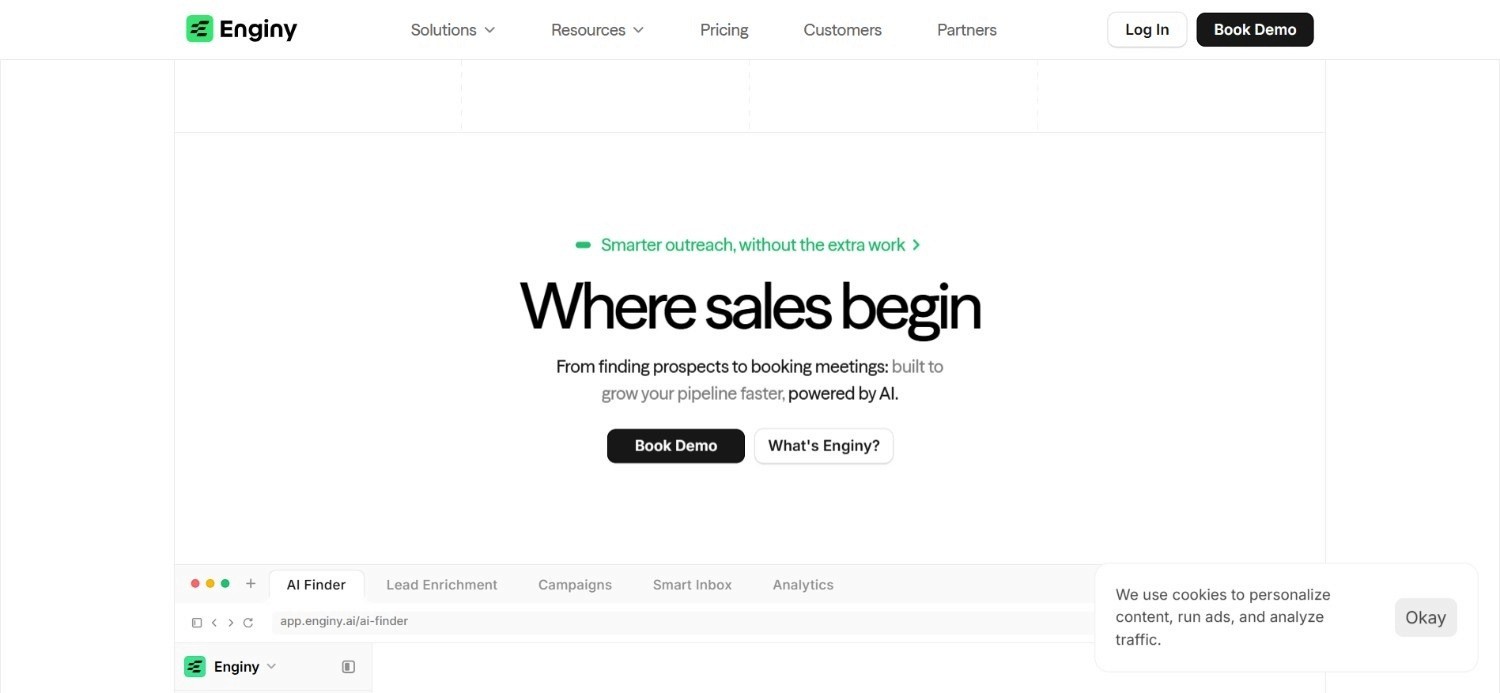
A Enginy é uma plataforma GTM nativa de IA, de ponta a ponta, concebida para equipas de vendas B2B modernas. Sendo uma das ferramentas de prospeção com IA mais completas disponíveis em 2026, cobrimos a descoberta de potenciais clientes, o enriquecimento de dados de múltiplas fontes de mais de 30 fornecedores e o alcance multicanal baseado em IA num único fluxo de trabalho.
Sem ferramenta de dados separada, sem sequenciador separado, sem etapas manuais entre eles. A nossa plataforma foi concebida para ser simples, de modo a que qualquer representante de vendas não técnico possa executar a sua atividade de outbound sem subcontratar tarefas a um recurso externo ou engenheiro de GTM.
Ao contrário de outras ferramentas de IA para prospeção de vendas, oferecemos a mesma profundidade de uma plataforma empresarial a uma escala acessível a PMEs e empresas em fase de crescimento.
Na Factorial, escalámos a geração de leads de 10 leads por dia para 5.000 por mês, com as taxas de resposta a atingirem os 45% e as taxas de conversão a duplicarem de 4% para 8%.
Ideal Para
Empresas de SaaS B2B, agências de recrutamento, empresas de consultoria de TI e equipas de serviços profissionais com atividades ativas de outbound que precisam de descoberta, enriquecimento e alcance numa única plataforma
Chefes de Vendas e VPs de Vendas que desejam um outbound previsível e escalável sem gerir múltiplas soluções pontuais ou contratar pessoal adicional
Fundadores e CEOs de PMEs que precisam de uma IA completa para prospeção de vendas que não exija um operador técnico dedicado
Líderes de Operações de Vendas e RevOps que estão a consolidar pilhas de ferramentas fragmentadas (Apollo + Lemlist + um limpador de dados) num único fluxo de trabalho integrado
Equipas de SDR e BDR a entrar em novos mercados que precisam de listas enriquecidas e segmentadas e de alcance multicanal lançado imediatamente a partir da mesma ferramenta
Principais Funcionalidades
AI Finder e Pesquisa Inteligente de Leads: Descoberta de potenciais clientes em linguagem natural com recomendações de IA baseadas num ICP definido. Suporta filtragem avançada incluindo pesquisa booleana, cargos anteriores, pilha tecnológica, rondas de financiamento, extração de interações em publicações sociais e extração de participantes em eventos. Elimina totalmente a configuração manual de filtros.
Enriquecimento em Cascata de mais de 30 Fontes: Agregação em tempo real em mais de 30 fornecedores de enriquecimento de contactos com lógica em cascata, maximizando a cobertura de e-mails e telefones verificados. A limpeza de dados pós-enriquecimento encaminha automaticamente cada contacto para o canal de alcance correto.
Campanhas Multicanal Condicionais: Sequências automatizadas que combinam tarefas de e-mail, prospeção social e chamadas com ramificação condicional baseada no comportamento do potencial cliente. As campanhas de identidade ao nível de C-level aquecem as contas-alvo antes do início do alcance do SDR. As sequências param automaticamente quando o potencial cliente responde.
Por que Razão nos Destacamos
A maioria das ferramentas de prospeção com IA fornece dados ou fornece alcance, mas não ambos com profundidade. Por outro lado, nós cobrimos todo o fluxo de trabalho: desde a descoberta ao enriquecimento, passando pelo alcance multicanal personalizado, gestão de respostas e sincronização de CRM – numa única plataforma que qualquer vendedor pode operar.
O modelo de prospeção também é estruturalmente diferente. Em vez de alcance de contacto único, ligamo-nos a múltiplos decisores na mesma conta simultaneamente: CEO, VP e diretores de departamento relevantes – com aquecimento de identidade ao nível de C-level antes do alcance do SDR.
Esta abordagem produz taxas de agendamento de reuniões fundamentalmente diferentes – algo que demonstrámos para a Talent Match, onde 25-30% de todas as novas leads vêm agora diretamente da nossa plataforma com um ROI de 4-5x sobre o seu investimento.
Prós
Fluxo de trabalho completo de prospeção de vendas com IA de ponta a ponta, cobrindo descoberta, enriquecimento e alcance multicanal numa única plataforma; sem necessidade de ferramentas separadas
O modelo de campanha multi-stakeholder contacta vários decisores em simultâneo, melhorando as taxas de reuniões
Concebido para utilização direta por SDRs; qualquer vendedor pode operá-lo desde o primeiro dia sem um engenheiro de GTM
Os agentes AI SDR gerem as respostas de forma autónoma com etiquetagem de caixa de entrada para acompanhamento de desempenho
Mais de 30 fornecedores de enriquecimento com lógica em cascata maximizam a cobertura de contactos e a qualidade dos dados
Contras
Os preços personalizados requerem uma chamada de qualificação antes de uma demonstração; não é self-serve como o Apollo
Não é adequado para equipas que estão em fase pré-PMF ou que ainda não validaram a adequação da mensagem ao mercado
Não é uma ferramenta apenas de dados; as equipas que apenas precisam de enriquecimento sem alcance encontrarão opções mais focadas nesta lista
Preços
A Enginy não publica os seus preços publicamente. O preço é orçamentado de forma personalizada com base nas necessidades identificadas numa chamada de qualificação. A estrutura de preços é baseada em créditos, sendo os créditos consumidos por ações como extração de dados, enriquecimento, verificação e campos gerados por IA.
Os escalões do plano base variam de Basic (5.000 créditos/mês, até 500 contactos) a Enterprise (totalmente personalizado).
Veredicto Final
A Enginy é a ferramenta de prospeção com IA mais forte no geral para equipas B2B que precisam de um fluxo de trabalho completo, pronto para SDR, cobrindo todo o ciclo de prospeção. Para equipas que pretendem uma base de dados self-serve ao preço mais baixo, o Apollo é mais acessível.
Para todos os outros que estão a construir uma atividade de outbound séria e escalável, a Enginy é a escolha certa.
2. Artisan
Visão Geral
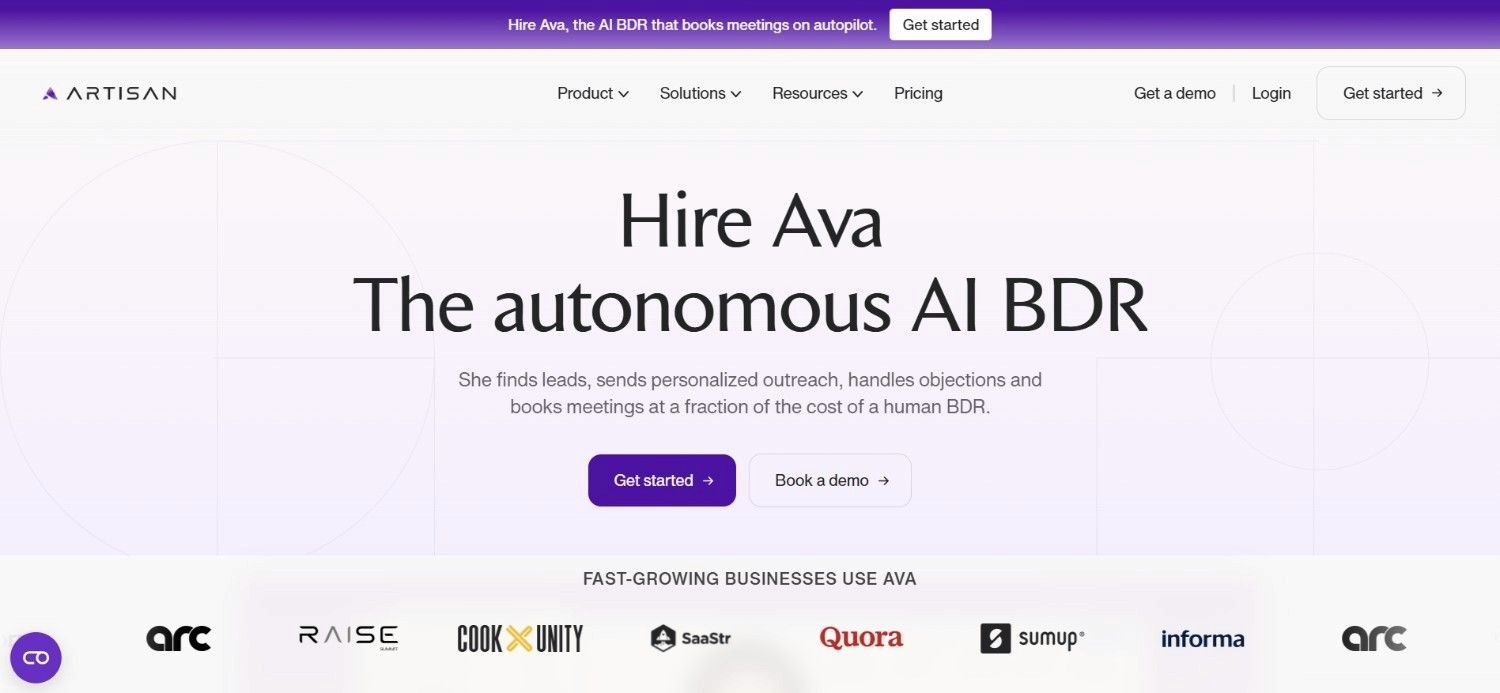
O Artisan é uma plataforma de prospeção de vendas nativa de IA, construída em torno de SDRs de IA autónomos que ajudam a automatizar a prospeção de outbound. Combina a descoberta de potenciais clientes, pesquisa, personalização e alcance para reduzir o trabalho manual tipicamente gerido pelos SDRs.
As equipas podem utilizá-lo para identificar contas-alvo, gerar mensagens personalizadas e executar campanhas de outbound com o mínimo de intervenção. O Artisan é mais adequado para organizações que procuram automatizar tarefas repetitivas de prospeção associadas ao outbound.
Isto permite que as equipas de vendas se concentrem mais em conversas, na construção de relações e no fecho de oportunidades, em vez de na criação de listas e execução de alcance.
Ideal For
Empresas B2B lideradas por vendas que pretendem testar um modelo de AI SDR antes de se comprometerem com a contratação de pessoal para outbound tradicional
Startups e empresas em fase de crescimento que avaliam ferramentas de IA para prospeção de vendas e que desejam ter o outbound a funcionar sem uma equipa de SDR dedicada
Líderes de receita que desejam testar a prospeção automatizada por e-mail à escala sem os elevados custos de SDR por utilizador
Equipas que precisam de uma operação de outbound a funcionar em paralelo com uma atividade humana de SDR, e não como o único canal
Empresas B2B com ICPs definidos e mensagens validadas que desejam automatizar a camada de prospeção e execução de alcance
Principais Funcionalidades
Ava (Agente AI SDR): SDR de IA autónomo que pesquisa potenciais clientes, escreve e-mails de alcance personalizados, envia sequências e gere respostas sem envolvimento humano em cada etapa.
Pesquisa Automatizada de Potenciais Clientes: A Ava recolhe dados de contacto, contexto da empresa e atividade recente para personalizar o alcance à escala sem exigir pesquisa manual por parte do SDR antes de cada envio.
Campanhas de E-mail em Múltiplas Etapas: Sequências de e-mail automatizadas em múltiplas etapas com mensagens personalizadas por IA, cadências de acompanhamento e gestão de respostas integradas.
Por que Razão se Destacam
O Artisan é uma das ferramentas de prospeção com IA mais distintas para equipas que pretendem testar um modelo autónomo de AI SDR.
A capacidade do agente de IA – Ava – de pesquisar, personalizar e enviar sem aprovação humana por e-mail dá-lhe um modelo operacional distinto da maioria das ferramentas de IA para prospeção de vendas, que ainda exigem que os SDRs revejam e aprovem o alcance.
Prós
Modelo de AI SDR verdadeiramente autónomo; a Ava opera a atividade de outbound com o mínimo de intervenção humana
Muito adequado para testar a prospeção com AI SDR sem se comprometer com um grande número de SDRs
A personalização do e-mail baseia-se na pesquisa do potencial cliente e não em modelos estáticos
Contras
Focado principalmente em e-mail; a prospeção multicanal para além do e-mail é limitada em comparação com plataformas completas como a Enginy
O modelo autónomo troca a profundidade da personalização pelo volume; situações complexas de ICP podem necessitar de mais discernimento humano
Começa em $280/mês para planos básicos; a capacidade total do AI SDR requer escalões mais elevados
Preços
O Artisan oferece um plano gratuito, com planos pagos a partir de $280/mês (Intern) e $660/mês (Employee). Os preços para empresas são personalizados. Os planos escalam por créditos mensais, volume de alcance, capacidades de automação, integrações e suporte empresarial dedicado.
Veredicto Final
O Artisan é uma escolha prática para equipas que avaliam um modelo de AI SDR autónomo para prospeção de e-mail.
É menos adequado para equipas que precisam de prospeção multicanal com IA que cubra o alcance nas redes sociais, sinais profundos de intenção de compra ou interação com múltiplos stakeholders da conta em conjunto com o e-mail.
3. AiSDR
Visão Geral
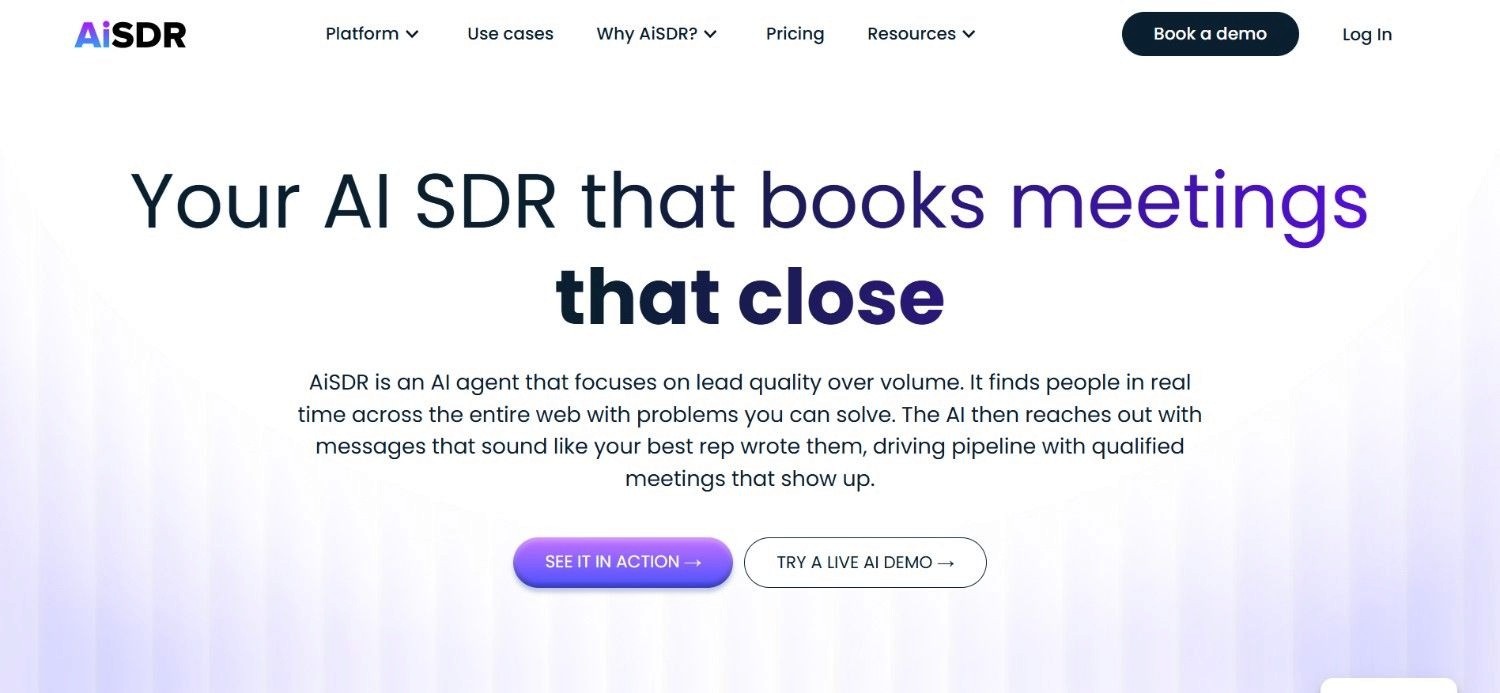
O AiSDR é uma ferramenta de desenvolvimento de vendas baseada em IA que automatiza tanto a prospeção de e-mail de outbound como a gestão de leads de inbound.
Entre as ferramentas de IA para prospeção de vendas, o AiSDR diferencia-se por cobrir ambos os lados do pipeline: a atividade de outbound, onde utiliza CRM e dados de intenção para identificar e contactar potenciais clientes, e o lado do inbound – onde gere pedidos de demonstração e submissões de formulários inbound com acompanhamento personalizado.
A plataforma também se pode integrar com o HubSpot para utilizar os dados existentes do CRM para fundamentar o alcance num contexto real da conta, em vez de gerar modelos genéricos.
Ideal For
Empresas B2B SaaS que precisam tanto de prospeção outbound com IA como de gestão automatizada de leads inbound a partir de uma única ferramenta
Equipas que utilizam o HubSpot como o seu CRM de referência e que pretendem um alcance de IA baseado em dados reais de contactos e contas
Empresas lideradas por vendas onde tanto os SDRs de outbound como os AEs precisam de assistência de IA na pesquisa e personalização de potenciais clientes
Organizações que avaliam ferramentas de prospeção de vendas com IA e que pretendem uma camada combinada de inbound e outbound com IA sem plataformas separadas
Líderes de operações de receita que procuram automatizar toda a atividade do topo do funil em ambos os canais simultaneamente
Principais Funcionalidades
Prospeção de E-mail Outbound: Identificação de potenciais clientes orientada por IA e alcance personalizado com base em critérios de ICP, sinais de intenção e dados de CRM.
Gestão de Leads Inbound: Acompanhamento personalizado automatizado para pedidos de demonstração e submissões de formulários inbound, com respostas geradas por IA baseadas no contexto da empresa do potencial cliente.
Integração com HubSpot CRM: Alcance baseado em dados existentes do CRM, garantindo que a personalização utiliza o histórico real da conta em vez de pesquisas genéricas.
Por que Razão se Destacam
O AiSDR é uma das ferramentas de prospeção de vendas com IA mais práticas para equipas que precisam de automação tanto de outbound como de inbound numa única plataforma.
A sua capacidade de gestão de inbound, que não é comum entre as ferramentas de prospeção com IA, aborda uma lacuna que as ferramentas exclusivas de outbound deixam em aberto.
Prós
Cobre tanto a prospeção de outbound como a gestão de leads de inbound a partir de uma única plataforma, uma combinação pouco comum
A integração com o HubSpot baseia o alcance no contexto real do CRM, melhorando a qualidade da personalização
Preços transparentes com escalões de volume de contactos claros a partir de $250/mês
Contras
Focado em e-mail; alcance limitado em redes sociais ou multicanal para além do e-mail
Depende fortemente da qualidade dos dados do HubSpot; dados de CRM fracos produzem personalizações mais fracas
Limitado aos canais e sinais aos quais o AiSDR tem acesso; não iguala a profundidade de enriquecimento das ferramentas em cascata de mais de 30 fornecedores
Preços
O AiSDR oferece três planos pagos a partir de $250/mês (Solo), $900/mês (Explore) e $2.500/mês (Scale).
Os planos diferem pelo número de contactos pesquisados por IA, limites de utilizadores e capacidade de outbound, estando disponível faturação anual com 20% de desconto.
Veredicto Final
O AiSDR é uma escolha sólida para equipas centradas no HubSpot que desejam automação de IA tanto na prospeção de outbound como na gestão de leads de inbound.
É menos adequado para equipas que precisam de alcance multicanal para além do e-mail, enriquecimento profundo de múltiplos fornecedores ou o fluxo de trabalho completo de ponta a ponta de uma plataforma de prospeção com IA completa.
4. Cognism
Visão Geral
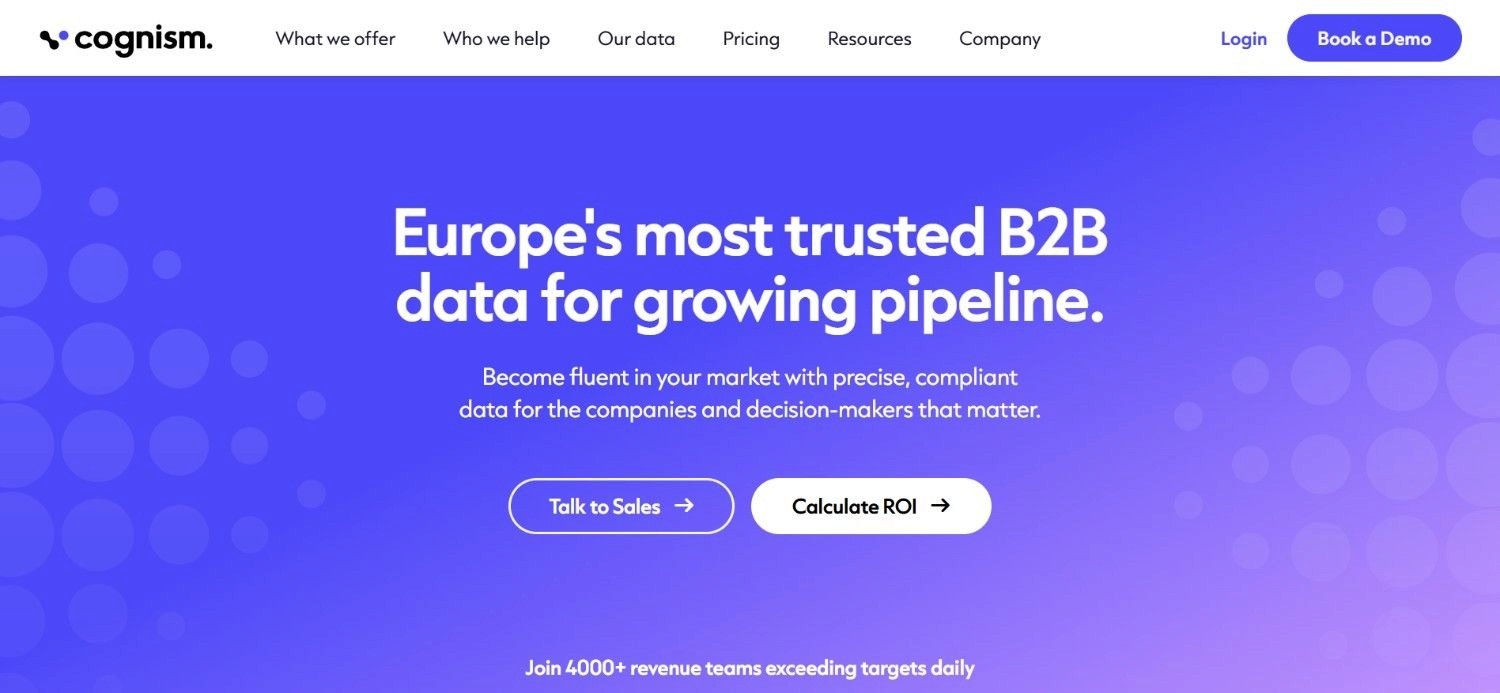
A Cognism é uma das principais plataformas de dados B2B para equipas de vendas na EMEA e América do Norte, oferecendo dados telefónicos verificados com o selo Diamond, registos de contactos em conformidade com o RGPD e uma camada de dados de intenção que revela contas ativas no mercado.
Entre as ferramentas de prospeção com IA especificamente para a qualidade dos dados de contacto, a Cognism é uma das escolhas mais fortes para equipas focadas na Europa, onde os números de telemóvel verificados e a conformidade com o RGPD são de extrema importância.
A sua funcionalidade de "Intenção de Compra", alimentada pela Bombora, acompanha a atividade de pesquisa de tópicos para revelar empresas que estão a avaliar ativamente soluções relevantes.
Em suma, a Cognism é principalmente um fornecedor de dados e não inclui um módulo de alcance nativo.
Ideal For
Equipas de vendas europeias que precisam de números de telemóvel e linhas diretas verificados e em conformidade com o RGPD para potenciais clientes na EMEA
Equipas B2B de grandes empresas e de média dimensão que avaliam a IA para prospeção de vendas onde a precisão dos dados e a conformidade regulamentar são os requisitos principais
Líderes de operações de receita que precisam de um fornecedor de dados com integração profunda com o Salesforce e o HubSpot para enriquecimento de CRM à escala
Equipas que já possuem uma ferramenta de alcance e precisam de uma camada de dados de alta qualidade para substituir fontes de dados mais fracas, como o Apollo, para contactos europeus
Organizações na EMEA que precisam de dados de contacto em conformidade regulamentar para alcance frio sem riscos legais
Principais Funcionalidades
Dados Telefónicos Verificados Diamond: Números de telemóvel verificados manualmente para contactos na EMEA, significativamente mais precisos do que as alternativas verificadas por algoritmos.
Intenção de Compra (Parceria com Bombora): Sinais de intenção que acompanham a atividade de pesquisa de tópicos dos potenciais clientes, revelando as empresas que avaliam ativamente soluções na sua categoria antes de contactarem os concorrentes.
Camada de Conformidade com o RGPD: Limpeza de listas de não-contacto e gestão de dados em conformidade com o RGPD integradas na plataforma, reduzindo o risco de conformidade para equipas europeias de outbound.
Por que Razão se Destacam
A Cognism é uma das ferramentas de prospeção de vendas com IA mais fortes para equipas focadas na EMEA, onde a precisão dos números de telemóvel e a conformidade são requisitos fundamentais.
O seu processo de verificação Diamond produz taxas de ligação materialmente mais elevadas em chamadas frias do que as alternativas não verificadas.
Prós
Os melhores números de telemóvel verificados na EMEA; a verificação Diamond produz taxas de ligação mais elevadas
Conformidade com o RGPD integrada; reduz o risco regulamentar para equipas europeias de outbound
Forte integração com Salesforce e HubSpot para enriquecimento de CRM à escala
Contras
Apenas dados; sem módulo de alcance, construtor de sequências ou capacidade de campanha multicanal
Começa em $14.000/ano, o que a coloca fora do alcance da maioria das PMEs e empresas em fase inicial
A qualidade dos dados da América do Norte, embora forte, é menos diferenciada da ZoomInfo e do Apollo do que a sua cobertura na EMEA
Preços
Os planos de Sales Prospecting da Cognism começam em $14.000/ano (Standard) e $18.750/ano (Pro), com cinco utilizadores incluídos.
O preço é baseado em subscrição, com créditos adicionais da Cognism disponíveis separadamente para revelação de contactos, enriquecimento e exportações.
Veredicto Final
A Cognism é a ferramenta de prospeção com IA certa para equipas empresariais focadas na EMEA, onde os números de telemóvel verificados e a conformidade com o RGPD são os requisitos principais.
Não é adequada para PMEs, equipas com orçamentos mais reduzidos ou organizações que precisam de automação de alcance juntamente com a sua fonte de dados.
5. Saleshandy

Visão Geral
O Saleshandy é uma plataforma de cold outreach e geração de leads que combina um Lead Finder alimentado por IA com sequenciação de e-mail, ferramentas de entregabilidade e uma caixa de entrada unificada.
Entre as ferramentas de IA para prospeção de vendas na gama de preços média, o Saleshandy é uma das opções mais práticas para equipas que precisam tanto de uma base de dados de contactos como de automação de alcance sem os preços das grandes empresas.
A sua funcionalidade de pontuação de sequências por IA analisa o desempenho do alcance e sugere melhorias para as linhas de assunto, conteúdo e tempo de envio.
A plataforma é ideal para quem procura ferramentas que ofereçam um fluxo de trabalho completo desde a prospeção ao alcance, a um preço acessível para equipas mais pequenas e agências.
Ideal For
Empresas B2B em fase inicial e startups que precisam de uma ferramenta combinada de localização de leads e alcance de e-mail a um preço acessível para prospeção de vendas com IA
Equipas de vendas e agências que executam campanhas de cold email e que precisam de otimização de sequências assistida por IA, juntamente com a descoberta de contactos
Equipas de SDR que avaliam ferramentas de prospeção com IA acessíveis com entregabilidade de e-mail integrada e suporte para múltiplos remetentes
Agências de marketing que gerem campanhas de outbound em nome de múltiplos clientes e que precisam de controlos e relatórios ao nível de agência
Equipas que desejam dar um passo em frente em relação às ferramentas básicas de cold email sem se comprometerem com preços empresariais.
Principais Funcionalidades
Lead Finder (+852M Contactos): Uma grande base de dados de contactos B2B com filtros avançados por cargo, setor, dimensão da empresa e localização, com e-mails verificados e linhas diretas.
Pontuação de Sequência por IA: Análise por IA de sequências de alcance com sugestões de melhorias nas linhas de assunto, estrutura do texto e tempos de envio com base nos dados de desempenho da campanha.
Infraestrutura de Entregabilidade de E-mail: Aquecimento de e-mail integrado, testes de spam e suporte para envio de múltiplos domínios para proteger a reputação do remetente à escala.
Por que Razão se Destacam
O Saleshandy está entre as ferramentas de prospeção de vendas com IA mais práticas para equipas que procuram uma base de dados combinada com uma ferramenta de alcance a um preço razoável.
O seu Lead Finder combinado com a otimização de sequências por IA cobre o fluxo de trabalho de prospeção ao alcance sem os custos de plataformas como o ZoomInfo ou o Cognism.
Prós
Um dos pontos de entrada mais acessíveis entre as ferramentas de prospeção com IA que incluem uma base de dados de contactos e automação de alcance
A base de dados de mais de 852 milhões de contactos com verificação de e-mail oferece uma cobertura ampla para a maioria dos mercados-alvo B2B
A pontuação de sequências por IA ajuda as equipas a melhorar o desempenho do alcance sem exigir um redator dedicado
Contras
O alcance multicanal para além do e-mail é mais limitado em comparação com plataformas completas
Os dados de sinais de intenção e gatilhos de compra são menos sofisticados do que em plataformas dedicadas a intenções
As funcionalidades de agência nos planos mais elevados são úteis para utilização com múltiplos clientes, mas acrescentam custos para configurações de uma única equipa
Preços
O Saleshandy oferece quatro planos pagos a partir de $25/mês (faturação anual) e escalando até $209/mês para o plano Scale Plus.
Os planos aumentam os potenciais clientes ativos, os limites de e-mail, as funcionalidades de IA, o acesso à caixa de entrada unificada, SSO e as capacidades de agência.
Veredicto Final
O Saleshandy é um ponto de partida prático para equipas B2B que precisam de uma base de dados de leads e de uma ferramenta de alcance de e-mail por IA combinadas a um preço acessível.
É menos adequado para equipas que precisam de campanhas multicanal profundas, sinais de intenção avançados ou o fluxo de trabalho completo de ponta a ponta de uma plataforma como a Enginy.
6. Gong
Visão Geral
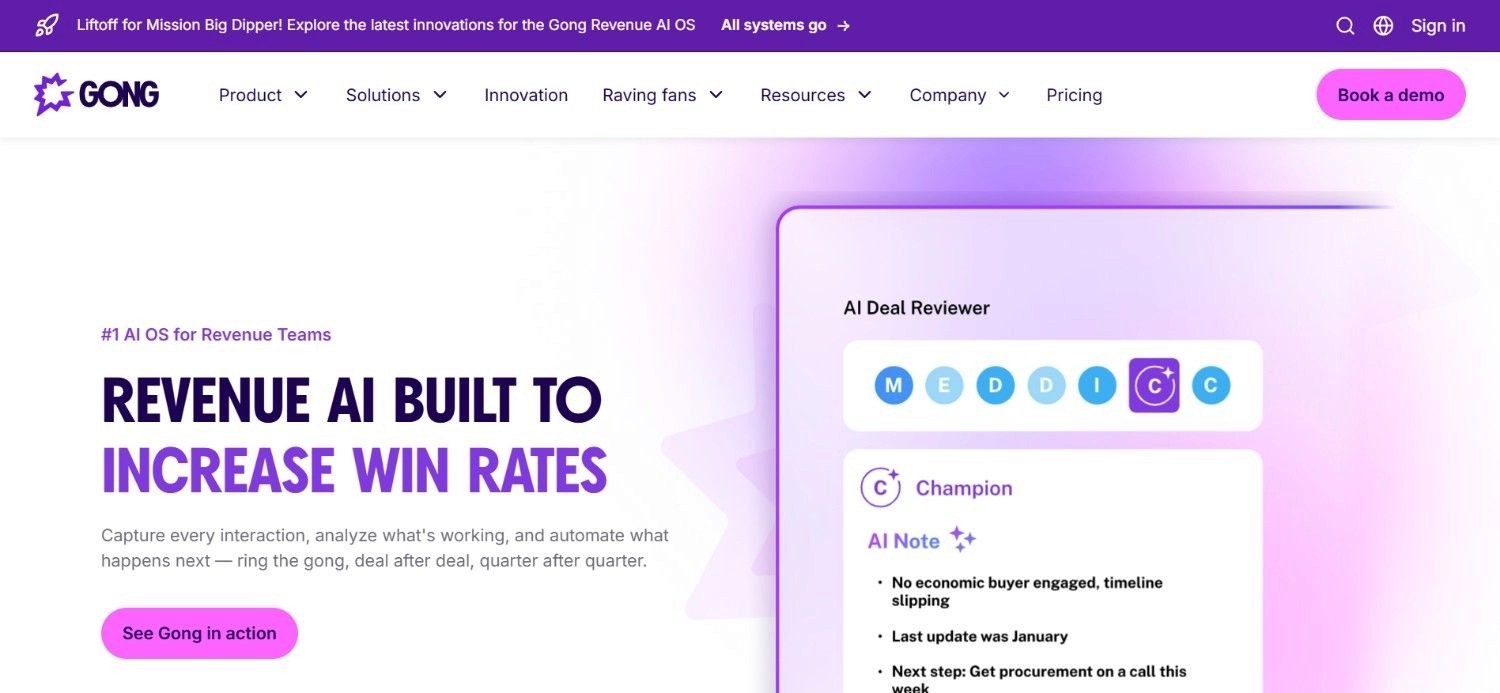
O Gong é a plataforma que define a categoria de inteligência de conversação, aplicando IA a chamadas de vendas e reuniões gravadas para revelar inteligência de negócios, insights de coaching e sinais de risco no pipeline.
O produto principal é uma plataforma de inteligência de conversação, e não uma ferramenta de prospeção com IA no sentido tradicional. Não ajuda as equipas a encontrar ou a contactar potenciais clientes. O que faz é analisar o que acontece nas conversas de prospeção para melhorar o desempenho futuro.
Os modelos de IA do Gong identificam padrões nas conversas que se correlacionam com negócios ganhos/perdidos, revelam pipelines em risco e fornecem sugestões de coaching ao nível do representante com base no comportamento real das chamadas.
Ideal For
Grandes organizações de receita com equipas estabelecidas de SDR e AE que pretendem melhorar a qualidade das conversas de prospeção através de análise por IA
Líderes de receita que avaliam as principais ferramentas de IA para prospeção de vendas sob a perspetiva da "inteligência de conversação" em vez da perspetiva de dados ou alcance
Gestores de vendas que precisam de insights de coaching ao nível do representante com base em dados de chamadas reais e não em observações subjetivas
Equipas empresariais com volumes de chamadas suficientemente grandes para que o reconhecimento de padrões por IA produza recomendações de coaching estatisticamente significativas
Organizações que já resolveram a prospeção no topo do funil e precisam da camada de inteligência de conversação para melhorar as taxas de conversão a partir da primeira chamada
Principais Funcionalidades
Inteligência de Conversação: Análise por IA de chamadas de vendas e reuniões gravadas, identificando padrões de objeções, rácios de fala, cobertura de tópicos e fluxo de conversação relativamente a negócios ganhos e perdidos.
Inteligência de Negócios: Sinais de IA que identificam negócios em risco com base em padrões de interação, cobertura de stakeholders e velocidade da fase do negócio.
Coaching por IA: Recomendações de coaching ao nível do representante geradas a partir da análise de chamadas, revelando comportamentos específicos a reforçar ou a corrigir.
Por que Razão se Destacam
O Gong é uma das ferramentas de IA mais fortes para prospeção de vendas ao nível da qualidade da conversação.
Nenhuma outra ferramenta nesta lista analisa o que acontece dentro das conversas de prospeção com a mesma profundidade, tornando-a uma camada de capacidade única para equipas com atividades de outbound estabelecidas.
Prós
Líder de categoria em inteligência de conversação; nenhuma ferramenta comparável analisa a qualidade das chamadas de prospeção com a mesma profundidade
A inteligência de negócios liga o comportamento da conversação aos resultados do pipeline em tempo real
As recomendações de coaching por IA baseiam-se em dados de chamadas reais e não em estruturas de vendas genéricas
Contras
Não é uma ferramenta de prospeção com IA no sentido tradicional; não ajuda as equipas a encontrar, enriquecer ou contactar potenciais clientes
Preços personalizados e custo significativo por utilizador; não acessível para PMEs ou empresas em fase inicial
O valor máximo requer um grande volume de chamadas; equipas mais pequenas podem não gerar dados suficientes para um reconhecimento significativo de padrões por IA
Preços
O Gong não publica preços fixos. O preço para prospeção de vendas é personalizado com base na dimensão da equipa, com licenciamento por utilizador e uma taxa de plataforma.
As integrações estão incluídas sem custos extra, e as organizações recebem um orçamento personalizado através do processo de vendas.
Veredicto Final
O Gong é a escolha certa para grandes equipas de receita que desejam inteligência de conversação juntamente com a sua pilha de prospeção com IA.
Não é adequado para equipas que precisam de ajuda para encontrar, enriquecer ou alcançar potenciais clientes em primeiro lugar.
7. Apollo.io
Visão Geral
O Apollo é a base de dados de contactos B2B em regime self-serve e ferramenta de prospeção com IA líder de mercado, com mais de 275 milhões de contactos e uma camada de sequenciação de e-mail integrada.
É o ponto de entrada mais amplamente utilizado pelas equipas quando estas avaliam as melhores ferramentas de IA para prospeção de vendas – principalmente devido ao seu registo self-serve, baixo preço de entrada e grande base de dados. As funcionalidades de IA do Apollo incluem cópia de e-mail escrita por IA, alertas de mudança de emprego, sinais de intenção e pontuação básica de contas, entre outras.
For que as equipas sob pressão orçamental que precisam de uma base de dados e de uma ferramenta de alcance para começar sem necessidade de uma chamada de vendas, o Apollo continua a ser a primeira paragem natural.
Ideal For
Equipas de vendas B2B com orçamento limitado e SDRs individuais que precisam de uma grande base de dados de contactos com sequenciação de e-mail integrada a um preço acessível para prospeção de vendas com IA
Startups que testam o outbound pela primeira vez e que desejam uma plataforma self-serve com um plano gratuito
Equipas que avaliam ferramentas de prospeção com IA e que pretendem registar-se e testar sem uma chamada de descoberta ou compromisso contratual
SDRs que executam outbound focado primeiro em e-mail e que precisam de sequenciação básica juntamente com a pesquisa de contactos
Pequenas equipas de vendas que superaram a prospeção manual e precisam de dar um passo em frente sem os preços das grandes empresas
Principais Funcionalidades
Base de Dados com mais de 275M de Contactos: Uma das maiores bases de dados B2B self-serve, com endereços de e-mail, números de telefone e dados firmográficos acessíveis através de filtros de pesquisa avançados e de uma extensão para Chrome.
Redação de E-mails por IA: Geração integrada de texto por IA para e-mails de alcance personalizados, utilizando dados de contactos e empresas para personalizar mensagens à escala.
Alertas de Mudança de Emprego e Dados de Intenção: Notificações quando os contactos mudam de emprego ou quando as contas-alvo mostram atividade de pesquisa, revelando oportunidades de alcance oportunas.
Por que Razão se Destacam
O Apollo está entre as ferramentas de prospeção com IA mais acessíveis para equipas onde o orçamento é a principal restrição.
A sua combinação de uma grande base de dados, registo self-serve e ferramentas integradas de redação por IA cobre o fluxo de trabalho de prospeção principal a um preço que a maioria das equipas consegue justificar sem um processo de aquisição elaborado.
Prós
O preço de entrada mais baixo entre as ferramentas tudo-em-um de prospeção de vendas com IA; plano gratuito disponível sem necessidade de chamada de vendas
A base de dados de mais de 275 milhões de contactos é uma das maiores na categoria self-serve
A redação de e-mails por IA e os alertas de mudança de emprego adicionam inteligência real para além da prospeção básica
Contras
A profundidade de filtragem e os sinais de intenção são relativamente superficiais em comparação com a Enginy e o Cognism
Não são suportados modelos de campanha ao nível de conta com múltiplos stakeholders; apenas sequenciação de contacto único
A qualidade da personalização por IA diminui com volumes elevados; a sensibilidade ao contexto é limitada em comparação com plataformas completas
Preços
O Apollo.io oferece um plano gratuito mais escalões pagos com faturação anual: Basic a $49/utilizador/mês, Professional a $79/utilizador/mês e Organisation a $119/utilizador/mês.
Os extras, incluindo créditos adicionais, domínios de e-mail avançados e integrações adicionais, têm preços cobrados separadamente.
Veredicto Final
O Apollo é o ponto de entrada certo para equipas focadas primeiro no orçamento que precisam de uma base de dados self-serve com ferramentas de e-mail por IA.
Não é adequado para equipas que precisam de campanhas multicanal avançadas, alcance multi-stakeholder ou a profundidade de enriquecimento de uma cascata de mais de 30 fornecedores.
8. ZoomInfo
Visão Geral
O ZoomInfo é uma das maiores e mais estabelecidas plataformas de dados B2B, com mais de 260 milhões de perfis de contactos e um conjunto abrangente de produtos de prospeção de vendas com IA que cobrem: SalesOS, Buyer Intent e o ZoomInfo Copilot, o seu assistente de vendas de IA.
Sendo uma das ferramentas de prospeção com IA mais frequentemente avaliadas no segmento empresarial, a principal diferenciação do ZoomInfo é a profundidade e a precisão dos dados para contas da América do Norte.
Combina essas vantagens com uma camada de dados de intenção de nível empresarial que acompanha os visitantes do website, a atividade de pesquisa de tópicos e os sinais de compra no mercado.
O assistente de IA do ZoomInfo sintetiza a inteligência de contas e contactos para revelar recomendações de alcance priorizadas.
Ideal For
Equipas de vendas de grandes empresas e grandes organizações de SDR na América do Norte que precisam da maior precisão de dados de contacto disponível, juntamente com uma camada madura de sinais de intenção de IA
Líderes de operações de receita que precisam de dados verificados de intenção de compra para priorizar contas com base na atividade de pesquisa ativa e dados de instalação de tecnologia
Empresas com ambientes Salesforce ou HubSpot complexos que necessitam de um fornecedor de dados com integração profunda e nativa de CRM à escala
Organizações que avaliam as melhores ferramentas de IA para prospeção de vendas para contas corporativas da América do Norte, onde a qualidade dos dados é o principal requisito
Grandes organizações de vendas que necessitam de um único contrato cobrindo dados, intenção e ferramentas de interação alimentadas por IA em uma grande organização de SDR e AE
Principais Funcionalidades
Base de Dados com mais de 260M de Perfis com Intenção de Compra: Base de dados profunda de contactos da América do Norte com uma camada de Intenção de Compra que acompanha a atividade de pesquisa de potenciais clientes em milhares de tópicos, revelando contas ativas no mercado antes dos concorrentes.
ZoomInfo Copilot: Assistente alimentado por IA que revela recomendações de contas priorizadas, gera alcance personalizado com base em sinais de intenção e integra insights em registos de CRM.
ZoomInfo SalesOS: Fluxo de trabalho completo de prospeção de vendas com IA que cobre a pesquisa de contas, a priorização baseada em intenções, sequenciação e sincronização de CRM para operações de SDR empresariais.
Por que Razão se Destacam
O ZoomInfo está entre as ferramentas de prospeção com IA mais fortes para equipas de vendas de grandes empresas da América do Norte, onde a precisão dos dados e a profundidade da intenção são os principais requisitos.
A sua camada de Intenção de Compra é materialmente mais sofisticada do que a maioria das alternativas, e as suas integrações de CRM para empresas estão entre as mais profundas da categoria.
Prós
A melhor precisão de dados de contacto e cobertura de linhas diretas na América do Norte entre as ferramentas de IA para prospeção de vendas
Os sinais de Intenção de Compra acompanham a atividade de pesquisa ativa em milhares de tópicos em tempo real
Integração de nível empresarial com Salesforce e HubSpot para operações de vendas em larga escala
Contras
O preço de entrada começa em aproximadamente $15.000/ano, inacessível para a maioria das PMEs e empresas em fase de crescimento
Os dados de contactos e números de telemóvel verificados na EMEA são mais fracos do que os da Cognism para equipas focadas na Europa
A complexidade da plataforma requer suporte dedicado de aquisição e operações de vendas
Preços
O ZoomInfo utiliza preços personalizados, baseados em utilizadores e créditos, com planos de entrada a começar por volta de $15.000/ano.
O preço final depende do número de utilizadores, créditos de dados e módulos de produtos específicos incluídos.
Veredicto Final
O ZoomInfo é a ferramenta de prospeção com IA certa para equipas de vendas corporativas da América do Norte que precisam da maior precisão de dados e sinais de intenção.
Não é adequado para PMEs, equipas em fase de crescimento ou organizações com mercados-alvo principalmente europeus.
9. Clay

Visão Geral
O Clay é uma plataforma flexível de automação de GTM e enriquecimento de dados concebida para equipas de RevOps e engenharia de GTM. A ferramenta liga-se a mais de 50 fornecedores de dados, tornando-a uma das ferramentas de IA mais fortes para prospeção de vendas para construir fluxos de trabalho de enriquecimento personalizados, pipelines de dados em cascata e pesquisa de contas à escala.
Deve notar-se que o Clay foca-se na descoberta e enriquecimento de potenciais clientes versus alcance – e é utilizado para passar listas qualificadas para ferramentas de sequenciação.
A maior força do Clay é a sua flexibilidade, o que torna a ferramenta adequada para operadores técnicos versus profissionais de vendas não técnicos.
Ideal For
Líderes de RevOps, engenheiros de GTM e profissionais de operações de vendas que constroem e gerem fluxos de trabalho de enriquecimento que necessitam de agregação de dados de mais de 50 fornecedores para prospeção com IA
Equipas técnicas de vendas que avaliam ferramentas de prospeção de vendas com IA especificamente pela profundidade de enriquecimento e personalização de fluxos de trabalho, em vez do alcance
Agências e consultorias que constroem fluxos de trabalho de GTM à medida para clientes que necessitam de acesso a múltiplos fornecedores de enriquecimento num único pipeline
Empresas em fase de crescimento com recursos dedicados de engenharia de GTM que desejam a máxima flexibilidade de dados sem ficarem presas à base de dados de um único fornecedor
Equipas com requisitos de enriquecimento invulgares (extração de repositórios do GitHub, dados do Google Maps, agentes de pesquisa personalizados por IA) que as plataformas padrão não conseguem suportar
Principais Funcionalidades
Cascata de Enriquecimento com mais de 50 Fornecedores: Acesso a mais de 50 fornecedores de dados num único fluxo de trabalho, com lógica em cascata que maximiza a cobertura e minimiza o custo por contacto enriquecido.
Agentes de Pesquisa de IA: Agentes de IA integrados que realizam pesquisas personalizadas à escala, incluindo resumos de notícias de empresas, extração de dados da web, geração de quebra-gelos personalizados e classificação de funções de contactos.
Construtor de Fluxos de Trabalho com Lógica Condicional: Construtor de fluxos de trabalho visual para pipelines de processamento de dados em múltiplas etapas com ramificações condicionais, filtros e exportação automatizada de CRM.
Por que Razão se Destacam
O Clay é uma das ferramentas de prospeção com IA mais fortes para equipas técnicas de GTM que priorizam o enriquecimento profundo de dados e a flexibilidade do fluxo de trabalho.
A sua cascata de mais de 50 fornecedores oferece uma das coberturas de dados mais amplas disponíveis, enquanto os fluxos de trabalho orientados por IA suportam uma prospeção e pesquisa altamente personalizadas que outras plataformas de prospeção de vendas com IA não conseguem igualar facilmente.
Prós
Mais de 50 fornecedores de enriquecimento num único fluxo de trabalho em cascata; a maior cobertura de dados entre as ferramentas de prospeção de vendas com IA
Os agentes de pesquisa de IA executam tarefas complexas de pesquisa personalizada à escala, sem envolvimento manual dos SDRs
O construtor de fluxos de trabalho altamente flexível suporta casos de utilização que as plataformas padrão não conseguem gerir
Contras
Requer competências de engenharia de GTM para operar; não foi concebido para utilização direta por SDRs sem um operador técnico
Não inclui um módulo de alcance; é necessária uma ferramenta de sequenciação separada para o envio
Pode tornar-se dispendioso com volumes elevados de ações ao utilizar fornecedores de enriquecimento premium
Preços
O Clay oferece um plano gratuito, com planos pagos a partir de $167/mês (Launch) e $446/mês (Growth). Os preços para empresas são personalizados. Os planos são dimensionados com base em ações anuais e créditos de dados.
Veredicto Final
O Clay é a ferramenta de prospeção com IA certa para operadores técnicos de GTM que precisam da máxima flexibilidade de enriquecimento.
Não é adequado para equipas de SDR que precisam de uma plataforma completa que cubra descoberta, enriquecimento e alcance sem um operador técnico na organização.
10. Lavender

Visão Geral
O Lavender é uma ferramenta de coaching de e-mail por IA que analisa e-mails de vendas em tempo real e fornece pontuação de personalização, feedback de sugestões e recomendações de linhas de abertura para ajudar os SDRs a melhorar as taxas de resposta.
Entre as principais ferramentas de IA para prospeção de vendas, esta ferramenta ocupa um nicho distinto e focado: não encontra potenciais clientes nem envia e-mails. Em vez disso, o seu treinador de e-mail por IA funciona dentro do seu Gmail e Outlook como uma extensão para analisar os e-mails que os SDRs já estão a escrever.
Com base no conteúdo introduzido, a ferramenta sugere melhorias específicas com base no que se correlaciona com taxas de resposta mais elevadas no seu conjunto de dados.
No geral, o Lavender é uma camada de melhoria de qualidade para a fase de alcance, e não uma ferramenta de prospeção ou de dados.
Ideal For
SDRs e AEs que escrevem um elevado volume de e-mails frios personalizados e que desejam feedback em tempo real sobre a qualidade e a profundidade da personalização
Gestores de vendas que avaliam ferramentas de prospeção com IA acessíveis para melhorar a qualidade dos e-mails da equipa sem substituir a plataforma de alcance
Equipas que avaliam a IA para prospeção de vendas especificamente para a camada de personalização de e-mail, tendo já implementada uma ferramenta de dados e sequenciação separada
Equipas de vendas B2B onde as baixas taxas de resposta são a principal restrição e o obstáculo é a qualidade do e-mail, em vez dos dados de contacto ou dimensão da lista
Representantes de vendas individuais que desejam um treinador de e-mail por IA acessível e de baixo custo que funcione dentro do seu fluxo de trabalho existente no Gmail ou Outlook
Principais Funcionalidades
Treinador de E-mail por IA: Análise em tempo real de e-mails frios com pontuação de personalização, sugestões de linhas de assunto e recomendações específicas para melhorar a taxa de resposta com base no conjunto de dados de desempenho de envio do Lavender.
Assistente de Personalização: Sugestões de linhas de abertura geradas por IA com base na atividade recente do potencial cliente, cargo, notícias da empresa e publicações sociais, reduzindo o tempo de pesquisa manual antes de cada envio.
Integração com Gmail e Outlook: Funciona como uma extensão de navegador dentro dos clientes de e-mail que os SDRs já utilizam, sem exigir uma alteração no fluxo de trabalho ou migração de plataforma.
Por que Razão se Destacam
O Lavender é uma das ferramentas de prospeção de vendas com IA mais focadas na melhoria das taxas de resposta de e-mail. Em vez de depender de análises pós-campanha, fornece orientação de escrita e personalização em tempo real à medida que os e-mails são criados.
Para SDRs que enviam dezenas de e-mails personalizados todos os dias, estas pequenas melhorias podem traduzir-se rapidamente num melhor desempenho de alcance.
Prós
Coaching de e-mail em tempo real no momento da escrita; melhora a qualidade antes do envio em vez de analisar o desempenho posterior
Preços acessíveis a partir de $27/mês; barreira de entrada baixa para SDRs individuais
Funciona dentro do Gmail e Outlook sem alterar o fluxo de trabalho existente
Contras
Apenas coaching de e-mail; sem descoberta de potenciais clientes, enriquecimento de dados ou automação de alcance
Não é uma ferramenta de prospeção com IA completa; requer plataformas separadas para todas as outras fases do fluxo de trabalho de prospeção
A qualidade do coaching depende da qualidade dos dados dos potenciais clientes que o SDR já possui; não ajuda a encontrar ou a enriquecer contactos
Preços
O Lavender oferece um plano gratuito, com planos pagos a partir de $27/mês (Starter), $45/mês (Individual Pro) e $89 por utilizador/mês (Team).
Os escalões mais elevados adicionam integrações, funcionalidades de coaching e gestão de equipas, sendo necessária faturação anual para os planos pagos.
Veredicto Final
O Lavender merece o seu lugar como uma camada de qualidade de e-mail focada e acessível para SDRs que escrevem volumes elevados de mensagens de alcance personalizadas.
Para equipas que precisam de uma ferramenta completa de prospeção de vendas com IA que cubra todo o ciclo, desde a descoberta ao alcance – o Lavender enquadra-se melhor como uma adição complementar ao seu software de outbound.
Como Escolher as Melhores Ferramentas de Prospeção com IA (O Que Considerar)?
As análises acima definem o que cada ferramenta faz. Estas cinco etapas mostram como adequar a ferramenta certa à sua situação específica:
1. Defina a Sua Principal Restrição
Comece por nomear o problema específico que precisa de resolver:
É a qualidade dos dados de contacto?
A velocidade de construção de listas?
As taxas de resposta ao alcance?
A qualidade das conversas nas chamadas frias?
A personalização do e-mail?
Cada um aponta para uma categoria diferente de ferramenta de prospeção com IA. Se a restrição for o número de telemóveis verificados na EMEA, avalie a Cognism – enquanto que para flexibilidade de enriquecimento, deve avaliar o Clay.
Se for todo o fluxo de trabalho de prospeção, desde o ICP até à reunião agendada, abrangendo a descoberta, enriquecimento e todos os canais de alcance, avalie a Enginy. Se apenas precisa de sequenciação focada primeiro em e-mail com um orçamento mais apertado, o Apollo cobre o básico.
Nomear a restrição evita que compre mais do que aquilo que realmente precisa.
2. Decida: Plataforma Completa vs. Ferramenta Especializada
O maior erro ao avaliar ferramentas de IA para prospeção de vendas é resolver apenas uma parte de um fluxo de trabalho fragmentado.
As equipas que precisam tanto de dados de potenciais clientes como de alcance devem procurar plataformas completas, enquanto aquelas com uma ferramenta de interação existente podem beneficiar mais de um fornecedor de dados especializado.
Quando o desempenho do e-mail é o obstáculo, as ferramentas de e-mail com IA dedicadas fazem mais sentido.
A chave é adequar a plataforma à sua maior restrição, e não ao conjunto de funcionalidades mais amplo.
3. Verifique o Modelo de Operador
Algumas ferramentas de prospeção com IA nesta lista exigem um engenheiro de GTM ou um recurso dedicado de RevOps para entregar o valor total. O Clay é o exemplo mais claro.
Pelo contrário – a Cognism, o ZoomInfo e o Gong exigem administradores dedicados e processos de aquisição. A Enginy, o Apollo e o Lavender foram concebidos para operação direta do utilizador.
Combine os requisitos operacionais da ferramenta com a capacidade real da sua equipa antes de se comprometer.
4. Avalie a Cobertura de Dados para a Sua Geografia
A dimensão publicada da base de dados raramente é a métrica relevante. O que importa é a cobertura de contactos verificados para a geografia específica do seu ICP. O ZoomInfo lidera nos dados de grandes empresas da América do Norte. A Cognism lidera nos números de telemóvel verificados na EMEA.
A cascata de mais de 30 fornecedores da Enginy maximiza a cobertura para ambos. O Apollo tem a maior base de dados global em regime self-serve.
Execute um teste de amostragem de enriquecimento na sua lista de alvos real antes de se comprometer com qualquer ferramenta com elevado volume de dados.
5. Calcule o Custo Total de Propriedade
O preço publicado não é o custo total. Adicione o tempo gasto na gestão e manutenção da ferramenta, o custo de ferramentas adicionais necessárias para preencher lacunas de capacidade – e as horas de SDR gastas em trabalho manual que uma ferramenta mais completa automatizaria.
Uma pilha fragmentada de três ferramentas de prospeção de vendas com IA mais baratas custará quase sempre mais no total do que uma plataforma completa, uma vez incluído o tempo do representante.
Tudo o Que Precisa de Saber Sobre Ferramentas de Prospeção com IA
Empresa | Prós | Contras | Facilidade de Utilização | Integrações | Suporte | Acessibilidade de Preço |
Enginy | Plataforma completa; alcance multi-stakeholder; sem necessidade de engenheiro de GTM | Preços personalizados; não indicada para equipas pré-PMF | ⭐⭐⭐⭐⭐ | ⭐⭐⭐⭐⭐ | ⭐⭐⭐⭐⭐ | ⭐⭐⭐⭐ |
Artisan | AI SDR autónomo; intervenção humana mínima; personalização de e-mail | Apenas e-mail; multicanal limitado | ⭐⭐⭐⭐⭐ | ⭐⭐⭐⭐ | ⭐⭐⭐⭐ | ⭐⭐⭐⭐ |
AiSDR | Inbound e outbound combinados; baseada em HubSpot; preços claros | Apenas e-mail; dependente da qualidade dos dados do CRM | ⭐⭐⭐⭐ | ⭐⭐⭐⭐ | ⭐⭐⭐⭐ | ⭐⭐⭐⭐ |
Cognism | Melhores dados móveis da EMEA; em conformidade com o RGPD; verificação Diamond | Entrada de +$14K; apenas dados; sem módulo de alcance | ⭐⭐⭐⭐ | ⭐⭐⭐⭐⭐ | ⭐⭐⭐⭐⭐ | ⭐⭐ |
Saleshandy | Base de dados + alcance combinados acessíveis; pontuação de sequência por IA | Multicanal limitado; sinais de intenção mais fracos | ⭐⭐⭐⭐ | ⭐⭐⭐⭐ | ⭐⭐⭐⭐ | ⭐⭐⭐⭐⭐ |
Gong | Melhor inteligência de conversação; sinais de IA ao nível do negócio; coaching | Não é uma ferramenta de prospeção; preços personalizados | ⭐⭐⭐ | ⭐⭐⭐⭐⭐ | ⭐⭐⭐⭐⭐ | ⭐⭐ |
Apollo.io | Maior base de dados self-serve; plano gratuito; ferramentas de e-mail por IA | Filtragem superficial; sequências de contacto único | ⭐⭐⭐⭐⭐ | ⭐⭐⭐⭐ | ⭐⭐⭐ | ⭐⭐⭐⭐⭐ |
ZoomInfo | Melhores dados da América do Norte; camada de intenção madura; integrações corporativas | Entrada de +$15K; cobertura fraca na EMEA | ⭐⭐⭐ | ⭐⭐⭐⭐⭐ | ⭐⭐⭐⭐ | ⭐⭐ |
Clay | +50 fornecedores de enriquecimento; agentes de IA flexíveis; profundidade técnica | Exige engenheiro de GTM; sem módulo de alcance | ⭐⭐ | ⭐⭐⭐⭐⭐ | ⭐⭐⭐⭐ | ⭐⭐⭐⭐ |
Lavender | Coaching de e-mail em tempo real; acessível; funciona no Gmail/Outlook | Apenas coaching de e-mail; sem dados ou alcance | ⭐⭐⭐⭐⭐ | ⭐⭐⭐ | ⭐⭐⭐ | ⭐⭐⭐⭐⭐ |
Comece a Fazer Prospeção de Forma Mais Inteligente com a Enginy
Cada ferramenta de prospeção com IA resolve um problema específico, quer seja a qualidade dos dados, o enriquecimento, a escrita de e-mails ou a inteligência de chamadas. O desafio é que a maioria das equipas de vendas precisa de tudo isto a funcionar em conjunto, e não como ferramentas separadas.
A Enginy reúne a descoberta de potenciais clientes, o enriquecimento de dados em cascata (em mais de 30 fornecedores), o alcance multicanal impulsionado por IA, juntamente com a gestão autónoma de respostas e a sincronização de CRM numa única plataforma. Isto garante que qualquer representante de vendas não técnico possa utilizar a plataforma para executar o seu outbound, em vez de depender da subcontratação de tarefas a um especialista em GTM externo.
Os nossos resultados também refletem essa abordagem, com a Factorial a crescer de 10 leads/dia para 5.000/mês – enquanto a Venair aumentou o seu fluxo de leads em 2-3x. Até a Talent Match gera agora 25-30% de todas as suas novas leads através da nossa plataforma, garantindo um ROI de 4-5x sobre o seu investimento.
Se deseja obter resultados semelhantes mantendo toda a sua operação de outbound numa única plataforma, reserve uma demonstração com a nossa equipa de vendas.
Perguntas Frequentes Sobre Ferramentas de Prospeção com IA
Qual é a melhor ferramenta de prospeção com IA em 2026?
A Enginy é a melhor ferramenta de prospeção com IA em 2026, uma vez que substitui toda uma pilha de ferramentas de outbound, e não apenas uma parte dela. Em vez de forçar as equipas de vendas a combinar ferramentas separadas para prospeção, enriquecimento e alcance – nós reunimos todo o fluxo de trabalho de GTM numa única plataforma que qualquer representante de vendas pode utilizar. Combinada com a automação de AI SDR, enriquecimento em cascata e alcance com múltiplos stakeholders, a plataforma ajuda as equipas a escalar pipelines sem adicionar complexidade operacional.
O que devo considerar ao escolher a ferramenta de prospeção com IA certa para mim?
Ao escolher uma ferramenta de IA para prospeção de vendas, comece por definir se precisa de dados, alcance ou ambos. Em seguida, avalie a capacidade técnica da sua equipa: algumas ferramentas exigem um engenheiro de GTM, enquanto a Enginy e o Apollo foram concebidos para operação direta do utilizador. Avalie a cobertura de dados especificamente para a geografia do seu ICP, não apenas a dimensão da base de dados. Calcule o custo total de propriedade, incluindo o tempo que o representante passa a gerir a ferramenta. Teste a cobertura de enriquecimento na sua lista de alvos real antes de se comprometer.
Como é que a Enginy se diferencia de outras ferramentas de prospeção com IA?
A Enginy destaca-se da maioria das ferramentas de prospeção com IA de duas formas. Combinamos todo o fluxo de trabalho, desde a descoberta de potenciais clientes e enriquecimento em cascata em mais de 30 fornecedores até ao alcance multicanal e gestão de respostas, numa única plataforma que qualquer representante de vendas pode utilizar. Também seguimos um modelo de alcance multi-stakeholder, interagindo com múltiplos decisores na mesma conta para gerar taxas de agendamento de reuniões mais elevadas do que o tradicional alcance de contacto único.
Como posso começar a utilizar a Enginy?
Começar a utilizar a Enginy começa com uma chamada de qualificação para compreender as suas necessidades e recomendar o plano certo. Após o registo, orientamo-lo na integração com o CRM, na construção de listas baseadas no ICP e na configuração de campanhas multicanal. A nossa equipa trabalha ao lado da sua durante toda a integração, ajudando a lançar a sua primeira campanha de outbound nas primeiras semanas, em vez de passar por um longo processo de implementação.
Qual é a facilidade de mudar para a Enginy a partir de outra ferramenta de prospeção com IA?
Mudar para a Enginy é simples. Orientamo-lo na integração com o CRM, na importação de listas, na configuração de Playbooks de IA e na configuração de campanhas durante o processo de integração. Os contactos existentes do Apollo, ZoomInfo e de outras plataformas podem ser importados, enriquecidos através da nossa cascata de mais de 30 fornecedores e lançados rapidamente em campanhas. A maioria das equipas tem as suas primeiras sequências de outbound ativas em 2-3 semanas.
A Enginy é adequada para startups e empresas em fase inicial?
Sim. A Enginy foi construída para que qualquer representante de vendas ou fundador não técnico possa gerir todo o fluxo de trabalho de prospeção com IA sem precisar de um engenheiro de GTM ou de um especialista em RevOps. Ajuda as equipas B2B em fase inicial a realizar outbound multicanal direcionado com o mínimo de esforço operacional. O plano Basic suporta até 500 contactos por mês, tornando-se um ponto de partida prático para testar novos mercados e conquistar os primeiros clientes.
Qual é a diferença entre a prospeção com IA e a prospeção tradicional?
A prospeção com IA melhora a prospeção tradicional de três formas principais. Primeiro, identifica sinais de compra como mudanças de emprego, rondas de financiamento e adoção de tecnologia, ajudando as equipas a contactar os potenciais clientes no momento certo. Segundo, enriquece dados de múltiplos fornecedores em vez de depender de uma única base de dados, melhorando a precisão do contacto. Terceiro, gera alcance personalizado à escala, permitindo que as equipas de vendas realizem campanhas muito mais direcionadas sem adicionar colaboradores de forma proporcional.
Sobre a Autora
Andrea Lopez é líder de go-to-market B2B e de conteúdo na Enginy, onde escreve sobre vendas outbound, prospeção e geração de leads para agências e equipas de receita. Passou vários anos a trabalhar ao lado de equipas de SDR e de agências na construção de listas, qualidade de dados e alcance multicanal, e a sua escrita foca-se na execução prática de vendas em vez de teoria. Leia mais do seu trabalho no blog da Enginy.