Best Sales Engagement Platforms in 2026 (Top Solutions Compared)

Andrea López
Condividi
Key Takeaways (TL;DR)
The Best Overall Sales Engagement Platform: Enginy is the best sales engagement platform in 2026 for teams that want an outreach sales engagement platform combining list building, contact data enrichment, and multichannel outreach in one workspace rather than three separate subscriptions. That means a rep can move from a signal-based list to a live campaign without switching tools.
Why Do You Need It?: Reps still spend roughly 70% of their time on tasks that aren't selling, from manual list building to chasing bad contact data. The right sales engagement software puts that time back into actual conversations.
Who It's For?: Sales teams with a structured SDR or AE function, from early-stage startups running lean outbound motions to mid-market teams scaling past their first 10 reps.
How to Choose the Right One?: Check whether the platform handles data enrichment natively, whether it supports true multichannel sequencing rather than email alone, and whether it needs a dedicated operator to run.
Expected Price: Enginy's pricing is credit-based and quoted after a short qualification call, so it reflects your actual usage rather than a flat seat fee. Across the market, sales engagement platforms range from around $99 per user a month up to five-figure annual contracts for enterprise data providers.
Top Sales Engagement Platforms in 2026 at a Glance
Tool | Best For | Key Features | Pricing |
Enginy | Teams wanting list building, enrichment, and outreach in one workspace | Signal-based lists, multichannel sequencing, AI SDR agents | Credit-based, custom quote |
Nooks AI | AI-assisted cold calling at scale | AI dialer, live coaching, call transcription | Custom quote |
Outreach.io | Large enterprise sales engagement | Sequence automation, forecasting, coaching analytics | Custom quote |
ZoomInfo | Teams prioritising contact data depth | Firmographic and intent data, org charts, buyer intent | From around $15,000/year |
Salesloft | Revenue teams wanting a mature cadence tool | Cadences, conversation intelligence, forecasting | Custom quote |
Lemlist | Startups and SMBs running cold email | Email personalisation, warm-up, multichannel add-ons | From $39/user/month |
Gong Engage | Teams already using Gong for call intelligence | Engagement plans tied to Gong's conversation data | Custom quote |
Cirrus Insight | Salesforce-native teams | Gmail/Outlook integration, activity capture | Configurator-based, custom |
Clari | Revenue operations and forecasting accuracy | Pipeline inspection, forecasting, deal risk signals | Custom quote |
Reply.io | Solo founders and small sales teams | Multichannel sequences, AI SDR agent | From $99/user/month |
What Are Sales Engagement Platforms?
Sales engagement platforms are software tools that help sales teams manage, automate, and track outreach across email, calls, and social channels.
Rather than a rep manually sending one email at a time, a sales engagement platform coordinates the whole sequence, from the first touch through follow-ups, and logs every interaction back into the CRM.
The category sits between two older tools that used to live separately: a data provider that supplied contact information, and a sales engagement tool that handled sending and tracking. Most sales engagement software still leans toward one side or the other, which is part of why buyers end up stitching several tools together.
We built Enginy as an end-to-end GTM platform specifically to close that gap, since a sales engagement solution is only as good as the data feeding it.
Why Do You Need a Sales Engagement Platform?
Sellers spend approximately 70% of their time on tasks that aren't selling. That includes manual list building, chasing incomplete contact data, and switching between disconnected tools just to send one coordinated sequence.
A sales engagement tool exists to close that gap. Instead of a rep manually tracking who's been contacted and on which channel, the platform runs the sequence, flags replies, and keeps the CRM updated without extra data entry.
The problem compounds when data quality is poor. Outdated titles and missing phone numbers lead directly to low deliverability and wasted outreach, regardless of how good the sales engagement platform's automation is on top of it.
This is why we think about sales engagement as a data problem first and an automation problem second.
A sales intelligence and engagement platform that pairs enrichment with outreach in one place removes the handoff where most data quality issues start.
Who Needs a Sales Engagement Solution?
The right platform depends largely on team size, budget, and how much technical support is available in-house, so here's how the main audiences tend to break down.
1. Startup Founders Wearing the Sales Hat
Early-stage founders often run outbound themselves before hiring a dedicated SDR. A sales engagement platform that doesn't require a technical operator matters most here, since there's no GTM engineer on staff to configure a complex tool.
2. Heads of Sales Managing SDR Teams
VPs and Heads of Sales own the revenue number and need predictable, scalable outbound without hiring proportionally more reps. This group evaluates sales engagement software on whether it actually lifts reply rates, not just activity volume.
3. Sales Operations and RevOps Teams
RevOps owns the technical layer, from CRM hygiene to outreach automation. This persona is often already juggling a data provider and a separate outreach tool, and is actively looking to consolidate into a single b2b sales engagement software stack.
4. Growing SDR Teams Past Their First Ten Reps
Once a team scales past a handful of reps, manual prospecting stops working. This group needs a sales engagement platform that standardises the outreach process so every rep follows the same proven sequence.
5. Recruitment and Agency Teams Running Outbound at Volume
Recruitment firms and agencies running outbound on behalf of clients need to build fresh, high-volume lists quickly. Speed and list quality matter as much as the outreach tooling itself for this group.
Best Sales Engagement Platforms: In-Depth Review and Comparison
1. Enginy

Overview
We built Enginy as an AI-native, end-to-end GTM platform for modern B2B sales teams, combining prospect discovery, multi-source data enrichment, and AI-powered outreach in a single workspace. Rather than positioning ourselves as another point solution, we set out to remove the tool sprawl that forces sellers to spend most of their time on tasks that aren't selling.
Our platform supports advanced filtering by firmographics and layered intent signals, including recent hires, job changes, and technology stack usage, so a list is built around genuine buying behaviour rather than static company size alone.
Once a list is enriched, multichannel outreach launches directly from the same workspace across email, social, and calling.
For teams comparing sales engagement platforms that need both data depth and outreach automation without a dedicated technical operator, this combination is the core of what we offer.
Ideal For
Founders and small sales teams without a dedicated GTM engineer
RevOps teams consolidating a fragmented data and outreach stack
SDR teams running multi-stakeholder outbound at scale
Top Features
Social prospecting that turns event attendance and post engagement into warm lead lists
Contact data enrichment from over 30 providers using waterfall logic
Conditional multichannel campaigns that adapt based on prospect behaviour
Why We Stand Out?
Most sales engagement tools either provide data or outreach, but not both with real depth. We built our platform specifically to combine the two, so a signal-based list moves straight into a coordinated sequence without a rep manually exporting and re-importing data between tools.
Pros
List building, enrichment, and outreach live in one workspace
Advanced intent signals go well beyond static firmographic filters
Any sales rep can operate the platform without a technical background
AI SDR agents keep pipeline moving without proportional headcount growth
Cons
Pricing isn't published publicly, so buyers need a qualification call for a quote
Newer brand recognition compared to long-established data providers
Full value depends on configuring the AI Playbook properly during onboarding
Pricing
We don't publish pricing publicly. It's custom-quoted based on needs uncovered during a qualification call before the demo, since this avoids unfavourable comparisons with cheaper data-only tools.
Pricing is credit-based, with credits consumed by actions like data extraction, enrichment, verification, and AI-generated fields.
Final Verdict
If you're comparing sales engagement platforms and want list building, enrichment, and outreach without stitching together three separate subscriptions, we'd suggest starting with a demo here.
2. Nooks AI

Overview
Nooks AI is a sales engagement tool built primarily around AI-assisted cold calling, aimed at teams that still rely heavily on the phone as a primary outbound channel. The platform provides an AI dialer that can parallel dial multiple numbers, along with live call coaching and automated call transcription.
Nooks positions itself as a way to compress the manual work around calling, from dialling itself through to note taking and follow-up scheduling.
Teams comparing sales engagement platforms with a calling-first workflow tend to shortlist Nooks specifically for this reason, since fewer sales engagement software options treat calling as the primary channel rather than a secondary one alongside email.
Ideal For
Sales teams running high call-volume outbound motions
SDR managers who want live coaching during calls
Teams wanting automated call transcription and note taking
Top Features
AI-powered parallel dialer for higher call volume per rep
Live coaching prompts during active calls
Automated call transcription and CRM logging
Why They Stand Out?
Nooks focuses specifically on the calling workflow, which makes it one of the stronger sales engagement tools for teams whose outbound motion is phone-heavy rather than email-first.
Pros
Strong focus on call volume and calling efficiency
Live coaching helps newer reps improve faster
Automated transcription reduces manual note taking
Cons
Less depth on list building and data enrichment compared to full-stack platforms
Primarily suited to calling-heavy motions rather than balanced multichannel outreach
Requires a sales consultation to get pricing
Pricing
Nooks AI does not publish fixed pricing.
It uses custom, quote-based pricing tailored to team size, product modules, and contract requirements, determined through a sales consultation rather than self-serve plans.
Final Verdict
Nooks is a strong choice specifically for calling-heavy teams, though those wanting list building and enrichment in the same platform may find it narrower than other sales engagement platforms on this list.
3. Outreach.io
Overview
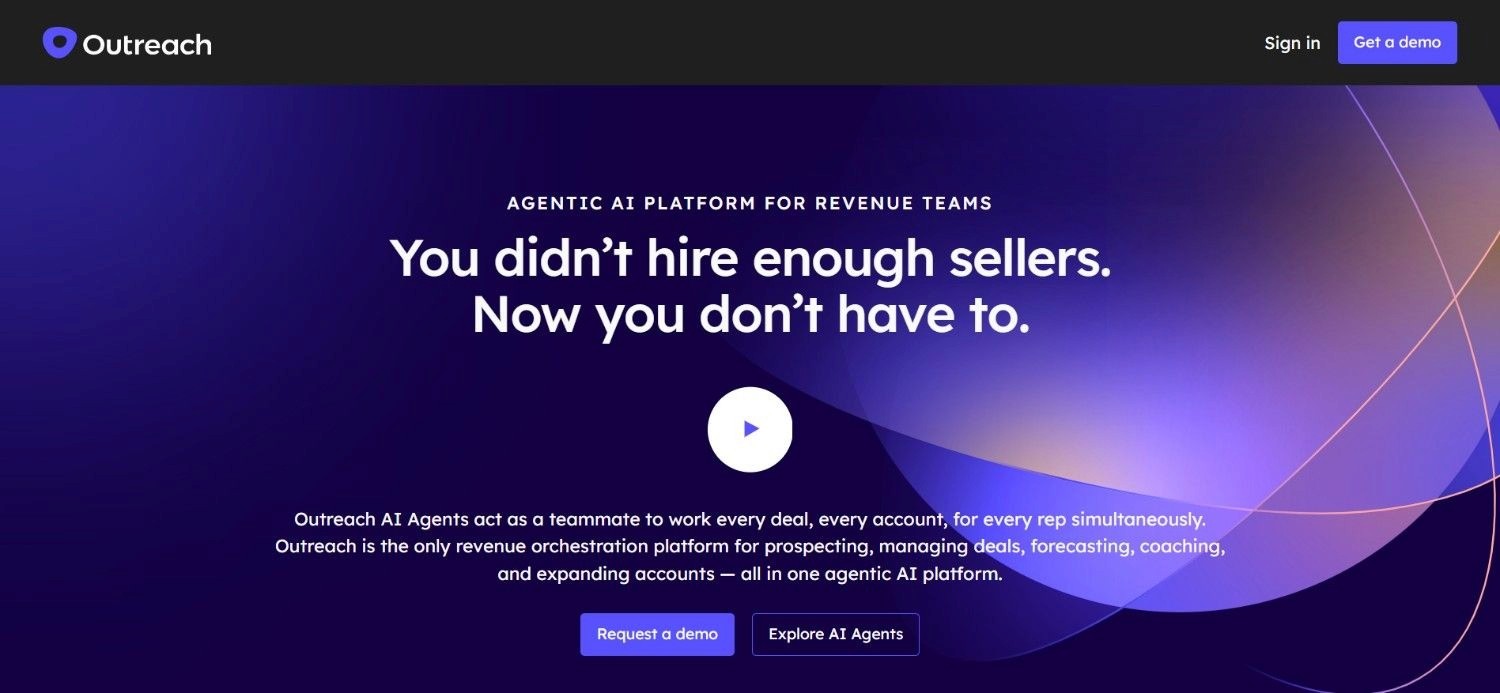
Outreach.io is one of the longest-established sales engagement platforms, built around sequence automation for larger sales organisations. The platform covers cadence building, forecasting, and coaching analytics, positioning itself as a category leader with a large enterprise install base.
Outreach's core strength is deep CRM integration alongside mature reporting, which appeals to sales operations teams managing complex, multi-team outbound motions.
Because Outreach has been in the sales engagement software category for over a decade, its feature set is broad, covering everything from sequence branching to pipeline forecasting.
Teams researching top sales engagement platforms for enterprise deployment frequently include Outreach on their shortlist because of this maturity and breadth.
Ideal For
Large enterprise sales organisations with complex reporting needs
Teams that already have a dedicated sales operations function
Organisations prioritising deep CRM integration over simplicity
Top Features
Sequence automation across email and calling
Forecasting tools built into the same platform
Coaching analytics for manager visibility into rep performance
Why They Stand Out?
Outreach's longevity in the sales engagement platform category gives it one of the most mature feature sets available, particularly for enterprise reporting and forecasting needs.
Pros
Deep CRM integrations suited to complex sales stacks
Mature coaching and forecasting analytics
Large, established enterprise customer base
Cons
Requires more setup and administration than lighter tools
Pricing isn't published, requiring a sales conversation
Can be more complex than smaller teams actually need
Pricing
Outreach.io pricing is tailored to your needs, covering team size, use cases, and setup, so the fastest way to get accurate pricing is to connect directly with their sales team.
Final Verdict
Outreach suits large, established sales organisations well, though smaller teams may find its complexity outweighs what they actually need from a sales engagement solution.
4. ZoomInfo
Overview
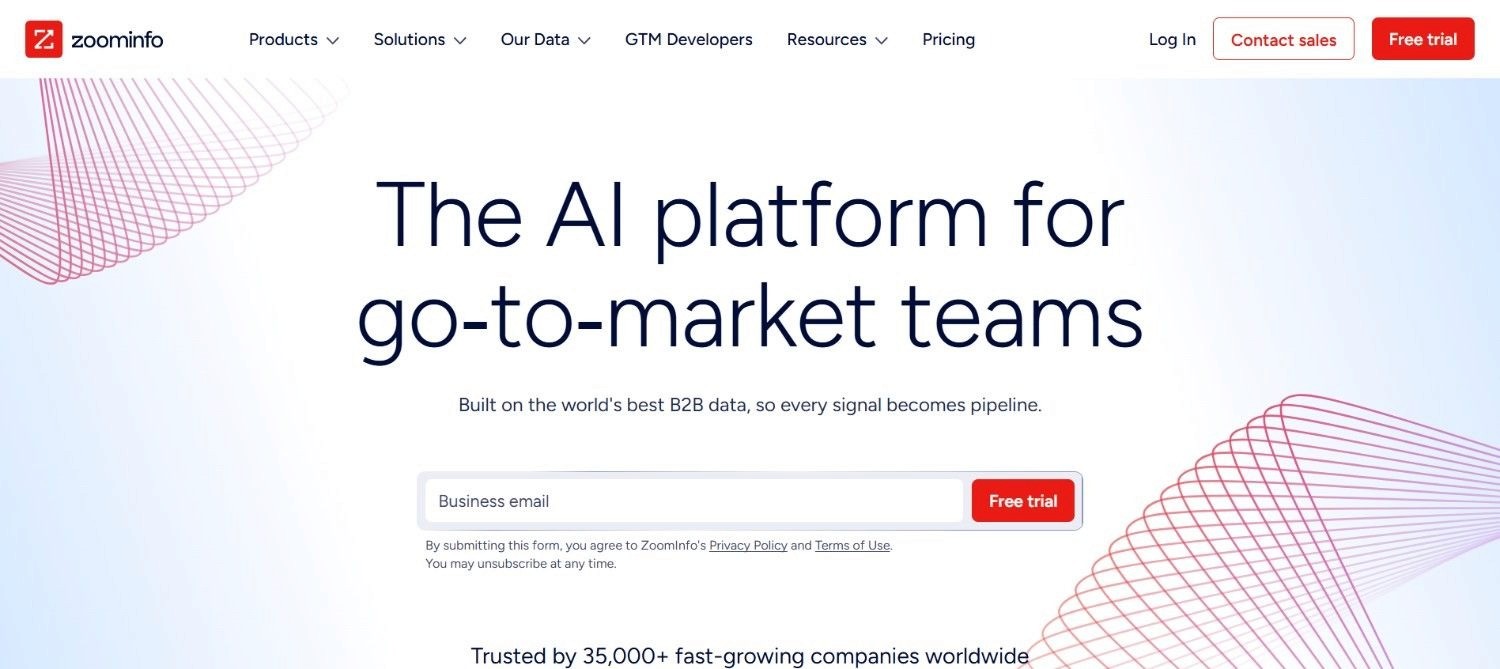
ZoomInfo is a large-scale B2B data provider that has expanded into sales engagement over recent years, combining its contact database with outreach and intent tooling. Its core strength remains data depth: firmographic details, org charts, and buyer intent signals drawn from a large proprietary database.
ZoomInfo is frequently the reference point buyers compare other sales engagement platforms against, given its brand recognition and scale in the data provider space.
The tradeoff is that ZoomInfo's outreach capabilities sit on top of a data-first product, rather than being built natively as a sales engagement platform from the ground up. This shows in how the two halves of the product feel somewhat separate in daily use.
Ideal For
Enterprise teams prioritising contact and account data depth
Organisations wanting org chart visibility for account-based selling
Teams with existing budget for a premium data provider
Top Features
Deep firmographic and technographic data coverage
Org chart mapping for multi-stakeholder accounts
Buyer intent signals layered on top of contact data
Why They Stand Out?
ZoomInfo's data depth and brand recognition make it one of the most referenced sales intelligence and engagement platform options among enterprise buyers specifically evaluating data quality.
Pros
Extensive, well-maintained contact and company database
Strong org chart and account mapping tools
Widely recognised brand that's easy to justify internally
Cons
Outreach tooling feels secondary to its data-first product
Entry pricing sits well above most SMB budgets
Long-term contracts are typical rather than flexible monthly billing
Pricing
ZoomInfo uses custom, seat- and credit-based pricing, with entry plans starting around $15,000 per year.
Final Verdict
ZoomInfo is a strong pick for enterprise teams that prioritise data depth above all else, though its price point puts it out of reach for most early-stage teams.
5. Salesloft
Overview
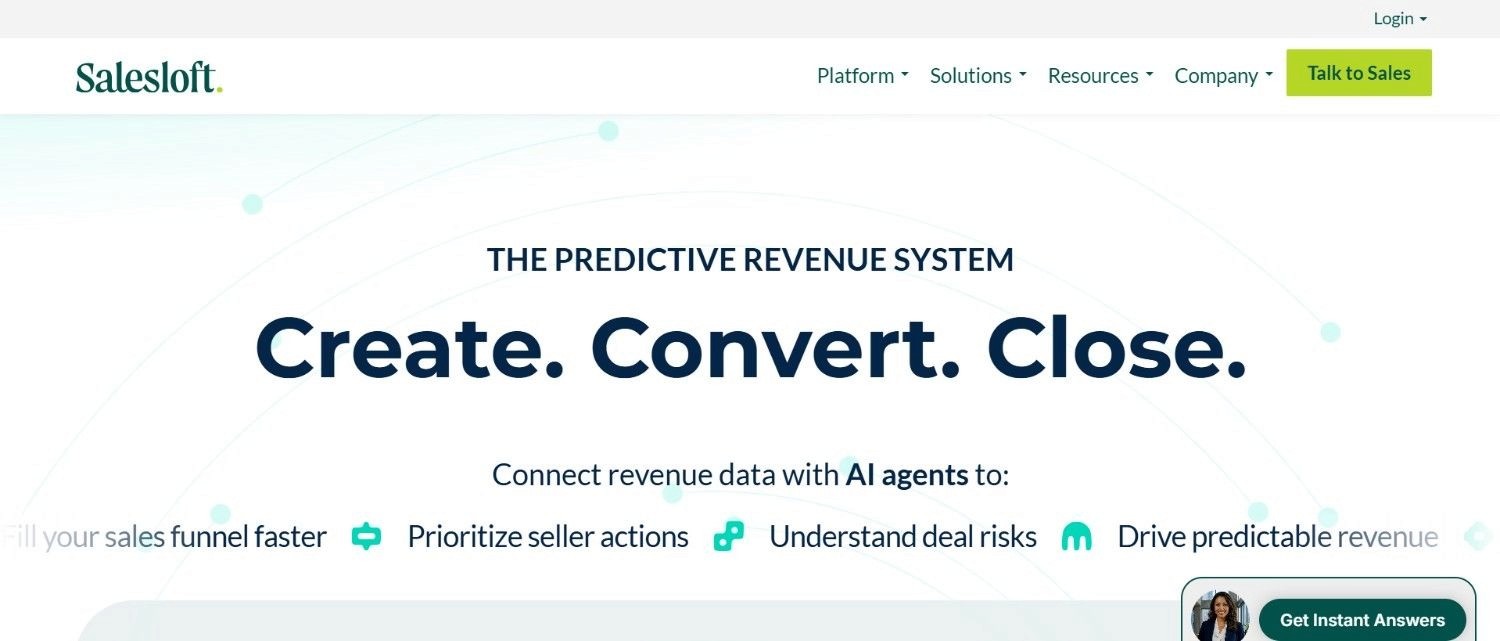
Salesloft is another long-established name among sales engagement platforms, built around cadences, conversation intelligence, and forecasting for revenue teams. Alongside Outreach, Salesloft is considered a category leader with a large enterprise install base and mature integrations across common CRM systems.
The platform's conversation intelligence layer analyses call recordings to surface coaching opportunities, which sets it apart from simpler cadence-only tools.
Salesloft's positioning leans heavily toward revenue teams that want forecasting and pipeline visibility built into the same system running their outbound cadences, rather than treating engagement and forecasting as separate workflows.
Ideal For
Revenue teams wanting cadences and forecasting in one system
Sales organisations using conversation intelligence for coaching
Teams with mature CRM integration requirements
Top Features
Cadence building across email, calls, and social touches
Conversation intelligence for call coaching
Forecasting tools integrated into the same platform
Why They Stand Out?
Salesloft's combination of cadence management and conversation intelligence makes it one of the stronger sales engagement software options for teams prioritising coaching alongside outreach.
Pros
Mature conversation intelligence for coaching purposes
Strong forecasting tools built into the platform
Established, well-supported enterprise product
Cons
Custom pricing requires a sales conversation before you see numbers
Feature depth can mean a steeper learning curve for new users
Less focused on native data enrichment than full-stack platforms
Pricing
Salesloft's pricing is custom-tailored to your requirements, so you'll need to connect with their sales team for a quote.
Final Verdict
Salesloft works well for revenue teams that want coaching and forecasting bundled with their outreach, though buyers wanting built-in data enrichment may need a separate tool alongside it.
6. Lemlist

Overview
Lemlist is a sales engagement tool aimed squarely at startups and SMBs running cold email as their primary outbound channel. The platform focuses on email personalisation and deliverability, including warm-up tools to protect sender reputation, with multichannel add-ons available for teams wanting to layer in calling or social touches.
Lemlist's pricing structure is more accessible than most enterprise-focused sales engagement platforms, which has made it a popular starting point for smaller teams testing outbound for the first time.
Because Lemlist leans email-first, teams wanting a fuller multichannel sales engagement solution from day one may need to add supplementary channels through its paid add-ons.
Ideal For
Startups and SMBs running cold email as a primary channel
Teams wanting an accessible, self-serve pricing structure
Solo founders testing outbound before hiring a dedicated SDR
Top Features
Email personalisation with dynamic variables and images
Built-in email warm-up to protect sender reputation
Optional multichannel add-ons for calling and social touches
Why They Stand Out?
Lemlist's accessible, tiered pricing and email deliverability focus make it one of the more approachable sales engagement platforms for teams just starting outbound.
Pros
Accessible entry pricing compared to enterprise platforms
Strong email personalisation and deliverability tooling
Self-serve setup without needing a sales call to start
Cons
Multichannel capability requires paid add-ons rather than being native
Less suited to complex, multi-stakeholder enterprise outreach
Data enrichment depth is limited compared to full-stack platforms
Pricing
Lemlist's pricing is tiered per user and billed annually: Email Starter at $39, Email Pro at $69, Multichannel Expert at $99, and Enterprise at custom pricing, with credit bundles included and additional credits, phone dialling, and other channels available as add-ons.
Final Verdict
Lemlist is a sensible starting point for smaller teams focused on email outbound, though those needing native multichannel and enrichment may outgrow it as they scale.
7. Gong Engage
Overview
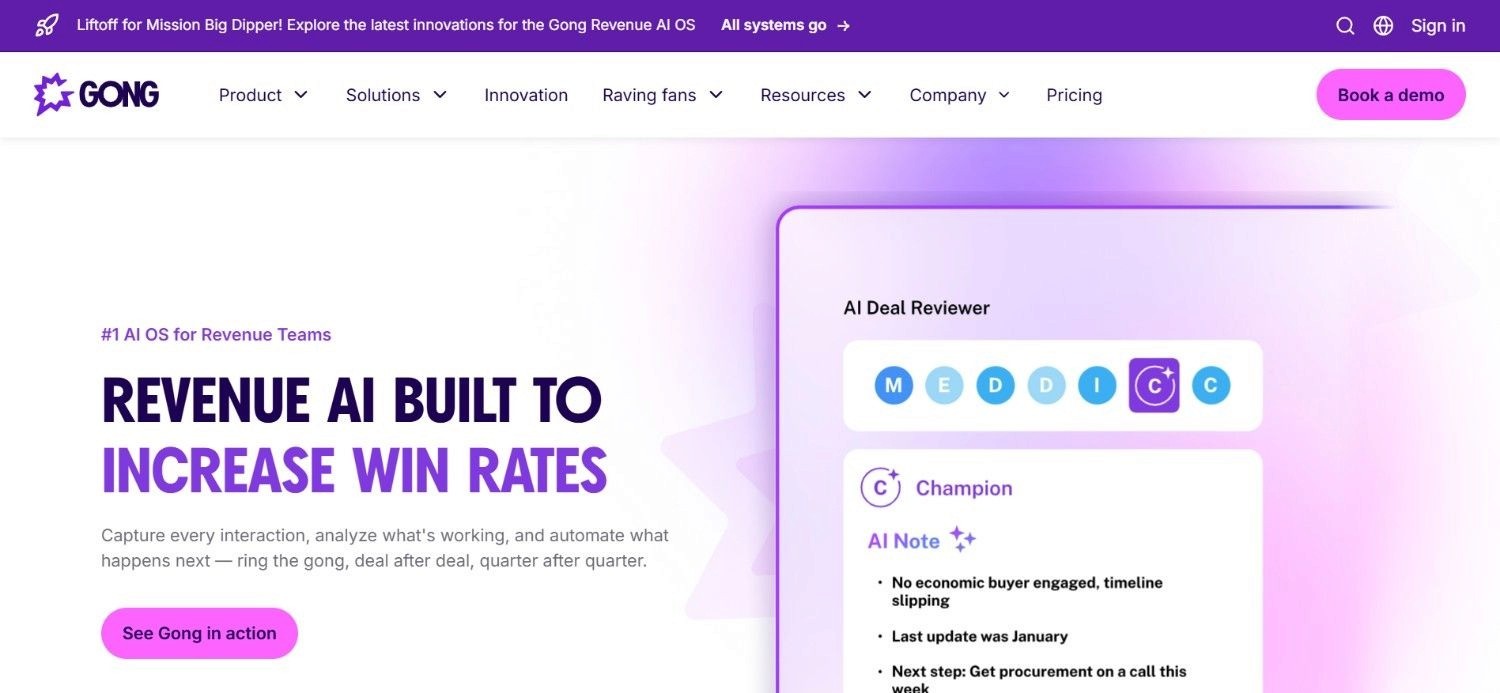
Gong Engage extends Gong's conversation intelligence platform into sales engagement, letting teams build outreach sequences informed directly by call and meeting data already captured in Gong.
This tight connection between engagement and conversation intelligence is Gong Engage's clearest differentiator, since sequence performance can be analysed alongside the actual call outcomes driving it.
The tradeoff is that Gong Engage works best as an extension for teams already invested in Gong's core conversation intelligence product, rather than as a standalone sales engagement platform for teams starting from scratch.
Ideal For
Teams already using Gong for call and meeting intelligence
Sales organisations wanting engagement tied directly to conversation data
Revenue teams prioritising data-informed sequence decisions
Top Features
Engagement sequences built from Gong's conversation intelligence data
Deal and account context pulled directly into outreach planning
Reporting that connects sequence activity to actual call outcomes
Why They Stand Out?
Gong Engage's direct tie to conversation intelligence data gives it a genuinely different angle among sales engagement tools, though it depends on an existing Gong deployment to unlock that value.
Pros
Sequence performance tied directly to real conversation outcomes
Strong fit for teams already standardised on Gong
Deal context readily available during sequence planning
Cons
Limited standalone value without an existing Gong subscription
Custom pricing requires a sales conversation
Less suited to teams wanting a fully independent engagement tool
Pricing
Gong does not publish fixed pricing. Sales prospecting pricing is customised based on team size, with per-user licensing and a platform fee.
Integrations are included at no extra cost, with a tailored quote provided through the sales process.
Final Verdict
Gong Engage suits existing Gong customers well, though it's a less practical choice for teams evaluating sales engagement platforms independently of that ecosystem.
8. Cirrus Insight
Overview
Cirrus Insight is a sales engagement platform built natively around Salesforce, Gmail, and Outlook, aimed at teams that want activity capture and engagement tooling directly inside their existing email client.
Rather than asking reps to work from a separate outreach interface, Cirrus Insight layers its features into the inbox itself, which reduces the friction of switching between tools during a normal outbound day.
Its flexible, feature-based pricing model lets businesses choose different seat quantities for different capabilities, rather than locking every user into the same package regardless of what they actually need.
Ideal For
Salesforce-native teams wanting engagement inside Gmail or Outlook
Sales organisations prioritising activity capture over standalone tooling
Teams wanting flexible, feature-based licensing rather than one fixed tier
Top Features
Native Gmail and Outlook integration for in-inbox outreach
Automatic activity capture back into Salesforce
Feature-based licensing that scales by capability, not just seats
Why They Stand Out?
Cirrus Insight's native email client integration makes it one of the more frictionless sales engagement tools for reps who want to stay inside Gmail or Outlook rather than a separate application.
Pros
Minimal context switching since it lives inside the inbox
Flexible, feature-based pricing rather than one-size-fits-all tiers
Strong native Salesforce activity logging
Cons
Best suited to teams already standardised on Salesforce
Less depth on data enrichment and list building than full-stack platforms
Exact pricing requires using their interactive configurator
Pricing
Cirrus Insight uses a flexible, feature-based pricing model, letting businesses choose different seat quantities for different capabilities rather than locking every user into the same package.
Exact prices are provided through its interactive pricing configurator, with demos available for tailored requirements.
Final Verdict
Cirrus Insight is a strong fit for Salesforce-native teams wanting engagement inside their inbox, though it's less suited to teams wanting list building and enrichment bundled in.
9. Clari
Overview
Clari focuses on revenue operations and forecasting accuracy rather than outreach automation itself, making it a slightly different category of sales engagement platform compared to others on this list.
The platform provides pipeline inspection tools, deal risk signals, and forecasting built on top of existing CRM and engagement data, aimed at giving sales leadership clearer visibility into what's actually likely to close.
Clari tends to sit alongside a dedicated sales engagement tool rather than replacing one, since its core value is forecasting confidence rather than sequence execution.
Ideal For
Sales leadership teams prioritising forecasting accuracy
Revenue operations teams needing deal risk visibility
Organisations layering forecasting on top of an existing engagement tool
Top Features
Pipeline inspection tools for deal-level visibility
Deal risk signals surfaced automatically from CRM activity
Forecasting that pulls from multiple data sources across the sales stack
Why They Stand Out?
Clari's forecasting focus makes it a genuinely different kind of sales engagement solution, better suited to revenue leadership visibility than day-to-day sequence execution.
Pros
Strong forecasting accuracy and deal risk visibility
Useful for revenue leadership reporting and planning
Integrates with existing CRM and engagement data sources
Cons
Not built as a standalone outreach or sequencing tool
Requires a sales consultation for pricing
Most valuable alongside another engagement platform, not instead of one
Pricing
Clari does not publish pricing publicly.
It provides custom quotes based on each organisation's revenue operations needs, with pricing determined through a sales consultation covering implementation, AI capabilities, integrations, and ongoing support.
Final Verdict
Clari is worth considering for forecasting accuracy specifically, though most teams will still need a separate sales engagement platform for actual outreach execution.
10. Reply.io
Overview
Reply.io is a sales engagement platform aimed at solo founders and small sales teams, offering multichannel sequences alongside an AI SDR agent called Jason.
The platform covers email, calling, and social touches within one interface, positioned as an accessible alternative to enterprise sales engagement software for teams without a large budget.
Reply.io's AI SDR agent is a notable differentiator, aimed at automating first-touch outreach for teams that don't yet have the headcount to run every sequence manually.
Ideal For
Solo founders and small sales teams on a limited budget
Teams wanting an AI SDR agent to handle first-touch outreach
Businesses prioritising unlimited-user email plans over per-seat pricing
Top Features
Multichannel sequences across email, calls, and social touches
Jason, an AI SDR agent for automated first-touch outreach
Flexible plans including an unlimited-user email tier
Why They Stand Out?
Reply.io's combination of accessible pricing and an AI SDR agent makes it one of the more approachable options among outreach-focused sales engagement platforms for smaller teams specifically.
Pros
Accessible pricing relative to enterprise sales engagement platforms
AI SDR agent adds automation without additional headcount
Unlimited-user email plan suits growing teams well
Cons
Less data enrichment depth than full-stack platforms
AI SDR agent pricing adds up separately from core plans
Smaller enterprise install base than category leaders
Pricing
Reply.io's monthly pricing starts at $179 per month for Email Volume with unlimited users, $99 per user per month for Multichannel, and $500 per month for their Jason AI SDR agent.
Annual billing can save customers up to 17%, making it more economical for longer-term use.
Final Verdict
Reply.io suits smaller teams wanting accessible multichannel outreach with AI assistance, though larger organisations may need more data depth than it currently provides.
How to Choose the Best Sales Engagement Platform
With so many options covering different parts of the workflow, a few practical checks make it much easier to compare them fairly.
1. Check Whether Data and Outreach Live in One Place
Many sales engagement platforms handle outreach well but rely on you bringing your own contact data from elsewhere. Checking whether enrichment is native, rather than a separate subscription, changes the total cost of ownership considerably.
2. Confirm True Multichannel Support
Some sales engagement tools market themselves as multichannel but charge extra for calling or social touches as add-ons. Understanding what's included natively versus what's an upsell avoids surprises later.
3. Evaluate the Technical Setup Required
Certain platforms need a dedicated GTM engineer or RevOps specialist to configure properly. If your team doesn't have that role, prioritise sales engagement software designed for direct SDR use instead.
4. Look at Intent Signal Depth
Static firmographic filters alone produce stale lists. The strongest sales engagement platforms layer in intent signals like job changes, funding rounds, and technology stack shifts to time outreach better.
5. Weigh Pricing Transparency Against Fit
Some vendors publish clear tiers, while others quote custom pricing after a consultation. Custom pricing isn't inherently worse, but it does mean budgeting a proper qualification call before you can compare total cost.
6. Test Multi-Stakeholder Outreach Capability
For larger deals, contacting only one person at an account is a common reason deals stall. Check whether a sales engagement solution supports coordinated outreach to several stakeholders at once.
7. Consider Support and Onboarding Structure
Implementation quality varies significantly. Platforms offering structured onboarding sessions tend to get teams to their first results faster than those leaving setup entirely self-serve.
Everything You Need to Know About Sales Engagement Platforms
Company | Pros | Cons | Ease of Use | Integrations | Support | Affordability |
Enginy | List, enrichment, and outreach in one place; strong intent signals; no technical operator needed | Custom pricing only; newer brand; onboarding setup required | ⭐⭐⭐⭐⭐ | ⭐⭐⭐⭐ | ⭐⭐⭐⭐⭐ | ⭐⭐⭐⭐ |
Nooks AI | Strong AI dialer; live coaching; automated transcription | Limited enrichment; calling-focused only | ⭐⭐⭐⭐ | ⭐⭐⭐ | ⭐⭐⭐ | ⭐⭐⭐ |
Outreach.io | Mature CRM integrations; strong forecasting; enterprise proven | Complex setup; custom pricing; steep for small teams | ⭐⭐⭐ | ⭐⭐⭐⭐⭐ | ⭐⭐⭐⭐ | ⭐⭐ |
ZoomInfo | Deep contact data; org charts; strong brand recognition | Outreach feels secondary; high entry price; long contracts | ⭐⭐⭐ | ⭐⭐⭐⭐ | ⭐⭐⭐⭐ | ⭐⭐ |
Salesloft | Conversation intelligence; strong forecasting; established product | Custom pricing; learning curve; limited native enrichment | ⭐⭐⭐ | ⭐⭐⭐⭐⭐ | ⭐⭐⭐⭐ | ⭐⭐ |
Lemlist | Accessible pricing; strong email tooling; self-serve setup | Multichannel needs add-ons; limited enrichment; less enterprise depth | ⭐⭐⭐⭐ | ⭐⭐⭐ | ⭐⭐⭐ | ⭐⭐⭐⭐⭐ |
Gong Engage | Ties to real conversation data; strong deal context | Needs existing Gong subscription; custom pricing | ⭐⭐⭐ | ⭐⭐⭐⭐ | ⭐⭐⭐⭐ | ⭐⭐ |
Cirrus Insight | Native inbox integration; flexible licensing; strong logging | Salesforce-dependent; limited enrichment; configurator pricing | ⭐⭐⭐⭐ | ⭐⭐⭐⭐ | ⭐⭐⭐ | ⭐⭐⭐ |
Clari | Strong forecasting; deal risk visibility; good integrations | Not a standalone outreach tool; custom pricing | ⭐⭐⭐ | ⭐⭐⭐⭐ | ⭐⭐⭐⭐ | ⭐⭐ |
Reply.io | Accessible pricing; AI SDR agent; unlimited email tier | Limited enrichment; add-on AI pricing; smaller install base | ⭐⭐⭐⭐ | ⭐⭐⭐ | ⭐⭐⭐ | ⭐⭐⭐⭐ |
Run Your Outbound from One Platform with Enginy
Most sales engagement platforms make you choose between good data and good outreach automation. We built Enginy so you don't have to.
Signal-based list building, verified data enrichment, and multichannel sequencing all run from the same workspace, so a rep can move from a fresh signal to a live campaign the same day rather than weeks later.
If your current sales engagement software is really three disconnected tools wearing one label, book a demo with our team and see how the whole workflow runs from a single platform.
FAQs About Sales Engagement Platforms
What is the best sales engagement platform in 2026?
The best sales engagement platform in 2026 is Enginy, since it combines list building, data enrichment, and multichannel outreach in a single workspace rather than three separate subscriptions. This lets a rep move from a signal-based list straight into a live campaign without switching tools. Pricing is credit-based and quoted after a short qualification call, so it reflects actual usage.
What should I consider when choosing the right sales engagement software for me?
Choosing the right sales engagement software comes down to whether data enrichment is native, whether multichannel outreach is included or an add-on, and how much technical setup is required. Teams without a dedicated GTM engineer should prioritise platforms designed for direct SDR use. Pricing transparency also varies, so budget time for a qualification call before comparing total cost.
How does Enginy differ from similar alternatives?
Enginy differs by combining list building, data enrichment, and multichannel outreach in one workspace, rather than requiring a separate data provider and outreach tool. Most sales engagement platforms specialise in one half of that equation, creating the tool sprawl Enginy was built to remove. Advanced intent signals, including job changes and tech stack shifts, also go beyond static firmographic filters.
How do I get started with Enginy?
Getting started with Enginy begins with a qualification call, where we uncover your specific needs before quoting credit-based pricing tailored to your team. From there, five structured onboarding sessions cover AI Playbook setup, reply rate best practices, and CRM integration. This structured approach helps most teams see results faster than a fully self-serve setup.
How easy is it to switch to Enginy from another sales engagement platform?
Switching to Enginy is more straightforward than most sales engagement platform migrations, since the five onboarding sessions cover CRM integration and playbook configuration together. Existing CRM data can be imported directly rather than rebuilt from scratch. Teams moving from a fragmented Apollo-plus-outreach-tool stack often find the consolidation alone reduces ongoing admin work.
Is Enginy too expensive compared to cheaper data-only tools like Apollo?
Enginy is not directly comparable to Apollo, since Apollo is a data provider while Enginy is a complete sales engagement platform covering data, enrichment, and outreach together. Apollo users also pay for a separate outreach tool and spend SDR hours on manual work that Enginy automates. Once wasted rep time is factored in, the fragmented stack is usually the more expensive option.
What's the difference between a sales engagement platform and a CRM?
A sales engagement platform and a CRM serve different purposes, though they work closely together. A CRM stores and organises customer and deal data as a system of record, while a sales engagement platform automates and tracks outreach activity, such as sequences, calls, and replies. Most sales engagement tools sync that activity back into the CRM automatically.