Proven Messages, Adapted to Every Prospect

Andrea López
Share
Outreach that sounds human has always been hard to run at volume. Not because reps lack skill, but because every good message used to require one-by-one context work: account research, timing, tone, then words.
Reps could personalize ten accounts or blast five hundred. Not both.
Enginy changes that constraint. Not by asking reps to write or prompt, but by giving them a curated library of proven templates, adapting each one to every prospect's context, and letting the rep pick, review, and send. One proven message, adapted to each prospect, still sounds human.
On the engagement side, that means adapted proven messages and AI voice for sales. Prospecting answers who to reach and why. Engagement answers what to say, across text and voice.
Why good outreach never scaled
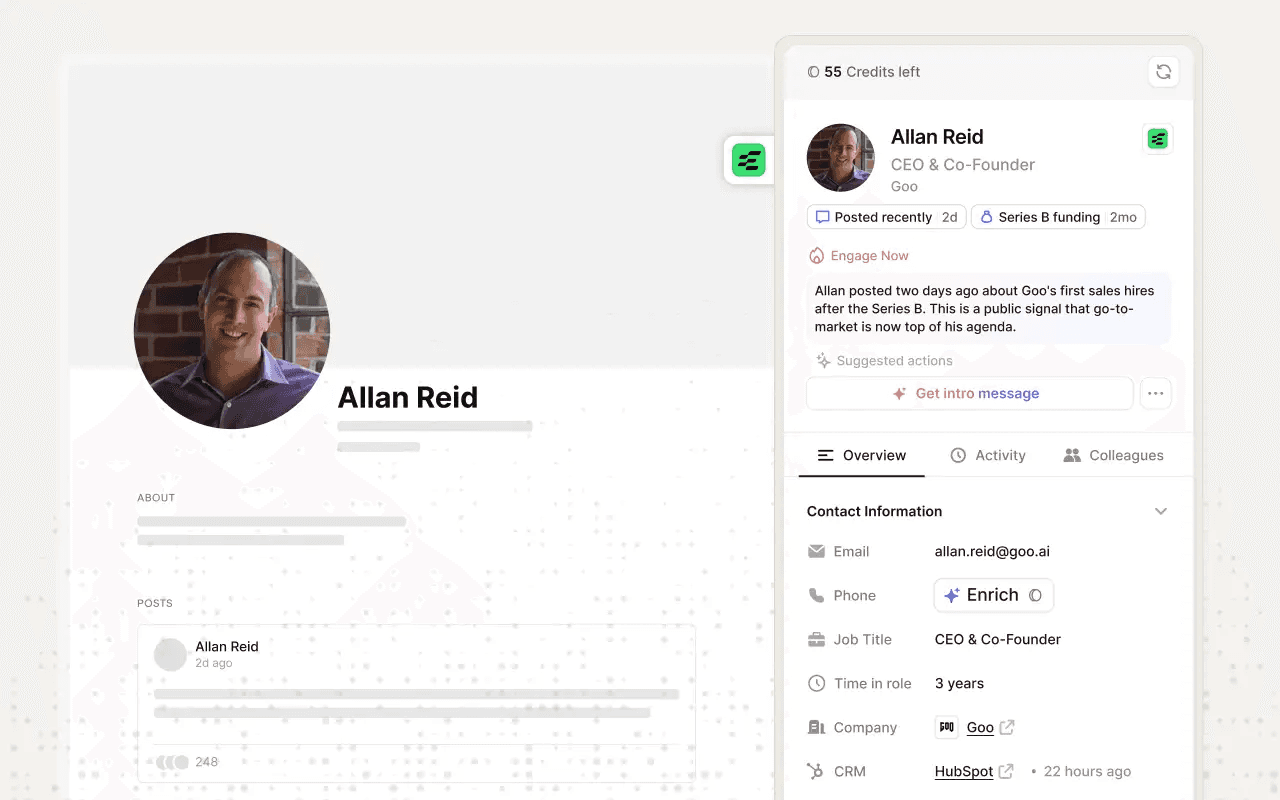
Personalization was never a copy problem alone. It was a context problem at volume.
To write something a prospect believes a human wrote, someone needs account context, person context, timing, and tone, then time to translate that into words. High-context work does not parallelize the way sending does.
So teams split into two bad options.
Option A: personalize deeply, reach few accounts. Strong reply rates. Weak pipeline coverage. Reps burn out on research and rewriting.
Option B: template at scale, sound like everyone else. High activity. Low trust. {firstName} tokens and hollow compliments.
Sales leaders asked for both for a decade. The stack could not deliver. Sequencers scaled steps. Copy tools scaled drafts. Nothing made relevant, human-sounding outreach repeatable.
That is the gap Enginy closes on the engagement side.
The template trap, and why merge fields are not personalization
Most "personalization" in outbound is mail merge dressed up as relevance.
Company name. First name. Job title. Maybe an industry line pulled from a database field that updated six months ago.
Prospects recognize the pattern. So do spam filters. So do your best reps, which is why they rewrite templates anyway, defeating the purpose of having templates.
True relevance reflects something specific about this prospect at this account in this moment. That requires context prospecting already surfaced (signals, fit, reasons to engage) plus a message structure that adapts, not just inserts tokens.
Static templates fail because they assume one message shape fits every buyer. It does not.
Enginy takes the opposite approach: proven templates Enginy built, adapted to each prospect, reviewed by the rep before send.
Proven messages, adapted to every prospect
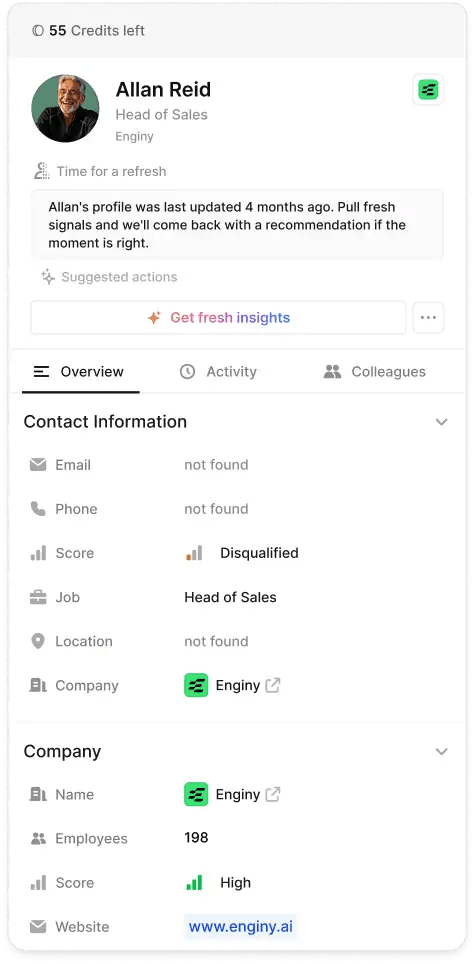
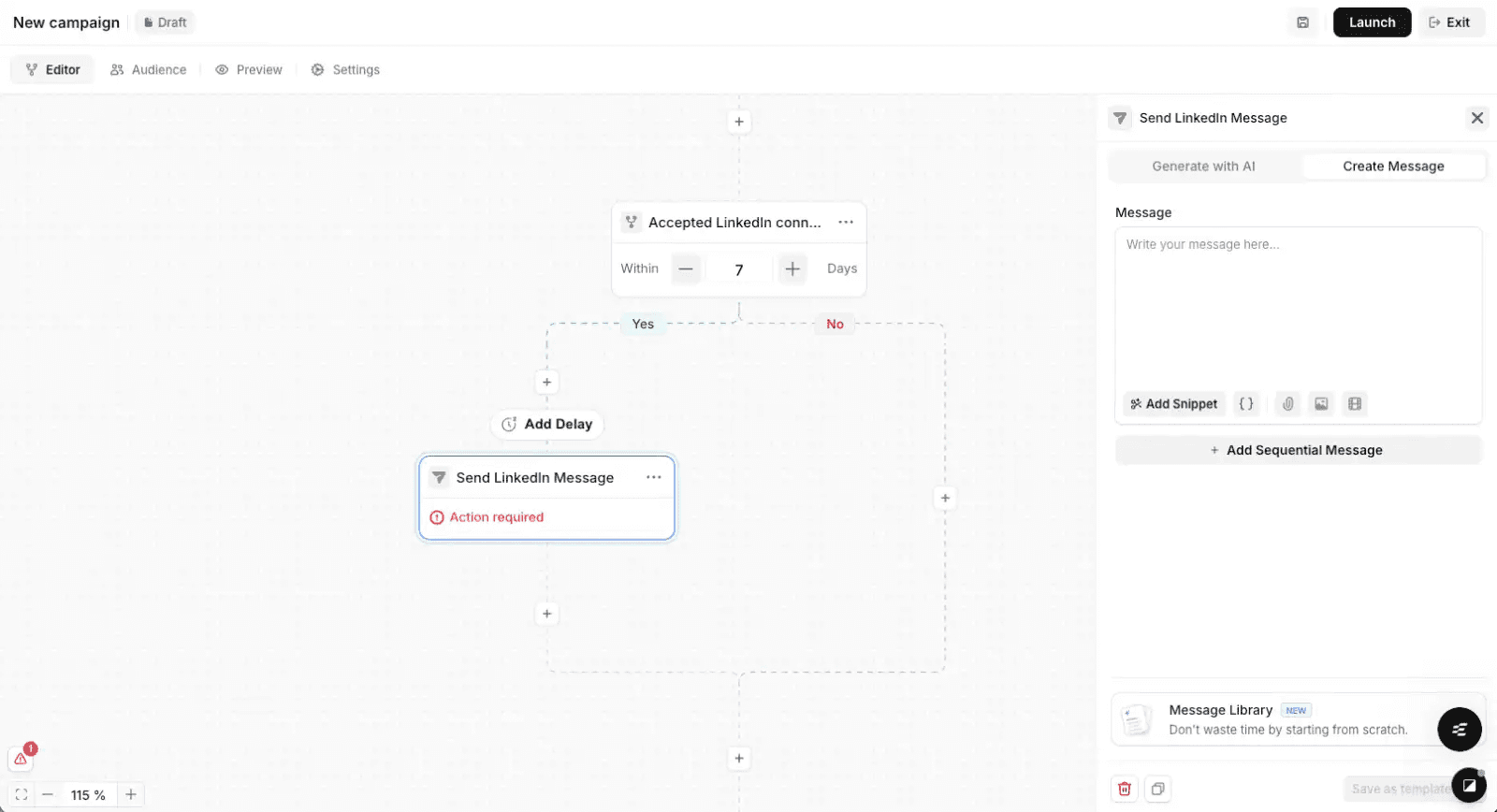
Enginy supplies a curated library of proven outreach templates. The rep picks one, Enginy adapts it to each prospect automatically, and the rep reviews the output before sending.
Every send reflects that prospect's context: company, role, and the signals that mattered when you added them to your list. The rep never writes the base message and never prompts. They choose, review, and send.
This is not "generate a cold email from a prompt." It is governed adaptation, starting from copy Enginy already proved, then varying the specifics per recipient using data the platform already holds.
What changes for reps: Less time rebuilding the same message with small edits. More time on accounts that reply.
What changes for managers: Templates become assets that scale with quality, not documents reps secretly abandon.
What changes for prospects: Messages that reference real context, because adaptation pulls from the same account and contact intelligence that powered prospecting.
Adapted messages live in the Enginy platform, alongside sequences, enrichment, and the AI inbox. Engagement is not a separate writing tool. It is how outbound executes after prospecting identifies who and why.
For teams evaluating multichannel outreach, the lesson is consistent: relevance breaks when context lives in a different system than the send. Enginy keeps both in one place.
Messages that still sound human
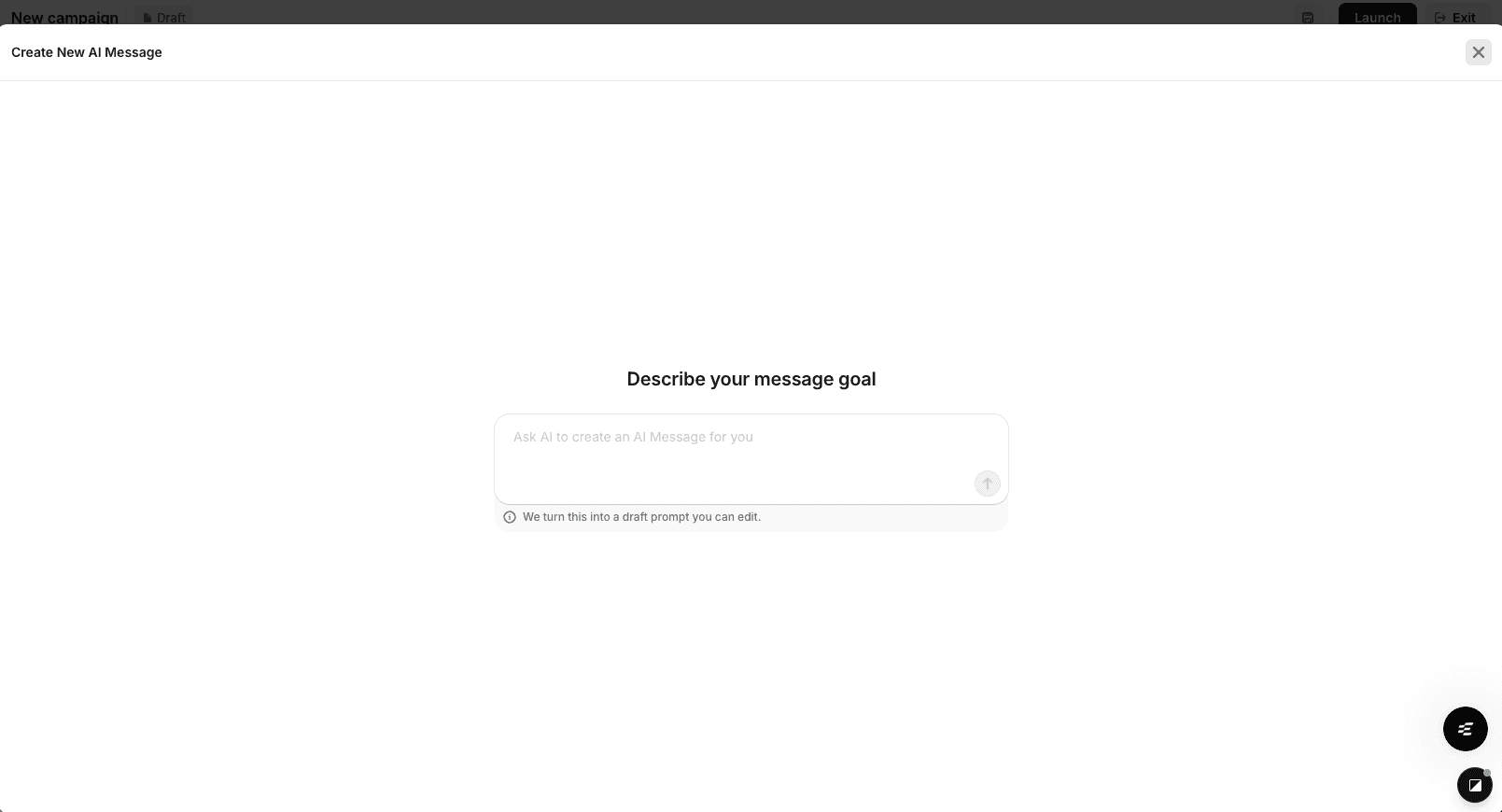
Buyers search for AI writing for sales, sales email personalization, and how to personalize outreach because they want copy that sounds human, specifically, human like a strong sales team.
Generic AI tone is easy to spot. Over-formal. Over-enthusiastic. Wrong level of familiarity. Wrong industry shorthand.
Enginy does not ask reps to prompt their personality into existence or author a base template. The rep picks a proven message, Enginy adapts it using prospect context the platform already knows (the same context prospecting surfaced through account intelligence and on-profile signals on LinkedIn), and the rep reviews before send.
The output still reads like someone on the team wrote it, because it starts from proven templates and real prospect context, not a blank prompt and not mail merge.
That is the Enginy bet: AI without knowing AI. The rep never writes or prompts. They pick, review, and send.
AI voice for sales: the highest-context channel, now operable
Text is not the only channel that converts. Voice is often the most human touch in a sequence, and historically the hardest to scale.
Recording a voice note takes time, quiet, and willingness to redo takes. Most reps use voice on high-priority accounts only. Everyone else gets text.
That made voice a luxury signal: effective, but impossible to operationalize across a full list.
AI voice for sales in Enginy lets you send voice messages at scale using natural standard voices. Voice becomes a channel reps can run consistently, not only on the ten accounts they have time to record manually.
What it is: Text-to-voice with controls, embedded in Enginy sequences, so voice touchpoints follow the same context-aware logic as adapted proven messages.
What it is not: A replacement for every human recording on strategic deals. It is infrastructure for scale where voice would otherwise never happen.
For buyers researching voice messaging in outreach or AI voice for sales, the practical question is operational: Can your team add voice without adding a second job? Enginy is built to answer yes.
How adapted messages and voice work together
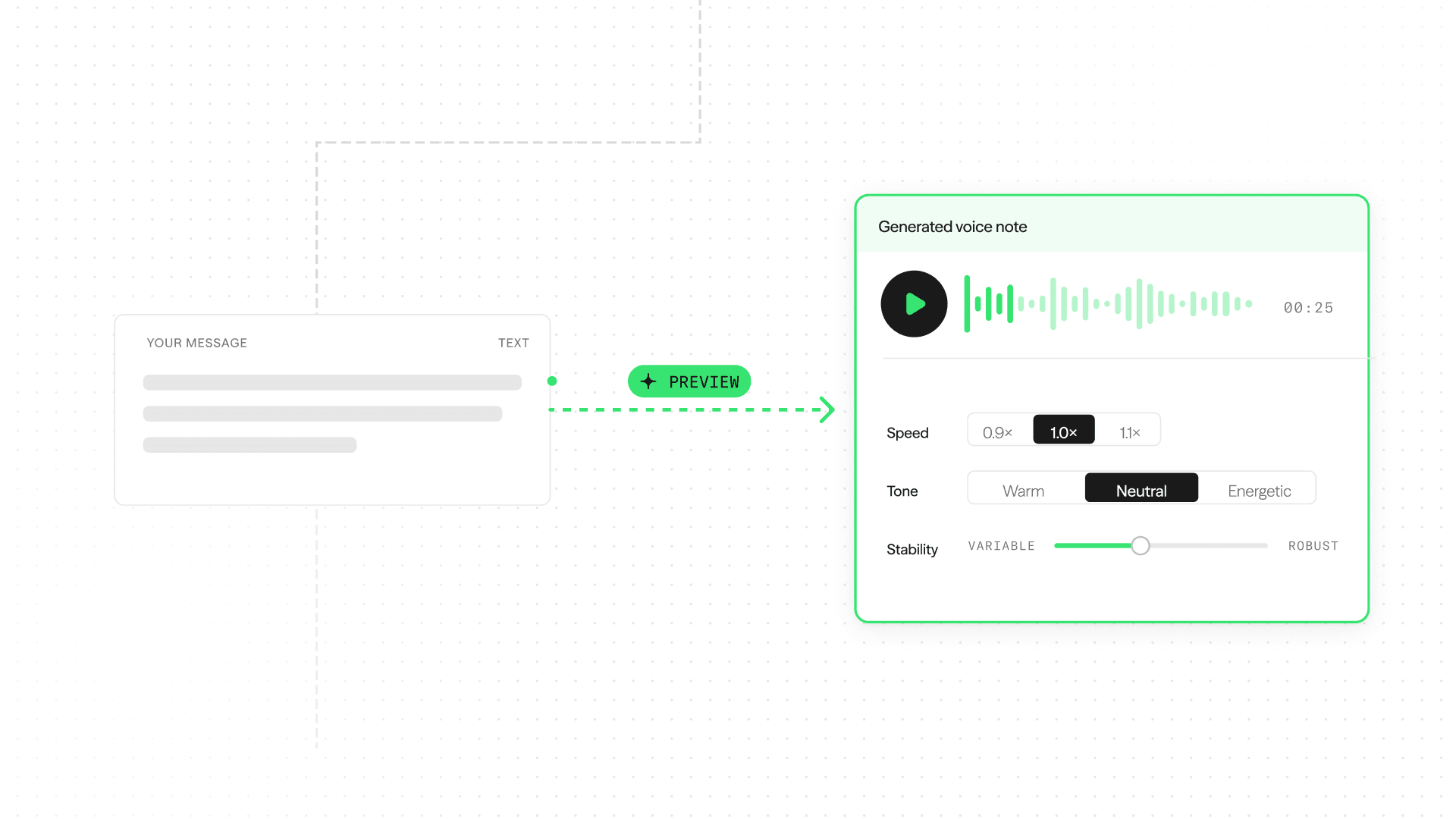
Engagement is two capabilities, one motion.
Adapted proven messages handle what to say in text: context-aware, scalable across email and LinkedIn steps in sequence.
AI voice for sales handles how to say it in the most human medium, without manual recording per prospect.
Used together, a sequence can move from context-rich text to voice touchpoints on the same account intelligence, so the prospect experiences continuity, not random channel spam.
Example motion (simplified):
Prospecting identifies account fit and reason to engage.
The rep picks a proven template; Enginy adapts it for intro outreach referencing that reason.
Follow-up steps vary by role and signal, still from proven template bases the rep selects and reviews.
A voice step adds a human channel on high-intent segments, operable without rep recording sessions.
The through-line is one context graph, many expressive outputs. That is what "AI knows what to say" means in practice.
From finding the right person to sending the right message
Enginy runs prospecting and engagement as one outbound motion.
Stage | Question answered | What Enginy does |
Prospecting | Who, and why now? | Account intelligence · on-profile context on LinkedIn |
Engagement | What to say, at scale? | Adapted proven messages · AI voice for sales |
Prospecting without engagement leaves reps with great context and manual copy labor. Engagement without prospecting produces well-written irrelevance: polished messages to the wrong people for the wrong reasons.
Together they implement the Enginy bet: the power of AI, without knowing AI.
We are a B2B sales platform that covers prospecting, waterfall enrichment, multichannel outreach, and smart inbox management in one system. AI-native outbound is built into how teams already sell, not bolted on as another tool to learn.
A practical rollout for engagement
Teams do not need to flip every sequence on day one.
Start with one high-intent segment. Take accounts that already passed prospecting qualification (clear fit, clear reason to engage) and swap static templates for adapted proven messages on the next sequence step.
Pick one proven template to test. Adaptation works best when the rep chooses a message Enginy already validated, then reviews the output per prospect.
Test voice on a narrow cohort. Use AI voice for sales on a segment where voice would help if you had time: re-engagement, executive titles, or warm-ish inbound follow-up. Compare reply quality to text-only controls.
Measure message-level outcomes. Reply rate, positive reply rate, and meeting rate, segmented by template variant and channel. Activity alone will lie to you.
Link prospecting and engagement in workflow reviews. Ask reps: "Did the message reflect the reason we chose this account?" If not, the bug is upstream in prospecting, not in the template engine.
What buyers should ask any AI outreach vendor
Use this checklist when evaluating tools, including Enginy.
Does personalization use live prospect context or merge fields? Tokens are not personalization.
Where does context come from? If research lives outside the sending system, reps will skip it.
Does the tool make you write or prompt anything to get a good message? Enginy's answer: no. Reps pick a proven template, review the adapted output, and send.
Does voice scale without manual recording per send? If not, voice stays a vanity channel.
Is there one platform from signal to send to reply? Fragmented stacks re-create the scalability wall.
Enginy is designed so "yes" is the honest answer to each question, inside one platform, not across five integrations.
Frequently Asked Questions (FAQs)
Can outreach sound human without writing every message from scratch?
Yes. Enginy supplies proven templates, adapts each one to the prospect's context automatically, and lets the rep review before send. The rep picks and reviews. They do not author the base message or write prompts.
How is Enginy different from ChatGPT for sales emails?
ChatGPT generates copy from prompts you write. Enginy adapts proven templates to each prospect using account and contact context inside the platform. The rep picks, reviews, and sends. No prompt engineering per message.
What is AI voice for sales in Enginy?
Enginy lets teams send voice messages at scale using natural standard voices, embedded in sequences, so voice touchpoints are operable without manual recording for every prospect.
Does AI voice replace human-recorded messages?
Not entirely. AI voice operationalizes voice for segments where manual recording would never happen. Strategic accounts may still benefit from rep-recorded messages, but the channel is no longer limited to those accounts only.
Do I need prospecting set up before using adapted messages and voice?
You can use engagement features independently, but results improve when prospecting identifies who and why first. Adaptation works best when context is accurate, which account intelligence and on-profile LinkedIn context are built to surface.
How does engagement relate to the rest of Enginy?
Engagement (adapted proven messages and AI voice for sales) sits alongside prospecting, enrichment, sequences, LinkedIn and email outreach, and an AI inbox, all in one outbound platform.
Where do prospecting and buyer signals fit in Enginy?
Account intelligence runs on the Enginy platform. On LinkedIn, the Chrome Extension surfaces why a prospect is worth contacting and drafts a ready-to-send opener, so reps see buyer signals where they prospect, not in a separate research tab.