Why Cold Outreach Is Broken, and How AI Fixes It

Andrea López
Share
Cold outreach is broken, not because reps stopped trying, but because the playbook most teams still run was built for a world where volume could compensate for weak context.
Generic openers. Lists built on firmographics alone. Research scattered across tabs. AI tools that write faster but not more relevantly. Prospects can tell. Reply rates reflect it.
The fix is not another template library or a bigger sending limit. AI fixes cold outreach when it knows who to reach and why to reach them now, before anyone opens a compose window.
On the prospecting side, Enginy tackles that by putting relevance before copy: deep account intelligence in the platform, and on LinkedIn, instant context on why a prospect is worth reaching out to right now, plus a ready-to-send opener.
Cold outreach failed quietly, then all at once
Cold outreach did not break because email died. It broke because everyone got good at the mechanics of sending and bad at the reason for sending.
Three forces stacked on top of each other.
Volume replaced judgment: Sequencers made it easy to contact hundreds of accounts per week. Dashboards rewarded activity. Reps learned to optimize sends, not relevance.
Context stayed manual: Knowing why this account, why now still meant opening LinkedIn, scanning news, checking job posts, and stitching it together by hand. That work does not scale, so it got skipped.
Trust eroded on the buyer side: Decision-makers receive dozens of "personalized" emails that reference nothing specific. Generic outreach reads as low-effort even when the sender worked hard. Prospects disengage before the second line.
The result is a familiar pipeline: high activity, low reply rate, burned domains, and reps who dread Monday list building.
If your team lives this cycle, the problem is probably not effort. It is structure.
Most AI sales tools scaled the wrong problem
When AI entered outbound, the first wave optimized speed: draft an email in seconds, generate ten variants, push more volume through the same lists.
That helped power users. It did not fix cold outreach for most teams.
Automating volume without relevance scales the problem, not the pipeline. Faster generic emails still feel generic. AI subject lines still land in the same crowded inbox. Prospects still ignore them.
Many tools also treat AI as another skill to master: prompts, workflows, playbooks, training sessions. Reps who already juggle CRM hygiene, LinkedIn limits, and call prep now juggle prompt engineering too.
That is the opposite of what Monday morning needs. Reps need context surfaced for them, not a blank chat box and a hope.
Enginy is built on a different bet: the power of AI, without knowing AI. AI that already understands your prospects and writes like you would, without you teaching it how.
Prospecting is where that bet starts.
The fix: relevance before copy
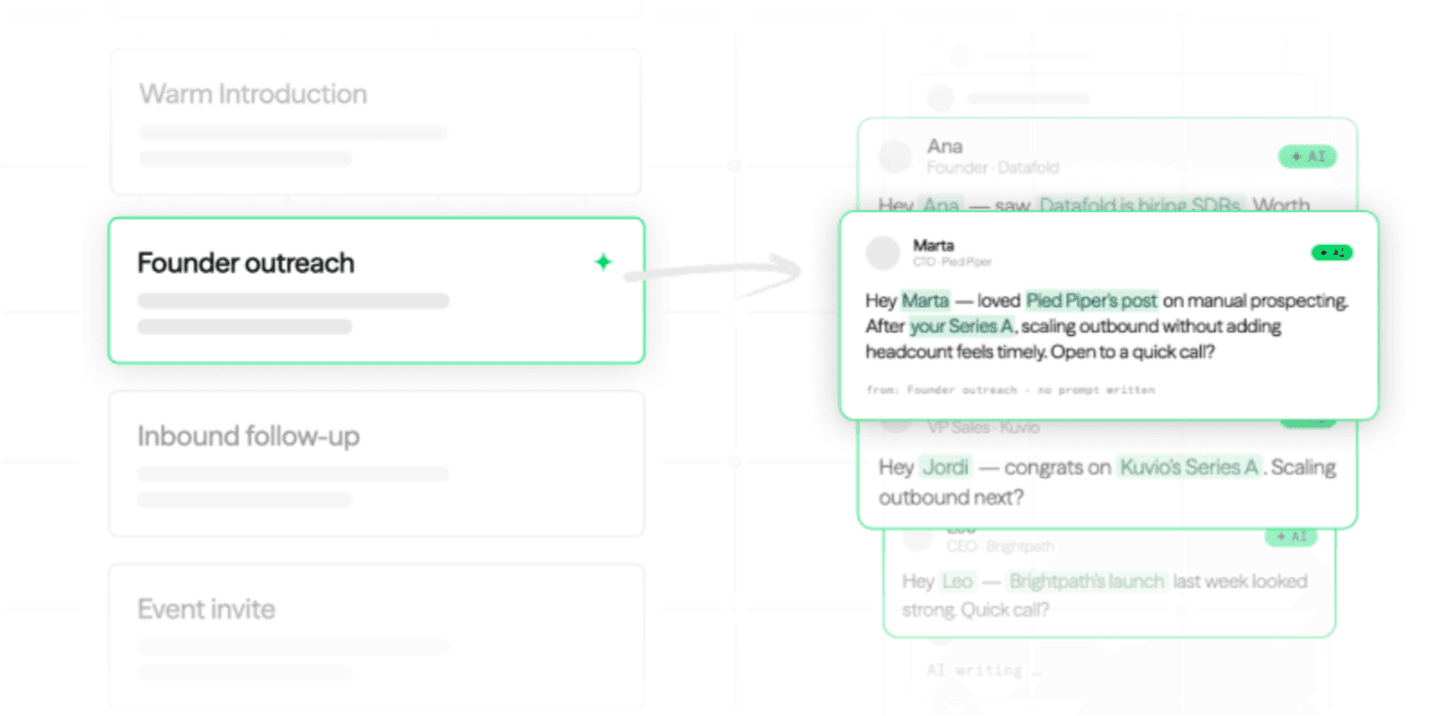
Cold outreach works when three questions are answered before the first message:
Who is worth reaching right now?
Why this person, at this company, in this moment?
What is the honest reason to start a conversation?
Most stacks answer question three first, or skip straight to a template. Enginy inverts the order.
We focus on who and why so that when copy appears, it is grounded in something a prospect would recognize as real. Not {firstName} and {companyName}. Not "I loved your recent post" with no post named.
This maps to how high-performing reps already sell. They just could not do it at scale. AI's job is to compress twenty minutes of research into twenty seconds, not to replace the rep's judgment.
That is the difference between AI for cold outreach that helps and AI that adds noise.
What "right person, right time" actually means
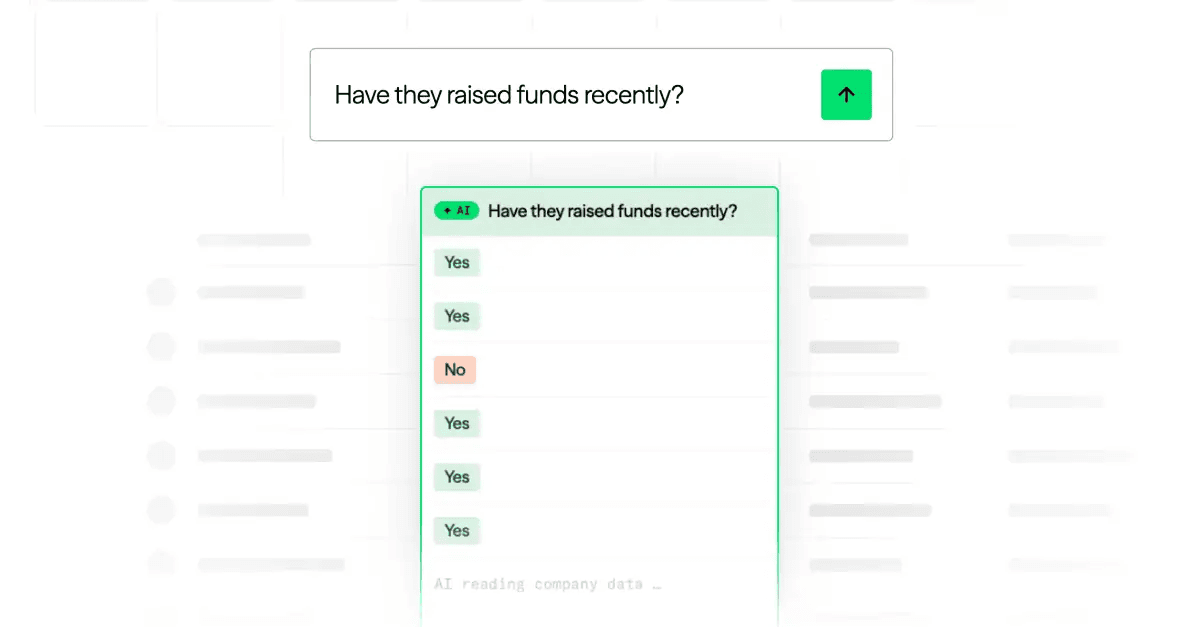
Buyers search for answers like how to find prospects to reach out to, buyer signals for B2B sales, and AI for cold outreach because the hard part is not finding a contact. It is finding a contact with a reason.
Right person means more than title and headcount. It means role, seniority, buying influence, and fit against your ICP, plus reachability through verified email or LinkedIn.
Right time means observable signals: funding, hiring patterns, leadership changes, tech shifts, intent indicators, or live engagement on LinkedIn. Something that makes outreach feel timely, not random.
Teams that track intent signals already know this. The gap is execution: signals in one tool, outreach in another, context lost in between.
Enginy closes that gap with account intelligence on the platform and prospect context on LinkedIn, where reps actually prospect.
Account intelligence without the tab marathon
Enginy delivers deep account intelligence on demand: company signals, recent news, and fit scoring, without leaving your workflow.
Instead of opening six tabs to understand an account, you get context where you are already working. Signals, news, and fit in one view, ready when you prioritize your list or prep for a call.
What it replaces: Manual Google searches, LinkedIn company page skimming, and notes scattered in CRM fields nobody reads before send.
What it enables: Faster list qualification, sharper account prioritization, and custom criteria at scale, so reps spend time on accounts that match both ICP and timing, not just firmographics.
This lives in the Enginy platform, alongside ICP search, waterfall enrichment across 30+ data sources, verified emails and phones, and multichannel sequences. Prospecting intelligence is not a separate research tool you export from. It is part of the same outbound motion.
For teams comparing approaches to B2B prospecting, the lesson is simple: research that stays in workflow gets used. Research that lives in a side tab gets skipped when quotas press.
Know why to reach out, before you type a word
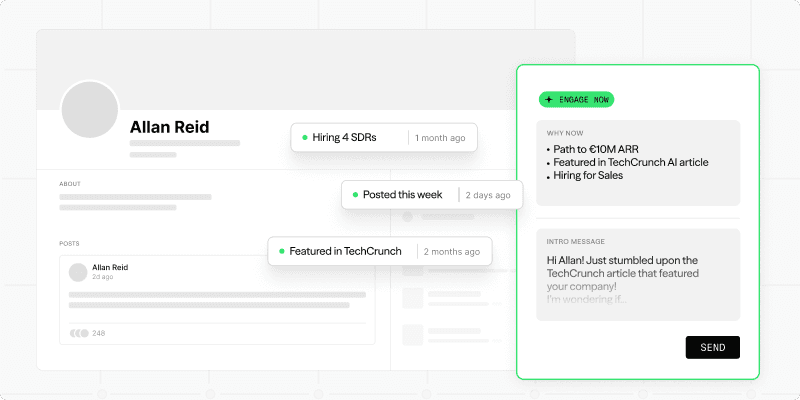
On LinkedIn, the cost of a generic opener is immediate. You get ignored, or worse, flagged.
With the Enginy Chrome Extension, you browse a profile and instantly see why this prospect is worth reaching out to right now, the kind of context that would take twenty minutes to gather by hand. You also get a ready-to-send opener drawn from that context. No prompt engineering. No blank page.
Not a template. Not a guess. Context tied to that person and that moment, plus a first line you can review and send.
This is signal surfacing, not signal storage. The buyer does not care that your platform logged a funding event last quarter. They care that your message reflects something true about them today.
That is what makes LinkedIn prospecting feel intentional again, without asking reps to become part-time researchers.
Lives in: Enginy Chrome Extension on LinkedIn, where most B2B prospecting actually happens.
That closes the prospecting loop:
Account intelligence tells you whether the account is worth time.
On-profile context tells you why this person now.
The ready-to-send opener gets you past the blank page without a stall.
Three steps. One motion. From tab chaos to a sent message.
A practical prospecting workflow with Enginy
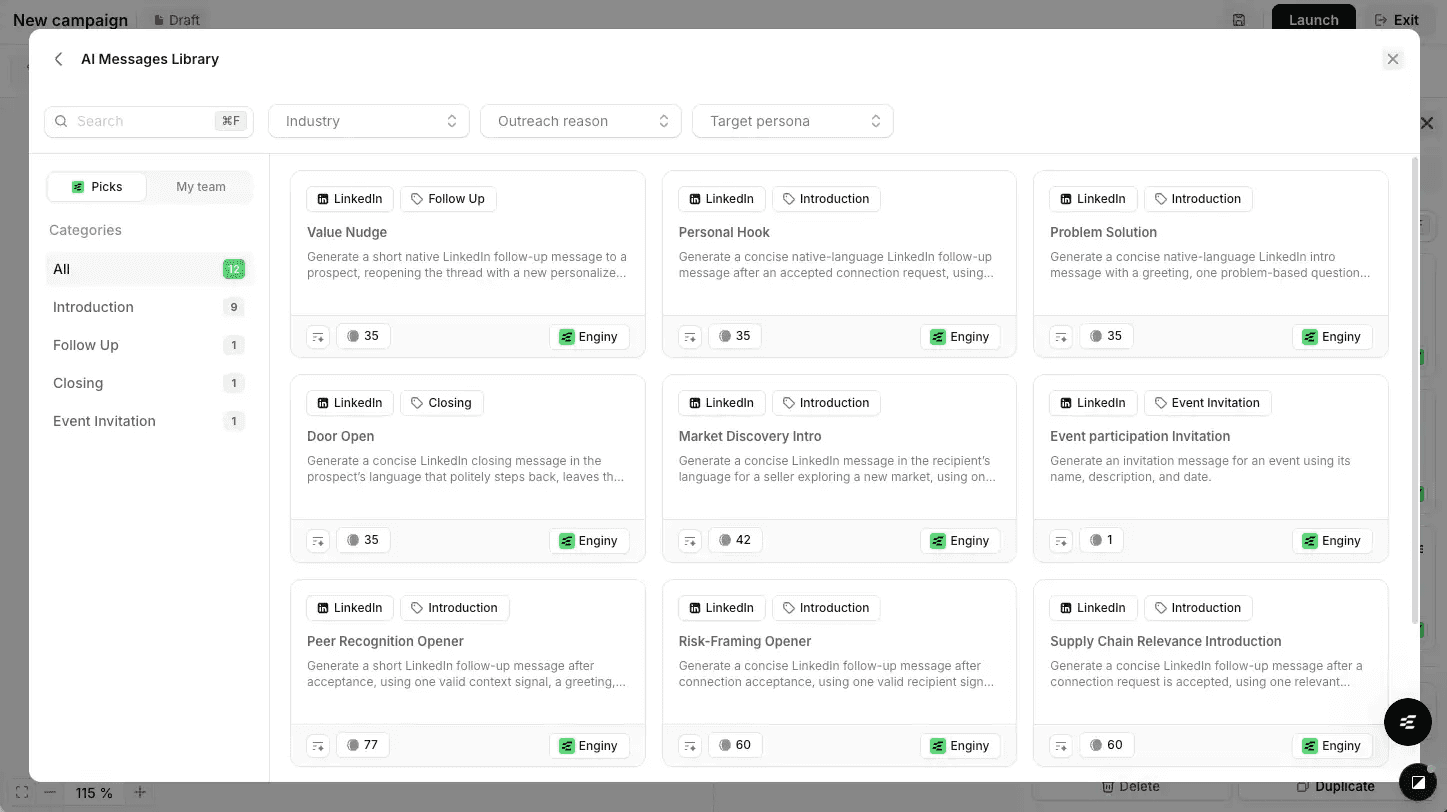
Here is how we see teams run prospecting in practice.
Step 1: Define ICP and signals. Clarify industry, size, titles, geography, and trigger events. Without this, AI prioritizes the wrong accounts confidently.
Step 2: Run account intelligence on priority accounts. Qualify fit and timing before anyone builds a list of two hundred names. Cut low-context volume early.
Step 3: Prospect on LinkedIn with the Chrome Extension. Open profiles where you would already work. Review the reason to reach out and the suggested opener. Edit if needed, then send.
Step 4: Route engaged accounts into sequences. Verified contact data and multichannel outreach stay in Enginy: email, LinkedIn, and replies in one platform with an AI inbox that triages responses.
Step 5: Measure relevance, not just activity. Track reply rate, positive reply rate, and meeting rate per segment, not sends per rep per day.
This workflow treats cold outreach as a relevance problem first and a copy problem second. That is the structural shift most AI outbound tools miss.
What to change this week
You do not need a full stack replacement to test the principle.
Audit ten recent cold emails or LinkedIn messages. Count how many reference a specific, verifiable reason to reach out. If the answer is zero, volume is not your bottleneck. Context is.
Pick one ICP segment and one signal type. Run account intelligence on twenty accounts that match. Compare how long qualification takes versus your current process.
Install the Chrome Extension for reps who live on LinkedIn. Have them review on-profile context on the next profile block, and compare openers before and after.
Stop rewarding send volume alone. Give managers a relevance metric to discuss in pipeline reviews.
Small changes here compound. Teams that fix who and why before scaling what see reply rates move without burning trust.
What comes after prospecting
Prospecting is half the outbound job. The other half is what to say, at scale, in your voice: proven messages adapted to each prospect, and voice touchpoints that do not require manual recording for every account.
Enginy handles that on the engagement side. Together, prospecting and engagement form one motion: from finding the right person to sending the right message, without asking anyone to become an AI expert.
Frequently Asked Questions (FAQs)
Why is cold outreach broken?
Cold outreach is broken because most teams optimized sending volume without solving relevance. Generic messages, manual research bottlenecks, and AI tools that write faster but not more contextually eroded prospect trust and reply rates.
How does AI fix cold outreach?
AI fixes cold outreach when it surfaces the right prospects and the right reasons to engage before copy is written, not when it automates more generic emails. Relevance has to come first.
What is the difference between AI that writes faster and AI that improves relevance?
AI that writes faster scales output. AI that improves relevance scales timely, specific outreach by compressing research and surfacing buyer signals. Only the second fixes reply rates sustainably.
How does Enginy show why a prospect is worth contacting on LinkedIn?
The Enginy Chrome Extension surfaces why a specific prospect is worth reaching out to right now, based on context that would take significant manual research, and drafts a ready-to-send opener from that context.
How does account intelligence work in Enginy?
Enginy delivers on-demand account intelligence (company signals, news, and fit scoring) inside the platform, so reps qualify accounts without leaving their workflow.
Do I need prompt engineering to prospect with Enginy?
No. Enginy surfaces prospect context and suggested openers from day one. Reps review and send. They do not train the system with prompts.
How does prospecting connect to the rest of outbound in Enginy?
Prospecting covers who to reach and why (account intelligence and on-profile context on LinkedIn). Engagement covers what to say at scale (adapted proven messages and AI voice for sales). Both run inside the same Enginy platform.